
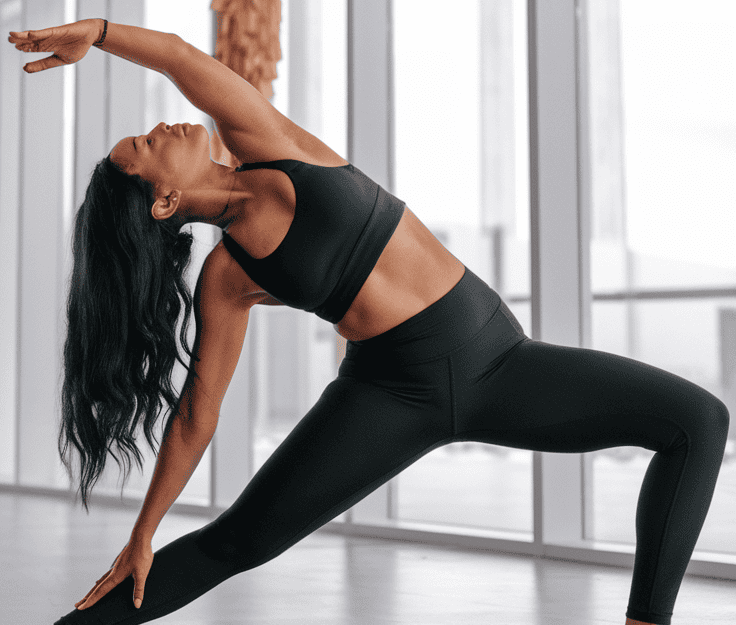
Chronic pain and inflammation can disrupt your daily life, leaving you feeling stuck, frustrated, and overwhelmed. But did you know that yoga—when practiced mindfully—can help lower stress, reduce inflammation, and ease chronic pain naturally?
This article explores nine easy-to-follow yoga routines that work together to relieve pain and improve overall well-being.
These routines focus on gentle movements, breathwork, and deep relaxation. Whether new to yoga or a seasoned practitioner, you can modify these routines to suit your body and your needs.
The 9 Yoga Routines
Below is a table summarizing the nine routines, their primary benefits, and a few quick tips:
| Routine | Primary Benefits | Quick Tips |
|---|---|---|
| 1. Cat-Cow Flow | Mobilizes the spine; reduces back stiffness | Sync movements with your breath; go slowly |
| 2. Child’s Pose (Balasana) | Releases tension in the back and shoulders | Use a bolster for extra comfort; hold for 3–5 min |
| 3. Downward Facing Dog (Adho Mukha Svanasana) | Lengthens the spine; enhances circulation | Slightly bend knees if needed; focus on alignment |
| 4. Supported Bridge Pose | Opens the chest, relieves lower back tension | Use a block for support; hold for 5–8 breaths |
| 5. Legs-Up-The-Wall Pose (Viparita Karani) | Reduces leg swelling; soothes lower back | Relax deeply; hold for 5–8 minutes |
| 6. Seated Forward Fold (Paschimottanasana) | Eases tension in the back and hamstrings | Use a strap if necessary; focus on lengthening the spine |
| 7. Supine Twist (Supta Matsyendrasana) | Massages the spine; releases hip tension | Keep shoulders grounded; hold each side 1 min |
| 8. Restorative Bound Angle Pose (Supta Baddha Konasana) | Opens the hips; promotes deep relaxation | Support your knees with pillows; hold for 2–3 min |
| 9. Savasana with Mindful Breathing | Integrates practice; reduces overall stress | Lie flat, relax completely; focus on diaphragmatic breathing |
Each routine is carefully chosen to target different body areas while reducing inflammation. Let’s dive into the details of each one.

Routine #1: Gentle Cat-Cow Flow
What It Is:
Begin on your hands and knees. As you inhale, gently arch your back (Cow Pose) and lift your head and tailbone. As you exhale, round your spine (Cat Pose), tucking your chin toward your chest.
Benefits:
- Spinal Mobilization: Alternating these poses increases circulation along your spine.
- Reduced Stiffness: Helps release tension in your back and shoulders.
- Mindful Movement: Synchronizes your breath with movement, reducing stress hormones.
Tips:
- Move slowly and listen to your body.
- Modify your range of motion if you have tight muscles.
Routine #2: Child’s Pose (Balasana)
What It Is:
Kneel on the floor, sit back on your heels, and lower your chest forward between your thighs. Extend your arms out in front or rest them alongside your body.
Benefits:
- Deep Relaxation: Gently stretch your back and shoulders.
- Stress Reduction: Calms the mind and lowers cortisol levels.
- Anti-Inflammatory: Helps ease muscle tension that contributes to inflammation.
Tips:
- Hold for 3 to 5 minutes while taking deep, slow breaths.
- If your chest doesn’t reach the floor, rest your forehead on a bolster or cushion.
Routine #3: Downward Facing Dog (Adho Mukha Svanasana)
What It Is:
Start in a tabletop position, then lift your hips, forming an inverted “V” shape. Keep your head between your arms and your heels pressing toward the floor.
Benefits:
- Full-Body Stretch: Targets the back, shoulders, legs, and arms.
- Improved Circulation: Increases blood flow and helps flush out toxins.
- Inflammation Reduction: Releases tension in tight muscles.
Tips:
- If your hamstrings feel tight, slightly bend your knees.
- Focus on pushing through both your hands and feet to balance evenly.
Routine #4: Supported Bridge Pose
What It Is:
Lie on your back with your knees bent and feet flat on the floor. Lift your hips upward, and place a yoga block or bolster under your sacrum for needed support.
Benefits:
- Chest Opening: Stretches the chest and shoulders.
- Back Relief: Eases lower back tension and improves circulation.
- Strengthening: Engages your glutes and lower back muscles.
Tips:
- Hold for 5–8 breaths, then slowly release.
- Ensure your knees remain in line with your hips to avoid strain.

Routine #5: Legs-Up-The-Wall Pose (Viparita Karani)
What It Is:
Sit sideways against a wall, using a folded blanket for support. Lie back and extend your legs up the wall.
Benefits:
- Restorative Inversion: Helps reduce leg swelling and relieve tired muscles.
- Deep Relaxation: Calms the nervous system.
- Reduced Inflammation: Promotes improved blood flow throughout the lower body.
Tips:
- Stay in this pose for 5–8 minutes.
- Keep your arms relaxed at your sides and focus on slow, deep breathing.
Routine #6: Seated Forward Fold (Paschimottanasana)
What It Is:
Sit with your legs extended straight in front. Hinge at your hips and lean forward, reaching toward your feet while keeping your spine long.
Benefits:
- Hamstring and Back Stretch: Releases tension in the lower back and legs.
- Stress Relief: Promotes relaxation through deep stretching.
- Anti-Inflammatory: Reduces muscle tightness, which can lower inflammatory markers.
Tips:
- Use a yoga strap around your feet if needed.
- Avoid rounding your back—focus on lengthening your spine.
Routine #7: Supine Twist (Supta Matsyendrasana)
What It Is:
Lie on your back, bring your knees to your chest, then let them fall over to one side while keeping your shoulders on the ground.
Benefits:
- Spinal Massage: Gently twists the spine, improving mobility.
- Hip and Back Tension Relief: Helps release built-up tension in the back and hips.
- Detoxifying: Encourages gentle massage of internal organs.
Tips:
- Hold each side for about one minute.
- Keep your shoulders squarely on the mat for proper alignment.
Routine #8: Restorative Bound Angle Pose (Supta Baddha Konasana)
What It Is:
Lie on your back with the soles of your feet together, allowing your knees to fall out to the sides. For extra support, place pillows or bolsters under your knees.
Benefits:
- Hip Opener: Gently stretch the inner thighs and groin area.
- Deep Relaxation: Encourages a state of calm and helps lower stress levels.
- Pain Relief: Soothes inflammation in the pelvic region.
Tips:
- Hold for 2 to 3 minutes, focusing on deep, mindful breaths.
- Use props as needed to support your body comfortably.
Routine #9: Savasana with Mindful Breathing
What It Is:
Lie flat on your back in Savasana (Corpse Pose) with arms at your sides and legs spread comfortably. Close your eyes and focus on your breath.
Benefits:
- Final Relaxation: Allows your body to integrate the benefits of your practice.
- Stress Reduction: Lowers cortisol levels and promotes overall relaxation.
- Mind-Body Connection: Enhances mindfulness and helps cement a calm state of being.
Tips:
- Focus on slow, diaphragmatic breathing.
- Stay in the pose for 5–7 minutes, letting go of all tension.
FAQs
Q: How often should I practice these yoga routines for chronic pain relief?
A: Aim for at least 3 to 4 sessions per week. Consistency is key to reducing inflammation and easing chronic pain.
Q: Do I need any special equipment?
A: A yoga mat is ideal, and using props like bolsters, blocks, or a folded blanket can enhance comfort and support.
Q: Can I modify these poses if I have limited flexibility?
A: Absolutely. Always listen to your body. To avoid strain, use props or adjust the depth of each pose.
Q: How long should each session last?
A: A full session can last between 45 to 75 minutes. If you’re short on time, even a 10–15 minute routine focusing on a few key poses can help.
Q: Is yoga safe for everyone with chronic pain?
A: Generally, yes—but it’s important to consult your healthcare provider before beginning any new exercise routine, especially if you have severe or acute pain.
Q: How does yoga reduce inflammation?
A: Yoga reduces inflammation by lowering cortisol levels, promoting better blood flow, and relieving muscle tension through gentle, mindful movement.
Q: Can I practice these routines at home?
A: Yes! These routines are designed to be accessible and can be practiced at home with minimal equipment.
Conclusion
Yoga offers a powerful, natural way to combat chronic pain and inflammation. By incorporating these nine routines into your weekly schedule, you can gradually ease muscle tension, improve mobility, and foster a deep sense of relaxation—all without relying on medications.
Whether you choose a restorative pose like Child’s Pose or a gentle inversion like Legs-Up-The-Wall, each routine contributes to a holistic, anti-inflammatory approach to pain management.
Remember, consistency and mindful practice are essential. Listen to your body, modify as needed, and always consult with your healthcare provider if you have any concerns.
Save this guide, share it with friends, and let these yoga routines be your stepping stone to a calmer, pain-free life.
Stay flexible, stay mindful, and enjoy your journey to healing!
