

STILL kicking inside the womb, some of Asia’s most vulnerable babies are being lined up, presented in a catalogue and “pre-ordered” by strangers – before they have even taken their first breath.
Expectant mothers crippled by poverty or terrified by the stigma of an unwanted pregnancy are lured in by traffickers who offer to pay for hospital bills, arrange the birth and shoulder the costs they cannot afford.


Deals can begin months before delivery, with investigators uncovering cases in which unborn children are effectively “pre-ordered”.
Buyers are then waiting in the wings for the moment they enter the world, with Indonesia’s child trafficking commissioner Ai Maryati telling The Sun: “Babies who are still in the womb are being chosen for trafficking before they are born.”
Newborns are being swept from the delivery room into an elaborate trafficking machine where midwives, forged birth certificates, bogus foundations and social media accounts have all allegedly been used to transform babies into commodities.
And once the paperwork is rewritten, the traces of where a child really came from can begin to disappear with it.
The murky trade stretches far beyond Indonesia, with babies allegedly bought and sold through illegal adoption networks across the world – including cases involving British nationals.
A British national was arrested at one of Nepals’ International Airports in 2019, after allegedly obtaining a one-month-old baby through an illegal adoption deal.
The infant was allegedly handed over by Bal Krishna Dangol, the then-director of children’s organisation Bal Mandir, in exchange for Rs400,000 (£3,148.41.)
Nepalese authorities arrested Dangol and investigated the alleged illegal transfer as part of a wider probe into suspected child trafficking and unlawful overseas adoptions.


Smith and Dangol were charged with human trafficking after cops accused him of helping her obtain the newborn and fraudulent documents falsely naming her as the child’s mother.”
Andy Ardian, of child protection organisation ECPAT Indonesia, said traffickers deliberately exploit pregnancies in which women feel they have nowhere else to turn.
He told The Sun: “These cases happen when there is an unwanted pregnancy so mothers will ask for help, but these people end up exploiting their baby.
“They will help the mother give birth but then take the baby and sell it across the world.”
Arun Dohle, who has long been involved with child protection and adoption issues, said: “Often unmarried or poor mothers get targeted.
“I’ve seen a case where a poor mother was targeted and someone asked her ‘give us one of your children and we will fix your roof for free.’”
He said some parents deliberately sell their babies for cash knowing full well the way the trade operates.
In Depok, West Java, cops busted a ring trawling Facebook for parents prepared to sell their babies.
A mum who was identified by cops only as SU, 24, allegedly handed over her newborn for Rp10million (£440), while another parent, identified as DA, 27, allegedly struck the same deal.
The babies were then allegedly shuttled to Bali and flipped for up to Rp45million (£2,000) – more than four times the amount.
Perhaps the darkest allegation was that some of those children had been earmarked while their mothers were still pregnant.
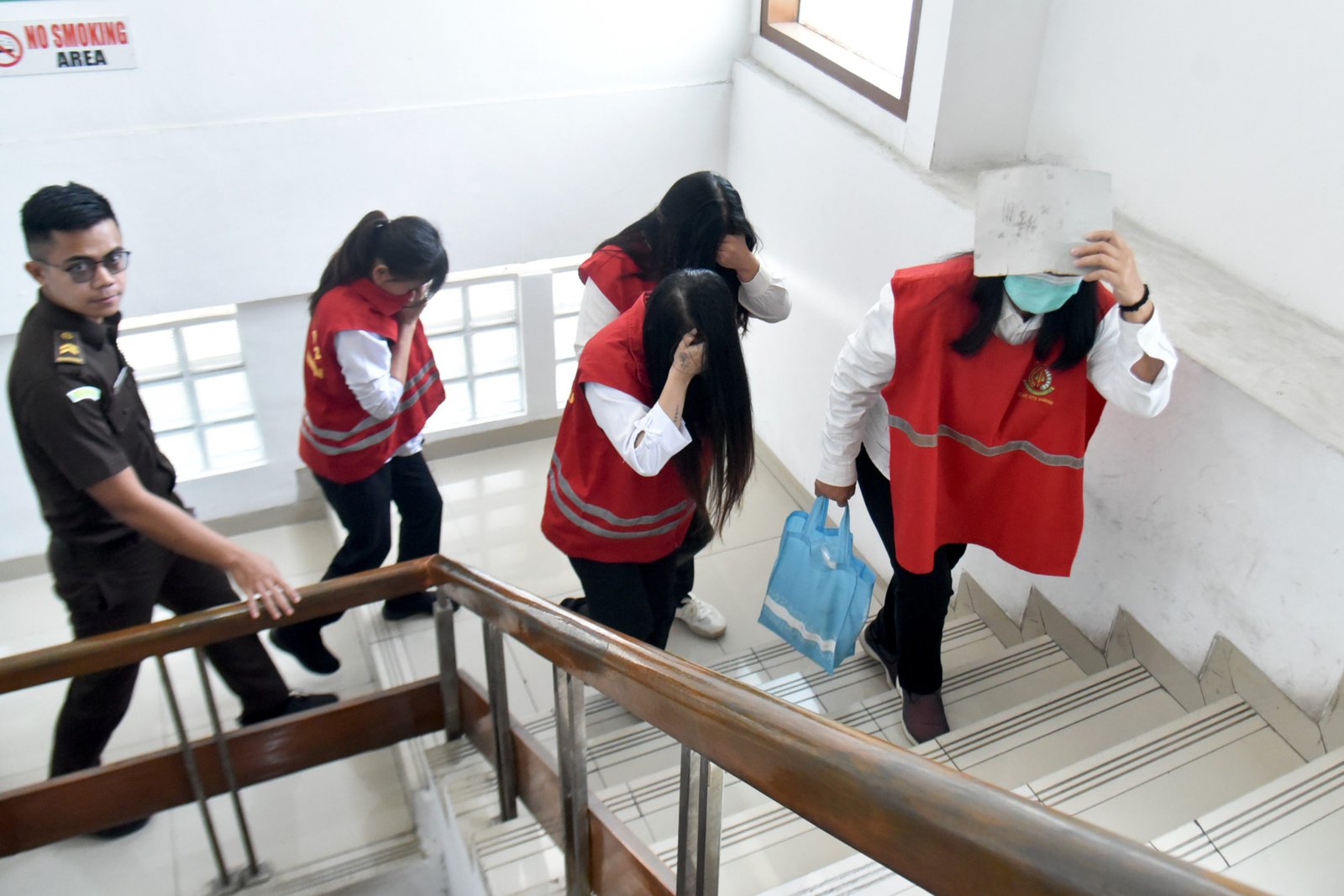
I Made Aryadana, the leader of Bali Luih Children’s Foundation which ran the trafficking ring is now serving a six-year prison sentence.
The mothers flogging their babies were charged with human trafficking and child protection.
But some mothers are not always clued up.
One sprawling operation saw 19 people convicted over the trafficking of 34 babies through a network stretching from Indonesia to Singapore.
The racket, masterminded by 70-year-old Lie Siu Luan, preyed on vulnerable families across West Java between 2023 and 2025, dangling cash and the promise of a swift adoption in front of parents struggling to cope.
Newborns were hidden away in safe houses and cared for by hired nannies as the gang set about manufacturing them new identities, falsifying birth certificates and other official documents.
The deception even extended to recruiting bogus mums and dads to masquerade as the babies’ real parents, helping pave their passage out of Indonesia and into Singapore.
Investigators in the Indonesian and Singaporean case believe at least 12 of the trafficked babies have already been taken to Singapore.
Lie was handed the toughest punishment, jailed for seven years for orchestrating the operation, while the remaining 18 defendants – including recruiters, carers and document fixers – received sentences ranging from three to six years.


Andy said investigators had also struggled to trace alleged members of networks once the trail crossed Indonesia’s borders, saying of one Singapore connection: “We cannot find the offender in Singapore.”
The high commissioner of child trafficking has also confirmed to The Sun that they are still on the hunt for the Indonesian babies who were trafficked to Singapore.
Andy says traffickers can also exploit contacts inside hospitals, allegedly working with midwives who use offers of money to persuade vulnerable mothers to hand over their newborns.
He said: “Traffickers will kidnap the children – often through having ties with the midwives – and bring the children to the customer.”
In July, the Yogyakarta High Court sentenced midwife Jemitri Eka Lestari, 44, to seven years in prison, while fellow midwife Dunuk Mudjiasri, 77, received two years for supporting the operation.
Police said the pair were arrested in December following an investigation into the sale of at least 66 babies dating back to 2015.
Investigators said the women helped with deliveries before birth records were falsified so that adopters could appear on paper as the babies’ biological parents.
Andy said: “There’s no documents being signed in this process and the child’s identity is completely erased.


“They created lots of fake identities for the children.”
Sometimes, a woman will be so financially desperate, they ask the midwife themselves if they can take the baby away in return for a free delivery.
Maria Yohanista, who runs a pregnancy clinic with a friend in Indonesia, said she has encountered mothers so financially desperate that they have asked whether somebody else could take their child in return for covering the cost of giving birth.
She said: “Women who give birth will frequently tell the midwife they can’t afford the baby.
“They ask the midwife for a free delivery in return to keep the baby.”
A straightforward delivery in an Indonesian hospital can cost around Rp5million to Rp15million (£220 to £660).
The sums are particularly stark against Indonesia’s poverty line, which stood at just Rp669,235 (£30) per person per month in March 2026.
The average Indonesian employee earned around Rp3.39million (£150) a month in May, but women targeted by traffickers can be far more financially vulnerable, including those without secure salaried work.
Mimi Vu, a child trafficking activist told The Sun: “This is a trade and a business. The most targeted are young poor and less educated women who are single.”
Mimi said after the vulnerable mums realise they can’t afford to take their babies home, they are forced to leave the newborn with the nurse.
She added: “The doctors or nurses in the hospital are making a lot of money out of the business.
“Hospitals will often have a system set up where they operate with middlemen.”
She said: “[Agencies] will strike up a backroom deal with nurses, hospitals, and orphanages to facilitate procurement of the baby.”
One of Indonesia’s most extraordinary cases centred on a 32-year-old social media figure who cultivated an image as a guardian angel for women facing unwanted pregnancies.
Suhendra Abdul Halim became known as the “father of a million children”, winning praise online after presenting himself as a man devoted to helping vulnerable pregnant women and taking unwanted children into his care.
His apparent benevolence spread across social media, where his growing profile helped attract more women to him.
Andy, who worked on this case, said: “He was promoting his business pretending to help women pay for their birth on Instagram.
“Because he was viral, people on social media were complimenting his work in helping women.
“Lots of women began asking him if he could help them too.”
Even Indonesian celebrities reportedly promoted his account, apparently believing they were directing struggling mothers towards a charitable lifeline.


But police would later found the wholesome image concealed an illegal baby-selling operation.
Andy said: “He was using social media to recruit women.
“The man would then sell the babies for 15 million rupiah (£632.20)”
“So he would help the mother who is in difficulty but then sell the baby on Instagram.”
Adoption in Indonesia is meant to be free of charge. All orphanages should be registered and accredited with the Indonesian Ministry of Social Affairs.
Arun Dohle said: “The parents who adopt the babies know exactly what they are doing.
“Adoption should not have a price tag on it. They are buying these babies and therefore participating in trafficking.”
The baby trafficking social media guru had a rented house where pregnant women and newborn babies were being kept together.
Police found ten pregnant women living there when the property was uncovered, five of whom had already given birth.
According to Andy, babies were kept at the house while waiting to be taken away.
The scheme began to crack when a health worker noticed an anomaly hidden in the paperwork.
Women arriving to give birth came from outside the Bogor area, yet the same address kept appearing on their records.
More strangely still, so did the same supposed father, Suhendra.
The repetition aroused suspicion and eventually helped expose an operation police said was masquerading as charity.
Bogor Police Chief Iman Imanuddin said: “The culprit offered to help the pregnant women. After the children were born, [he would take them in but] they would eventually be given up for adoption. But the adoption process was illegal.”
Police said Suhendra had falsified documents connected to his Father of A Million Children Foundation and demanded IDR15million – roughly £700 – from people wanting to adopt a baby.
Imanuddin said: “If somebody wanted to adopt one of his children, they would have to pay IDR15 million (£630) to the culprit. The culprit used the Father of a Million Children Foundation as a front.”
He was eventually jailed for four years.
The Bogor case offered a disturbing glimpse into a trade that has surfaced repeatedly across the sprawling archipelago and other parts of the continent.
In July, The Sun exposed a human trafficking racket in India mistakenly contacted an anti-trafficking charity – asking if they wanted to buy a baby.
Using this as an opportunity to act as decoy customers, the organisation, Against Child Trafficking (ACT) started to answer messages posed as a desperate couple unable to bear children.
The child trafficking ring, having moved the conversation to another channel, sent over several pictures of naked newborns and asked the “couple” to choose from their catalogue.
Director of ACT, Arun Dohle, told The Sun: “One day a guy wrote on our own Facebook page and offered us a baby.
“We faked to be a couple who couldn’t have a baby. We pretended to be unsure to not give away our cover.
“It was a really simple process. Then they sent us tons of pictures of babies. It was a horror.
“They started to demand payment like a scammer and in the end we were not sure if they would provide the product.”
After the charity teamed up with cops and planned a sting operation, the gang was paid Rs 20,000 (£155) via UPI as token money and promised Rs 5.8 lakh (£4,500) at a location where they would make the exchange.
That’s when cops swooped in and arrested five men who had arrived for the deal.
The cases expose an underground trade capable of wrapping itself of charity, adoption and rescue while exploiting women at perhaps their most vulnerable.
And at the centre of it all is a baby who has no idea that, while still cocooned inside its mother’s womb, strangers may already be discussing its future.
A Meta spokesperson told The Sun: “The exploitation of children is a horrific crime and we work aggressively to fight it on and off our platforms.
“We respond to valid law enforcement requests, which aid in the arrest and prosecution of these criminals, and report accounts of suspected traffickers to NCMEC.
“Predators will always try to adapt to evade detection, which is why our expert teams are constantly tracking evolving trends and sharing signals of violating behavior across the industry.”