
PIPENCO on Muma P?durii, Romanian Folklore and Showing at NYFW


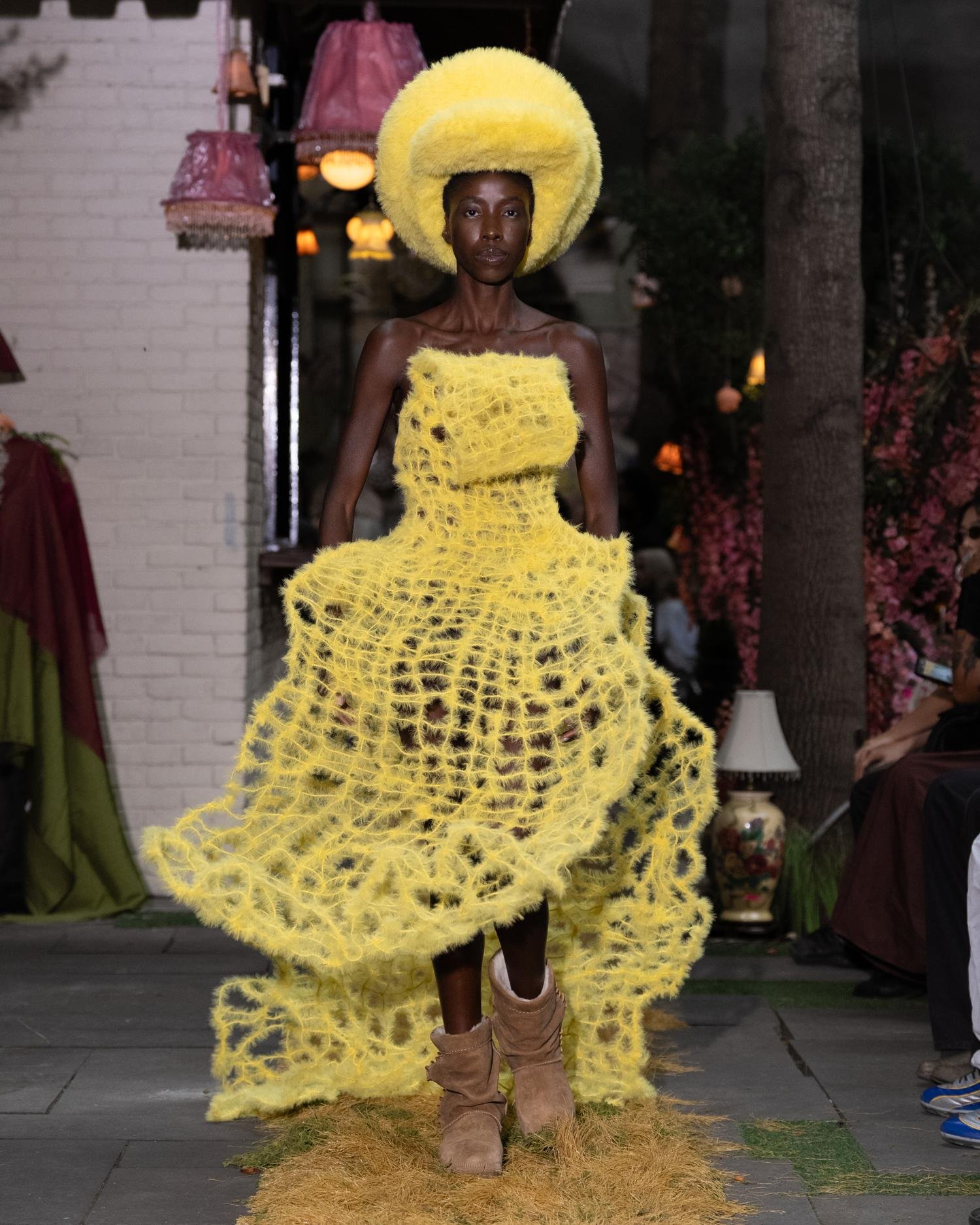
Romanian folklore meets experimental textile design in PIPENCO’s Muma P?durii collection. Named after the “Mother of the Forest”, the collection explores femininity, protection and the tension between softness and strength through hands-on techniques and unconventional materials. In this interview with FAULT Magazine, PIPENCO discusses the inspiration behind the designs, the realities of showing at New York Fashion Week and finding space to switch off.
Words: @theefashionmix
Image credit: Colin Savercool
What’s the name of this collection and what inspired you?
The collection is called Muma P?durii, which translates to “Mother of the Forest.” She is a figure from Romanian folklore who has traditionally been portrayed as this frightening, shapeshifting woman who lives deep in the forest. Growing up, you hear these stories almost as warnings, but I wanted to look at her differently.
For me, she became a symbol of protection. She is frightening because she is powerful, and she protects the forest and punishes those who disrespect it. I started thinking about the way strong women are often perceived in a similar way. Especially as a woman working in fashion, being direct, ambitious or protective of what you have built can sometimes be interpreted as being difficult or harsh. So throughout the collection, I wanted to explore that tension between softness and strength, beauty and fear, and how the same woman can embody all of those things.


What should designers know about showing at NYFW? What advice would you give?
I think the biggest thing is understanding that a show is much more than the ten minutes people see on the runway. There are months of work behind it, and as an independent designer you are constantly problem solving with the venue, casting, production, fittings, press, partnerships and budgets, while still trying to protect the creative idea.
My advice would be to know why you are showing. You don’t need to create a runway show just because you feel like that is what a fashion brand is supposed to do. It should have a purpose for your brand and give people an experience they couldn’t get from simply seeing the clothes online.
I would also say things will go wrong. Every season something happens that you could never have predicted, so you have to become very good at adapting without allowing the audience to see the chaos behind it. Sometimes the unexpected parts actually make the show better.
What kind of person do you envision wearing PIPENCO?
I don’t really design with one specific person in mind. I think the PIPENCO person is someone who enjoys being seen and doesn’t take fashion too seriously. There is always something playful or slightly strange about what we make, even when the story behind it is quite emotional.
I love seeing completely different people wearing the same piece in their own way. Someone might wear one of our huge hats with a very simple outfit, while someone else will wear PIPENCO completely head to toe. I think what connects them is confidence and curiosity. They aren’t looking for clothes that help them disappear.


What’s your favourite part of the design process? Is there anything unique about the way you’re creating the garments?
My favourite part is developing the textiles because that is usually where the collection really starts becoming its own world. I begin with research into Romanian culture, traditional clothing, folklore, old films, objects or artists, and then I connect that research to something happening in my own life at that moment.
A lot of our process is very hands-on. We work with knitting, felting, knotting, oversized proportions and unconventional materials, and many pieces are developed directly on the body rather than completely planned on paper first. I like when you can see the hand of the person who made something. I don’t want everything to feel perfectly manufactured.
We also work with existing and discarded materials whenever possible. I’ve always been interested in taking something that already has a history and transforming it without completely erasing what it was before. Those imperfections often become the most interesting part of the garment.
What is your FAULT?
I probably burn out at least once a week. I can get so consumed by work and fashion that eventually my body and brain just tell me to stop. I’m trying to get better at accepting that instead of fighting it or feeling guilty about it.
When it happens, I try to completely disconnect and find things to do that have nothing to do with fashion at all. I think having a life and interests outside of the industry is really important for me because it gives me the space to reset and eventually come back to the work with a clearer mind.