
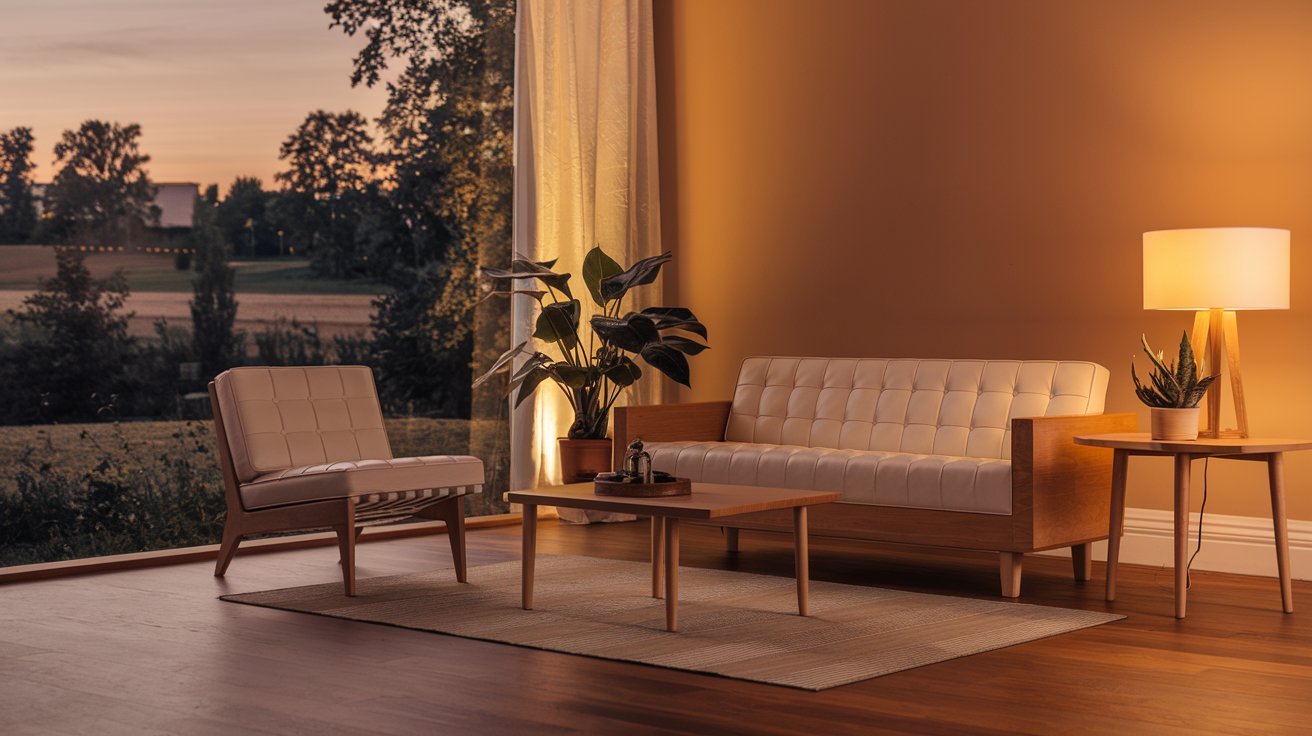
The right floor lamp can completely change how a living room feels, from creating a warm evening glow to highlighting a favorite reading corner.
These Living Room Floor Light Ideas combine style and function, helping you choose lighting that looks beautiful while making your space feel more comfortable, layered, and inviting.
1. Go Sleek With an Arc Floor Lamp

An arc floor lamp is a smart choice when you want dramatic lighting without installing anything on the ceiling.
Its curved design can extend over a sofa or chair, creating focused illumination while adding a polished contemporary touch.
Simple steps:
- Place the base beside or slightly behind your sofa.
- Position the curved arm over the seating area.
- Choose a warm white bulb for a cozy atmosphere.
- Keep surrounding furniture relatively simple so the lamp stands out.
Tip: Choose a lamp with a wide, adjustable shade if you want both decorative impact and useful reading light.
2. Add Warmth With a Tripod Floor Lamp

Tripod lamps bring architectural interest to an otherwise simple living room. Their three-legged structure feels relaxed yet intentional, making them especially useful in modern,
Scandinavian, farmhouse, or transitional interiors where texture and shape matter.
Simple steps:
- Select a location near an empty corner.
- Pair the lamp with a neutral fabric shade.
- Angle the light toward a seating or display area.
- Balance the corner with a plant, basket, or small side table.
Tip: Avoid placing a tripod lamp directly in a major walkway where the legs could become an obstruction.
3. Create a Cozy Reading Corner

A floor lamp can turn an unused corner into a comfortable reading nook with very little effort.
Look for a design that provides directed light without overpowering the softer ambient lighting throughout the rest of the room.
Simple steps:
- Position a comfortable armchair near a wall or window.
- Place the floor lamp behind or beside the chair.
- Add a compact side table for books and drinks.
- Layer the area with a cushion or throw.
Tip: An adjustable-head lamp is particularly useful because you can direct light precisely where you need it.
4. Choose a Sculptural Statement Lamp

Sometimes lighting should function as décor first and illumination second.
A sculptural floor lamp can become a focal point, especially in a neutral living room where an unusual silhouette adds personality without requiring additional wall art.
Simple steps:
- Identify a visually quiet corner.
- Select a lamp with an interesting silhouette.
- Keep nearby accessories understated.
- Use warm lighting to soften the sculptural shape at night.
Tip: Treat a statement lamp like artwork and give it enough surrounding space to remain visually noticeable.
5. Bring in Natural Texture With a Rattan Lamp

Rattan, woven fiber, and natural wood floor lamps can instantly make a living room feel warmer.
They work particularly well with beige upholstery, natural wood furniture, linen fabrics, and earthy decorative accents.
Simple steps:
- Pick a corner near natural-textured furniture.
- Choose a woven shade with an open pattern.
- Add complementary materials such as wood or jute.
- Use a soft bulb to emphasize the texture.
Tip: Repeat the lamp’s natural material elsewhere in the room so it feels connected rather than randomly placed.
6. Keep It Minimal With a Slim Floor Lamp

Small living rooms do not need oversized lighting.
A slim floor lamp provides useful vertical illumination while taking up minimal floor space, making it a practical option for apartments and compact seating arrangements.
Simple steps:
- Measure the available floor space before shopping.
- Choose a narrow base and streamlined profile.
- Place it beside a sofa, console, or accent chair.
- Keep the surrounding area visually uncluttered.
Tip: A tall, slender lamp can draw the eye upward and help a compact room feel more vertically balanced.
7. Make a Corner Glow With an Uplight

Uplights direct illumination toward the ceiling or upper wall, creating soft reflected light rather than harsh downward brightness.
This makes them excellent for relaxed evenings when you want atmosphere instead of intense task lighting.
Simple steps:
- Position the lamp in a darker corner.
- Aim the light toward a nearby wall or ceiling.
- Combine it with table lamps or ceiling lighting.
- Use a warm bulb for a softer nighttime effect.
Tip: Place the uplight near textured walls or architectural details to create attractive shadows and depth.
8. Try a Modern Pharmacy Floor Lamp

Pharmacy-style lamps offer a practical combination of classic character and adjustable functionality.
Their flexible heads make them useful beside sofas, desks, or chairs while their simple metal construction works with both traditional and contemporary décor.
Simple steps:
- Place the lamp beside your primary seating.
- Adjust the head toward your reading or activity area.
- Match the finish with existing metal accents.
- Keep the rest of the lighting slightly softer.
Tip: Choose an adjustable design when your living room serves multiple purposes throughout the day.
9. Layer a Floor Lamp Behind the Sofa

The space behind a sofa is often overlooked, yet it can be an ideal location for a tall floor lamp.
This arrangement adds height and creates a gentle glow behind the seating without consuming valuable side-table space.
Simple steps:
- Measure the gap between the sofa and wall.
- Select a lamp with a compact base.
- Place it where the switch remains accessible.
- Check that the shade is visible without overwhelming the sofa.
Tip: A lamp with a fabric shade can soften the area and make the sofa feel more visually anchored.
10. Add Elegance With a Modern Brass Lamp

Brass finishes introduce warmth and a subtle sense of luxury.
A brass floor lamp can look especially refined alongside cream sofas, dark wood, marble accents, or muted neutral palettes without making the room feel overly formal.
Simple steps:
- Identify existing metallic finishes in the room.
- Choose brushed, antique, or polished brass accordingly.
- Position the lamp near a statement chair or console.
- Repeat small brass accents elsewhere for cohesion.
Tip: Use brass sparingly. One strong lighting piece often creates more impact than several competing metallic accessories.
How to Choose the Right Floor Lamp for Your Living Room
Before buying a lamp, think beyond appearance.
The best lighting choice depends on the room’s size, furniture arrangement, ceiling height, existing fixtures, and how you actually use the space.
A beautiful lamp can still feel wrong when its scale or brightness does not suit the room.
Simple steps:
- Decide whether you need ambient, task, or accent lighting.
- Measure the area where the lamp will sit.
- Consider the height and width of nearby furniture.
- Select a bulb color that complements the room’s mood.
- Check whether the lamp has adjustable brightness or direction.
Tip: Layer several light sources at different heights instead of relying on one bright fixture. This usually creates a more comfortable and sophisticated living room.
Small Details That Make Floor Lighting Look Better
Good lighting design is not only about choosing an attractive lamp.
Placement, bulb temperature, shade size, and surrounding décor can determine whether the finished result feels balanced or awkward.
A few thoughtful adjustments can make an affordable floor lamp look far more intentional.
Simple steps:
- Keep cords neatly routed away from walking paths.
- Avoid blocking artwork, windows, or architectural features.
- Match the lamp’s scale to the furniture nearby.
- Use dimmable bulbs where possible.
- Test the lighting at different times of day.
Tip: Step back and view the lamp from the main entrance to the room. This helps reveal whether it improves the overall composition rather than simply looking attractive up close.
Final Thoughts
The best Living Room Floor Light Ideas do more than brighten a dark corner. They add height, atmosphere, texture, and personality while making everyday spaces more functional.
Start by identifying what your room lacks—focused reading light, a softer evening glow, or a decorative focal point—then choose a floor lamp that fills that specific role.
Simple steps:
- Identify the room’s lighting problem first.
- Choose a lamp style that complements your existing décor.
- Measure the available space before purchasing.
- Layer the new floor lamp with other light sources.
- Adjust placement until the room feels balanced from multiple angles.
Tip: Prioritize both aesthetics and function. The most successful floor lamp is one that looks stylish during the day and makes the living room noticeably more comfortable after sunset.