This 1963 Board Game is a Surprisingly Important Part of Godzilla History (& You Won’t Guess the Reason Why)
Over his seventy year existence, Godzilla‘s likeness has graced virtually every product imaginable. This ranges from the logical, like a never-ending parade of action figures, model kits, and miniatures, to the ridiculous, like ash-trays and salt-and-pepper shakers. But it wasn’t always this way: when Toho released the original Godzilla in 1954, it was an era largely before the advent of movie tie-in merchandise. Conventional wisdom was that in the time it took to develop a product, a movie could come and go from the public consciousness, leaving the product without a customer by the time it was ready for retail. Though Godzilla proved his staying power in the 1960s, throughout the fifties, the King of the Monsters was a stranger to the toy aisle, only officially appearing in magazines. That all changed with 1962’s King Kong vs. Godzilla, the film that cemented Godzilla’s status as a pop cultural icon and a franchise, but as a brand with major marketing appeal.
King Kong vs. Godzilla received a wide release in North America in 1963 through Universal, part of a licensing deal with Toho Studios (Universal owned King Kong, they lent him to Godzilla’s producers in exchange for American distribution rights). The film was a major hit in Japan and the United States alike, and toy company Ideal capitalized in the fastest, easiest way they could: a board game. Ideal’s Godzilla game hit shelves in 1963, along with a near-identical King Kong board game. Both represent the earliest officially-licensed toys of either character ever made, and are today highly sought-after by collectors. Later this month, Heritage is set to auction the Godzilla Game in rare complete condition. At the time of writing, there are sixteen days left to bid, and the auction has already attracted a price of almost four hundred dollars — a testament to highly prized the game is among historically-minded Godzilla collectors.
Why This Forgotten Board Game Might Be the Most Important Godzilla Toy Ever Produced
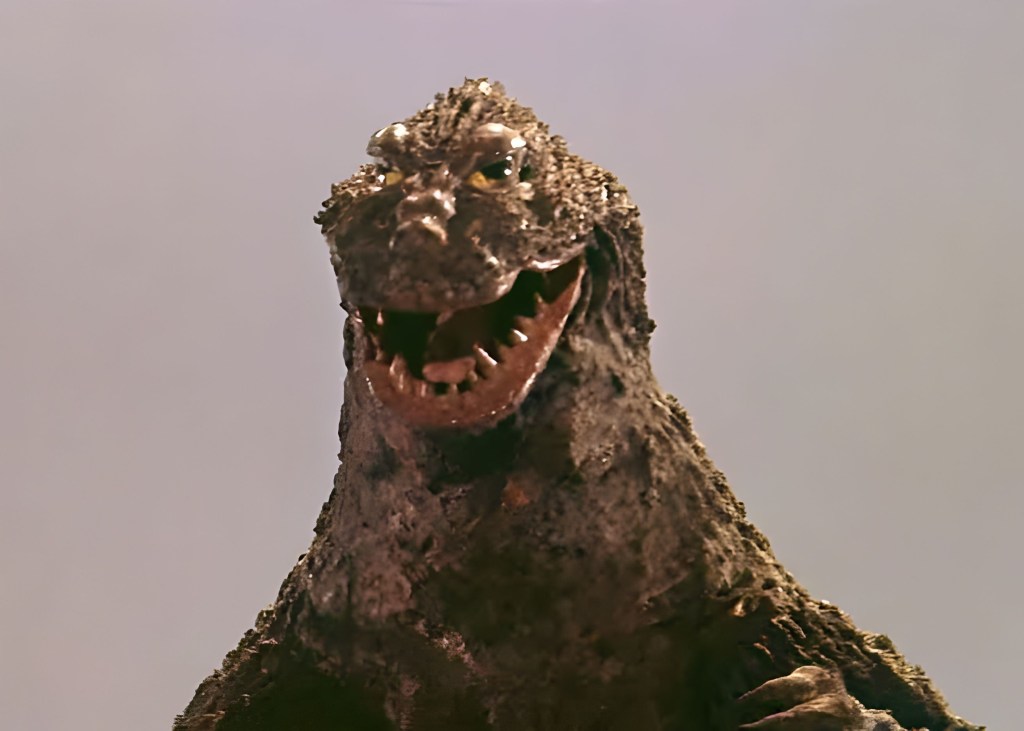
By and large, collectors don’t prize the Godzilla Game strictly on its own merits. The game’s incredible packaging, featuring a painted image of Godzilla spewing his radioactive breath on the remains of a ruined city, is certainly a bonus, but the appeal of the game is really its historical significance. It was the game’s popularity that spurred model kit manufacturer Aurora to add Godzilla to their beloved “Monsters of the Movies” range in 1964. The Aurora Kit was the first ever figural depiction of Godzilla, and is credited by many as inspiring Japanese toy company Marusan to produce its first Godzilla action figure. The Marusan line represents the beginning of a near-continuous deluge of Godzilla action figures produced for the sixty-two years since. Today, some of the most popular of those Godzilla figures are still being made in the same six-inch scale, soft-vinyl standard Marusan set. Ideal’s Godzilla Game is the domino that set all this into motion. While it can be argued that someone would absolutely have realized the potential for Godzilla toys sooner or later, without this toy, it wouldn’t have happened when it did.
The game itself is simple, with gameplay limited to using a spinner to move colored pieces across a board. The pieces lack specific theming, a reminder that the game was rushed out to capitalize on King Kong vs. Godzilla while it was still fresh in kids’ minds. The spinner and board feature artwork of Godzilla, with the spinner’s art identical to that on the packaging, though cast in an orange-red color. The board features four additional, spectacular pieces of artwork depicting Godzilla’s rampage across the city. One, with the Chrysler Building looming in the background, confirms Godzilla’s target as New York, anticipating the real Godzilla’s first encounter with the city five years later. The other three scenes show Godzilla attacking an electrical works, a railroad yard, and an oil field, and feature a relatively inconsistent depiction of Godzilla from scene to scene. On some art, he resembles the 1962 King Kong vs. Godzilla suit, in other images, he looks more akin to the original 1954 film. The players’ goal is cross a city under attack by Godzilla in order to reach the Rocket Launch Area, so that they can fire the missiles at the radioactive monster and end his rampage — not that this has ever worked in a real Godzilla film.
The Collecting Legacy of Ideal’s Godzilla Game
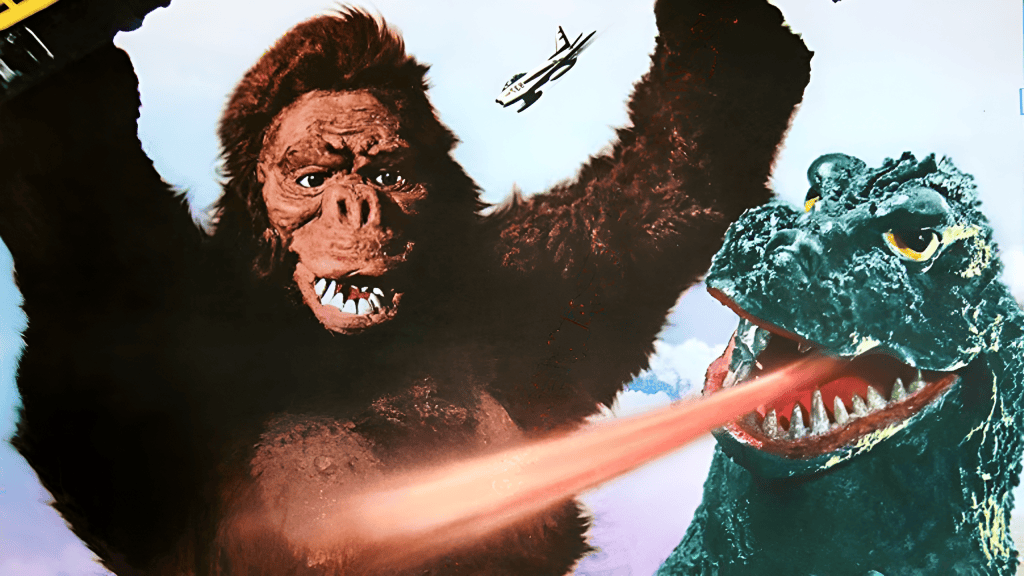
In the decades that followed, Godzilla board games have become a perennial piece of merchandise in the United States and Japan alike. The most collectible of these later games is Mattel’s 1978 Godzilla Game, where players try to navigate their rocket-ships around a spring-loaded plastic Godzilla that surge out of the 3-D game board to attack. The Mattel game is more elaborate than its Ideal predecessor, and comes from a brief late-seventies American Godzilla merchandising push that also gave collectors all-time grails like the Shogun Warriors Godzilla and Rodan and the repackaged import Godzilla’s Gang soft vinyl figures. In the wake of a similar domestic Godzilla merchandise push today, numerous classic board games have been redressed with Godzilla theming. This ranges from the logical (Jenga) to the surprisingly well-executed (Clue) to the obligatory Monopoly.
All of these are more elaborate than the original Ideal game, and their gameplay may be more intricate, but the 1963 Godzilla Game will always have one thing going for it: historical significance. The 1960s were a turning-point decade for modern toys, marking the beginning of a two-decade transition into TV and movie toys’ market dominance. At the time of manufacture, the Ideal Godzilla Game was an experiment, with Louis Marx and their army-man style figures the only other major company investing heavily in licenses. Like King Kong vs. Godzilla, the Godzilla Game was a sign that Godzilla was here to stay, a character with enough lasting impact to have legions of fans ready to pay hundreds to own decades-old collectibles like this one.