Tokyo: Milcho Manchevski on his Competition Film, Blacklisting and the Ills of Neo-Social Realism
Returning to the Tokyo International Film Festival with Sister Brother Manhole Cover, another dark comedy four years after Kaymak played in competition, Milcho Manchevski appears to have lost none of his uncompromising attitude, his perceptiveness, nor his wry humor.
Splitting his time between his native Macedonia and New York, the 67-year-old director, writer, photographer, artist and educator has a resume to match his protean talents: a seminal 1991 music video for Arrested Development’s Tennessee; his feature debut Before the Rain, landing a Golden Lion at Venice and an Oscar nomination; directing a first-season episode of HBO’s The Wire.
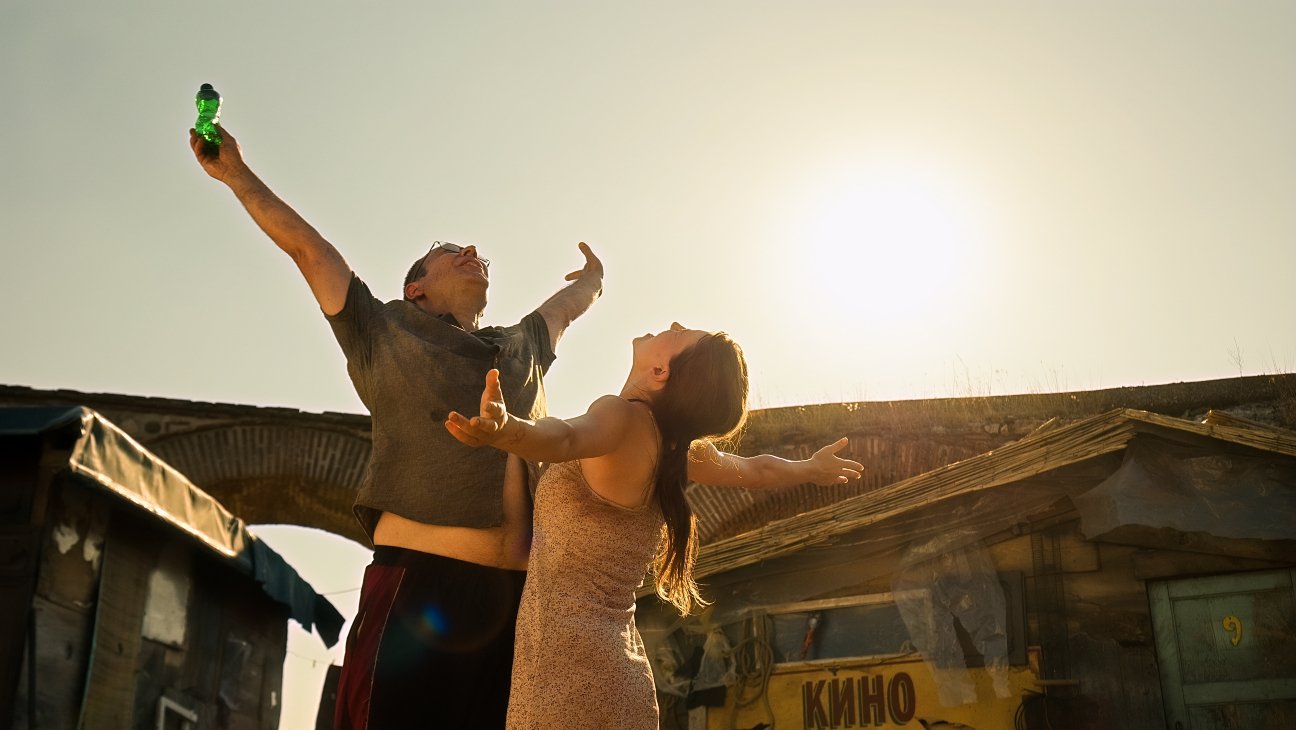
Sister Brother Manhole Cover, his eighth feature which had its world premiere in Tokyo on Oct. 30, meditates on fraternal love at society’s margins, motherhood and the wealth gap.
Manchevski sat down with The Hollywood Reporter before his film bowed at the festival to talk about being blacklisted, the ubiquitous presence of mothers in his films, neo social realism and why he made his first documentary feature despite his deep suspicions of the genre.

‘Sister Brother Manhole Cover’
Tokyo International Film Festival
To start, where did the idea for this film come from?
I was just toying with stories and seeing how far I could take them. I wanted a story about a love that knows no boundaries but isn’t erotic – so, love between a sister and a brother. There are a lot of Macedonian folk songs about sisterly love that are really interesting, really profound. Some of them are disturbing – disturbing in how dark they can go in their devotion. So that was the embryo. But I also wanted to talk about what I think is going to be the central issue for society in the years to come: the wealth gap. The haves and have-nots, and how that sense of unfairness is going to drive society, and already is. But I didn’t want to do it in a pontificating, lecturing way, where the message is pretty much the only thing you get out of a film. Approaching it as a satire and as a tender character study at the same time felt like it would give us enough of a foundation for something beautiful. Because if there’s no beauty, why do art? I feel like we’re witnessing a lot of message-driven films, which is fine as long as they’re supported by something more profound.
How do you think that is impacting filmmaking?
It’s become a requirement, a style, in the industry in general, with film funds and film festivals. I grew up with communism, with social realism, so to be witnessing this neo-social realism is a little sad. There’s so much you can say and do and create, and to limit yourself to a pamphlet, it’s fucking sad. And now that you’ve got me going: that goes hand in hand with judging films by non-film things: Judging them by what surrounds the film, who the filmmaker is, where they come from, their lifestyle, the political context; everything but the film itself. Ideally, as a viewer, I don’t want to know anything about where a film came from or who made it. I just want to see it, credits to credits. That’s the beauty.
In what ways did growing up surrounded by social realism affect your own art?
In many ways it was great growing up in [then] Yugoslavia, because it was open to the world. I saw Rashomon on TV. I saw Bertolucci’s Novecento on TV, Orson Welles, and then at the movies I grew up on spaghetti westerns. But then there was the Yugoslav production of partisan movies – Yul Brynner playing one of Tito’s partisans [The Battle of Neretva, 1969]. I guess I became aware of censorship very early on, and that made me sensitive to censorship in any form, whether it’s Hollywood, record labels or the government. It wasn’t monolithic and it wasn’t static. You’d have films that were approved for production and then, once completed, banned – because opinions changed, the people in power change. There was the famous, or infamous, Black Wave at the beginning of the ’70s – filmmakers like Dušan Makavejev, Aleksandar Petrović and Živojin Pavlović, who made brilliant films that were widely recognized with awards in Berlin, Cannes and so on… And then, overnight, they were banned. They couldn’t work in Yugoslavia anymore. Though they didn’t go to jail.
When we spoke the last time you were in Tokyo, I asked about your recurring theme of mothers, and you said it just crept up on you and wasn’t planned. But we’re back with mothers again.
It’s there in every single one of my films. I have a book of fiction called “The Ghost of My Mother.” But it’s not as if I set out to say, now I’m going to talk about mothers. But since it’s obvious: look, my mother died when I was six and a half, so I’m sure it goes back to that. And not only that she died, but that for years I refused to acknowledge it, which is almost as bad as the fact that she had died. I’m sure that’s making its way through my thinking in ways that are not conscious. But also, mothers are such fantastic dramatic material. Like the two mothers in this film, the one in jail, and the other one.
The blind mother.
With the blind mother, the idea was to toss it up, to play – not so much consciously, but these are all great tools in front of you, archetypes. The Sibyl: the prophet who senses things even though she’s blind, and she’s threatening. And she’s also the witch from Hansel and Gretel. But then you turn it upside down. I put it in the story, put it on paper, and as it develops I follow it…Now that we’re talking, this is the first time I’m trying to rationalize things, because I do them in an intuitive kind of way. But disciplined. Intuitive doesn’t mean frivolous; it just means you don’t have to explain it to yourself – until you confront someone who has seen the film. You hone it by writing and rewriting and rehearsing, and the themes come up to the surface, even if you didn’t plan them.
How do you think about portraying characters like this? They’re sympathetic, but they’re also criminal; she’s manipulative, though in the service of her brother.
They do a lot of bad things. But that’s what’s interesting. The contradictions of life. I think we’re all contradictory, some more, some less. But I think it’s fair to portray people that way. It’s more honest, and it’s certainly more inviting. That’s what art – or at least narrative art – should be about: exploring what it’s like being human, with all our faults. Eating the apple, right?
Films like these still struggle to get funded and this one is a multi-country co-production. Has much changed since you started?
Yes. I was blacklisted. This film was initially financed four years ago. Then, because I reported corruption at the film agency twice – in 2020 and 2022 – that went all the way up to the prime minister. I was blacklisted and my projects were frozen. Kaymak was blocked as well, even though it was finished. It was eventually unblocked – not released in theatres, but they paid the final instalment so we could pay the crew. And then there was a smear campaign in the government press. They filed criminal charges against me. But what I reported was confirmed by the Anti-Corruption Commission and by the State Audit Office. I got support from Transparency International, Whistleblowing International and the Venice Film Festival. And then I won two court cases against the agency.
Cases they brought against you?
No, I sued the film agency. And that’s how the funds for this film were eventually released. And the investigation based on my corruption reports is still making its way through the system. I’ll give you an example: there were 39 projects that were partially or fully funded and never made. Nobody cares. They split the money.
And you made Good People, a documentary about the Macedonian nightclub fire. I’ve only had a chance to see the trailer.
One, I needed a creative outlet while I was talking to lawyers and smoking on my balcony. Two, I felt for the people of Kočani. It was a terrible tragedy, a disgusting tragedy. And I wanted to hear them talk about the moment when you’re looking death in the eye. It wasn’t about commemorating things; it was about something very active. I found people who were trapped, who were at the bottom of the pile, who felt they were burning, and asked them: what is it like to look death in the eye? What did you think? And I got interesting answers. Some said, I just want this to end; I feel bad for my family, but I’ll be fine. One admitted he was clawing over other people to get out. Then there were the heroes, who went in multiple times, into the fire, not breathing, hurting themselves, but saving people. And then the families of the victims. We shot it only a month after the fire. And I decided to make it very spartan, very minimalist and austere, to force us to face the people.
How did you fund it?
I paid for it myself, because I couldn’t access the agency funds, but also because I didn’t want any chance of it being politicized – the trials and the aftermath have been politicized. We were editing the two films at the same time. Manhole Cover is a serious film, but it’s also funny. This one is not funny; it’s very dark. But in my head and in my heart, working on one offset the other and refreshed the other. It was exhausting, but it was sort of exuberant, doing both. You step away to work on the other one, and then you come back with a slightly better perspective. They’re coming out within two months of each other. Good People premiered in Sarajevo, then some other festivals, then had a theatrical run in Macedonia, which I didn’t expect, given the nature of the film. It went on TV. It’s playing in Torino next month. So, you see: they tried to shut me up, and instead I made two films.
That’s your first feature-length documentary?
Yes. You know, I’m suspicious of the documentary genre.
You can’t just leave that hanging.
Fuck [laughs]. A couple of things. Sometimes I’ve seen poor filmmaking hide behind important subjects. We celebrate the subject, rightfully so, but the talent and the effort that went into making that particular film are overlooked, and that’s sort of unfair. Then there’s claiming you’re delivering the truth. The truth is often more complex than what you can deliver in a single film. There’s a certain pomposity to making a documentary: I am handling the truth. No, your rendition of the truth, which could be fair, could be brilliant and profound, but it’s just a rendition. At the same time, some of the best films in the world are documentaries. I guess it’s the earnestness and the pomposity that bug me.
Can you talk about your next project?
I do have one. Usually, when I have an idea, I pick it up and run with it until it’s released, whether it takes a year or seven years, as with Dust. This next one, if it happens, God willing, would be the first one I’ve had forever and kept coming back to. Now it’s opened up to me. It’s a story with a happy ending about a guy who comes home to die and learns how to forgive himself. It’s called Homecoming. It cracked open for me when I went back and simplified the story, the emotions and the structure; and all of a sudden it was working. But I’ve been circling around it for a very, very long time.
How long?
Thirty-plus years. I guess I had to be old enough to be able to do it.