A Rare Action Comics Cover Without Superman Is About to Sell at Auction — and It Stars One of DC’s Oldest Heroes — Explained
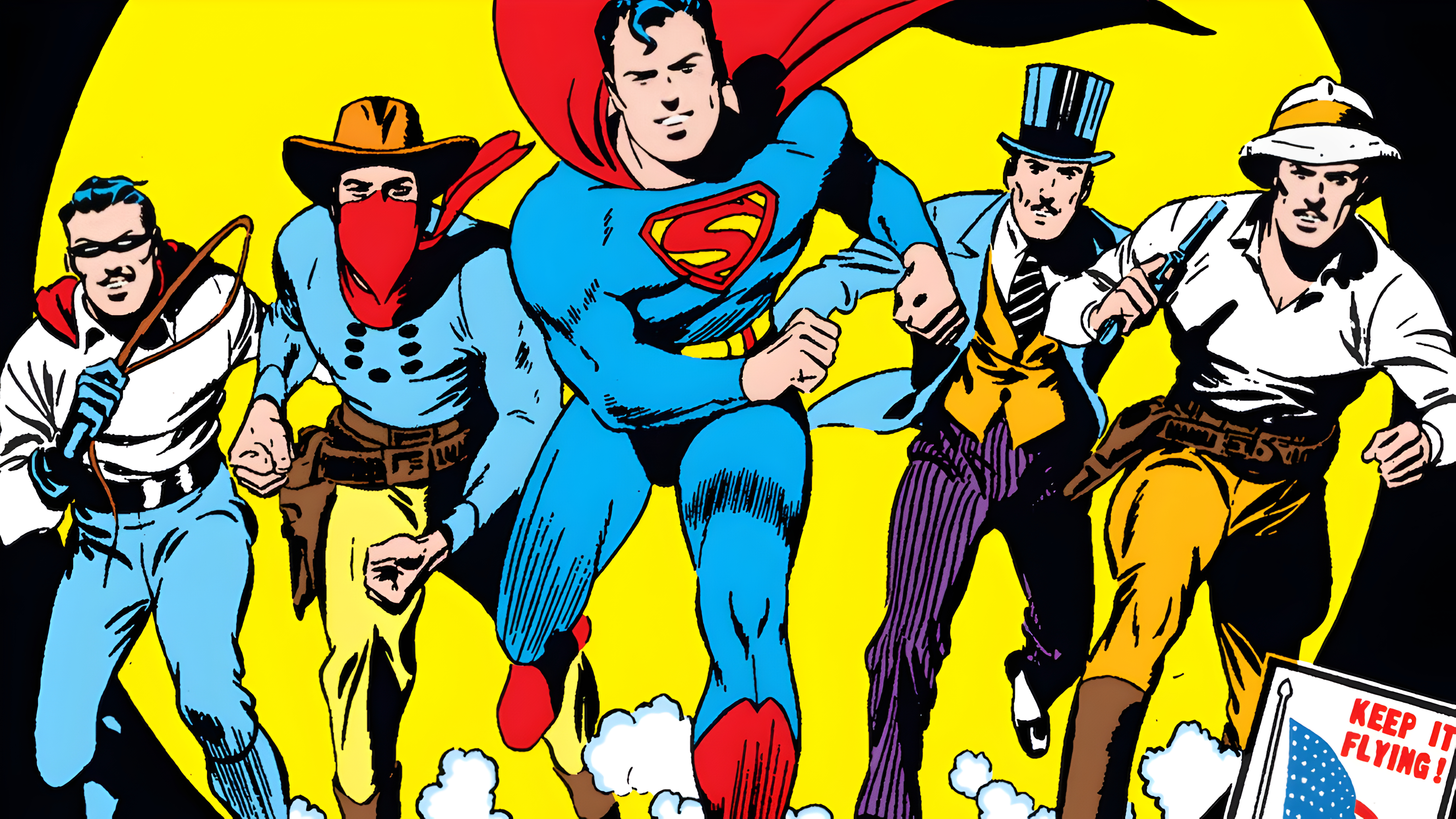
Since he exploded onto the cover of its first issue in 1938, Superman has been synonymous with Action Comics. However, Superman has always shared the Action Comics spotlight with other DC heroes, ranging from fan favorites like Green Arrow and Black Canary to deep cuts like Congorilla and the Human Target. You wouldn’t know it from looking at Action Comics‘ covers, which since the early forties have featured Superman prominently or exclusively (website Key Collector notes that 1940’s Action Comics #18 was the last cover not to feature Superman until issue #602 in 1988). But this wasn’t the case for the comic’s earliest years, when dynamic scenes of adventure and, yes, action from artists like Leo O’Mealia were just as often the cover story. In this era, Superman’s co-stars were also of a less super-heroic variety, and even a die-hard comic book reader would be hard-pressed to tell you anything about Pep Morgan or Clip Carson.
The exception is a hero who, though certainly less well-known than Superman, debuted right alongside him in the pages of Action Comics #1, and has remained an important part of the DC Universe since: Giovanni Zatara, DC’s take on then-popular comic strip hero Mandrake the Magician. Though best known today as the father of the Justice League’s resident magician, Zatanna, Zatara was a prominent figure in DC’s golden age, appearing regularly in the pages of Action Comics and later World’s Finest Comics until 1950. Despite this, Zatara seldom made the cover, save for in those early years of Action Comics, when twice, Superman stepped aside to put Zatara in the spotlight. Zatara is featured on two covers, 1939’s Action Comics #12 and #14. This week as part of its Comic Book Select Auction, Heritage has available a 3.5 CGC (Certified Guarantee Company) graded copy with the bidding price already at $2.5k. The copy is one of only four in existence in this condition, with only twenty-seven known to exist in higher grade. The issue is so old that its cross-sell advertising upcoming DC comics features Detective Comics #27, the first appearance of Batman.
Zatara’s Origins & Golden Age History

Zatara’s earliest adventures eschew providing an origin for the hero, presenting him to readers as a stage magician who possesses legitimate supernatural abilities. His full origin would not be given until 1980’s DC Special Blue Ribbon Digest #5, when Gerry Conway would provide Zatara with a suitably golden age-styled background. In this issue, Conway details that Zatara was the grandson of a famous stage magician, Luigi Zatara, inspired to pursue the art of stage magic after being gifted his grandfather’s tools of the trade. Discovering a hidden book passed down through generations of the Zatara family, he learns that he is the descendant of Leonardo Di Vinci, and that he possesses real, latent magical abilities. This magic is activated through speaking spells backward, a trademark of Zatara that is again better recognized for its continued use by his daughter Zatanna. Zatara vows to use his magical abilities to fight for justice, and becomes the stage magician / mystery man super-hero that we meet in the pages of Action Comics #1.
Here, Zatara is investigating a string of robberies committed along the railroad, perpetrated by a villainess known as “the Tigress.” She proves a match to Zatara, who foils her scheme but fails to capture her at the end of the issue. Tigress would reappear as a foe to Zatara in a further eleven issues of Action Comics, functionally serving as the hero’s nemesis. The character is, confusingly, unrelated to the “Tigress” that Wildcat and the Justice Society of America fought (best known as the mother of Artemis Crock and Cheshire). Ironically, the better-known Tigress’s name was changed during the bronze age to avoid confusion, as she was introduced in the golden age as “Huntress,” with that name by then being used by a different DC super-hero.
In his hundred-odd golden age appearances, Zatara would fight few other recurring villains, instead facing off against the standard-for-the-time array of generic criminals and gangsters. Naturally during the war years, this would be supplemented by spies, saboteurs, and other Axis-affiliated threats. Throughout these appearances, Zatara had minimal contact with the larger DC Universe, and it would be the work of later writers to introduce retroactive continuity tying him to the All-Star Squadron and Batman. His All-Star Squadron appearances were limited to cameos in storylines featuring the team’s expanded roster. Taking from a story he wrote for Batman: The Animated Series, Paul Dini established in 2007’s Detective Comics #833 that Zatara was a friend of Thomas Wayne and later a mentor to Bruce Wayne, instructing him in escape artistry and stage illusion.
How Zatanna’s Silver Age Debut Reintroduced (And Overshadowed) Zatara
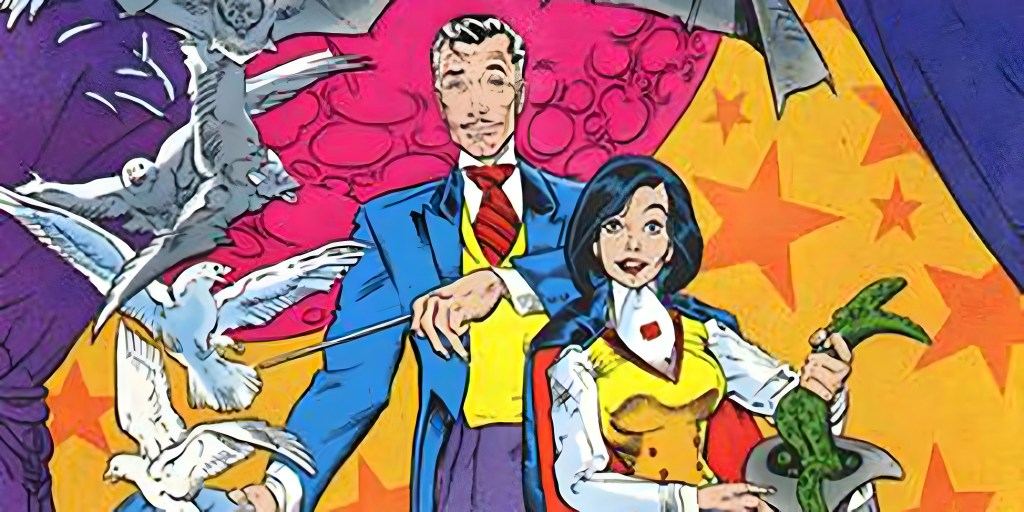
In 1964, Gardner Fox and Murphy Anderson introduced Zatanna Zatara in Hawkman #4, searching for her missing father. “Zatanna’s Search” would run through four other Fox-penned stories (in The Atom, Green Lantern, and Detective Comics) before culminating in Justice League of America #51. There, it is explained that Zatara fell under a curse while battling the sorceress Allura, one which doomed Zatanna to death if Zatara spoke to or even saw her. For her protection, he fled to the mystic realm of Kharma to protect Zatanna and discover how to lift the spell. Learning that her father was there, and unaware of the curse, Zatanna led the Justice League into Kharma to find him. Through the convoluted magic of silver age writing, the curse is lifted when the evil Allura is forced into conflict with her alternate-dimension “good” self, reuniting Zatara and his daughter.
Zatara’s subsequent pre-crisis appearances were limited predominantly to flashbacks and guest appearances in Zatanna-centric comics, as with a Gerry Conway-penned arc in Justice League of America #161-166 revealing the story of Zatara’s relationship with Zatanna’s mother, Sindella. Sindella is a member of a race known as Homo Magi, humans with innate magic abilities who lived in a hidden city in the mountains of Turkey. Shortly after Zatanna’s birth, Sindella faked her death and returned to her people. She was reunited with Zatara and Zatanna when an evil race known as the Hidden Ones threatened all Homo Magi, including Zatanna, and sacrificed her life to defeat them. He would remain in retirement until Swamp Thing #49, when John Constantine asked for his and Zatanna’s help and magic in defeating the entity known as “the Great Darkness.” During a seance, the Great Darkness kills fellow golden age footnote Sargon the Sorcerer and targets Zatanna, Zatara sacrifices his life to protect her.
Death hasn’t prevented Zatara from continuing to advise and protect his daughter, as he appears regularly to her as a ghost or vision. Zatara’s own adventures have been left to the golden age, with the most important part of his legacy now being the relationship he shared with Zatanna. In Sindella’s absence, Zatara worked to create a loving and stable home for her, and most writers characterize their relationship as positive, inspiring Zatanna to become the world-class magician and heroine that she is. Action Comics #14 provides a rare snapshot of a time before Zatara became a father, emblematic of a comic book universe in its earliest form. His quest for the Fountain of Youth and battle with Geas the Ugly may not be the stuff of comic book legend, but Zatara’s place in the history of DC Comics is assured by his daughter, a legacy any father would be proud of.