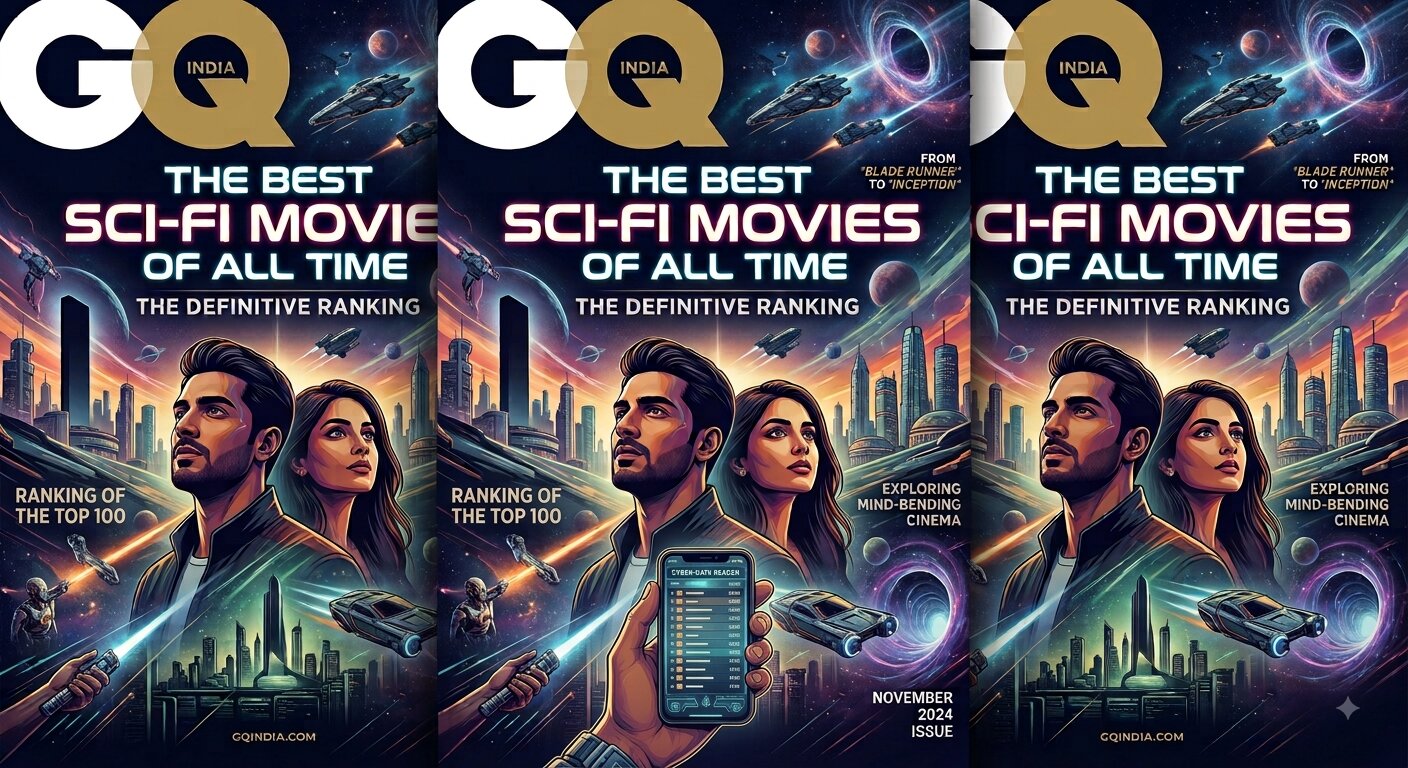
GQ India Unveils Definitive Ranking of the Best Sci-Fi Movies of All Time
Science fiction has long served as cinema’s most ambitious playground, a genre where filmmakers wrestle with humanity’s deepest questions while pushing the boundaries of visual storytelling. This week, GQ India joined the ongoing critical conversation with its own authoritative ranking of the 20 greatest science fiction films ever made, reigniting debates about which titles truly define the genre.
What Makes a Sci-Fi Film “The Best”?
Compiling a definitive list of the best sci-fi movies of all time is an exercise in balancing innovation, influence, and enduring relevance. Critics typically weigh several factors: groundbreaking visual effects that changed the industry, philosophical depth that transcends spectacle, cultural impact that resonates across decades, and narrative daring that expands what the genre can achieve.
GQ India‘s editorial team reportedly applied these criteria across cinema history, from silent-era pioneers to contemporary blockbusters. While the full ranked list remains the property of the publication, the exercise highlights how sci-fi criticism has evolved from dismissing the genre as mere escapism to recognizing it as cinema’s most potent vehicle for social commentary.
The Undisputed Titans
Certain films appear on virtually every credible best-of list, forming an informal canon. Stanley Kubrick’s 2001: A Space Odyssey (1968) remains the gold standard, its meticulous scientific accuracy and enigmatic narrative structure continuing to confound and inspire viewers over half a century later. Ridley Scott’s Blade Runner (1982) similarly transformed cyberpunk aesthetics while interrogating what constitutes humanity.
Andrei Tarkovsky’s Solaris (1972) and Stalker (1979) represent the genre’s philosophical peak, using speculative premises to explore grief, faith, and desire. These Soviet masterpieces demonstrated that science fiction could achieve the emotional and intellectual rigor of any art-house drama.
Modern Classics Reshaping the Canon
Recent decades have produced contenders that now sit comfortably alongside the old guard. Denis Villeneuve’s Arrival (2016) and Dune (2021) exemplify contemporary sci-fi’s ability to merge blockbuster scale with linguistic and ecological sophistication. Alex Garland’s Ex Machina (2014) and Annihilation (2018) brought chamber-piece intimacy to existential questions about consciousness and identity.
Christopher Nolan’s Inception (2010) and Interstellar (2014) demonstrated that high-concept narratives could achieve both commercial dominance and critical acclaim, while Bong Joon-ho’s Snowpiercer (2013) and Okja (2017) used genre allegory to dissect class stratification and corporate ethics.
International Perspectives Enrich the Conversation
An India-based publication’s ranking carries particular significance given the country’s evolving relationship with the genre. While Bollywood has historically approached science fiction cautiously—with notable exceptions like Koi… Mil Gaya (2003) and Robot (2010)—recent years have seen more ambitious efforts. The Tamil-language 2.0 (2018) and the upcoming Kalki 2898 AD signal growing technical confidence and narrative ambition.
GQ India‘s list reportedly acknowledges global cinema beyond Hollywood, potentially including landmarks like Japan’s Akira (1988) and Ghost in the Shell (1995), Germany’s Metropolis (1927), and France’s La Jetée (1962). Such inclusivity reflects a welcome shift from Western-centric film criticism.
The Streaming Era’s Impact on Canon Formation
Platform algorithms and binge-watching culture have changed how audiences discover and reevaluate older films. Titles that underperformed theatrically—like Blade Runner 2049 (2017) or Annihilation—find second lives on streaming services, influencing new generations of viewers and critics. This dynamic means “best of” lists now reflect not just initial reception but sustained cultural conversation.
Moreover, the proliferation of high-budget sci-fi series (Black Mirror, The Expanse, Foundation) blurs the line between cinematic and televisual storytelling, complicating traditional feature-film rankings. GQ India‘s decision to focus exclusively on movies represents a deliberate critical stance worth noting.
Why These Lists Matter
Beyond clickbait or prestige signaling, curated rankings serve a curatorial function. They guide viewers toward essential works, spark intergenerational dialogue, and document critical consensus at a specific moment. GQ India‘s list captures the genre’s status in 2026—acknowledging its past while making space for its future.
For Indian audiences specifically, such a list from a domestic luxury publication validates science fiction as serious cinema worthy of deep engagement, potentially encouraging more local filmmakers to tackle the genre with ambition and resources.
Looking Forward
As artificial intelligence, climate crisis, and space commercialization move from speculation to daily reality, science fiction’s role as society’s imaginative laboratory only grows more vital. The films that best diagnose our present and envision our possible futures—whether utopian or dystopian—will likely dominate the next decade’s best-of lists.
GQ India‘s contribution to this ongoing conversation reminds us that the best sci-fi movies of all time aren’t just entertainment. They’re cultural artifacts that measure how we see ourselves, our technology, and our place in the cosmos—questions that remain as urgent as ever.