Ancient gold ring found at Phetchaburi archaeological site
A gold ring believed to be around 2,000 years old has been found during work to recover skeletons and artefacts from the Don Yai Thong archaeological site in Phetchaburi.
The Fine Arts Department said the inscribed gold ring was discovered as archaeologists collected human skeletal remains and artefacts from an excavation pit in Ban Lat district.
Phanombut Chantarachoti, Director-General of the Fine Arts Department, said the work was ordered on 2 July after the site was affected by groundwater, salinity and damp conditions during the rainy season.
Officials said those conditions could speed up the deterioration of the skeletons and cause bronze artefacts to corrode, making it necessary to move the remains and objects for scientific conservation.
Ancient Brahmi script found on ring

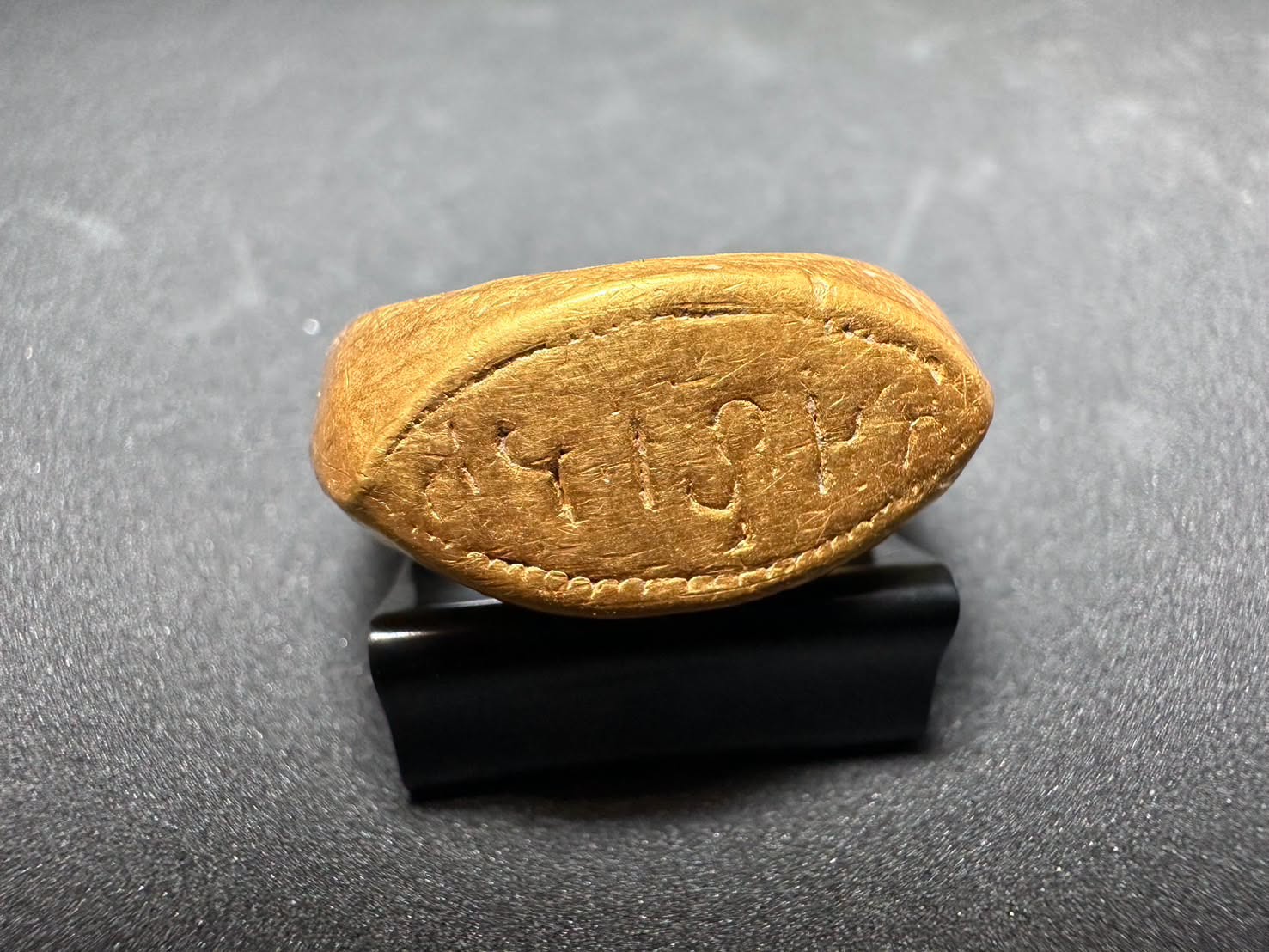
Two gold rings were found with skeleton number 4. One of them has ancient script engraved on the head of the ring, suggesting it may have been used as a seal ring. The second ring has no decoration.
Dr Uthen Wongsathit, from the Faculty of Archaeology at Silpakorn University, and ancient language specialists from the Fine Arts Department initially believe the inscription is ancient Indian Brahmi script.
The ring is thought to date from around the 5th to 7th Buddhist centuries, or approximately 1,900 to 2,100 years ago.
The inscription has been read as “Pusarakitasa”, meaning “belonging to Pusarakita”. Experts said the name may refer to a person protected by the Pushya lunar mansion or star. They also believe the owner may have belonged to the Vaishya caste, which was associated with merchants.
Brahmi script has previously been found on seals and jewellery at archaeological sites in southern Thailand, including Khlong Thom in Krabi and Khao Sam Kaeo in Chumphon.
The two rings have been handed to the Phra Nakhon Khiri National Museum for safekeeping before further conservation and study.
The Fine Arts Department said skeletal remains are being recovered in two ways. Some are being collected piece by piece, while others will be lifted with the surrounding soil block to help preserve their condition.
A recently discovered skeleton, believed to be that of a child, is in a fragile condition and was found with a large bronze vessel placed around the middle of the body. It will also be lifted with the surrounding soil.