One of the Rarest Vintage Rodan Figures Just Surfaced, and It’s a Godzilla Collector’s Holy Grail
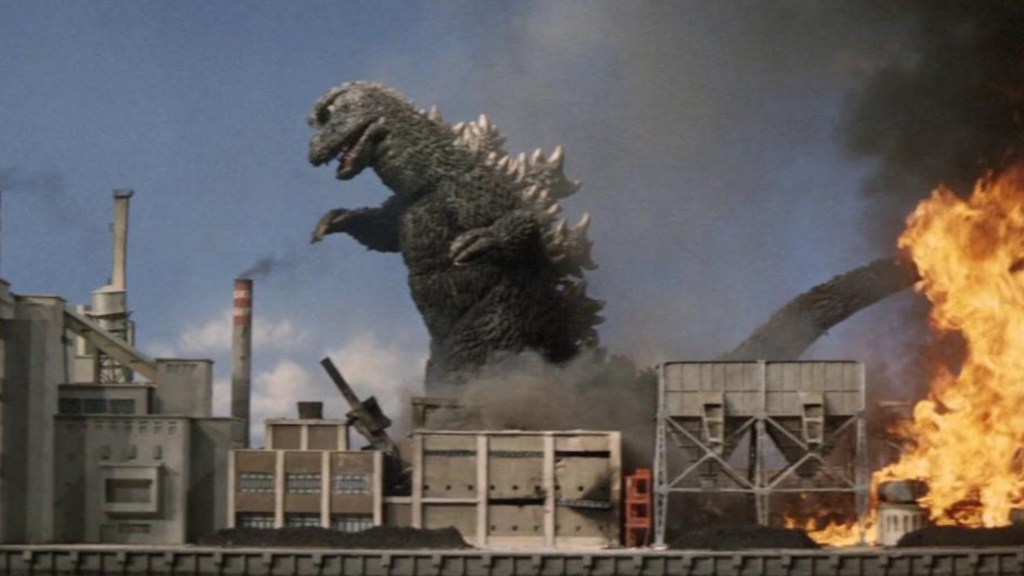
The 1962 release of King Kong vs. Godzilla was a record-breaking hit for Toho Studios, and helped turn their Godzilla franchise into a cinematic universe on par with today’s MCU. When King Kong vs. Godzilla proved almost as popular in the United States, American toy companies became the first to cash in on the King of the Monsters’s rising star. Ideal released a Godzilla board game in 1963, followed by Aurora’s addition of Godzilla to their popular monster model kit line in 1964. The kit’s success helped inspire the first Japanese Godzilla toyline in Japan later that year. These were an immense success, and turned Godzilla into an evergreen toy property that has remained on Japanese shelves virtually ever since.
It was a different story in America, where Aurora’s Godzilla kit (eventually joined by a Rodan and a King Ghidorah) remained the only American Godzilla toys for more than a decade. Godzilla returned to American shelves in 1977 as part of Mattel’s Shogun Warriors, and that figure is today one of the most sought-after Godzilla collectibles ever made. But even more coveted by kaiju collectors is Mattel’s follow-up figure, the 1980 Shogun Warriors Rodan. It came and went from retail in under a year, and today fetches three or four times the price of the already-expensive Shogun Warriors Godzilla. Boxed samples are vanishingly rare, especially in the near-mint condition of this Rodan on eBay now.
How the Shogun Warriors Came to America
In the nineteen seventies and eighties, it was a common industry practice for American manufacturers to buy the U.S. distribution rights for Japanese toylines, reimagining and repackaging them for domestic audiences. This spawned everything from nostalgic favorites like Mego’s Micronauts to massive, flagship properties like Hasbro’s Transformers. In 1977, it gave kids the “Shogun Warriors,” a group of unrelated robot figures from Japanese company Popy repackaged and sold together by Mattel.
Popy’s robot figures were based on popular giant robots from anime series of the era, and included a number of figures and vehicles at a variety of scales (three-inch, five-inch, and twenty-inch). The twenty-inch Shogun Warriors “Jumbo Machinders”are the best-remembered and most iconic figures in the line, especially the inaugural 1977 characters: Dragun, Raydeen, and Mazinga. Though stories vary as to exactly how it was decided (some, largely apocryphal, narratives say it was so that the hero robots had an “enemy” figure to fight), Mattel’s team determined they wanted to expand the line, and secured an additional license to join the Shogun Warriors: Godzilla.
Godzilla had become more popular than ever with American children due to the constant airing of the classic films on television (Godzilla vs. Megalon was even aired on prime-time in 1977, hosted by none other than John Belushi). With Aurora’s model kits discontinued, the Godzilla license was a potentially lucrative untapped niche. Godzilla was rushed to market for the 1977 Christmas season, with Mattel outsourcing the tooling to a Japanese company to ensure the toy made it to shelves in time for Christmas. That company was Bandai, and the 1977 Shogun Warriors Godzilla would be their first ever Godzilla toy. Beginning in 1983 and continuing into the present, Bandai would become the premiere manufacturer of Godzilla collectibles.
Why Mattel Added Rodan to the Shogun Warriors
The Shogun Warriors were a hit for Mattel, with four new robots added to the line in 1978 and 1979 – though no new kaiju were added to the line to join the top-selling Godzilla. There’s a simple reason for this: the robots were all reused tooling from the existing Japanese Popy figures, while if Mattel wanted a second kaiju, they’d have to invest in the entire production process from design to manufacturing themselves. Secondarily, the complex designs of many of Godzilla’s most iconic friends and foes posed an engineering challenge.
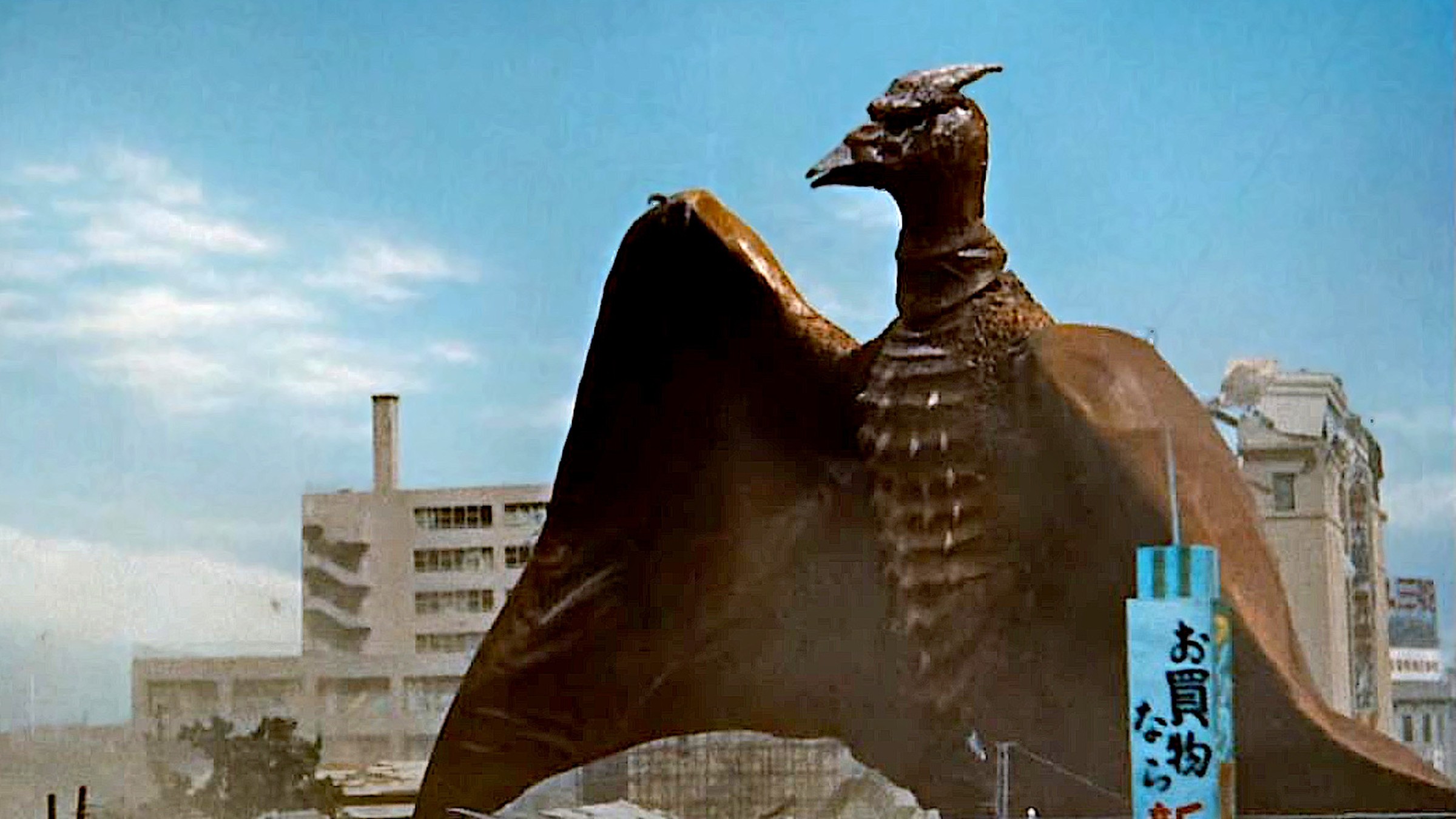
Still, the sales potential was too much to ignore, and in 1979, Mattel began design work on Rodan, the first and only character in the Shogun Warriors’ “World’s Greatest Monsters” spin-off line. Mattel’s Rodan is an impressive sight, boasting a wingspan of thirty-eight inches. He stands a little shorter than Godzilla, only about eighteen inches high. The sculpt is more movie accurate than Godzilla, with the armored chest and horned headsculpt immediately calling Rodan’s classic-era appearances to mind. Mattel’s Godzilla is noted for its liberties with the kaiju’s likeness, sporting green skin, smoothed-out spines, and decidedly round headsculpt.
The Shogun Warriors Godzilla is also noted for his action features, including a spring-loaded firing fist and push-tab radioactive breath. Rodan is given a similar feature, with a snapping beak controlled by a lever in the back of his head. His wings flap, and are made of a brittle plastic notorious for tearing or breaking from use. Rodan’s final action feature is grabbing talons, which one can only imagine snatched many a Hot Wheels car and G.I. Joe in their day.
What Makes the Shogun Warriors Rodan So Difficult to Find Today
Rodan was released in 1980, and was the final character produced for the Shogun Warriors line. Coming at the tail end of a toyline is always the recipe for a “holy grail” item, especially when it’s from a franchise as beloved (and collected) as Godzilla. Rodan was only on shelves for a year, compared to the four-year shelf-life of the original 1977 Shogun Warriors characters. This puts fewer of the toys in circulation to begin with, and couples with reduced orders from retailers and reduced purchases from parents and kids to make the toy ultra-rare today.
Loose, Rodan fetches $1k, and in box, $2k has long been the floor. In recent years, these prices have only risen, and now collectors can expect to pay between $4.5k and $6k for a Rodan in box. Collectible resource the Toy Collectors’ Guide puts great emphasis on this in their page on the Shogun Warriors line, denoting Rodan as “VERY tough to find.”
Finding a boxed sample in near-mint condition is, by this eBay seller’s own description, “like winning the lottery.” In an absolute dream scenario, they lucked into a fresh, never-opened case of these figures that never made it to shelves. If the price seems high, the listing is also keen to point out that one of these case-fresh Rodans has already sold for the full asking price – almost five hundred times the $16.88 he retailed for back in 1980.