new challenge toews
| | | |

New challenge: Why BT Toews wants to coach Gilas Women

The quest for a new challenge has led Burke “BT” Toews to coach Gilas Women. 

After decades in Japan where he helped shape its thriving women’s basketball scene, the 60-year-old mentor hopes to do the same in the Philippines, convinced that Gilas Women have what it takes to reach new heights. 

Toews takes over the coaching reins from Patrick Aquino, whose decade-plus tenure with Gilas Women saw the team achieve several milestones and multiple firsts.

Under Aquino, Gilas Women ruled three of the last four Southeast Asian Games, earned promotion to the Division A of the FIBA Women’s Asia Cup, and beat a non-Asian team for the first time when they stunned Colombia in the FIBA Women’s World Cup Qualifying Tournament in March.

While those accomplishments reflect a steady growth, Toews believes there is still another level for Gilas Women to unlock. 

“I’m very familiar with all the teams in Asia, whether they’re national team or pro team. And of all the teams that I thought about — and I’ve had some other offers in Asia to coach national teams — I thought that the Philippines, the women’s, were a team that had a really high ceiling,” said Toews. 

“Not just because of what happened in the last few years with coach Pat and the success they had. But if things could be changed not just on the court but off the court, I thought that the Philippines could really get to the top tier and be a perennial contender.” 

Change of scenery

Originally from Canada, Toews moved to the Land of the Rising Sun, where he carved out a prolific career as head coach of the Fujitsu Red Wave in the Women’s Japan Basketball League.

Across his two stints with the Red Wave spanning nearly a decade — first from 2014 to 2016 and again from 2018 to 2025 — Toews steered Fujitsu to five finals appearances and two championships.

Following three unsuccessful bids for the elusive crowns, the Red Wave finally broke through in 2023–24 and successfully defended their title in 2024–25, with Toews earning Coach of the Year honors in both seasons.

But even with his success in Japan, Toews left Fujitsu in 2025 in pursuit of new horizons elsewhere. 

“It seemed like kind of a strange time to step down as a coach at the peak of my Spider-Man powers, so to speak. I really felt strongly at this stage of my career, I still had some personal goals that were more than just championships,” said Toews.

Toews made Japan his home.

He married Eiko, a Japanese national, and their two sons, Kai and Luka, have followed in his basketball footsteps, representing Japan on the international stage.

A change of scenery, however, felt necessary. 

“I accomplished two things right there: I got the job of the Philippines, and second of all, I’m able to coach in English. The third thing was I wanted to live outside of Japan because I’ve been there for 30-some years. I think it’s 35, actually. Both my wife and I wanted to experience a different country in Asia, so that brings me here,” he said. 

Built over time

When it comes to women’s basketball in Asia, Japan is a prime example of sustained development.

Ranked outside the world top 15 in 2015, Akatsuki Japan made consistent improvements that culminated in a historic silver medal in the Tokyo Olympics in 2021.

It marked the first time an Asian team won an Olympic medal in women’s basketball since China bagged silver as well in the 1992 Barcelona Games. 

Japan also reached the finals in each of the last seven Women’s Asia Cup editions, capturing five consecutive championships from 2013 to 2021 before settling for runner-up finishes in 2023 (lost to China) and 2025 (lost to Australia).

The philosophies that have made Japan a force to be reckoned with are among the lessons Toews hopes the Filipinas can learn from.

“I scouted the Philippines for a long time, even before I got this job, even more so after. My impressions and my take is accurate, I believe. It shouldn’t be news to anybody. I think that the players’ individual offensive skills are very good, in some ways better than Japanese players’ individual skill,” said Toews. 

“But the Japanese, to make a direct comparison, play with the team, in every sense. They sprint together, they play defense together, they’re all in charge of stopping the ball, they’re all on a string. Offensively, the ball moves quickly, people are cutting and flying all over the place. It’s dizzying.” 

Although Toews brings with him the practices and principles that have contributed to the rise of Japanese women’s basketball, having coached national team players such as Rui Machida, Yuki Miyazawa, and Monica Okoye at Fujitsu, he wants Gilas Women to forge an identity of their own.

“I don’t want to say that we can just bring what Japan does to the Philippine national team, to Gilas. Not only should you not copy someone completely because you lose the essence of the players that you’re coaching and what they do well, but at the same time, I feel like there’s a lot of areas that we can tune up and we will imitate,” he said. 

And success takes time, as Toews learned during his second stint with Fujitsu.

The Red Wave finished seventh in 2018-19, placed third in the next two seasons, fell short of the crown in 2021-22, and slipped to sixth in 2022-23 before going on to win back-to-back championships. 

“It doesn’t happen overnight,” he said. 

Long road ahead

Toews gets to see how far Gilas Women have come since he took over the helm in June as the Philippines takes part in the FIBA Women’s Olympic Pre-Qualifying Tournament in Mexico scheduled from August 17 to 23.

Currently ranked 30th in the world, the Filipinas will take on No. 7 Canada, No. 22 Senegal, and No. 31 Mexico in the group stage, needing a top-two finish to advance to the knockout rounds. 

After that, Toews and Gilas Women travel to Japan for the Asian Games in September as they shoot for a first-ever medal.

The road leads to the next Asia Cup, which the Philippines will host in 2027 in Cebu City. 

“We have high goals and we want to win every game we play. We’ll take it one game at a time. I won’t make predictions but my standards are high. The players know that. They hear me in practice when I talk about what I accept, what I don’t accept. But they’re human and it’s going to take time. But we want to win while we’re learning,” Toews said. 

“The long range plan is to be the best team we can be in the Asia Cup in Cebu.” – Rappler.com
Similar Posts

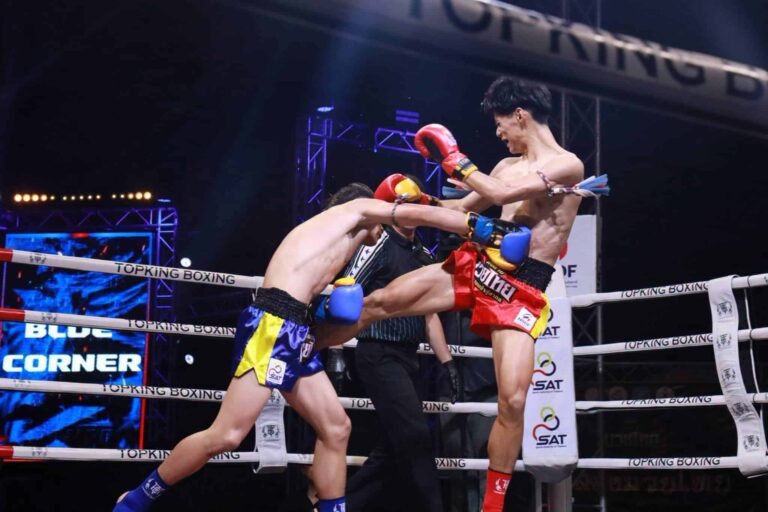
  • Chiang Rai Hosts Authentic Muaythai 2569″ Tournament Northern Qualifiers

    CHIANG RAI – The Sports Authority of Thailand (SAT) officially launched the northern regional quarterfinals of the highly anticipated “Authentic Muaythai 2569” tournament. This grassroots development initiative aims to find and nurture raw, undiscovered boxing talent from local communities and elevate them onto the global sports stage. The action-packed event took place at the temporary boxing […]

  • |

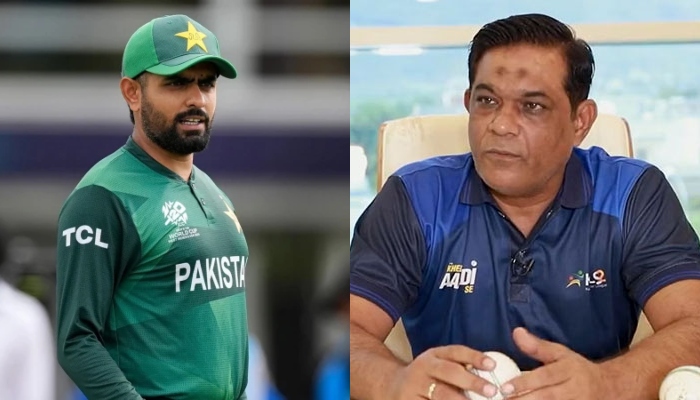
    Rashid Latif urges PCB to shield Babar from English media

    Former Pakistan captain Rashid Latif has urged the Pakistan Cricket Board (PCB) to reduce Babar Azam’s media commitments during the upcoming Test tour of England, warning that the Pakistan skipper could face intense scrutiny from the English press. Pakistan have arrived in England for a three-match Test series, with Babar returning to the leadership role in red-ball cricket. The series begins at Headingley in Leeds on August 19 and will continue at Lord’s before concluding at Edgbaston in September. Speaking on a television programme, Latif described an England tour as a challenging assignment and suggested that the PCB should carefully manage Babar’s interactions with the local media. According to the former wicketkeeper-batter, the English press can generate considerable attention around visiting teams, potentially creating distractions away from the cricket. “An England tour is a difficult assignment,” Latif said, adding that the PCB should consider keeping Babar away from frequent media appearances. His suggestion is not to isolate the captain completely, but rather to share the responsibility of representing the team with other experienced players. Latif specifically recommended Shan Masood, who previously led Pakistan in Test cricket and has considerable experience of playing in England. He believes Masood is well equipped to handle difficult questions and media pressure. The former captain also identified Imam-ul-Haq and Mohammad Abbas as players who could take on media duties during the tour. Babar was reappointed Pakistan’s Test captain in July, replacing Shan Masood after his stint in charge. The PCB confirmed Babar as captain for both the West Indies and England Test tours. Pakistan’s immediate challenge will be to carry the momentum from their recent Test victory over the West Indies, where they secured an eight-wicket win in Port of Spain to level the two-match series 1-1. The England assignment will test Babar both as a batter and captain. With the spotlight likely to remain firmly on him, Latif’s advice raises an interesting question: could fewer media commitments help Babar focus more sharply on Pakistan’s battle in English conditions? The first Test will be played in Leeds from August 19–23, followed by Lord’s from August 27–31 and Birmingham from September 9–13. Pakistan squad for England Tests Babar Azam (captain), Aamir Jamal, Abdullah Shafique, Ali Usman, Azan Awais, Imam-ul-Haq, Khurram Shahzad, Mohammad Abbas, Mohammad Ali, Mohammad Rizwan, Muhammad Awais Zafar, Muhammad Ghazi Ghori, Sajid Khan, Salman Ali Agha, Saud Shakeel, Shan Masood and Ubaid Shah.

  • Subcontinental rivals set for blockbuster clash 

      The cricketing world is turning its gaze toward the United Arab Emirates, as the Asian Cricket Council has officially unveiled the complete fixture list for the highly anticipated Women’s T20 Asia Cup 2026, a premier continental tournament slated to take place at the iconic Dubai International Cricket Stadium from August 28 through to September 13. In a vibrant announcement shared across their social media platforms, the ACC confirmed that all fifteen matches will be played under the floodlights, promising a spectacular evening spectacle for fans both in the stands and watching from around the globe, with the tournament’s official caption highlighting the electric atmosphere as Asia’s finest cricketing nations battle head-to-head for regional supremacy and the coveted championship trophy. The competition will feature eight of the continent’s top women’s teams, strategically divided into two competitive groups of four, with reigning champions India finding themselves in Group A alongside their perennial rivals Pakistan, as well as Thailand and Hong Kong, China, while Group B presents a fascinating mix of talent and emerging prowess, featuring Sri Lanka, Bangladesh, Indonesia, and the host nation, the UAE. This grouping sets the stage for a rigorous test of skill, temperament, and consistency, with each team playing three matches in the round-robin phase to secure a coveted spot in the knockout rounds, as the tournament kicks off on August 28 with a Group A encounter between Thailand and Hong Kong, China, setting the tone for what promises to be an intensely fought contest. While every match carries its own weight and significance, the fixture that has captured the most attention is undoubtedly the Group A clash between India and Pakistan, scheduled for September 5, which is expected to be a blockbuster event drawing massive viewership and adding yet another dramatic chapter to the storied rivalry between the two neighboring nations, with the build-up to this high-octane showdown set to be immense as both teams boast explosive batting lineups and deceptive bowling attacks capable of turning the game on its head within a matter of overs. The path to this marquee face-off is littered with intriguing preliminary matches, with India first facing Thailand on August 30 and then Hong Kong, China, on September 3, while Pakistan’s journey includes fixtures against Thailand on September 1 and Hong Kong, China, on September 7. In Group B, the action is equally compelling and closely contested, as Sri Lanka will open their campaign against the UAE on August 29, followed by matches against Indonesia on September 2 and Bangladesh on September 6, while Bangladesh will begin their quest against Indonesia on August 31 before taking on the UAE on September 8, with these fixtures likely to determine the final standings before the semi-finals. The group stage officially concludes on September 8, setting the stage for the high-pressure knockout rounds, as the top two teams from each group will advance to the semi-finals scheduled for September 10 and 11, with the first semi-final featuring the Group A winner against the Group B runner-up and the second showcasing the Group B winner against the Group A runner-up. The victors of these two fiercely contested encounters will then progress to the grand finale on September 13, where they will compete for the prestigious continental title, with all eyes firmly fixed on Dubai as the tournament promises to be a celebration of athleticism, strategy, and the unyielding spirit of Asian cricket.

Leave a Reply

Your email address will not be published. Required fields are marked *