5 Fantasy Movies That Tried to Be the Next Lord of the Rings, But Failed Miserably
The trilogy wrapped up more than twenty years ago, and even today, it’s hard to talk about fantasy movies without thinking of The Lord of the Rings. It’s no surprise that two new films are on the way, and The Rings of Power is getting ready to release its third season. Peter Jackson’s adaptations of J. R. R. Tolkien’s universe in the 2000s weren’t just a box office hit but also showed several studios that there was a huge audience willing to explore big, complex, and well-built worlds with franchise potential. So naturally, many other fantasy movies started popping up, and some of them were clearly designed to fill the space left by this epic. However, creating a story with plenty of fantasy elements was never the hard part — the problem was making all of them work together.
Over the years, there have been many attempts, and some of them completely failed. Some movies were even marketed as potential successors to The Lord of the Rings, and others had so many similarities to Tolkien’s universe that comparisons were inevitable. However, the bar was always extremely high, and the trilogy remains a major milestone in pop culture. With that in mind, this list brings together some examples of movies that tried to reach the same level in cinema, but simply couldn’t pull it off.
5) Warcraft
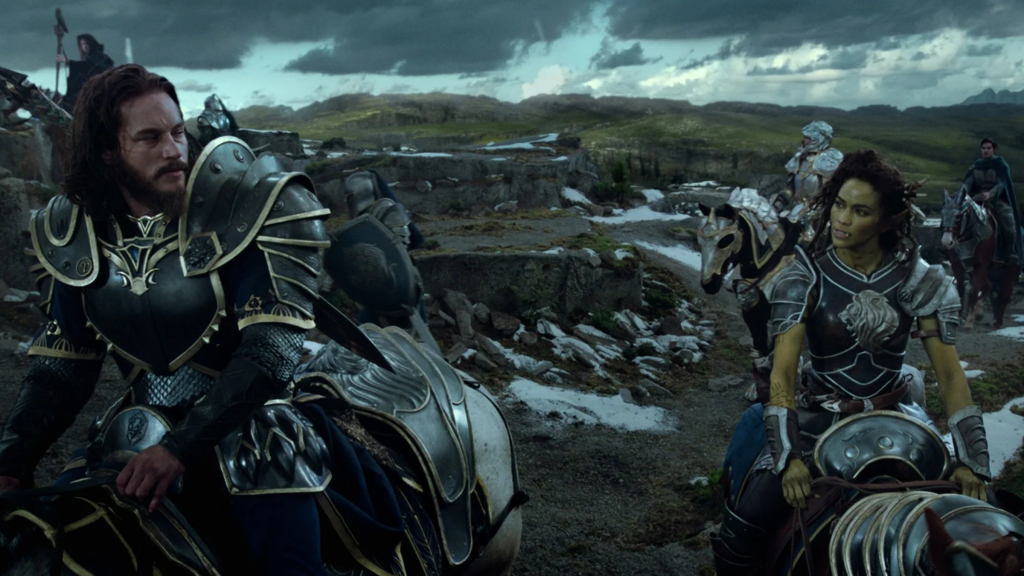
Based on a video game series, Warcraft tells the story of the orc Durotan, who starts questioning the destructive path of his people, while the humans of Azeroth try to stop the invasion led by the powerful sorcerer Gul’dan. And back in the 2010s, when it was released, it was easy to see that it had everything to become a great fantasy epic: you have orcs, humans, mages, kingdoms at war, creatures, an invasion story, and a whole universe that could have easily supported several movies. But one thing it failed to understand was how to introduce itself to a general audience beyond the fans, because most of them hadn’t spent years getting to know the history of Azeroth. You can’t just throw names and concepts at the audience without explaining everything.
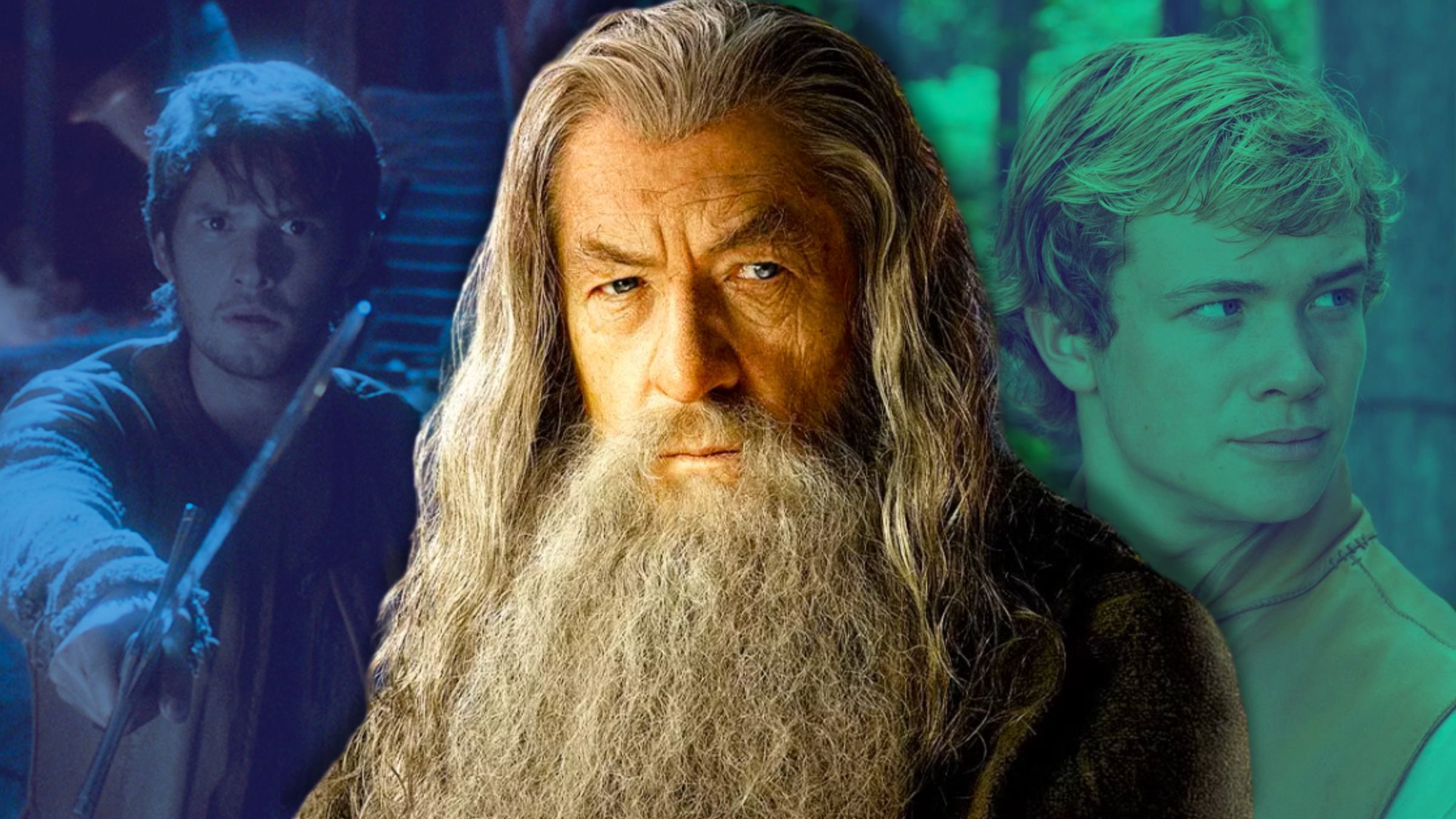
The story basically keeps running from one battle to another, but in the middle of all that, anyone who had never played the games doesn’t really get why they should get attached to these characters in the first place. The funny thing is that the film’s director, Duncan Jones, compared the game’s adaptation to The Lord of the Rings, yet the first installment of Jackson’s trilogy, The Fellowship of the Ring, never required you to study Middle-earth before watching it. Frodo, Gandalf, and the hobbits worked because they were our eyes into that world, while Warcraft pretty much assumes you already know who everyone is. For fans, it’s certainly a lot of fun, but for everyone else, it’s an avalanche of information that needed to be much better organized if it wanted to have the potential to become a saga.
4) The Chronicles of Narnia
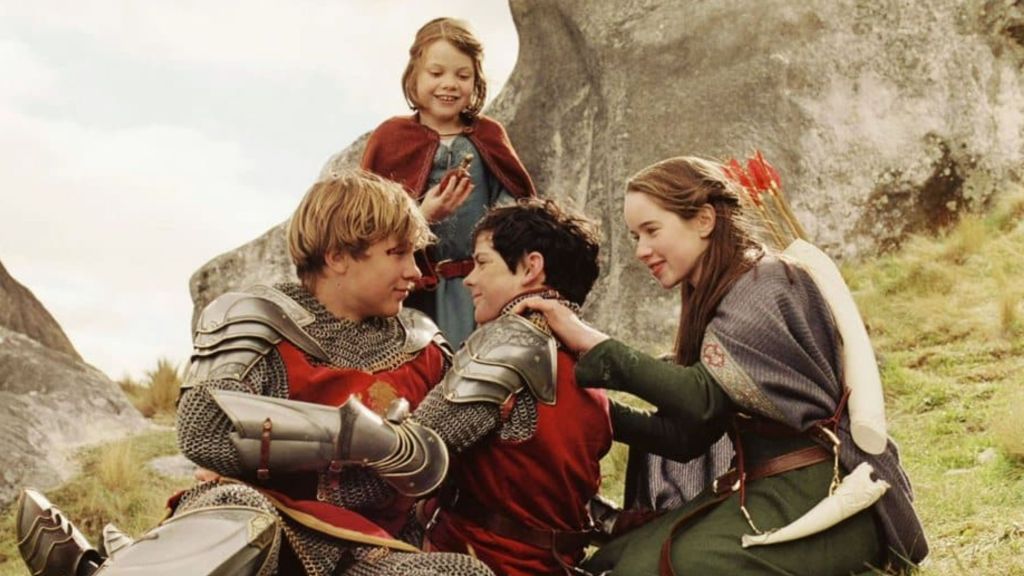
The fact that The Chronicles of Narnia movies didn’t have the same impact as the first one and the whole saga now has to be rebooted is reason enough for it to make the list. Being the attempt that looked the most likely to work, the first chapter, The Lion, the Witch and the Wardrobe, arrived when The Lord of the Rings was still very fresh in the audience’s mind and brought a fantasy movie with all the right ingredients: C.S. Lewis’s famous literary work, a magical world, creatures, and battles. In it, four siblings walk through a wardrobe and discover Narnia, a kingdom trapped in an eternal winter by the White Witch, where they end up getting involved in a war alongside Aslan.
And what about the comparisons to Tolkien’s story? A similar epic scale, plus some of the same visual effects crew. The interesting thing is that The Chronicles of Narnia didn’t necessarily need to be the next The Lord of the Rings, since it always had an identity of its own, a younger energy, and a strong source material. And well, the first film was a huge success, but then Prince Caspian and The Voyage of the Dawn Treader failed to have the same impact. Because of that, the franchise didn’t manage to complete the story of all seven books. Maybe the biggest problem is that this was a universe that managed to prove audiences liked it, but never managed to make them feel like they needed to come back to it.
3) Seventh Son
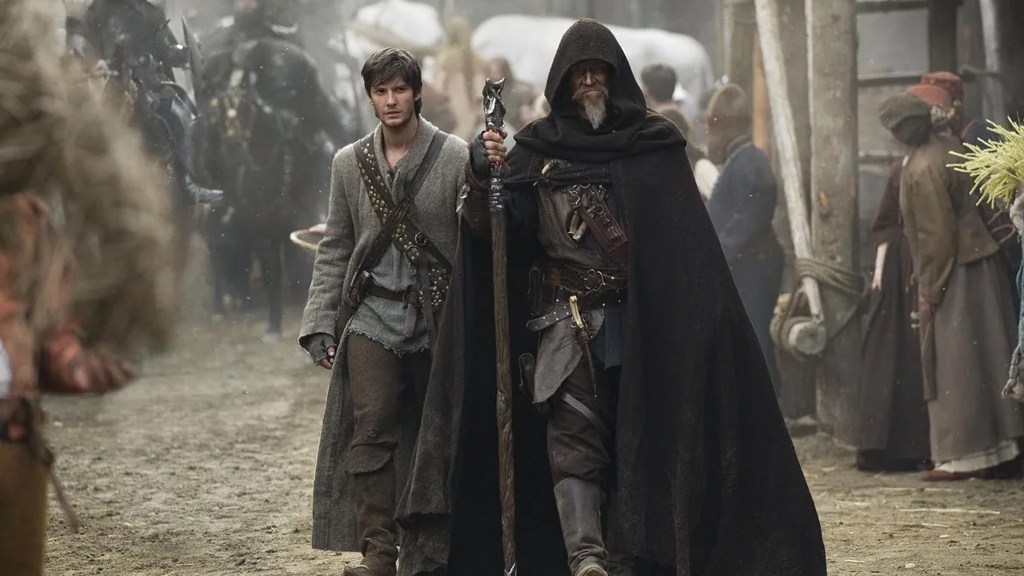
Nobody talks about Seventh Son, but if you made a list of everything that was popular in fantasy films after The Lord of the Rings and checked off every item that appears in this movie, you’d probably end up with almost the entire list filled in. Here, we have a young man chosen by destiny, a mentor, a powerful witch, magic, monsters, prophecies, magical weapons, and a medieval kingdom. In the story, Tom Ward discovers that he is the seventh son of a seventh son and ends up training with Master Gregory to face Mother Malkin. Yes, it sounds like a collection of things we’ve already seen in other movies, but that’s exactly where the problem lies. It’s not that the film has a bad concept, but as a whole, it doesn’t really seem to have an identity; it’s almost as if it was released already trying to compete with other stories in the genre.
Everything in this universe is recognizable, but almost nothing is memorable enough. It has all the appeal of trying to be the beginning of a franchise, but when it comes to the fundamental part, which is making the first installment feel important and captivating, it just doesn’t do it. When we think about The Lord of the Rings, we can see that Tolkien didn’t even need to throw in a kind of prophecy, monsters, and a battle every few minutes to convince you that what you’re watching (or reading) is something grand. Seventh Son, on the other hand, seems like it’s constantly trying to remind the audience that its story is an epic fantasy, and because of that, everything starts to feel forced. It didn’t understand what it was supposed to do and ended up focusing way too much on the intention itself.
2) Eragon
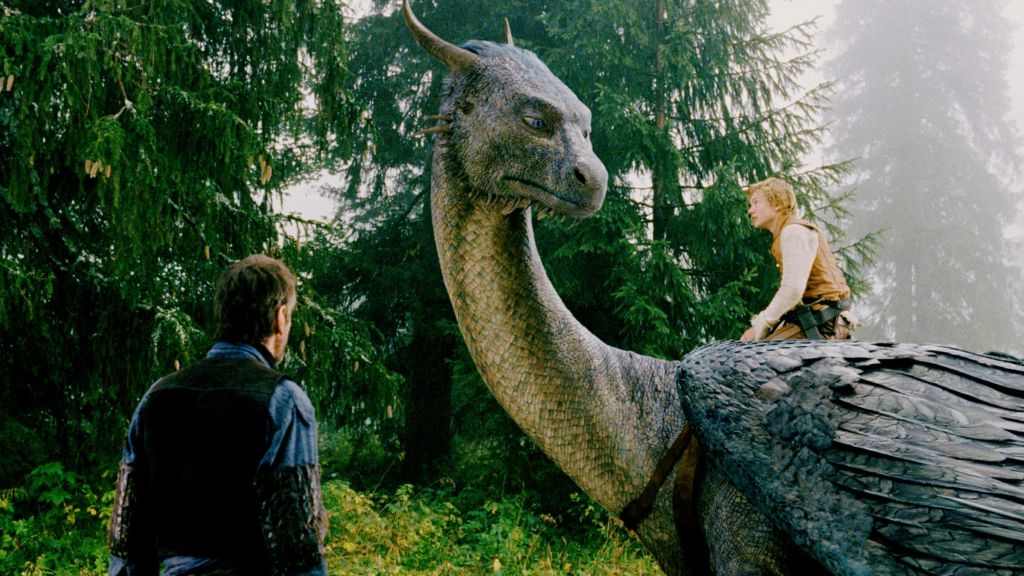
Eragon is a case that nobody forgets, and not because it’s good — quite the opposite. This is also an adaptation of a story that was always very popular and tried to kick off a potential new fantasy franchise, but it left a lot to be desired for several reasons. Loosely based on Christopher Paolini’s work, the story follows the titular character, a boy who finds a dragon egg and discovers that he is destined to become a dragon rider, while learning magic from the former dragon rider Brom and eventually getting pulled into the war against King Galbatorix. There are dragons, swords, magic, a young hero, a mysterious mentor, an evil empire, and a war that could turn into something much bigger. In theory, there’s not much to complain about, right?
However, in this case, rushing things ended up being the enemy of getting it right. The movie is a little over 100 minutes long and needs to introduce characters, locations, rules of magic, political history, the dragons, and a major threat, which is very little time. Naturally, you’d expect some of that to be reduced or saved for a sequel, which is what happens with Jackson’s trilogy, but that doesn’t happen here. In The Lord of the Rings adaptations, it’s very clear that you need plenty of time to get to know Middle-earth; you understand the Shire, who Frodo is, why the Ring matters, and why Sauron is a threat before the story even becomes massive. Eragon, on the other hand, wants you to accept that everything is huge just because the script tells you it is. It has enough material, but it wanted to go big way too quickly.
1) The Golden Compass

Here we have a movie that had absolutely everything going for it, and it’s no coincidence that the story later became an incredible TV show. The Golden Compass is based on the first book in a series written by Philip Pullman, had a huge budget, a stacked cast, and was even produced by the same studio behind The Lord of the Rings. The plot follows Lyra, a girl who lives in an alternate version of the real world and sets out to find her missing friend, eventually getting caught up in a conspiracy involving kidnapped children, a powerful religious organization, and mysterious particles called Dust. In short, if there really was anyone looking for the next big fantasy epic, this was about as obvious a bet as you could get.
Still, this is a complex story, and turning it into a safe family-friendly blockbuster isn’t necessarily the best idea. Because of that, certain things from the source material had to be taken out. Instead of developing the world and exploring its more controversial aspects, The Golden Compass focuses on the creatures, the landscapes, the big moments, and then it’s over. And it’s pretty hard to build a franchise when your first film feels like it just stopped halfway through the story. It did make enough money to avoid being called a failure, but it came nowhere near the performance needed to seriously consider more installments. In the end, this is a case of a story with a lot of weight behind it being completely underused.