
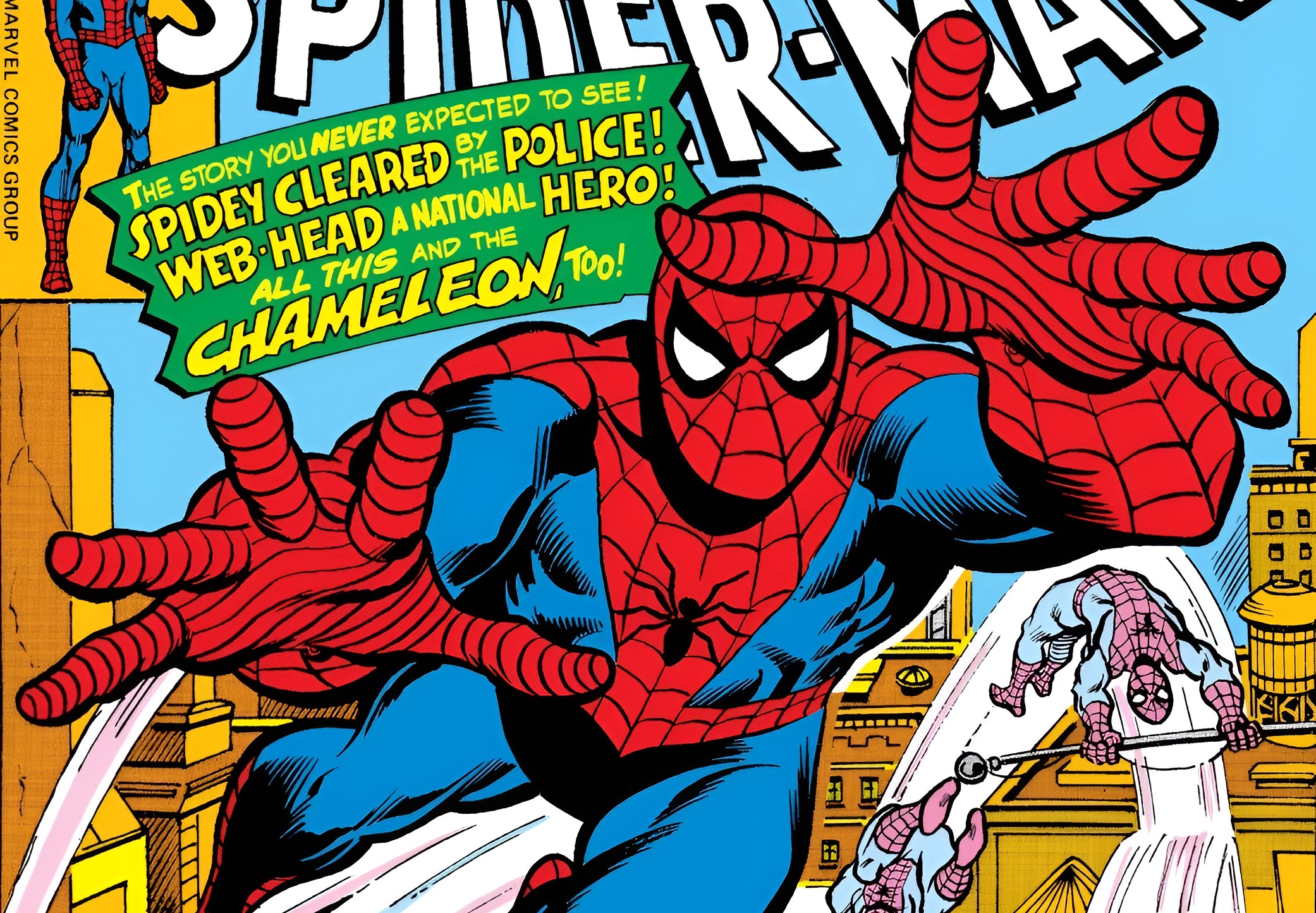
This Unique ’70s Spider-Man Toy Let Kids Play Like the Real Thing and Gave Them a Marvel City to Explore
Some super-powers are easy to replicate than others. For decades, manufacturers have produced Batman utility belts that come pretty close to giving kids a child-friendly version of the Caped Crusader’s glorious gadgets. A little tougher is the trademark wallcrawling of Marvel’s amazing Spider-Man, a power the character only possesses thanks to his scientific acumen. At least, that was the case in the seventies, when for the first time, Marvel Comics toys and action figures were filling shelves. Although the decade is best remembered for its iconic super-hero action figures, there was also innumerable lower cost “rack toys,” designed as impulse purchases for parents and children at drug and department stores. While these usually consisted of a character logo slapped on an existing product (sometimes to hilarious results, like with Larami Toy’s Spider-Man bowling set or tool kit), a few went above and beyond. One of the coolest was a toy that finally gave kids the chance to spin webs – or at least look like they could.
The Chemtoy Amazing Spider-Man Webmaker wasn’t the only webshooter on the market – Funco produced a simpler web-shooter that was a spring-launched spring with a suction cup at the end – but it was the most imaginative. The Chemtoy web-shooter shot a real substance that stuck to surfaces and hardened like Spider-Man’s webs, a precursor to modern versions of the same toy. To sweeten the deal, Chemtoy included a whole other toy: micro-figures of Spider-Man, Mary Jane Watson, and Green Goblin. Between this an the perishable tube of webbing, Chemtoy virtually designed the set to be impossible to find complete and loose, with the “webs” likely used up in an afternoon’s play and the figures lost in an ocean of shag carpeting. That makes a complete sample in or out of box a sought-after collectible, worth hundreds to Spider-Man fans.
What Makes Chemtoy’s Web-Shooter Unique
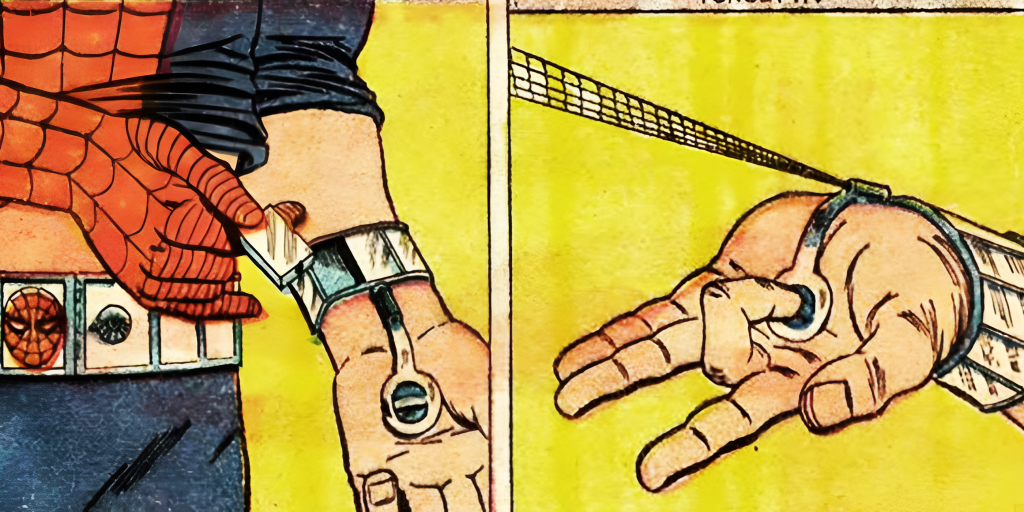
Marvel writers have always kept the specifics of what Spider-Man’s webs are made of and how they work vague. It’s a necessary story conceit that the webs are enough of a scientific marvel that only Peter Parker could invent them. It’s also a necessary story conceit that they’re made from common enough chemicals that a perpetually-broke teenager can concoct a never-ending supply. Obviously, this makes a 1:1 translation of the webs to toy form impossible, necessitating creative license. Besides Funco’s strings and Chemtoy’s paste, other companies have used projectiles, Silly String, and even water for their web-shooters. For most of these, the “web” is pressurized, making it shoot out when a button or release is pushed. For Chemtoy, the webs came in a toothpaste-like tube that clipped into a plastic, Spider-Man-shaped holder. Pressing down on it, kids could squeeze out a line of “webs” with even pressure and distribution. In an odd touch, plastic figurines of Spider-Man, Mary Jane Watson, Green Goblin, and a spider were included, able to clip onto the web-holder through small pegs in the back. If the user neglected the plastic holder, the webs more than likely all shot out at once — again, think toothpaste.
This would be the last web-shooter toy made for almost twenty years (the eighties were something of a dark age for Marvel toys), with the next produced by Toy Biz as part of their Spider-Man: The Animated Series line. Toy Biz’s web-shooter shot a gliding projectile almost like a badminton birdie, cleverly explaining away the difference between this and its comic/ cartoon counterpart by referring to it as a “web tracer” on the packaging. This toy became the first to include a sculpted plastic web-shooter to house the webbing, as well as replica Spider-Man gloves. Virtually every other web-shooter toy produced since has retained these features, as they really help sell the illusion.
Refreshing its packaging every couple of years, a version of the Toy Biz web-shooter would stay on the market through the decade and into the early 2000s. A variation was produced that shot disks instead of a glider. In 2002, Toy Biz hit on the version of the toy that can still be found on store shelves today, using an aerosol can of “web fluid,” swappable with a tank that squirts water. The Silly String-like web fluid is a plastic resin that hardens when exposed to air, kept liquid by a solvent in the can. It comes closest to really feeling like you are Spider-Man, though the mess created by the plastic resin will leave you wishing that the manufacturer had figured out how Spidey makes his webbing dissolve after an hour. The included water tank is likely included so that parents, at their discretion, can take away the mess but still let their kids have the toy. Minor variations on this toy exist with packaging, mechanism, and glove alterations to reflect the current version of the character.
How Chemtoy Turned Their Packaging Into a Bonus Miniature Playset
As Peter Parker can attest, the problem with web fluid is that it runs out faster than you’d think. While Peter compensates for this by packing extra cartridges, and later manufacturers would make their webs either reusable or refillable, Chemtoy opted to do neither. The single tube of “webs” that were included with the set were it, and while the packaging does advertise “REFILL TUBES AVAILABLE FROM YOUR DEALER,” the lack of surviving samples suggest few kids or parents took Chemtoy up on this. However, running out of webs wasn’t the end of the fun, as the toy’s packaging also calls out the “EMPIRE STATE PLAY CITY” on the back. Flipping the card over, a kid would find a pop-out cardboard New York City scene, designed to scale with the included plastic figurines.
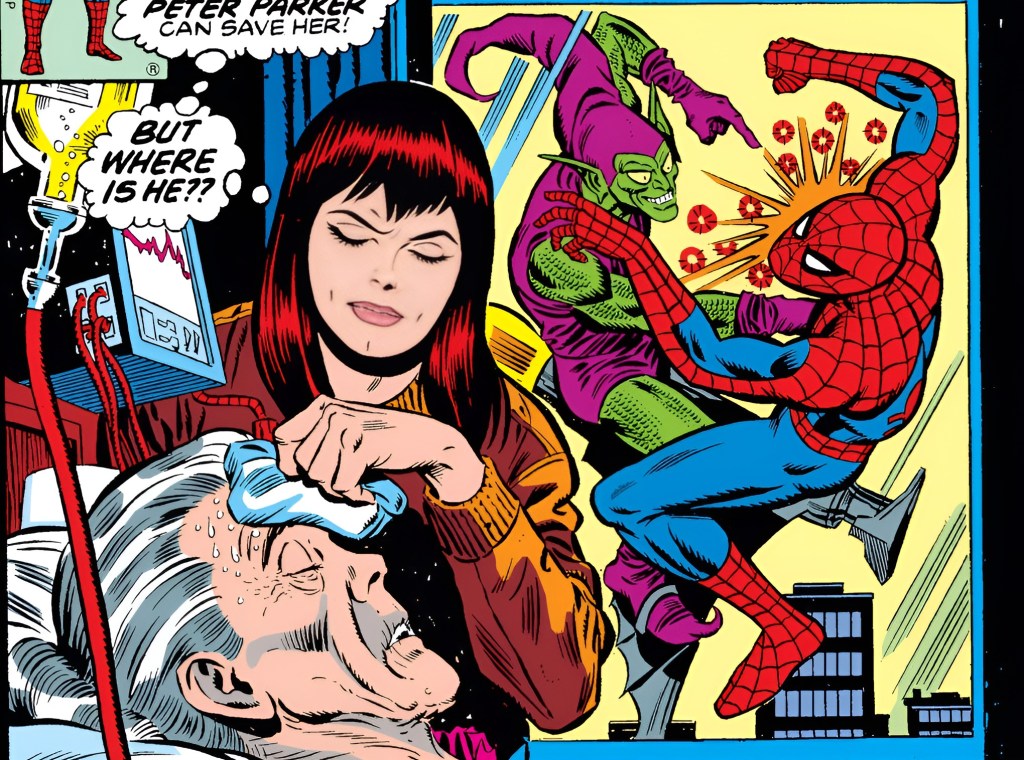
The figurines’ inclusion is an odd but inspired touch, and notable as the first 3-D, plastic version of Mary Jane Watson ever produced. Her next shot at plastic wouldn’t come until 1996, in a Toy Biz-produced “Famous Couples” two-pack with Spider-Man. Not so for Green Goblin, who saw more merchandise than any other Marvel villain in the seventies. Mego produced three separate Green Goblin figures in two different scales, and Remco made a battery-powered Green Goblin to pair with their 12″ Spider-Man. The plastic spider makes more sense in the context of being clipped onto the Spider-Man shaped web container, although an imaginative (and especially nerdy) kid could pretend it was the Mark III or Mark IV Spider-Slayer. The cardboard city backdrop is era-appropriate for seventies Spider-Man, a time when artist Ross Andru was drawing New York City with such realism and fidelity that Marvel once received a cease-and-desist from a Rockaway Beach resident whose home had been used for the villain Mindworm’s hideout.
Each figurine was about the size of a thumbnail, and most probably ended up lost in the belly of a vacuum cleaner within a week. But the toy’s surprising creativity overshadows its disposability. Fans who had one in the seventies remember it vividly, describing how much fun it was for the single afternoon it lasted. In the decades since, fans who have never even seen the toy in person, let alone owned one, are fascinated by it. It’s a distinctive variation on a now-common Marvel toy, and the two-in-one bonus is just as appealing to collectors now as it was to kids then. It stands not only as a colorful artifact of Marvel’s first merchandising boom, but a precursor to a toy that the past thirty-five years of Spider-Man fans have grown up loving. Not bad for a toy that only lasted for an afternoon.
Did you have a web-shooter toy growing up? Leave a comment below and join the conversation now in the ComicBook Forum!


