Asian AI startups launch Mythos-like models as Anthropic’s export ban drags on
New models are launching in Asia that promise Mythos-like capabilities without fear of an export ban. U.S. AI labs may never recover this enormous market.


New models are launching in Asia that promise Mythos-like capabilities without fear of an export ban. U.S. AI labs may never recover this enormous market.

As Anthropic forges a closer relationship with the state of California, the federal government has made an enemy out of the OpenAI rival.

Anthropic’s Claude Science is a workbench that gives scientists one environment to do computational research, saving them from the need to bounce between databases, pipelines, and tools.
Anthropic’s Claude Sonnet 5 brings stronger agentic capabilities, lower pricing, and improved safety, positioning the model as a cheaper alternative to Opus, GPT-5.5, and Gemini Pro.

The Trump administration’s erratic approach to AI policymaking has left companies across the industry with little clarity about what will govern future model releases.
The news comes about a week after OpenAI announced its own custom AI chip in a partnership with Broadcom.

Alibaba has reportedly classified Claude Code as high-risk software.
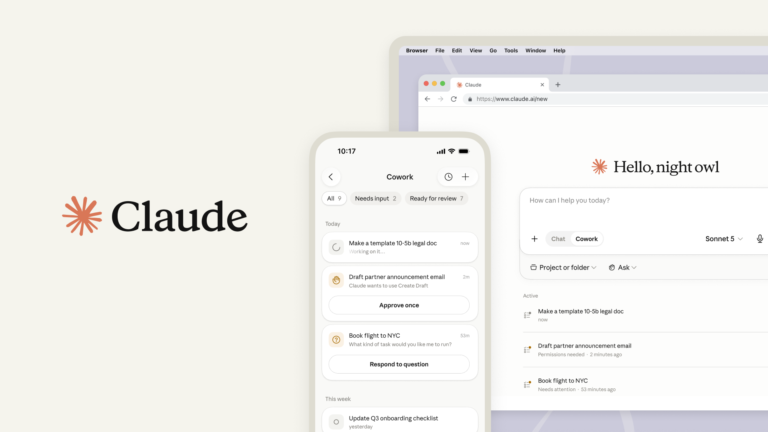
With this update, users can start a task from their desk, get status updates on their phone, and pick up the finished output later — even if their laptop is closed.

Open source models’ success isn’t coming at the expense of frontier labs. Instead, they each seem to capture two phases of the same life cycle.

Microsoft is the latest Silicon Valley giant to cut back on its AI spending.