Tiny things for big feelings: Small objects are becoming our emotional companions
Squishies and plushies aren’t just cute to look at, but sources of comfort, too

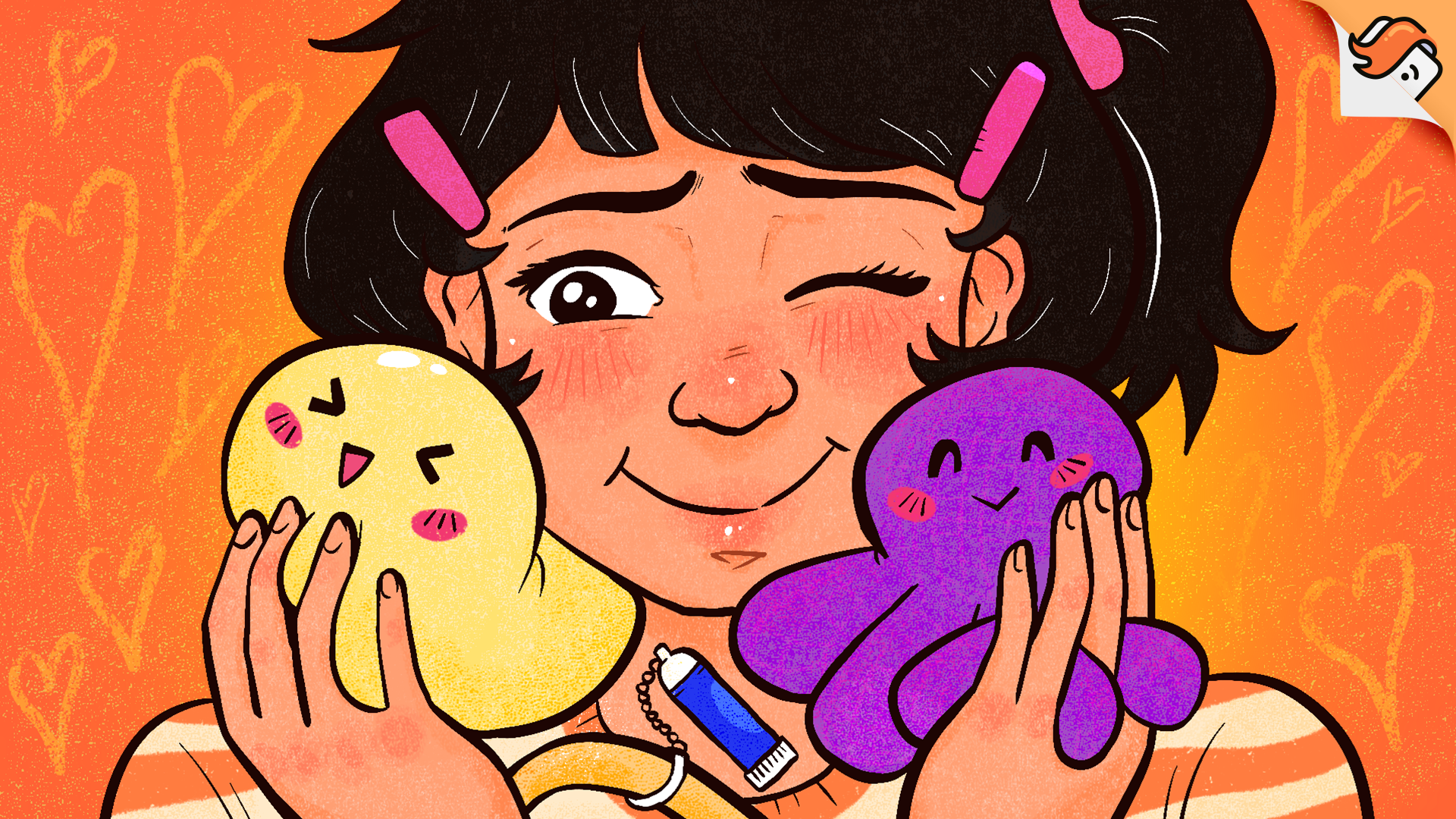
Squishies and plushies aren’t just cute to look at, but sources of comfort, too

‘From the time I wake up to the time I go to sleep the rain never stops… I fear that, if my brain gets used to constantly feeling this down, it will consider this the “new normal” and I have to be on a higher medical regime forever after this.’

Rather than neatly condense all the violence and trace it to one root cause, psychologists choose to ask the difficult questions about each individual case. Each child in conflict with the law is not just a perpetrator, but a highly vulnerable person.

Grown-ups are not good at masking their concerns, although they can hide their delight and curiosity surprisingly well. Whereas with children it is the other way round. Children can tactfully mute their anxiety and conceal their sorrow, but will struggle not to express their excitement. That is what growing up means, in some simple way: learning to repress all expressions of pure happiness and joy. This quote exposes a subtle tragedy embedded within the journey to maturity. To become an adult, the passage suggests, is not merely to gain years or acquire responsibilities. Rather, it is to master the delicate art of emotional inversion. We trade the radiant honesty of childhood for a guarded composure. We learn to keep our wonder under lock and key while allowing our worries to spill openly across our brows. In recent cultural discourse and ongoing public health conversations surrounding wellness, psychologists have increasingly noted a pervasive phenomenon. The modern adult’s profound struggle with joy anxiety and burnout. Recent reports on workplace psychology and mental health trends reveal that adults frequently censor their enthusiasm to maintain a professional facade of stoicism and control. Society rewards composure and treats exuberance with suspicion, equating solemnity with competence. As a result, millions of people navigate their daily lives wearing a heavy armor of stress while systematically burying their moments of genuine awe, playfulness, and delight. When we observe children, their emotional mechanics operate in reverse. A child facing uncertainty or sorrow often swallows their tears to fit into the mysterious world around them. Yet, when confronted with something marvelous like a beetle on a leaf, a splash of rain, or an unexpected gift, their joy erupts without permission. It dances in their eyes and bursts into unfiltered laughter. Their happiness is an open room with no doors. For adults, however, delight becomes a secret kept strictly within. We learn to suppress the gasp of wonder, to filter our laughter into a polite smile and to temper our excitement lest we appear naïve or unprofessional. Meanwhile, our anxieties: the constant calculus of bills, schedules, deadlines, and social expectations leak out uncontrollably through furrowed brows, sighing lips, and taut shoulders. We become masters at channeling our burdens while keeping our light hidden in the shadows. This loss of expressive freedom raises a crucial question about the true cost of maturity. Must growing up inevitably mean muting our light? Reclaiming our capacity for uninhibited joy requires an intentional unlearning of the rules we spent decades acquiring. It demands that we grant ourselves permission to be thrilled without reservation, to wonder without apology, and to let our happiest moments spill freely into the open world. True maturity might not be the complete suppression of enthusiasm. It’s the courage to let unfiltered delight break through the cracks of our daily routine once more.

With over 7,000 distinct human languages spoken across the globe today, humanity communicates through fascinating sentence structures. A compelling debate has captivated thinkers for decades. Does the language you grow up speaking dictate the limits of what your mind can comprehend? This captivating idea lies at the heart of the Sapir-Whorf hypothesis. A theory that continues to provoke vibrant discussions across linguistics, philosophy, and cognitive science. The Power of Vocabulary and Perception The hypothesis was formulated in the early 20th century by linguists Edward Sapir and Benjamin Lee Whorf. It’s often referred to as linguistic relativity or linguistic determinism. They propose that the structure of a native language fundamentally shapes its speakers’ worldview and cognitive capacity. If a concept or object lacks a dedicated word in a person’s language, that person cannot truly perceive, categorize or conceptualize it. Consider how different cultures classify colors. Some languages possess dozens of specific terms for distinct shades. Whereas, others operate with only a couple of basic terms distinguishing between light and dark tones. According to strong linguistic determinism, a speaker whose native tongue lacks a dedicated word for green would struggle to perceive a green leaf as distinct from yellow. Similarly, emotional vocabularies vary widely across cultures. German famously uses the word Schadenfreude to describe taking pleasure in someone else’s misfortune. According to Sapir-Whorf theory, an English speaker whose language lacks an exact single-word equivalent would supposedly find it difficult to recognize or isolate that specific emotional state within themselves. Why the Concept Fascinates Us? It is easy to see why the Sapir-Whorf hypothesis captured public imagination. The notion that our mother tongue acts as a unique way through which we view reality is deeply romantic. Philosophically, the theory suggests that the world contains thousands of distinct cognitive universes. If language entirely dictated thought, cross-cultural understanding would face profound barriers. It is so as the speakers of different languages would operate inside fundamentally incompatible mental frameworks. In semantic studies, labeling objects and experiences allows humans to organize chaotic sensory input efficiently. Giving a name to a precise group such as distinguishing toddlers, teenagers and senior citizens helps us categorize society into recognizable stages. The hypothesis demonstrated that naming things provides cognitive shortcuts. Such a naming method makes specific distinctions far easier to reference and discuss in daily life. Why Modern Science Rejects Strong Determinism Despite its initial popularity, modern linguistics and cognitive scientists reject strong linguistic determinism. The fundamental flaw in the hypothesis rests on a misunderstanding of the relationship between mind and speech. Language does not produce thought. Rather, human thought drives the creation and evolution of language. When people encounter new experiences, foods or technologies, they do not remain silent simply because they lack pre-existing terminology. Instead, humans spontaneously create new phrases. They adapt existing terms or borrow words from other cultures to describe what they have experienced. An English speaker can easily understand and feel pleasure at a rival’s failure without ever having heard the German word Schadenfreude. While English uses blue for both dark and light shades. Whereas Italian maintains separate primary words (blu and azzurro). English speakers are fully capable of seeing the difference between a midday sky and the deep ocean. Human cognition precedes language. Speech serves as a flexible tool designed to communicate human experiences, not a rigid cage that imprisons cognitive ability. The Lasting Value of Sapir-Whorf The Sapir-Whorf hypothesis retains great value even if its most radical claim has been disproven. It paved the way for weak linguistic relativity. The claim further explores how language subtly influences cognition, memory and visual attention without imposing hard limits on intellect. Ultimately, Sapir and Whorf inspired generations of researchers to explore the mysterious connection between human culture, language and the mind.