Luna Band review: Subscription-free Fitbit Air rival with slick software
At a glance
Expert’s Rating
Pros
- Affordable & no subscription
- Very polished companion app
- Good sleep and heart rate tracking
- Useful app store
Cons
- Buckle scratches easily
- Just not as stylish as other bands
- Some data and apps not available yet
Our Verdict
The Luna Band is another solid-performing fitness band where the companion app shines – importantly with no subscription model – but is slightly let down by a design that’s not quite on par with the competition.
Price When Reviewed
This value will show the geolocated pricing text for product undefined
Best Pricing Today
Price When Reviewed
£129
Best Prices Today: Luna Band
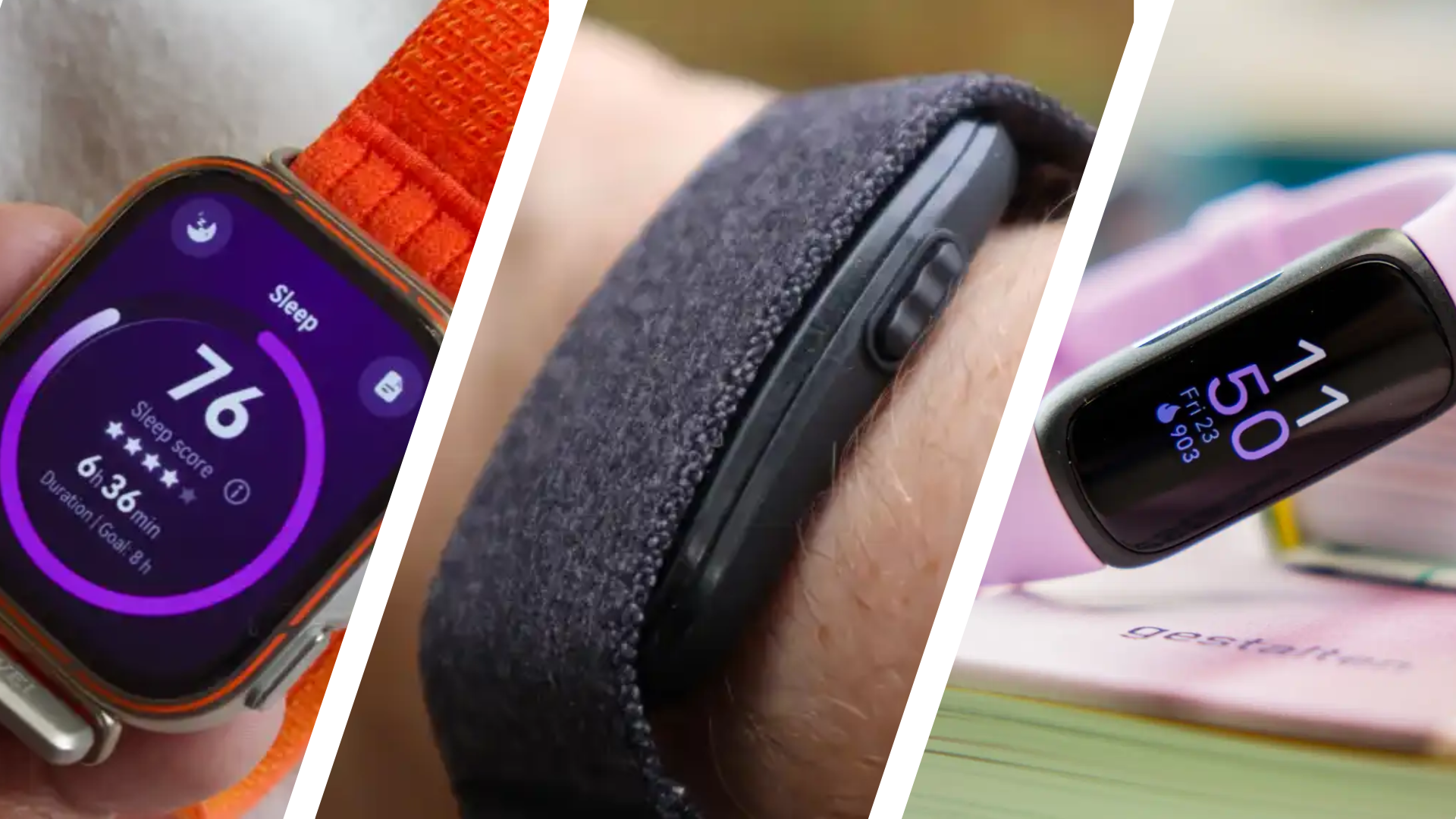
The Luna Band emerges as another screenless smart band that wants to be your all-in-one health and fitness monitor that lives a bit more discreetly on your wrist than a smartwatch.
After launching the Luna Ring, the Luna Band joins the likes of the Fitbit Air, Garmin Cirqa, Amazfit Helio Strap and Polar Strap in offering a subscription-free alternative to Whoop.
Beyond tracking many of the same things as those rival bands, Luna is hoping its companion app, affordable £129/$149 price and no subscription will set it apart from the competition. I wasn’t blown away by its smart ring, so does Luna do things better with a band?
I’ve been wearing it for a few weeks to find out if this is one you should be strapping on.
Design & Build
- Available in 3 colour finishes
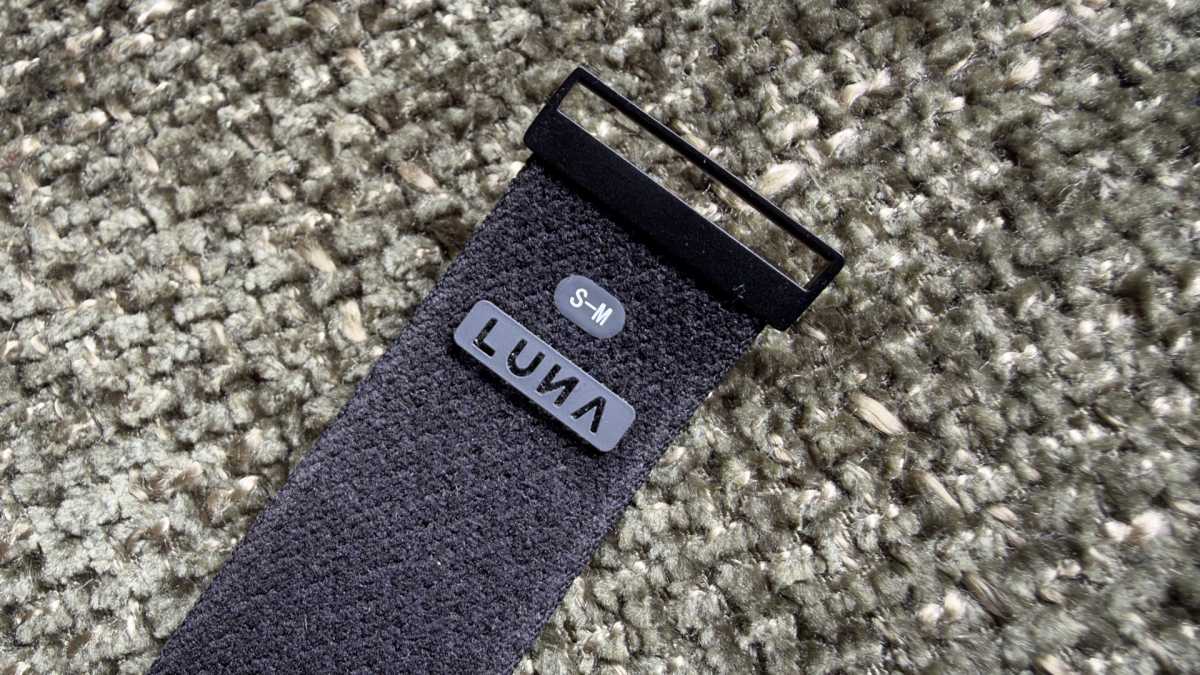
- Comes with two strap sizes
- Waterproof up to 50 metres depth
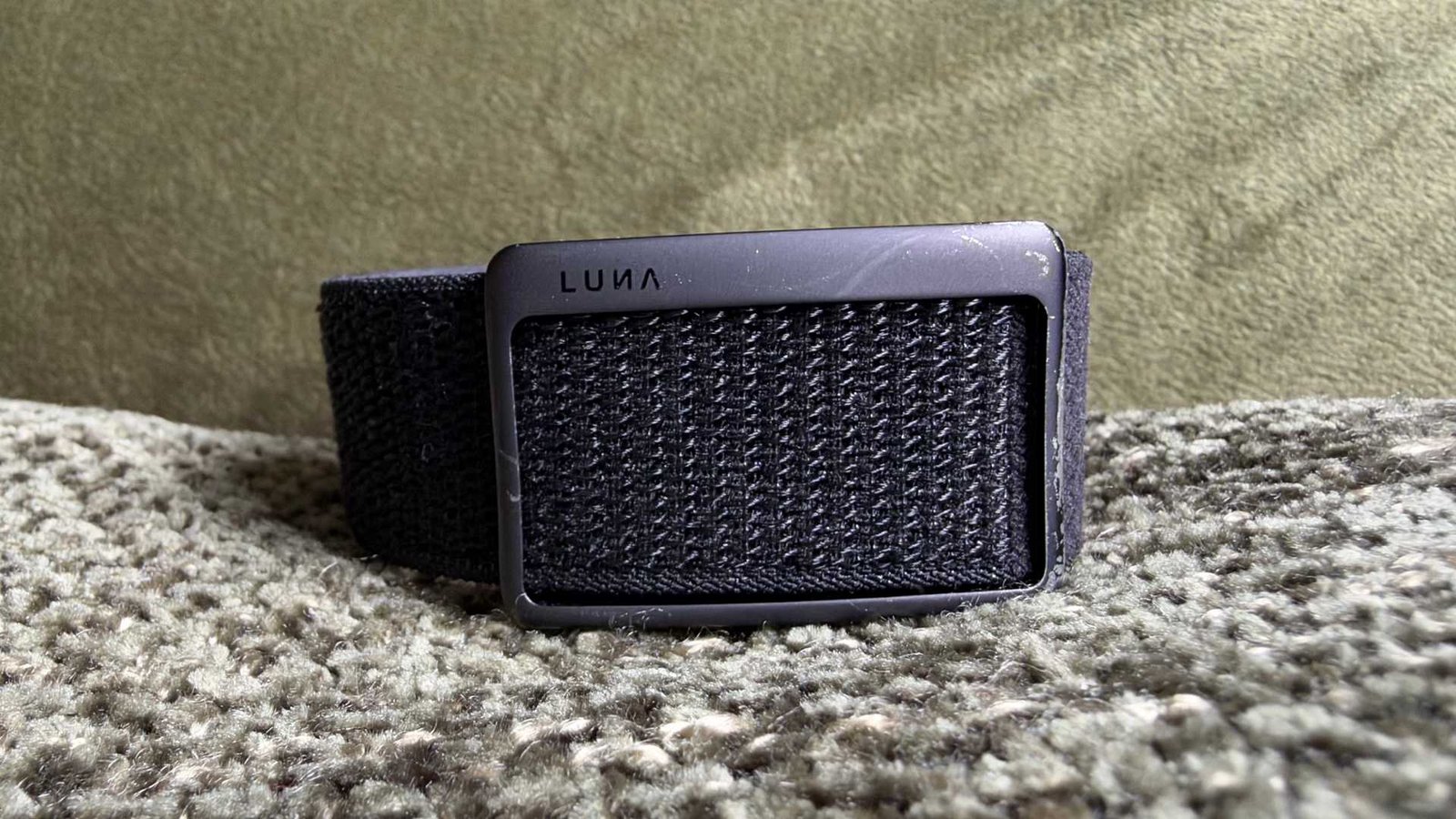
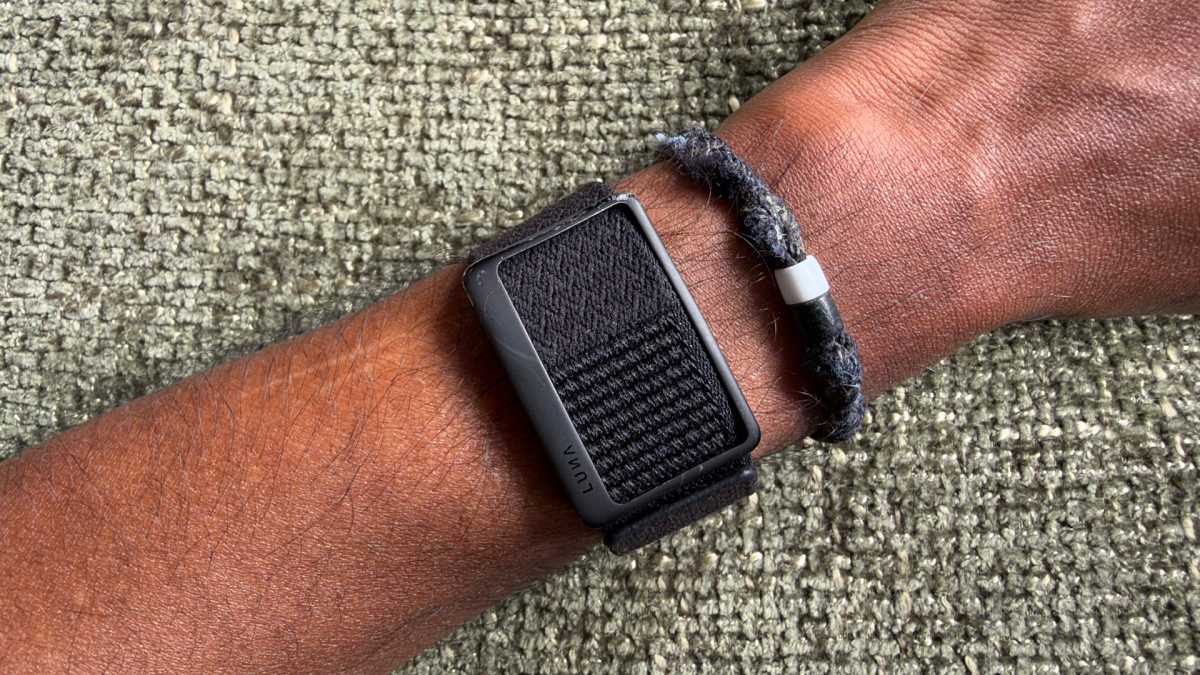
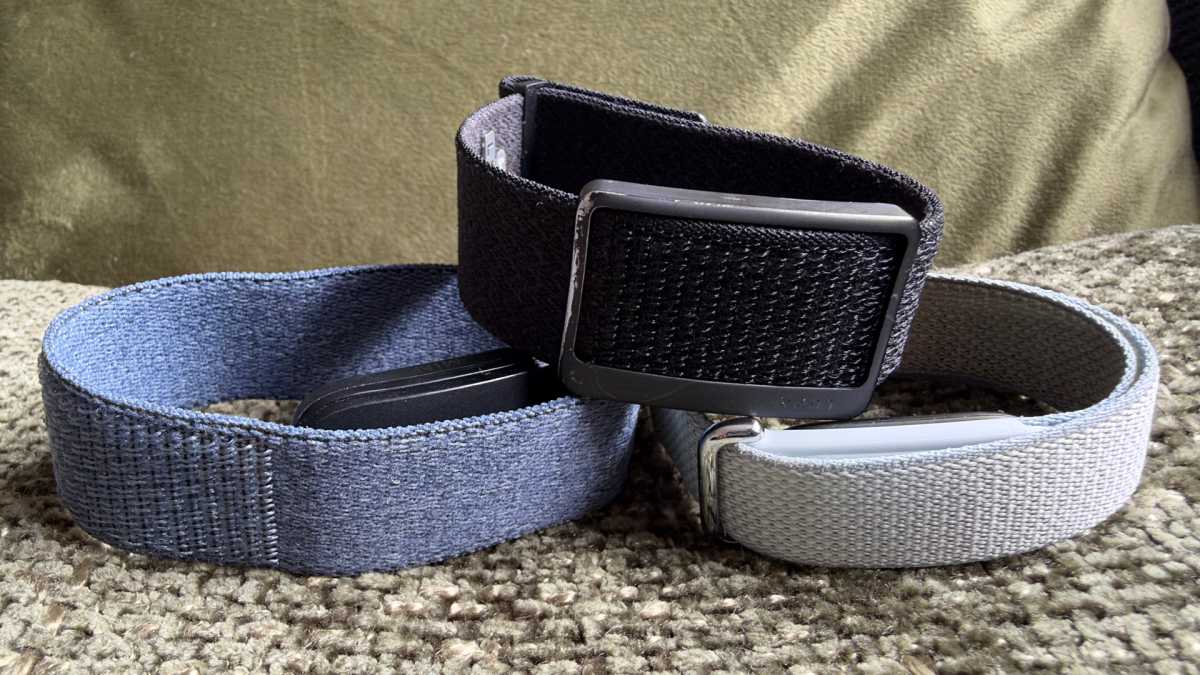
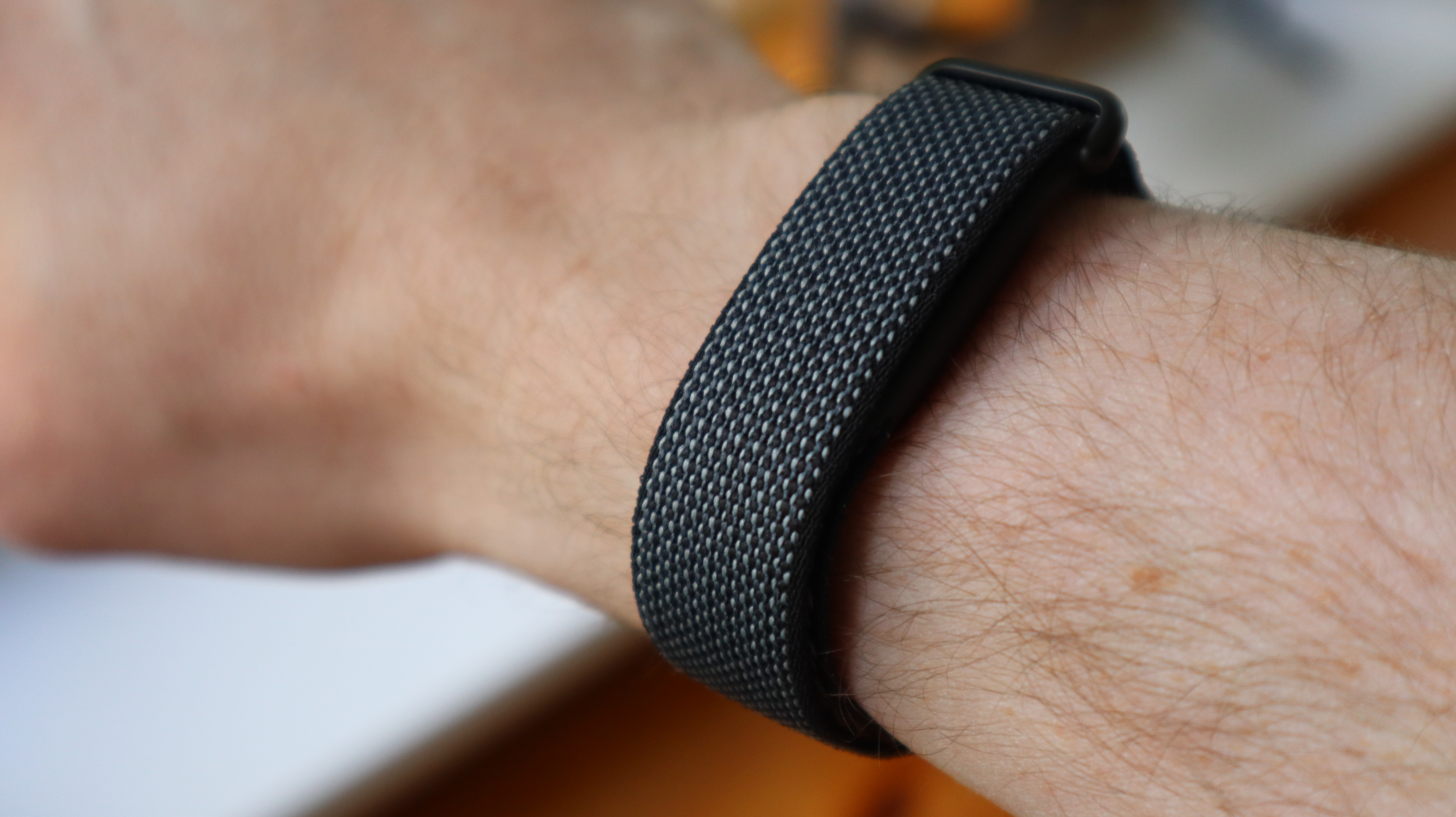
The Luna Band matches up a nylon strap with a Velcro clasp that holds in place the all-important sensor module. On top is a metal buckle to give it a very Whoop band-like look. The band comes in either Onyx Black, Aloe Green or Desert Beige looks. Luna includes two-sized straps in the box with optional straps available in six different colours.
Mike Sawh
I wouldn’t say you’d mistake it for a Whoop, while it’s also wider than the Fitbit Air.
At just 24g, it weighs around the same as a Whoop and comes in lighter than Garmin’s Cirqa band. It sits at a good weight, making it ideal for all-day wear and taking it to bed.
There are no buttons, but you can tap on the sensor to illuminate the single LED notification light. That light can indicate when the battery life is healthy or you will soon need to charge it up. A vibration motor will also emit a rumble when the battery is running low.
Mike Sawh
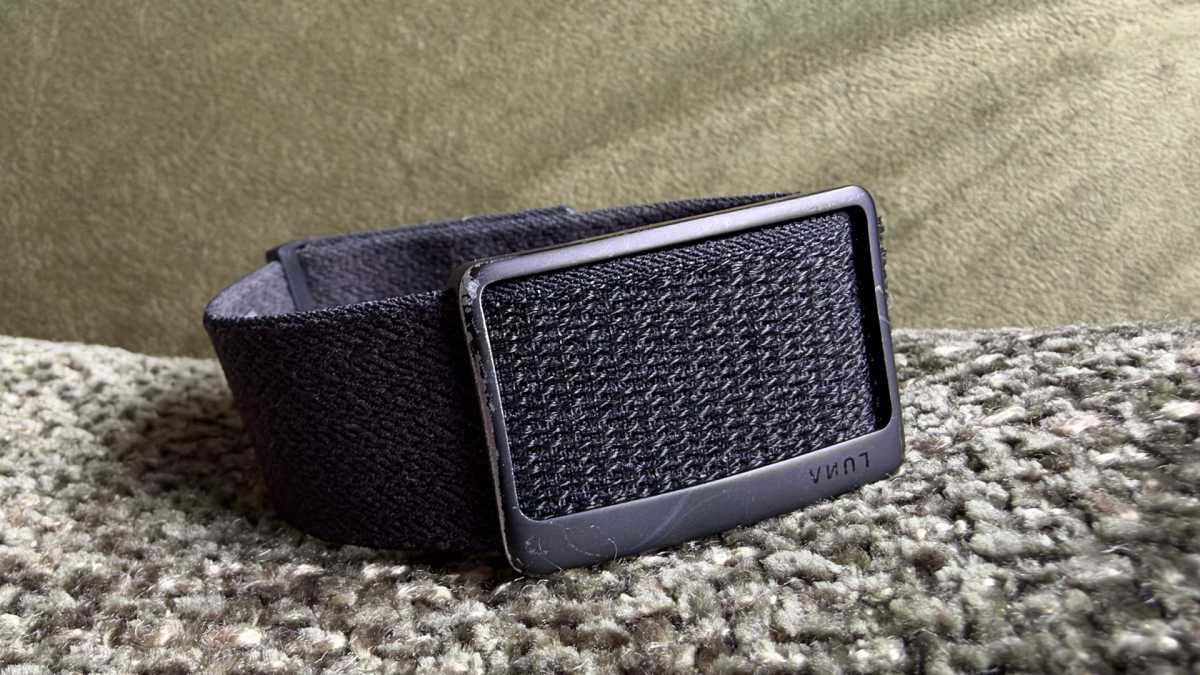
One issue I have noticed in my few weeks is that the buckle has already started to scuff. I had similar issues with Luna’s ring. It’s disappointing to see that the metal frame isn’t quite up to scratch, if you’ll excuse the pun. The device is affordable but still shouldn’t be showing signs of wear this quickly.
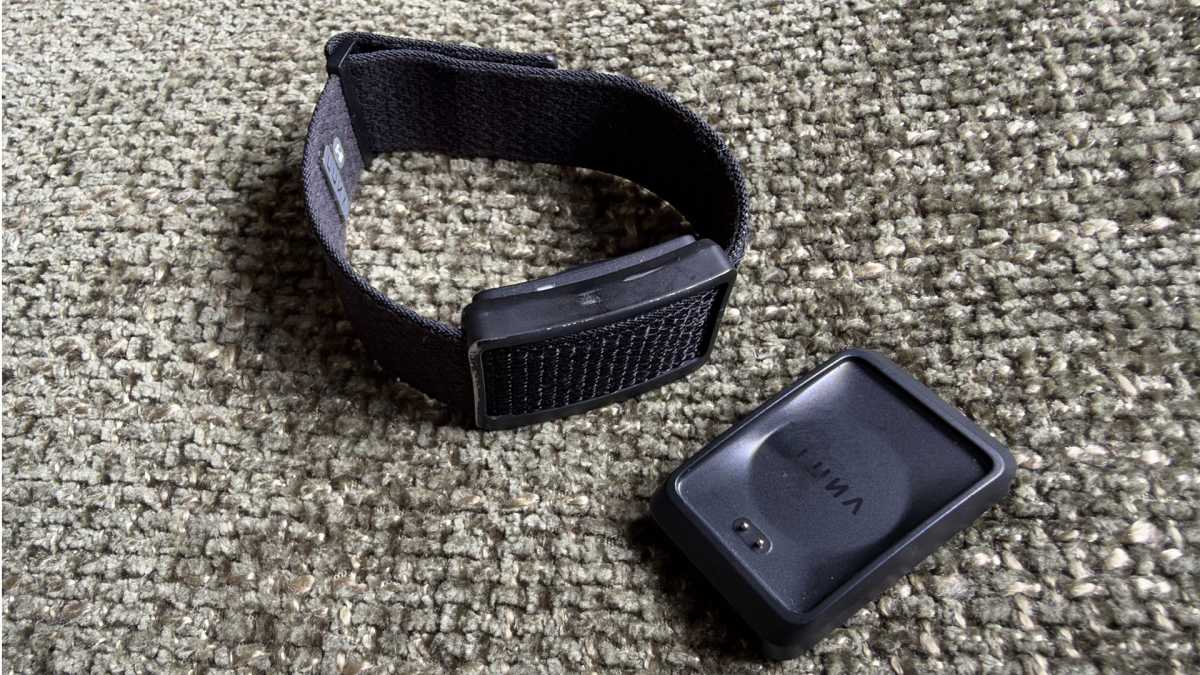
Extra strap size aside, you’ll also find a proprietary charger and USB-C cable in the box. That charger does a good job of clipping to the rear of the Band when it’s time to charge. More on that later.
Features & Health Tracking
- Tracks data like heart rate, temperature and blood oxygen
- Compatible with Apple Health and Google Fit
- Includes app store
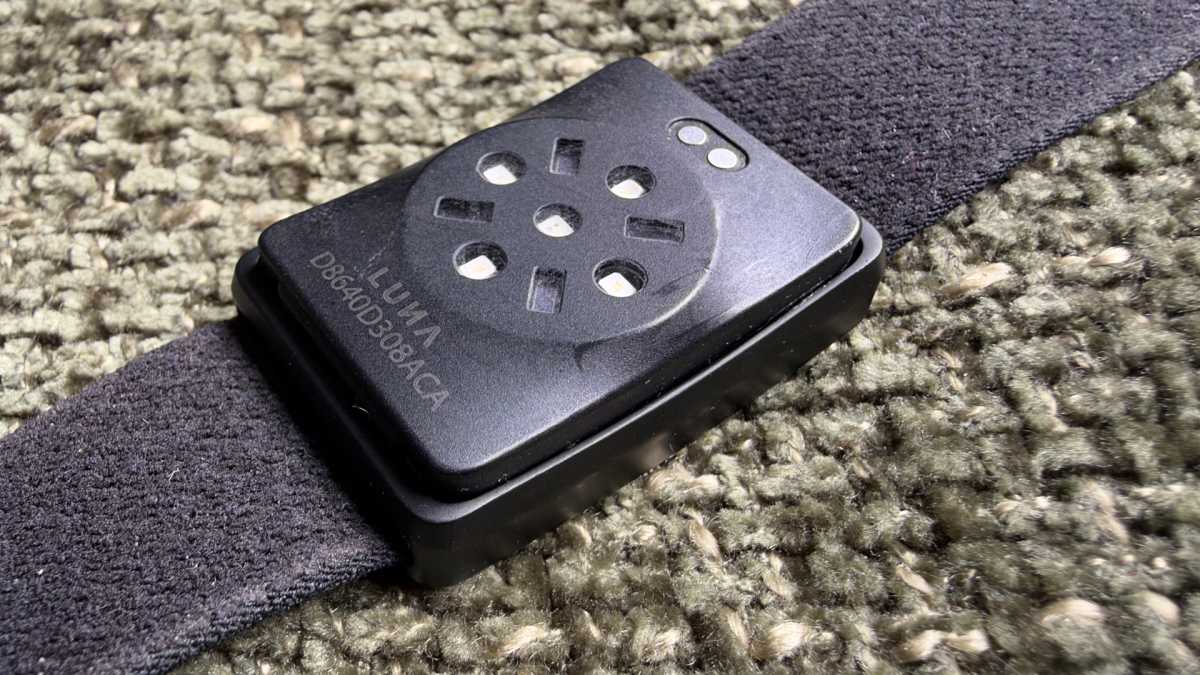
The sensors packed into the band are pretty much the same ones you’ll find powering tracking in other bands. That includes an optical PPG sensor to take care of heart rate monitoring, accelerometer and gyroscope sensors to track movement like steps and exercise.
There are also sensors to track both skin temperature and SpO2 (blood oxygen) levels.
a sleek, very stylised interface that strikes a good balance between making data both glanceable and also insightful.
Mike Sawh
There’s a pretty extensive array of other metrics tied to those sensors that the Luna Band can dish out. It monitors heart rate variability, can send out abnormal heart rate alerts and even tell you your fitness age.
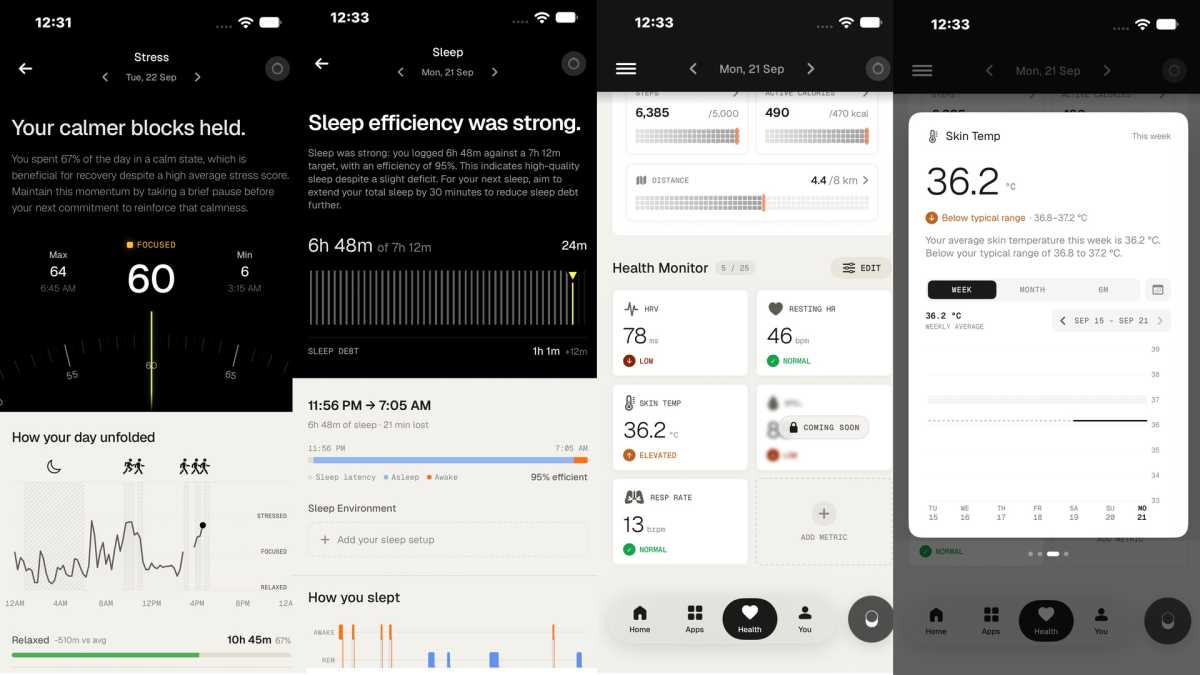
While it’s great to be able to track and monitor a wealth of metrics, the communication and presentation of that data really needs to be up to the task. You certainly can’t accuse Luna’s companion app of simply mirroring what you’ll see from Whoop, Garmin or Google’s apps.
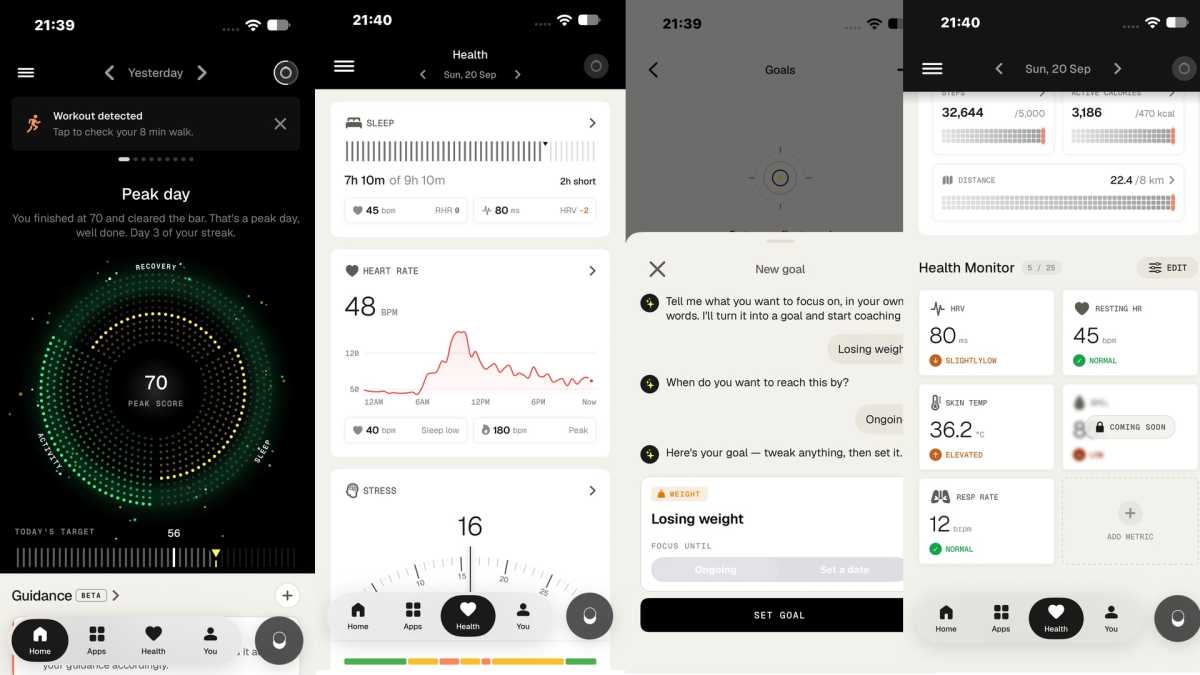
It reminds me most of the app tied to Ultrahuman’s smart ring. It’s got a sleek, very stylised interface that strikes a good balance between making data both glanceable and also insightful.
Mike Sawh
From the home tab, you can see this large dot matrix circle that aims to illustrate the balance of your recovery, activity and sleep data. There’s a separate tab dedicated to showing off your health data like heart rate and a nicely designed stress dial. You also have an app section that lets you add in features like a calorie tracker or cycle tracker.
This app approach again feels very similar to the PowerPlug add-ons that Ultrahuman offers. This helps to pay more attention to data that feels more personal to you to monitor. While the apps appear to be free, many of the apps are currently tagged as ‘coming soon’.
It’s an app that I’ve been happy to spend time in, displaying data in a digestible way. Yes, that app support isn’t quite fully flowing yet, but when it does, it’ll give Luna something different to other bands.
Performance
- Reliable sleep tracking with simple guidance
- Offers automatic and manual workout tracking
- Some monitoring not yet available
All of the above doesn’t matter if the tracking accuracy isn’t there to drive it. Looking at sleep data, Luna monitors sleep duration, breaks down sleep stages and delves into metrics like resting heart rate and respiratory rate.
I’ve been wearing it alongside the Oura Ring 5 and a few different smartwatches I know can offer reliable sleep stats. I found it captured similar sleep duration and recognised similar times for the times I’d fallen asleep and woken up. Even sleep stage breakdown was similar to the solid (not forgetting much more expensive) tracking from Oura.
totals were in the same ballpark as Garmin and Oura
Mike Sawh
Luna provides a summary of your night’s sleep, with some simple, yet useful advice if you’re below your sleep target goal or you’re adding to your bank of sleep debt.
Many fitness trackers falter when it comes to tracking heart rate through the day and night. The resting heart rate tracking during the night mirrored tracking from Garmin and Oura. Daily heart rate graphs told a similar story to other devices, though I found resting and average heart rate data in general skewed higher. At the time of testing, SpO2 data was not yet visible and was blurred out in the app.
When tracking daily steps, totals were in the same ballpark as Garmin and Oura’s step tracking totals. I found total distance covered differed from two other devices.
Mike Sawh
When you want to track exercise, you can leave the Band to automatically detect when you’ve swapped sitting down for a run or walk. You can manually start workout tracking from the app and lean on your phone’s GPS signal for more accurate outdoor data. The automatic activity recognition has been reliable when detecting walks and was able to track when I’d worn it for a half marathon race.
When manually tracking, the distance tracking looked good on the whole. I had a mixed experience with the exercise heart rate, where it actually held up well against a chest strap at higher intensity, but on some easier workouts the average and maximum readings were notably higher than a chest strap.
It does cast a bit of doubt over Luna’s concept of maintaining a good balance between your activity, recovery and sleep. I’ve seen enough good data to say that it can offer support in the decisions you make about your sleep, recovery and workout time.
Battery Life & Charging
- Up to 10 days battery life
- Full charge in 60 minutes
- Proprietary charger
The Luna Band can last up to 10 days, which is a few more days of battery life than the Fitbit Air, the same battery promised on the Garmin Cirqa, but 4 days less than what you’ll get from the latest generation Whoop.
For an hour’s worth of manual tracking, the battery dropped by a few percent
Mike Sawh
This is absolutely a band that can get you through a week’s worth of monitoring your data 24/7.
Both the daily battery drop and drain overnight aren’t severe or ever concerning. For an hour’s worth of manual tracking, the battery dropped by a few percent. As mentioned, when you get low, the band vibrates and a phone notification will prompt you to grab the charger. You can also check the battery level via the LED.
I found it took just shy of an hour to get from 0-100%. While no one wants or likes to have another charger to keep hold of, this is at least a nicely compact one that you can easily chuck into your pocket or bag.
Price & Availability
The Luna Band is priced at £129/$149 and that’s all you’re paying for it. There are no hidden charges or subscription to factor in instead.
You can buy it from the official store, but nowhere else at the time of writing.
So how does that compare to the competition? The Fitbit Air is cheaper at £84/£$99, while Garmin’s Cirqa is pricier at £179/$179. Both of those bands can be used without a subscription, but certain features and data require a paid tier, though we found it’s more necessary with the Fitbit.
So it’s not the cheapest screen-less band available, but it’s also not the most expensive either. It’s competitively priced against the bands that are much more affordable to pick up than a Whoop and the complete lack of a subscription is a big plus point.
Should you buy the Luna Band?
Mike Sawh
The Luna Band is a pretty likeable band to live with. It’s been comfortable to wear, the tracking performance in general has been good and the companion app is really well-designed too.
I do think it lacks something in the looks department, especially when compared to the Fitbit Air and Whoop and less so against Garmin’s Cirqa. Those scuffs on the buckle are far from ideal.
The software feels in a better place than Garmin and Google, especially in making it feel like it’s solely built for this device. I think you’ll get a good tracking experience from the Luna Band, you just might be wishing for a design to better match some of the competition.

Specs
- Weighs 24g
- Up to 10-day battery life
- Nylon strap and metal case
- 5 ATM water resistance
- 3-axis accelerometer and gyroscope
- PPG optical heart rate sensor
- Connected GPS
- Compatible with Android and iOS