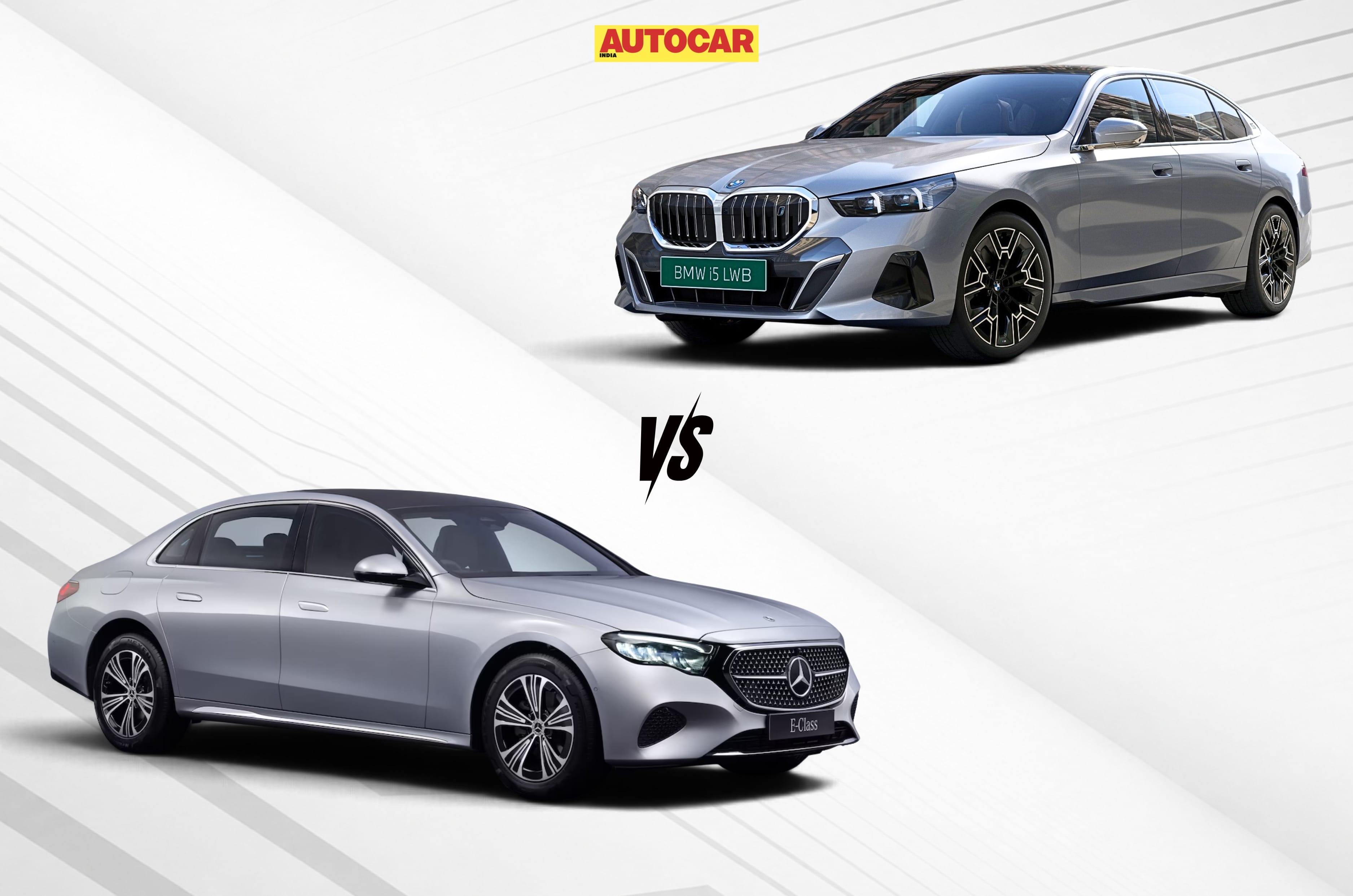
BMW i5 LWB vs Mercedes E-Class diesel: Specs, features and price compared
This vehicle news update was discovered from an RSS feed. The original report is linked below. Add original reporting, verified specifications, context and buyer-focused information before republishing or expanding this article.
Latest Update
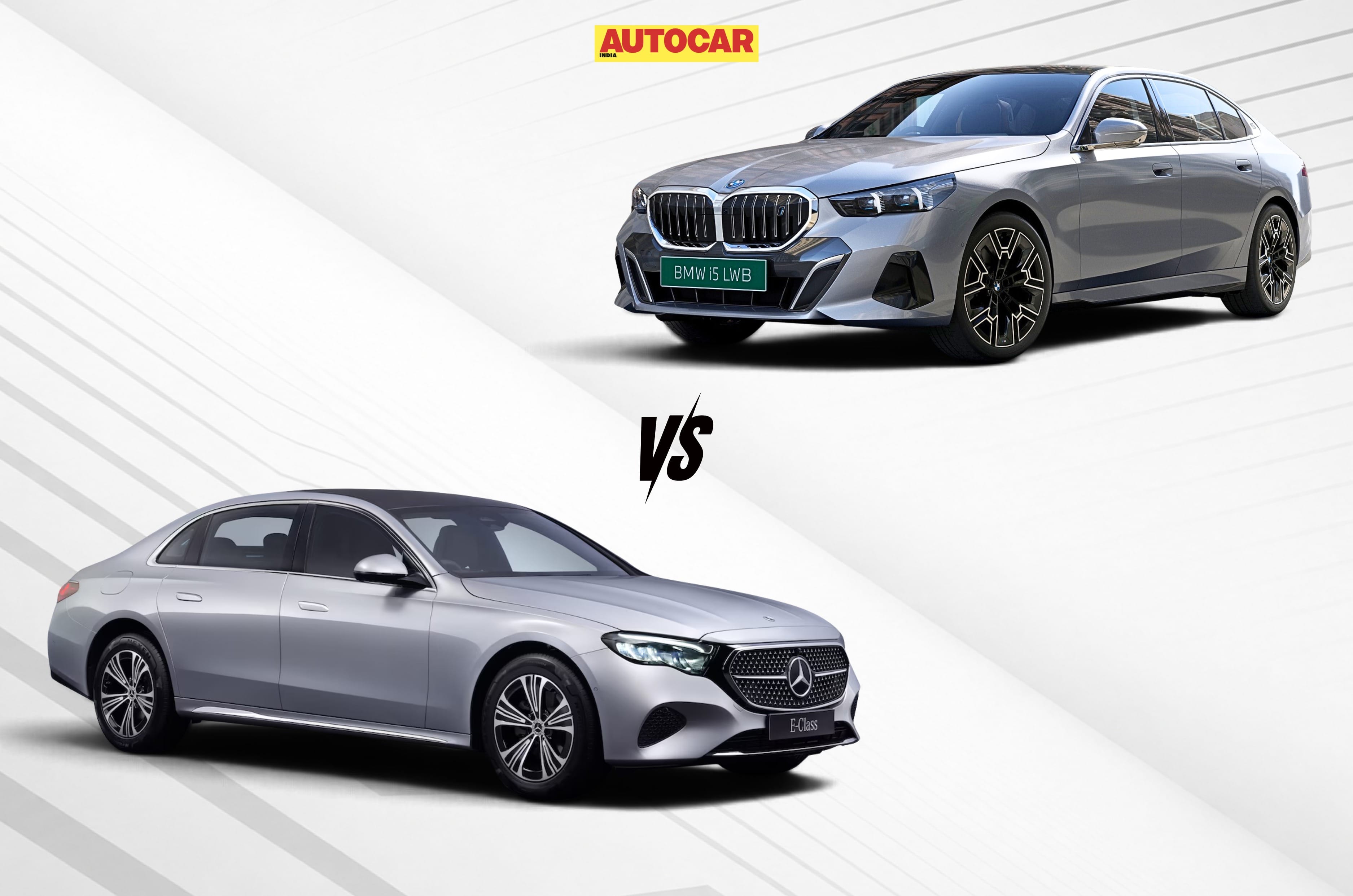
The BMW i5 LWB and Mercedes-Benz E 220d take different approaches to the luxury sedan. BMW no longer offers a diesel engine with the 5 Series in India, so for buyers with high annual running who want an efficient 5 Series, the electric i5 is the only option. The E-Class, meanwhile, continues to offer a diesel powertrain in the form of the E 220d, alongside petrol versions. Both are aimed at buyers seeking a spacious, chauffeur-friendly luxury sedan, but their powertrains make for very different ownership propositions. Here’s how they compare.
BMW i5 LWB vs Mercedes E-Class: Dimensions
i5 is wider, while length, height and wheelbase are similar
| BMW i5 LWB | Mercedes E 220d | |
| Length | 5,175mm | 5,092mm |
| Width | 2,156mm | 1,880mm |
| Height | 1,520mm | 1,493mm |
| Wheelbase | 3,105mm | 3,094mm |
| Wheel size | 20-inch | 18-inch |
The i5 LWB is significantly wider than the E-Class – by 276mm – while the two are fairly similar in length, height and wheelbase. The BMW also gets larger 20-inch wheels compared with the Mercedes’s 18-inch units.
Another point of difference is the suspension. The i5 LWB gets rear-axle air suspension, which should help with ride comfort, while the E 220d uses a steel setup with selective damping, which also does a great job of blunting sharp bumps and keeping the car as level as possible over cracks and ruts.
BMW i5 LWB vs Mercedes E-Class: Powertrain
i5 is quicker and more powerful; E 220d has more torque
| BMW i5 LWB | Mercedes E 220d | |
| Powertrain | Single electric motor | 2.0-litre diesel + 48V mild hybrid |
| Power | 268hp | 197hp |
| Torque | 410Nm | 440Nm |
| Transmission | Single-speed automatic | 9-speed automatic |
| Drive layout | Rear-wheel drive | Rear-wheel drive |
| 0-100kph | 6.7sec | 7.6sec |
| Battery | 81.6kWh | – |
| Claimed range | 669km, MIDC | – |
The i5 has the clear advantage in power and acceleration, but the E 220d has more torque than its electric rival. The i5 should also be smoother, as expected of an EV, while the E-Class is exceptionally fuel efficient for a luxury sedan and can manage more than 800km on a full tank.
The i5 gets a large 81.6kWh battery pack and has a claimed MIDC range of 669km. Considering this figure, a real-world range of over 500km should be achievable, which is enough for highway runs. Longer journeys will still need to be planned around charging stops, whereas the E-Class does not face this limitation.
On paper, the i5 makes a strong case, particularly for buyers who primarily drive in the city and have access to charging. The E 220d, however, is better suited to those who regularly mix city driving with long highway journeys and want the convenience of quick refuelling.
BMW i5 LWB vs Mercedes E-Class: Exterior features
i5 gets adaptive LEDs; both have electric folding mirrors
| BMW i5 LWB | Mercedes E 220d | |
| LED headlights | Adaptive LED | LED |
| LED DRLs | Yes | Yes |
| LED tail-lights | Yes | Yes |
| Illuminated grille | Yes | No |
| Powered ORVMs | Yes | Yes |
| Powered tail-gate | Yes | Yes |
| Door handles | Flap type | Flush-fitting |
In terms of exterior features, both sedans are similarly equipped. Both get LED headlights, LED daytime running lamps (DRLs), LED tail-lights, powered outside rearview mirrors (ORVMs) and a powered tailgate. The i5 LWB, however, gets adaptive LED headlights and an illuminated grille. The two also differ in their door-handle designs, with the i5 using flap-type handles and the E-Class getting flush-fitting units.
BMW i5 LWB vs Mercedes E-Class: Interior and features
i5 focuses on front-seat comfort, while the E-Class prioritises the rear
| BMW i5 LWB | Mercedes E 220d | |
| Digital driver’s display | 12.3-inch | 12.3-inch |
| Central touchscreen | 14.9-inch | 14.4-inch |
| Passenger display | No | 12.3-inch |
| Wireless Apple CarPlay/Android Auto | Yes | Yes |
| Four-zone climate control | Yes | Yes |
| Front-seat ventilation | Yes | No |
| Rear-seat recline | No | Up to 36 degrees |
| Wireless charging | Front and rear | Front and rear |
| Audio system | 17-speaker Bowers & Wilkins | 17-speaker Burmester |
| Ambient lighting | Yes | Yes |
| Rear sunblinds | No | Yes |
| Panoramic sunroof | Yes | Yes |
| Electric seat adjustment from rear | No | Yes |
| Soft-close doors | No | Yes |
Both offer a similar baseline of luxury equipment, but their priorities differ. The i5 adds ventilated front seats and a larger central display, while the E 220d has a more comprehensive set of rear-seat features, including electric recline, sunblinds, soft-close doors and the ability to adjust the front passenger seat from the rear. For a chauffeur-driven buyer, that gives the Mercedes an advantage in rear-seat functionality.
BMW i5 LWB vs Mercedes E-Class: Safety features
Both get ADAS and 360-degree cameras
| BMW i5 LWB | Mercedes E 220d | |
| Airbags | 8 | 8 |
| 360-degree camera | Yes | Yes |
| Lane departure warning | Yes | Yes |
| Blind-spot monitoring | Yes | Yes |
| Automatic Emergency Braking | Yes | Yes |
| Parking assist | Yes | Yes |
| TPMS | Yes | Yes |
| Auto hold | Yes | Yes |
The two cars are closely matched on safety features, with both offering 8 airbags, lane departure warning, blind-spot monitoring, automatic emergency braking, 360-degree cameras and parking assistance.
BMW i5 LWB vs Mercedes E-Class: Prices
BMW i5 LWB is Rs 3.90 lakh cheaper
| Price (ex-showroom) | BMW i5 LWB | Mercedes E 220d |
| Price | Rs 79.60 lakh | Rs 83.50 lakh |
At Rs 79.60 lakh, the i5 LWB is Rs 3.90 lakh more affordable than the E 220d and is also cheaper than the petrol E-Class. Factoring in the lower running costs of an EV, particularly for buyers who can charge at home, the BMW makes a strong financial case.
BMW i5 LWB vs Mercedes E-Class: Verdict
On paper, the BMW i5 LWB is the stronger choice if outright performance, lower running costs and a more front-seat-focused cabin are priorities. It is more powerful, quicker and cheaper to buy, while home charging can make it substantially cheaper to run.
The Mercedes E 220d makes the stronger case for chauffeur-driven use, with a more rear-seat-focused cabin, along with the longer range and quicker refuelling of its diesel powertrain.
Source
Autocar India – All
Read the original report