
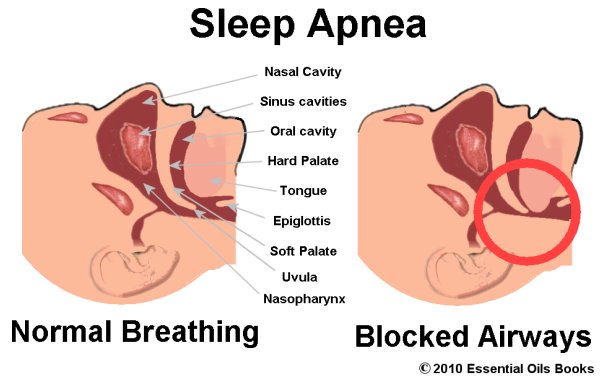
This is a very common sleep disorder in which the individual has one—or multiple—breathing pauses or even breathing shallowly when sleeping.
These breathing pauses can last anywhere from a few seconds to a few minutes and can occur thirty or more times within one hour.
Usually, when normal breathing resumes, there is a loud choking sound or snort.
Typically, sleep apnea is an ongoing or chronic condition that disrupts sleep because when breathing stops or slows down, you often come out of your deep, restful sleep and into a lighter, less restful sleep.
Therefore, you won’t get the rest you need, and I’ll tire during the day. Sleep apnea is one of the main causes of daytime sleepiness.
All too often, sleep apnea is undiagnosed. The condition typically can’t be found during a routine office exam, and no blood test is available for diagnosis.
Most individuals don’t even realize they have the condition because it occurs while they are sleeping. Usually, it is a family member that notices.
Obstructive sleep apnea is the most well-known form of sleep apnea. This is when the individual experiences a collapsed or blocked airway while sleeping, which results in breathing or shallow breathing pauses.
When this happens, and the individual tries to breathe, air squeezing past the blockage causes loud snoring. This form of sleep apnea is most common in overweight individuals but can affect anyone, even children who have enlarged tonsils.
Central sleep apnea is a less common form of sleep apnea, which occurs when the brain doesn’t send the right signals to the muscles that regulate breathing.
Therefore, your body makes little to no effort to breathe for short periods of time. This form of sleep apnea is most common in individuals with underlying medical conditions or who use certain medications- but can occur in anyone.
Central sleep apnea can occur with or without obstructive sleep apnea, and usually, snoring is not an indication of central sleep apnea.
Prognosis of Sleep Apnea
When left untreated, sleep apnea:
- Increases risk of conditions such as heart attack, diabetes, obesity, high blood pressure, or stroke.
- Increases risk of heart failure
- Cause irregular heartbeats
- Increases the chance of automobile accidents
This chronic condition requires long-term management. Changes in lifestyle, surgery, mouthpieces, and breathing machines are usually successful in treating it.
Causes of Sleep Apnea
When an individual is awake, their throat muscles keep their airway open and stiff, allowing air to flow through to their lungs. When sleeping, these muscles are relaxed, which causes the throat to become more narrow.
In most cases, this doesn’t really prevent air from flowing in and out of the lungs unless an individual has sleep apnea. With sleep apnea, the airway becomes blocked completely or partially because of the following:
- Throat muscles relax more than what is considered normal
- Tongue/tonsils are large compared to the windpipe opening
- Being overweight- soft fat tissue thickens the windpipe walls, narrowing the inside of the windpipe
- Head/neck shape causes the airway to be smaller in the mouth/throat
- The aging process limits the brain’s ability to keep muscles stiff during sleep
When your airway is blocked completely or partially, insufficient air flows into your lungs, which can cause a drop in blood oxygen levels and loud snoring.
When oxygen levels drop to a dangerous level, the brain disturbs sleep, which results in tightening the upper airway muscles and opening the windpipe. Then, normal breathing resumes, resulting in a choking sound or loud snort.
When there are frequent drops in blood oxygen levels and a reduction in the quality of sleep, stress hormones are released, which raise heart rate and increase the risk of heart-related medical issues.
Finally, if not treated, sleep apnea results in changes in the way your body uses energy, which can cause an increase in risk for diabetes and obesity.
Who is at Risk?
Usually, when you hear about sleep apnea, it is obstructive sleep apnea, and around half of the individuals with this condition are overweight.
Sleep apnea is much more common in men than in women, and while the condition can occur at any age, the greater the risk, the older the individual.
Additionally, if there is a family history present, an individual’s risk is increased.
Individuals with smaller airways are much more likely to have this condition. Children who have enlarged tonsils and overweight children could be at an increased risk.
Approximately half of individuals with this condition also have high blood pressure. Finally, sleep apnea has been found to be related to diabetes, smoking, and metabolic syndrome and is a risk factor for heart failure and stroke.
Signs & Symptoms of Sleep Apnea
One of the most common symptoms of Obstructive Apnea is loud, chronic snoring. Sometimes, the snoring pauses, and a loud gasping/choking sound may occur when breathing resumes.
Snoring is usually loudest when the individual is on their back. The snoring may be less loud if they lie on their side. Snoring may or may not occur every night, but over time it is likely to progressively get worse.
When the gasping/snoring occurs, the individual is asleep, so they are not likely to realize they have problems, much less the severity of those problems.
In most cases, a family member is likely to notice symptoms first. However, just because someone snores does not mean that they have this condition.
Another very common sign of this condition is fighting sleepiness during the day during normal activities.
The individual will likely fall asleep quickly during the quiet moments of the day. However, even if you don’t have this symptom and you know you have difficulty breathing at night, you should consult your physician.
Some other signs/symptoms of this condition include the following:
- Headaches
- Memory/learning difficulties and inability to concentrate
- Being depressed or irritable and having changes in personality or mood swings
- Getting up several times in the night to visit the restroom
- Dry mouth/sore throat upon waking
When it comes to childhood sleep apnea, symptoms include poor performance in school, hyperactivity, and angry/hostile behaviors. Children with this condition will likely breathe through their mouths during the day.

Diagnosing Sleep Apnea
Physicians diagnose this condition based on the individual’s medical and family history, examination by the physician, and the results of a sleep study.
A primary care physician will likely evaluate the results first and then determine whether the individual should seek further assistance from a sleep specialist.
If you believe that you are experiencing a sleep disorder, you should keep a sleep diary for approximately two weeks and bring that with you when you visit your physician.
You can do this by writing down when you go to sleep when you wake up, and whether you take any naps during the day. You will also need to write down how much sleep you’re getting each night and whether or not you feel alert and rested upon waking.
Finally, you’ll need to record how sleepy you feel during the day. This will help your physician determine whether you have a sleep disorder.
The physician will ask about sleep patterns and daytime functioning during the appointment. He will also want to know how loudly or often you snore or make gasping or choking sounds at night.
Since you’re not likely to notice these yourself, you will need to have input from a friend/family member who has been around you when you’re sleeping. You will also want to inform your physician whether or not there is a family history of this condition.
Sadly, many people are not even aware they have a problem and therefore are never diagnosed.
If you have a child who may have this condition, speak with their pediatrician about their symptoms.
In addition to asking about your family history and medical history, your physician will perform a physical examination, checking your nose, throat, and mouth for extra/large tissues.
When a child has this condition, it is likely due to enlarged tonsils. Sometimes, a physician only needs a physical examination and medical history to diagnose children.
Adults with this condition likely have an enlarged soft palate or uvula.
Sleep Studies for Sleep Apnea Diagnosis
A sleep study is a test that measures how well an individual sleeps and how their body responds to sleep issues.
These tests will assist the physician in determining the presence of a sleep disorder as well as the severity of it. A sleep study is the most accurate test for making this diagnosis.
There are a couple of different sleep studies: polysomnogram (PSG) or a home-based monitor.
The most common sleep study is a polysomnogram, which records the brain’s activity, heart rate, blood pressure, and eye movements during sleep.
In addition, this test records blood oxygen levels, air movement through the nose when breathing and snoring, and chest movements, which reveal whether the body is trying to breathe.
These tests are typically done at a sleep lab or sleep center and is painless. You’ll lie down and go to sleep like normal, except you’ll have sensors attached to your body in various places. These sensors are used to check on you during the night.
After the study, a sleep specialist will review the results to determine whether or not the individual has this condition and the severity. The results will also be used to determine the best course of action.
In addition to determining the presence of sleep apnea, the physician can use the results to determine the best setting for a CPAP machine, which is the most common treatment for this condition.
If your physician does believe that you have this condition, he/she is likely to schedule a split-night study. You’ll sleep without a CPAP machine during the night’s first half.
During the night’s second half, you’ll be hooked up to a CPAP machine. The staff will monitor you and adjust the settings as necessary.
In some cases, a physician recommends a home-based portable monitor sleep study. This monitor will record much of the same information as a polysomnogram.
A sleep specialist or your physician will use the monitor’s results to diagnose you and may decide you need a full sleep study in a lab or center.
Treating Sleep Apnea
In most cases, medication is not used to treat this condition; simple changes in lifestyle, breathing devices, mouthpieces, or surgery are the “go-to” treatments. The whole goal of treatment is to:
- Restore normal breathing
- Relieve symptoms such as sleepiness during the day and/or snoring
Additionally, treating this condition may help improve other medical issues, such as high blood pressure.
Treating your sleep apnea is also likely to help reduce your risk of developing diabetes, heart disease, or having a stroke.
If you have this condition, speak with your physician about the best options. Changes in lifestyle or mouthpieces may improve mild cases of sleep apnea.
However, those who have moderate to severe sleep apnea are likely to need a breathing device or even surgery to correct the problem.
If you do continue to experience symptoms during the day even though you’ve been using treatments, your physician may ask if you’re getting the proper amount of sleep.
Adults should get at least seven to eight hours of sleep each night, and children and teens will need more. If current treatments aren’t relieving sleepiness during the day, your physician will consider other options.

Changes in Lifestyle
If an individual has been diagnosed with moderate sleep apnea, changes in lifestyle may be the only treatment necessary. Some of these changes include:
- Avoid medications that cause drowsiness and alcohol. These both make it difficult for your body to keep your throat open during sleep
- If you’re overweight or obese, lose a few pounds
- Instead of sleeping on your back, use a pillow to keep you on your side to help keep your throat open.
- Use nasal sprays or allergy medications to keep your nasal passages open when sleeping.
- If you’re a smoker, you should quit smoking- speak with your physician about programs that can help.
Mouthpiece
An oral appliance, or mouthpiece, might be of assistance for those with mild sleep apnea. Even if you don’t have sleep apnea and you snore, your physician may recommend using one of these.
A dentist/orthodontist will make a custom-fit mouthpiece for you. The mouthpiece will be designed to adjust your tongue and lower jaw to keep your airways open.
You should speak with your physician if you have any pain or discomfort while using your mouthpiece.
Breathing Devices
A CPAP is the most common breathing device for treating moderate to severe sleep apnea. This machine uses a mask that fits over your mouth or mouth and nose and gently blows air into your throat. This air pressure will keep your airways open when you’re sleeping.
Treating your sleep apnea will likely help you stop snoring. However, just because you stop snoring does not mean you can stop using your machine. If you quit using it or don’t use it properly, your sleep apnea will come back.
When your physician determines that you will be using a CPAP machine, a technician will bring it to your home and set it up according to your physician’s prescription. After it is set up, you’ll still need to have it periodically adjusted to maintain the best possible results.
For some people, treatment with CPAP may cause side effects such as stuffy/dry nose, irritated skin on the face where the mask touches, headaches, and dry mouth.
Additionally, if it is not adjusted properly, you will likely experience discomfort and even bloating.
If you have any of these, work with your specialist, CPAP technician, and the nurse to reduce them. Typically, those with severe apnea will feel so much better once they are using a CPAP.
Surgery
In some cases, individuals with this condition are likely to benefit from surgery- but the type of surgery and the results depend upon the condition’s root cause.
Surgery can be done to expand the airways, which can involve resetting the jaw and removing or shrinking excess tissue in the throat and mouth.
Surgery to shrink tissue will be done in a physician’s office or hospital and may involve small injections or other treatments. You’ll likely need several treatments to completely shrink the tissue.
On the other hand, if tissue must be removed, this is done in a hospital. You’ll be put to sleep for the surgery and may experience pain that lasts for a few weeks afterward.
Children with this condition may experience improvement upon having their tonsils removed. However, in some cases, physicians may suggest waiting to see if the tissue shrinks on its own, which is common as children grow up.

Sources
http://www.nhlbi.nih.gov/health/health-topics/topics/sleepapnea/treatment
http://www.helpguide.org/articles/sleep/sleep-apnea.htm