
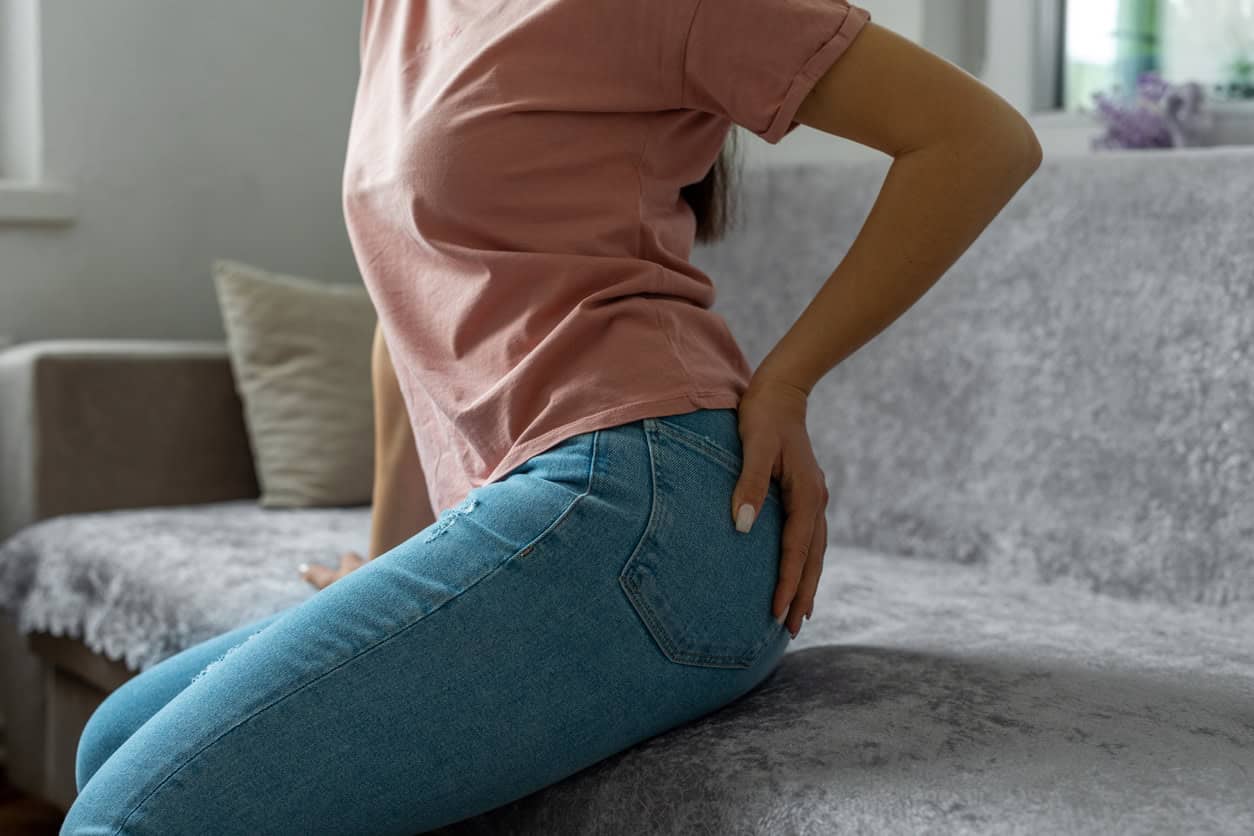
Living with pain near the hip can make the smallest things feel unfair. Standing up too fast, climbing stairs, rolling over at night, or walking just a little too far can suddenly become a reminder that something is not right.
Gluteal tendinopathy is one of those conditions that can quietly take over daily life, then make you doubt your own body when the pain comes and goes.
It is frustrating, exhausting, and deeply personal. And because the pain often hides in plain sight, many people keep pushing through long after their body has already started asking for help.
Disclaimer: This article is for general education only and is not a substitute for medical advice, diagnosis, or treatment.

What Gluteal Tendinopathy Feels Like
Gluteal tendinopathy is not just “a sore hip.” It often feels like a stubborn, nagging pain on the outer side of the hip that refuses to mind its own business. It can show up when you least expect it and then linger like an unwanted guest who has no intention of leaving.
For many people, the pain feels:
- Sharp when climbing stairs
- Achy after sitting for too long
- Worse when lying on the affected side
- Tender when pressing on the outside of the hip
- Angry after walking, running, or standing for a long time
It is the kind of pain that can make you wonder why simple movements suddenly feel like work. One moment the body seems manageable, and the next, it is sending signals that demand attention.
This condition often affects the tendons of the gluteal muscles, especially the gluteus medius and gluteus minimus. These tendons help stabilize the hip and pelvis, which means they do a lot more than people realize. When they are irritated or overloaded, the pain can become very real, very fast.
Why It Happens
The body is incredibly patient, until it is not.
Gluteal tendinopathy often develops when the tendons around the hip have been under too much stress for too long. That stress can come from repeated movement, poor load management, weak surrounding muscles, or changes in walking and exercise habits. Sometimes it happens after a sudden increase in activity. Sometimes it creeps in slowly, like a whisper that grows louder over time.
Common reasons include:
- Overuse from walking, running, or standing
- Weak hip and core muscles
- Sitting or sleeping in positions that compress the tendons
- Sudden increases in exercise
- Poor movement mechanics
- Previous hip, back, or knee issues that shift pressure to the hip
The strange part is that the body can often keep going for a while. You may still be able to work, care for family, exercise, or run errands. But underneath all that, the tendon may be getting more irritated with every step. That is what makes it so easy to dismiss at first.
And then one day, the pain is no longer easy to ignore.
The Pain Has A Pattern
Pain like this usually has a personality. It is not random to the body, even if it feels that way to you.
A person with gluteal tendinopathy may notice:
- Pain on the outside of the hip, not deep in the groin
- Pain that worsens with side-lying
- Pain after long walks or repeated stairs
- Pain when standing on one leg
- Pain when getting up from a chair
- Stiffness after sitting and then standing again
It can be sneaky. It may calm down during rest, then flare up after a “normal” day that did not feel so normal to the tendon. That is where confusion begins. You start asking yourself whether you overdid it, whether you slept badly, whether the pain is really there or if your body is just being dramatic.
It is there.
And it can be relentless.
The Emotional Side Nobody Talks About
Pain in the hip sounds physical, but it gets emotional quickly.
It changes how you move. It changes how you sleep. It changes how you think about errands, exercise, chores, and even fun. It can make a person feel older than they are, slower than they are, and more limited than they ever expected to be.
There is a quiet grief in this condition.
Not being able to lie on one side comfortably. Not trusting stairs. Not walking without calculating the consequences. Not knowing whether today will be a decent day or a painful one. That uncertainty wears people down.
And worst of all, because the pain is not always obvious from the outside, others may not understand how much it affects daily life. A person can look fine and still be negotiating every step in silence.
What Makes It Worse
Some movements and habits tend to irritate the tendon more than help it.
Common triggers include:
- Lying on the painful side
- Crossing the legs for long periods
- Standing with weight shifted onto one hip
- Long walks without pacing
- Hills and stairs
- Repetitive movements without recovery
- Sitting too long with poor posture
- Sudden return to exercise after rest
This is not always about doing “too much” in a dramatic sense. Sometimes it is about doing too much for a tendon that is already overwhelmed. The tendon is not trying to ruin your day. It is simply protesting.
That protest can be loud.
Who Is More Likely To Get It
Gluteal tendinopathy can affect many people, but it is more common in certain groups. It often appears in middle age and beyond, and it is frequently seen in people who are active, sedentary, or somewhere in between.
Risk factors may include:
- Being over 40
- Female sex
- Repeated hip overload
- Long-term sitting
- Previous lower body injuries
- Weak hip stabilizers
- Excess body weight
- Walking or running patterns that put extra pressure on the hip
Still, this is not a condition that politely selects only one type of person. It can show up in runners, walkers, desk workers, caregivers, and people who simply did not realize their hip had been quietly holding too much strain for too long.
Why It Feels So Confusing
The pain often lives right where the body is supposed to be strong. The gluteal muscles and tendons are meant to help stabilize movement, absorb load, and keep the pelvis steady. When they fail to cooperate, everything can feel off.
That is why the pain can be confusing.
You might think:
- It should not hurt this much from such a simple movement
- It feels better, then worse, then better again
- Rest helps, but too much rest makes the body stiff
- Exercise sometimes helps and sometimes irritates it
- The pain seems local, but the effect spreads into daily life
This back-and-forth can wear down patience. It can also lead to second-guessing. Am I making it worse? Should I rest? Should I move? Should I stretch? Should I ice? Should I push through?
This is where many people get stuck between fear and frustration.
What Can Help
Healing usually involves a mix of reducing irritation and rebuilding capacity. The goal is not to baby the tendon forever. The goal is to help it tolerate load again without constantly flaring up.
Useful approaches often include:
- Avoiding positions that compress the hip too much
- Reducing repeated aggravating activity temporarily
- Strengthening the hip and core gradually
- Improving movement patterns
- Using pain as a guide rather than an enemy
- Giving the tendon time to adapt
The most helpful plan is often not the most dramatic one. It is the one the body can actually tolerate and repeat.

Helpful Daily Adjustments
Small changes can make a big difference when the tendon is irritated.
Try:
- Sleeping with a pillow between the knees
- Avoiding lying directly on the painful side
- Standing with even weight on both feet
- Taking breaks from long sitting sessions
- Using stairs more slowly
- Shortening walks and building them back up gradually
- Avoiding crossed-leg sitting for long periods
These changes do not “fix” everything, but they can calm the situation enough for real recovery work to begin.
What Strength Work Usually Focuses On
Gluteal tendinopathy often improves when the gluteal muscles are strengthened in a smart, progressive way. This is not about burning out the hip with endless reps. It is about teaching the body to trust load again.
Commonly targeted areas include:
- Gluteus medius
- Gluteus minimus
- Deep hip stabilizers
- Core muscles
- Pelvic control muscles
Exercises may include:
- Side-lying leg raises
- Standing hip abduction
- Bridges
- Step-ups
- Controlled squats
- Lateral band walks
- Single-leg balance work
The key is progression. Too little load and the tendon stays underprepared. Too much load and it gets angry again. The middle path is where recovery often lives.
What Usually Makes It Worse During Recovery
Sometimes people mean well and accidentally set themselves back.
Common mistakes include:
- Doing too much too soon
- Returning to hills, running, or stairs at full intensity
- Stretching aggressively when the tendon is already irritated
- Sitting for hours and then expecting the hip to behave
- Ignoring side-lying pain at night
- Treating the problem like it will disappear overnight
Tendons are stubborn, but they also respond well to consistency. They do not like chaos. They like patience. They like gradual change. They like being respected instead of bullied.
Rest Is Not The Whole Answer
Rest can help calm a flare, but too much rest can make the area weaker and stiffer. That is the tricky part. People often think pain means stop everything. Sometimes that is true for a short while. But long-term recovery usually needs movement, not avoidance.
The body wants balance.
Not punishment. Not fear. Balance.
That means resting enough to reduce irritation, while still keeping the hip active enough to rebuild strength and confidence.
A Simple Way To Think About It
Think of the tendon like a rope that has been tugged too many times. At first, it stretches, adapts, and keeps going. But after enough strain, it starts to fray. If the tugging continues, the rope complains more and more.
The answer is not to never use the rope again.
The answer is to stop yanking it, then rebuild its strength slowly.
That is the heart of tendon recovery.
When To Get Help
If the pain lasts more than a few weeks, keeps returning, or makes daily life difficult, it is worth seeing a healthcare professional. A physiotherapist, doctor, or orthopedic specialist can help confirm what is going on and guide a plan.
You should seek help sooner if:
- The pain is severe
- You cannot bear weight comfortably
- There is swelling, fever, or redness
- The pain came after a fall or injury
- The pain spreads in unusual ways
- Symptoms are getting worse rather than better
Sometimes what feels like “just a sore hip” needs a proper look. Pain has a way of pretending to be smaller than it is.
Exercises That May Be Useful
The right exercises depend on the person and the stage of recovery, but these are often part of a plan:
- Isometric hip abduction
- Glute bridges
- Side steps with a band
- Step-ups
- Sit-to-stand practice
- Single-leg stability drills
- Controlled hip hinge patterns
These should be introduced carefully and adjusted to tolerance. If an exercise creates a sharp spike in pain that lingers afterward, it may be too much for now.
Recovery is not a contest.
It is a conversation with the body.
What About Stretching?
Stretching is often the first thing people try when pain shows up. And sometimes it feels good for a moment. But with gluteal tendinopathy, aggressive stretching may increase compression or irritation around the tendon.
Gentle mobility can be useful. Forceful stretching is a different story.
If a stretch makes the outside of the hip feel pinched or more irritated afterward, that is a sign to back off. The tendon is usually asking for load management, not more yanking.
Can It Get Better?
Yes.
And that matters.
Gluteal tendinopathy can improve with the right combination of load reduction, strengthening, movement changes, and time. It may not be instant. It may not be neat. It may take more patience than anyone wants to give. But the hip can recover.
Some people improve gradually. Others need a longer path. Flares can happen along the way. That does not automatically mean failure. It may just mean the tendon needs a different pace.
Living With It Day To Day
The hardest part is often not the diagnosis itself. It is the daily negotiation.
Should I walk today or rest?
Should I sit, stand, or change positions?
Should I sleep on the other side?
Should I do the exercise or wait until tomorrow?
Should I trust the pain or ignore it?
That constant calculation can be exhausting. It can make a person feel like their life has shrunk around one painful spot. But even then, there is room for progress. Small wins matter.
A little less pain when getting up from the couch.
A little longer walk before symptoms start.
A little better sleep.
A little more trust in the hip.
That is recovery too.
Common Myths
Myth: It is just tight muscles.
Not usually. Tendons can be involved and need different care than simple tightness.
Myth: You should completely stop moving.
Too much rest can slow recovery. Smart movement matters.
Myth: If it hurts, the exercise is always bad.
Not necessarily. Some discomfort may be acceptable, but lingering or worsening pain means the plan may need adjusting.
Myth: It will go away on its own if you ignore it.
Sometimes it calms down temporarily, but unresolved irritation often comes back.
Myth: Only athletes get it.
Not true. Many everyday people develop it.
A Practical Recovery Mindset
The body often heals better when it feels understood.
So instead of asking, “Why is this happening to me?” it can help to ask:
- What makes this better?
- What makes this worse?
- What level of movement is tolerable?
- How can load be reduced without becoming inactive?
- What small step can be repeated today?
That mindset turns pain from a mystery into a pattern. And patterns can be worked with.
Frequently Asked Questions
What Is Gluteal Tendinopathy?
It is irritation or overload of the tendons in the gluteal muscles, usually causing pain on the outer side of the hip.
Is It The Same As Bursitis?
Not always. The pain can look similar, and both may appear around the outer hip, but the underlying issue is not always the same.
Why Does It Hurt More At Night?
Lying on the painful side can compress the irritated tendons and increase discomfort.
Can Walking Make It Worse?
Yes, especially if walking volume is too high or hills and stairs are included too soon.
Does It Heal?
Yes, many people improve with the right management, strengthening, and time.
Should I Stretch It?
Gentle movement may help, but aggressive stretching can sometimes irritate it more.
How Long Does Recovery Take?
It varies. Some improve in weeks, while others need months, depending on severity and consistency of care.
When Should I See A Professional?
If the pain is persistent, severe, or affecting daily life, a healthcare professional can help guide next steps.
Final Thoughts
Gluteal tendinopathy can be the kind of pain that makes ordinary life feel unusually complicated. It can turn sitting, walking, sleeping, and climbing stairs into events your body wants to negotiate. It can be quiet on the outside and very loud on the inside.
But it is not the end of movement. It is not a sentence. It is a signal.
And once the signal is understood, the body can begin to rebuild trust, one step at a time. Not all at once. Not perfectly. But steadily.
The hip may have been asking for help for a while. Recovery begins when that message is finally heard.