
Sciatica, a condition where the sciatic nerve is irritated, can cause intense shooting pain along the lower back, hips, and legs.
While there are many ways to manage sciatica during the day, nighttime can often be the most challenging.
Lying down can increase pressure on the irritated nerve, leading to discomfort and disturbed sleep. But the right sleeping position can help alleviate some of this pain.
In this guide, we’ll walk through the best sleeping positions for sciatica, provide tips to relieve pain, and answer some frequently asked questions.
Best Sleeping Positions for Sciatica
Side Sleeping with a Pillow Between Knees
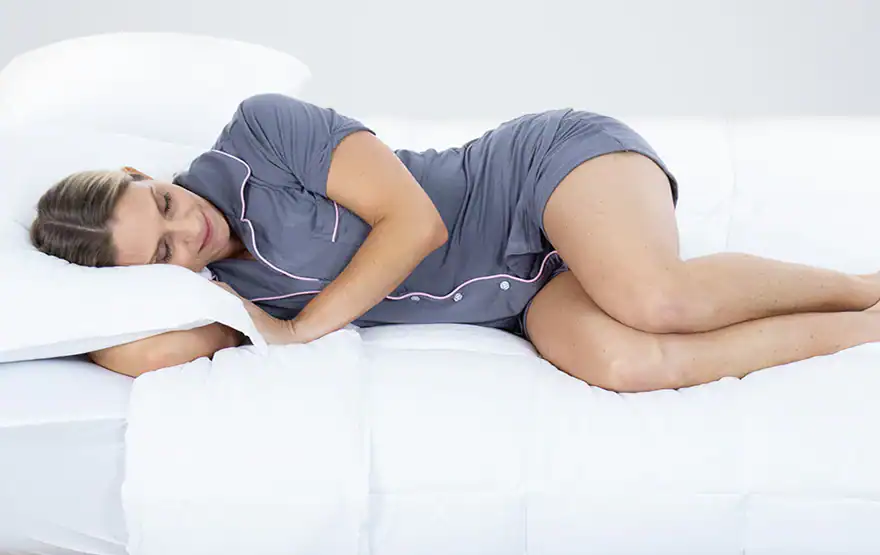
One of the best positions for sciatica relief is sleeping on your side, particularly if you sleep with a pillow between your knees.
This position reduces pressure on the lower back and hips, allowing your spine to maintain a more neutral alignment.
Sleeping on your side helps to take pressure off the sciatic nerve, which can otherwise be aggravated by misalignment. To ensure maximum relief, lie on your side with the injured side facing up.
Place a pillow between your knees to prevent your legs from rotating, which could put additional strain on the lower back.
If you find a gap between your waist and the mattress, consider adding a small pillow there for extra support.
This position helps to minimize discomfort and ensures that your spine stays aligned throughout the night.

Fetal Position
The fetal position, where you curl your body into a “C” shape with your knees drawn toward your chest, can offer significant relief from sciatica, especially when dealing with a herniated disc. This position helps open up space between your vertebrae, which can alleviate pressure on the sciatic nerve.
When positioning yourself, lie on your side and gently draw your knees toward your chest, keeping your back slightly rounded. This helps create more space in the lower back, potentially easing pain.
For added comfort, place a pillow between your knees or under your waist if you feel a gap. However, some people may find that the fetal position aggravates their sciatica. If that’s the case, you may want to switch to another position or try adjusting your body alignment.
Lying on Your Back with a Pillow Under Your Knees
Lying on your back is another recommended position for sciatica sufferers, especially if you place a pillow under your knees.
This position helps distribute your weight evenly across your back and supports the natural curve of your spine.
By elevating your knees with a pillow, you reduce pressure on the sciatic nerve, which can minimize pain and discomfort.
To set this position up, lie flat on your back with a comfortable pillow under your head. Place one or two pillows under your knees so that your heels rest comfortably against the mattress.
This position helps relax your hip flexors and takes pressure off your lower back, improving overall comfort while you sleep.
Pillow or Towel Under Lower Back
For those who need extra support in their lower back, placing a pillow or towel under your lower back can provide the necessary relief.
This simple technique can help keep your spine in a neutral position, reducing the gap between your lower back and the mattress.
With this alignment, your pelvis stays in a stable, neutral position, helping to minimize the strain on your sciatic nerve.
To use this position, lie on your back and use a pillow behind your head for proper support. Slide a thin towel or pillow under your lower back to reduce the curve and provide support to your lumbar region. You can also combine this position with placing a pillow under your knees if that’s more comfortable for you.
Best Pillows for Sciatica Relief
- Contour BackMax Bed Wedge Lumbar Support System
- ComfiLife Knee Pillow for Back Sleeping
- ComfiLife Orthopedic Knee and Leg Pillow for Side Sleepers Sleeping
- MedCline Shoulder Relief System, Bed Wedge Pillow
- Cushion Lab Back Relief Lumbar Pillow
Sleeping on the Floor
Sleeping on the floor may not sound comfortable, but it can be an excellent option for sciatica sufferers. A soft mattress can sometimes cause the spine to curve unnaturally, leading to increased pain.
Sleeping on the floor with a thin mat, such as a yoga or camping mat, helps keep your spine aligned and prevents your body from sinking into the mattress.
This can provide a more supportive surface, especially if you have a soft mattress that causes you to lose proper spinal alignment during sleep.
While sleeping on the floor, you can try any of the previously mentioned positions, such as lying on your back or side. The firmness of the floor can help you maintain better posture, reducing the pressure on the sciatic nerve.
Best Sleeping Position for Sciatica During Pregnancy
Pregnancy can make sciatica more challenging, as the growing belly puts extra pressure on the spine and sciatic nerve.
Doctors generally recommend sleeping on your side during pregnancy, as this position promotes optimal blood flow and minimizes pressure on internal organs.
Whether you sleep on the left or right side, both are equally safe for you and your baby.
If you suffer from sciatica during pregnancy, you may find relief by sleeping on your uninjured side. Placing a pillow between your knees and another pillow between your waist and the mattress can help reduce pressure on the sciatic nerve.
These adjustments allow your spine to maintain a more neutral position, promoting better sleep quality while reducing discomfort.

Sleeping Positions to Avoid with Sciatica
While finding the right sleeping position is essential, there are also certain positions to avoid to prevent worsening sciatica pain.
- Sleeping on Your Stomach: Sleeping on your stomach is not recommended for sciatica sufferers. This position often causes your spine to curve unnaturally, putting additional strain on your muscles and joints. This misalignment can increase pressure on the sciatic nerve, aggravating pain and discomfort.
- Twisting Your Spine: Regardless of the position you sleep in, try to avoid twisting your spine or hips. Twisting movements place extra pressure on the sciatic nerve, which can lead to further irritation and pain.
Tips for Relieving Sciatica Pain While Sleeping
- Mattress Type: Opt for a medium to firm mattress to maintain proper spinal alignment. Soft mattresses can cause your body to sink too much, leading to poor posture during sleep.
- Plywood Under Your Mattress: If your mattress is too soft, consider placing a piece of plywood under it for added firmness. This helps prevent your body from sinking, keeping your spine in a more neutral position.
- Use a Body Pillow: A body pillow can help prevent you from rolling onto your stomach during the night, maintaining the alignment of your spine.
- Stretching and Yoga: Incorporating light stretching or yoga before bed can help relax the muscles around the sciatic nerve and reduce pressure.
- Warm Bath: A warm bath before bed may help relax tight muscles, offering temporary relief from sciatica pain.
What Makes Sciatica Worse in Bed?
Sciatica pain can worsen in bed due to increased pressure on the irritated nerve. Sleeping on soft mattresses or poor alignment can cause the spine to bend, aggravating sciatica symptoms. Additionally, improper sleeping positions that twist or compress the lower back can increase nerve irritation. It’s essential to choose a sleeping position that supports proper spinal alignment and reduces pressure on the sciatic nerve.
When to See a Doctor
If your sciatica pain persists for more than a week, becomes progressively worse, or is accompanied by numbness, tingling, or weakness in the leg, it’s time to seek medical help.
A doctor can help identify the cause of your sciatica and recommend treatment options, such as physical therapy, medications, or other interventions.
Conclusion
Getting a good night’s sleep with sciatica can be difficult, but finding the right position can make a significant difference. Whether you sleep on your side with a pillow between your knees or on your back with pillows supporting your lower back, these positions can help reduce pressure on the sciatic nerve and alleviate pain.
Additionally, avoiding certain positions, like sleeping on your stomach, and using tips such as stretching or switching to a firmer mattress can also help manage sciatica symptoms.
If your pain persists, it’s important to consult with a healthcare provider for further evaluation and treatment.

FAQs
Q1: Can sleeping on the floor help with sciatica?
Yes, sleeping on the floor can help maintain proper spinal alignment, especially if your mattress is too soft. Using a thin mat on the floor can provide a firmer surface that supports the natural curve of your spine.
Q2: Is it better to sleep on the left or right side for sciatica?
Both left and right sides are equally beneficial, but if you’re pregnant or have a specific side affected by sciatica, sleeping on your uninjured side may be more comfortable.
Q3: How can I reduce sciatica pain while sleeping?
Use a medium-firm mattress, place pillows between your knees, and consider using a body pillow to maintain proper spinal alignment. Stretching before bed and taking a warm bath can also help.
Q4: Is it bad to sleep on my stomach with sciatica?
Yes, sleeping on your stomach can worsen sciatica pain by misaligning your spine and adding pressure to the sciatic nerve. It’s best to avoid this position.
Q5: How long should I wait to see a doctor for sciatica?
If your sciatica pain lasts longer than a week or worsens, it’s time to see a doctor. Early intervention can help manage the condition and prevent long-term issues.
