
Fibromyalgia is a chronic condition that causes widespread pain, fatigue, and tenderness in the muscles, ligaments, and tendons. Managing these symptoms can be challenging, but incorporating yoga into your routine can provide much-needed relief.
Yoga offers gentle movements and relaxation techniques that can ease pain, improve flexibility, and help reduce stress, all of which are important for fibromyalgia patients.
In this article, we’ll explore seven yoga poses that can benefit those living with fibromyalgia and provide tips for practicing them safely.
Child’s Pose (Balasana)
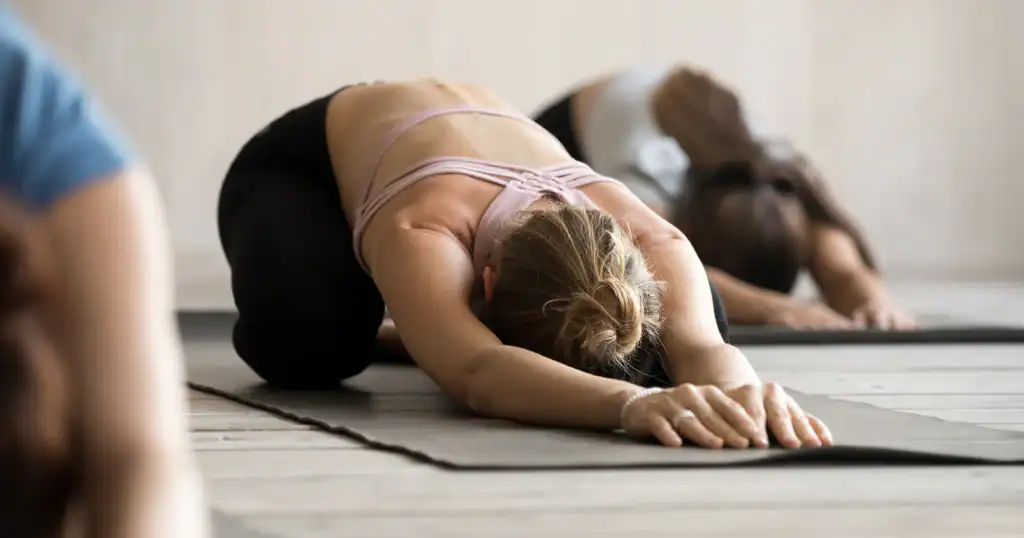
Child’s Pose, or Balasana, is one of the most restorative and relaxing yoga poses. It’s especially beneficial for fibromyalgia patients as it gently stretches the back, hips, and thighs, releasing tension in the body.
The pose also allows for deep breathing, which can help calm the nervous system, an essential part of fibromyalgia relief.
Many people with fibromyalgia experience muscle stiffness and tension, especially in the back and shoulders. Child’s Pose helps alleviate this discomfort while promoting overall relaxation.

To practice Child’s Pose:
- Kneel on the floor with your big toes touching and knees apart.
- Slowly lower your torso toward the floor, resting your forehead on the mat. Your arms can be extended in front of you or placed alongside your body, depending on what feels most comfortable.
- If you experience discomfort or have difficulty reaching the floor, place a bolster, blanket, or cushion under your chest or forehead for extra support.
- Hold the pose for a few breaths, focusing on relaxing into the stretch.
Cat-Cow Pose (Marjaryasana-Bitilasana)
The Cat-Cow Pose is a gentle flow between two positions that promotes spinal flexibility and relieves back neck, and shoulder tension.
This is particularly important for fibromyalgia patients, who often experience stiffness and discomfort in the upper body.
Moving between arching and rounding the back lets you gently stretch and strengthen the spine’s muscles, improving mobility.
Start on your hands and knees, with your wrists directly under your shoulders and knees under your hips.
As you inhale, arch your back, dropping your belly toward the floor while lifting your head and tailbone (Cow Pose).
As you exhale, round your spine, tuck your chin to your chest, and draw your belly button toward your spine (Cat Pose).
Continue flowing between these two positions for several breaths, moving slowly and mindfully. Pay attention to your breath and move within a range that feels comfortable.
This pose can help increase circulation and ease muscle stiffness, a common fibromyalgia symptom.
Seated Forward Fold (Paschimottanasana)
The Seated Forward Fold is a simple yet effective pose that stretches the back, hamstrings, and hips. Fibromyalgia patients often experience tightness in the lower back and legs, making this pose particularly beneficial.
By gently stretching these areas, you can increase flexibility and reduce the discomfort caused by muscle tension. The forward bend also encourages relaxation and can help relieve stress, a common issue for those with fibromyalgia.
To practice the Seated Forward Fold, sit on the floor with your legs extended straight before you.
Flex your feet and keep your spine tall as you inhale. On the exhale, hinge at the hips and gently reach for your feet, shins, or thighs.
If you can’t get your feet, don’t worry—rest your hands on your legs where they land and avoid forcing the stretch. It’s essential to keep your spine long as you fold forward, avoiding rounding your back.
You can place a cushion or blanket under your hips to provide extra support. Hold the position for several deep breaths, allowing your body to relax into the stretch.
Legs Up the Wall Pose (Viparita Karani)
Legs Up the Wall Pose is a vital posture that helps alleviate fatigue, reduce leg swelling, and improve circulation. It’s ideal for fibromyalgia patients who experience persistent fatigue and discomfort in their lower limbs.
By gently inverting the body and elevating the legs, this pose encourages blood flow to the upper body, providing a soothing sensation and helping calm the nervous system.
To practice Legs Up the Wall, sit with one side of your body against a wall, then slowly lie back as you extend your legs up the wall. Your hips should be close to the wall, and your body should form a straight line with your legs.
If needed, you can place a cushion or block under your lower back for added comfort. Close your eyes and relax, allowing your legs to rest against the wall for several minutes.
This pose is perfect for moments when you need to recharge, as it promotes a deep sense of relaxation and restoration.
Supported Bridge Pose (Setu Bandhasana)
Supported Bridge Pose is a gentle backbend that helps open up the chest, stretch the spine, and release tension in the lower back.
Fibromyalgia patients often deal with stiffness and discomfort in the back and hips, making this pose particularly useful.
The bridge helps strengthen the glutes, lower back, and core muscles, improving posture and supporting overall mobility.
To practice the Supported Bridge Pose:
- Lie on your back with your knees bent and feet flat on the floor, hip-width apart.
- Press your feet into the floor as you lift your hips, creating a gentle arch in your lower back. You can place a yoga block or cushion under your sacrum for support, which will help relieve pressure on the lower back.
- Hold the pose for several breaths, engaging your glutes and thighs to maintain the lift. This pose can also help reduce stiffness in the hips and improve flexibility in the spine.
Sphinx Pose (Salamba Bhujangasana)
Sphinx Pose is a gentle backbend that stretches the lower back and opens up the chest, making it an excellent choice for fibromyalgia patients.
This pose helps counteract the effects of prolonged sitting or slouching, which can contribute to muscle stiffness and discomfort. It also strengthens the spine and promotes better posture, benefiting those with fibromyalgia.
To practice Sphinx Pose:
- Lie on your stomach with elbows directly under your shoulders and forearms on the floor.
- Press your forearms into the mat as you lift your chest off the ground, elongating your spine.
- Keep your elbows slightly bent and engage your back muscles to support the lift.
- Avoid arching your lower back too much, and relax your shoulders away from your ears.
- Hold the pose for several breaths, feeling the gentle stretch in your back and chest. This pose can be a great way to relieve tension and build strength in the spine.
Corpse Pose (Savasana)
Corpse Pose, or Savasana, is the ultimate relaxation pose, often practiced at the end of a yoga session.
It’s essential for fibromyalgia patients because it allows the body and mind to relax deeply, reducing stress and promoting healing.
Chronic stress can exacerbate fibromyalgia, so taking time to relax and practice mindfulness is crucial for symptom management.
To practice Savasana:
- Lie flat on your back with your legs extended and arms at your sides, palms facing upward.
- Close your eyes and take deep, slow breaths.
- Focus on releasing any tension in your body, letting go of stress with each exhale. For added comfort, you can use blankets or eye pillows.
- Stay in this pose for several minutes, allowing your body to relax.
This pose helps reset your nervous system and is a powerful tool for reducing anxiety, improving sleep, and managing fibromyalgia symptoms.
FAQs
1. How often should I practice yoga for fibromyalgia relief?
For optimal benefits, it’s recommended that you practice yoga at least 3-4 times a week. However, it’s essential to listen to your body and start slow. Begin with shorter sessions and gradually increase the duration as your body becomes more accustomed to the practice.
2. Can I do yoga if I’m experiencing a flare-up?
Yes, but practicing gentle and restorative poses and avoiding intense movements is crucial. Focus on deep breathing and relaxation poses like Child’s Pose or Legs Up the Wall to calm the body during a flare-up.
3. Do I need to take a class, or can I practice yoga at home?
While taking a class with a trained instructor can be beneficial, practicing yoga at home is also an option. Many online resources, including videos and apps, can guide you through gentle yoga routines specifically for fibromyalgia relief.
4. What if I can’t do a pose correctly?
It’s important not to force any pose. Yoga is about listening to your body, and there are always modifications that can help. Use props like cushions, blankets, or blocks to make the poses more accessible and comfortable.
Conclusion
Yoga can be an incredibly effective tool for managing fibromyalgia symptoms. The poses outlined in this article can help alleviate pain, improve flexibility, reduce stress, and enhance overall well-being.
By incorporating yoga into your routine, you can find relief from the challenges of fibromyalgia and improve your quality of life.
Remember to practice mindfully, listen to your body, and seek support from a qualified instructor if needed.
