
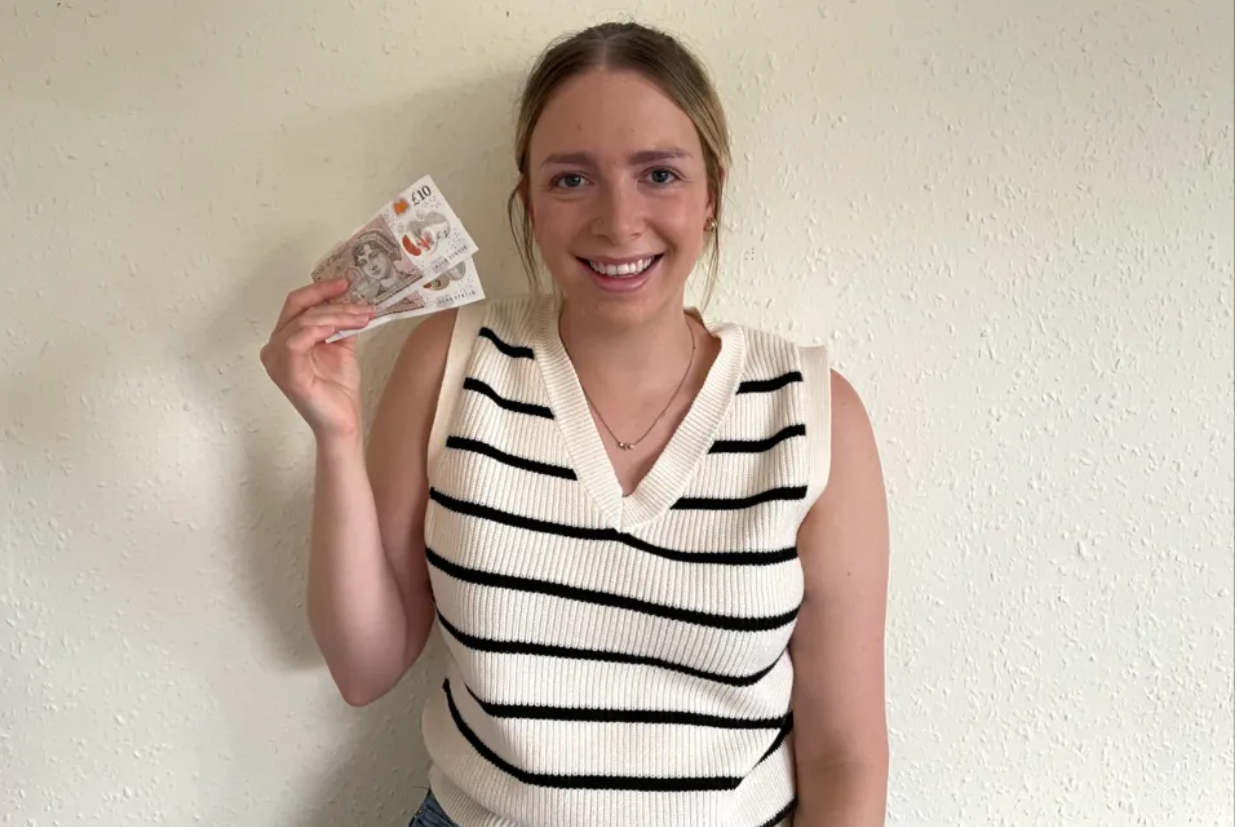
MY phone pings – it’s text from HMRC. As I opened it, thinking the taxman might want more money, I was left with a big smile on my face.
A message from HMRC might not sound like the start of a good news story.


But it came with a welcome surprise: I was owed some cash.
The message arrived just a few weeks after an unexpected email from the Student Loans Company (SLC), telling me I was eligible for a refund.
HM Revenue and Customs (HMRC) paid me £842.06, while the Student Loans Company (SLC) refunded another £374.
Both payments arrived within days of claiming.
There was no competition to enter and no money to spend first. These were refunds I was entitled to — I just needed to claim them.
And while not everyone will be due a payout, my experience shows it’s worth checking.
A welcome message from the taxman

I received a text message from HMRC on September 21 that said: “You may be due a tax refund.
“Search ‘P800 refund’ on GOV.UK to claim it.
“Check this text is genuine by searching ‘HMRC texts’ on GOV.UK.”
The message appeared under the name HMRC, rather than a phone number, with the HMRC logo as its contact picture.
It didn’t contain a link to click or ask me to send any personal or bank details.
Those details alone weren’t proof it was genuine, so I went directly to GOV.UK myself, rather than accessing it through the message.
I checked the wording against HMRC’s list of genuine texts, then independently signed into my Personal Tax Account using my Government Gateway details.
There, under my “PAYE Income summary”, I could see that I was owed £842.06 — confirming the refund was real.
I requested my refund, entered my bank details and, three days later, it was paid straight into my bank account.
I got the cash back because I resigned from my job in December 2025 and, as a result, hadn’t used my full tax-free allowances for the 2025–26 tax year.
A student finance refund

On August 13, an email landed in my inbox from the SLC with the subject line – “Good news, Olivia – you’re eligible for a refund”.
I have two student loans – a Plan 2 which funded my undergraduate study and a postgraduate loan for my Master’s degree.
I signed into my online account and requested my refund.
I wasn’t told how much my refund would be at the time, this came in a separate email a few days later.
I was getting the nice little sum of £374 back into my bank account.
SLC told me the £374 was made up of three refunds:
- £96 in postgraduate loan repayments from 2021–22.
- £104 in Plan 2 loan repayments from 2025–26.
- £174 in postgraduate loan repayments from 2025–26.
The explanation came down to something called a “below threshold” refund.
Student loan deductions are calculated using what you earn in each pay period, rather than waiting to see what you earn across the whole year.
That means repayments can correctly come out of your wages in a higher-paid month, even if your annual earnings end up below your loan’s repayment threshold.
A bonus or overtime can cause this, for example.
In my case, SLC checked my annual earnings against the relevant thresholds and identified £374 I could claim back.
It then contacted me directly to invite me to request the refund through my online account.
Taking the refund meant £374 was added back to my outstanding student loan balance.
But I claimed it because student loans don’t work like ordinary bank loans: repayments depend on what you earn above your plan’s threshold, rather than how much you owe.
That means a bigger balance doesn’t automatically mean bigger regular repayments.
If you won’t clear your loan before it’s written off, leaving those extra repayments with SLC might not reduce what you ultimately pay — so claiming the money back can be worthwhile.
It won’t be the right choice for everyone, though.
If you expect to repay your loan in full, taking a refund means having more to repay later, potentially with extra interest.
Combined with my tax refund, that took my total to £1,216.06.
Could the taxman owe you too?

You don’t need to wait for a story like mine to check your own position.
If you’ve paid too much Income Tax, HMRC may issue a tax calculation known as a P800 explaining whether you’re owed a refund.
Start by going directly to GOV.UK and checking your Personal Tax Account.
If you’ve received a tax calculation, follow the refund instructions it gives you.
And if you think you’ve overpaid but haven’t had a calculation, GOV.UK has a “Check how to claim a tax refund” tool to help you find the right route. The tool explains what to do — it doesn’t submit a claim for you.
My payment arrived in two days, but that’s my experience rather than a promise that yours will be just as quick.
Check your student loan account
If you’ve been making student loan repayments, it’s worth checking those too.
For a below-threshold refund, compare your total annual income before tax with the repayment threshold for your plan and the tax year concerned.
Don’t just look at your usual monthly salary: bonuses and overtime count towards your income too.
You can ask for a refund if you made repayments but your income across the whole tax year was below the relevant annual threshold.
SLC told The Sun it proactively contacts eligible borrowers once the tax year has ended and it has received their annual earnings information from HMRC.
If you receive that invitation, you can request the money through your online student loan repayment account.
But if you think you’ve overpaid and haven’t heard from SLC, official guidance says you can still ask for a refund.
Below-threshold repayments aren’t the only reason you might be owed money.
Other refund situations include repaying on the wrong plan, starting repayments too early or paying more than your outstanding loan balance.
One thing to know before claiming
There is an important difference between my two refunds.
The student loan money goes back onto my outstanding loan balance.
SLC told me future repayments will still be calculated in the normal way, based on my earnings and repayment plan.
So it’s money back in my bank now — not £374 of debt being wiped away.
SLC also said there is no deadline for claiming a refund, and most approved refunds take up to 28 working days, although timings vary.
Mine arrived within days, but other borrowers may need to wait longer.
A good surprise — but check safely
An unexpected refund message can be genuine, as mine were. But I’d still urge readers to check carefully.
Go directly to GOV.UK and access the relevant official account rather than relying on a link in an unexpected message.
SLC told me it will never ask borrowers to provide or confirm personal or financial information by email, text or social media.
If you’re unsure, verify the message with SLC before proceeding.