
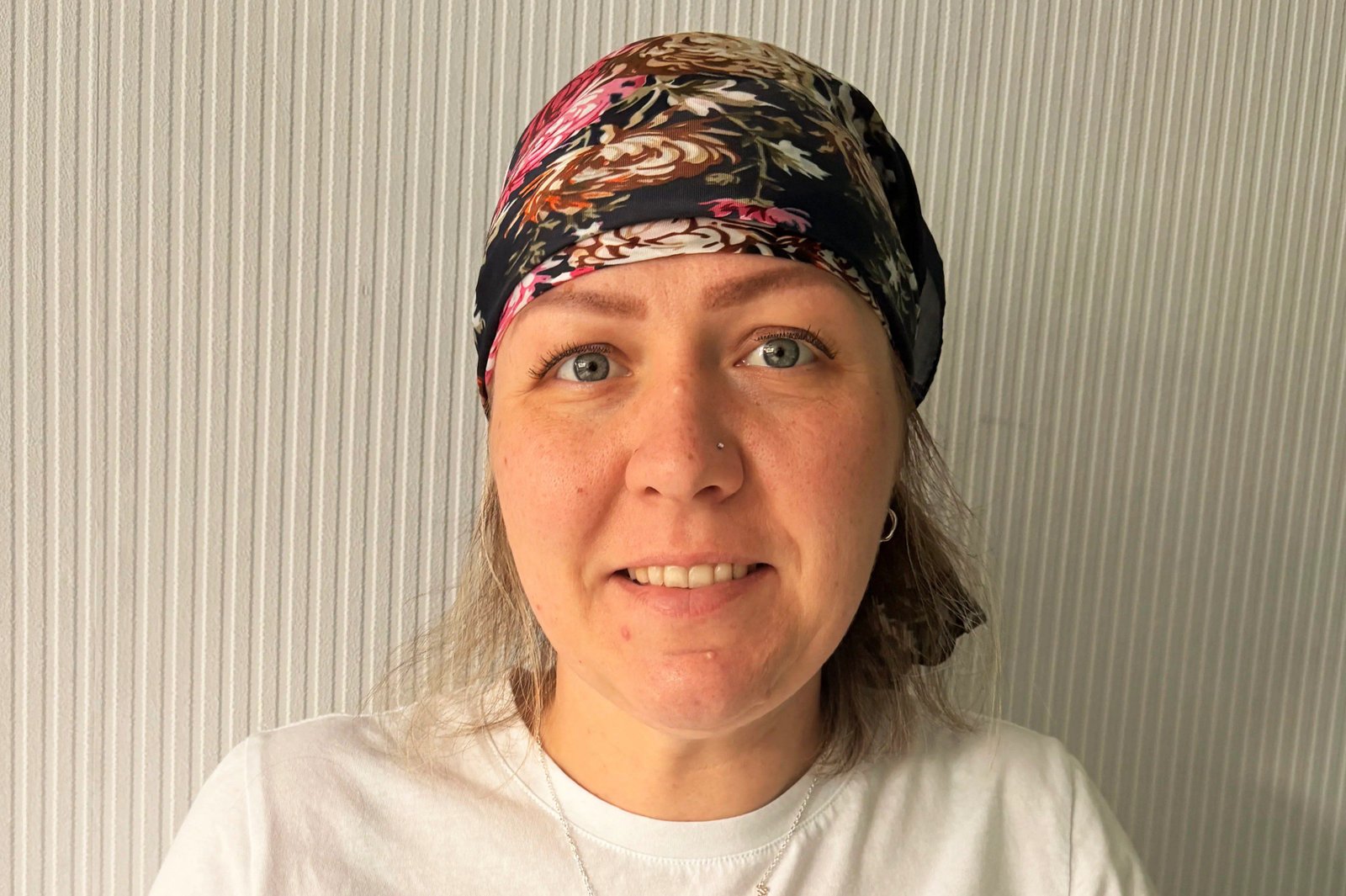

BECKY Small describes her three children as her everything. But the 33 year old became terrified she’d never see them reach crucial milestones after being told she had stage four ovarian cancer.
And it’s not clear how long she has left.


It’s the sixth most common cancer in the UK, but it is often diagnosed too late because symptoms like bloating, feeling full and lower tummy pain can be attributed to other conditions, making it particularly deadly.
Becky, a logistics manager from Hampshire, first experienced bloating in April. But it took a visit to A&E, after being misdiagnosed by two GPs, for the cancer to be spotted.
By that time, she says: “My stomach was rock-solid and painful. The only way to describe it was like I was nine months pregnant. I couldn’t breathe or walk properly, either.”
Her immediate thought after being told doctors had found two lesions on her ovaries and one on her kidney was that she was going to die, leaving Iris, four, Harley, eight, and Logan, 10, without their mum. “I just want to be a mum to my kids and to be a wife to my husband Paul,” says Becky.
“Thinking that you’re going to die is a horrible feeling.”
Considering herself fit and healthy, Becky rarely went to the GP before this year.
When she first noticed bloating on April 22, she thought it might be connected to her polyendocrine metabolic ovarian syndrome or PMOS (formerly known as PCOS), which she was diagnosed with aged 16.
The condition made it harder for Becky to conceive, but it can also cause bloating, belly pain, weight gain and missed periods. Her symptoms soon became severe.
“My stomach felt really hard all the time. I couldn’t fit into any trousers, and it was so uncomfortable. I couldn’t sleep and I couldn’t even roll over in bed because it was so painful and so big,” says Becky.
After also noticing pain on the right side of her back, she visited her GP on April 27, who diagnosed her with inflammation.
She did a urine test, which came back clear, and was given medication, but Becky saw no improvement.
She says that she saw a different GP three days later, who did not carry out any tests or examine her abdomen. She was told she had a tummy bug and that she should be “back to normal” within a week.
When Becky took herself to A&E, doctors were shocked she hadn’t had blood tests or CT scans. That same evening, she was told she had growths on her ovaries and kidney.
“If I hadn’t gone to A&E, I probably wouldn’t be here now,” she says. After a biopsy, Becky finally received her diagnosis of stage four metastatic ovarian cancer on June 1.
Ovarian cancer affects 7,500 people in the UK every year and kills more than 4,000.*
Plus, research suggests rates among Brits under 50 are rising**, while Ovarian Cancer Action predicts 9,400 women will be diagnosed every year by 2040.
Rising levels of obesity are thought to be a key factor, but this doesn’t fully explain it, says Helen Hyndman MBE, lead nurse at The Eve Appeal.
Other factors include age (you’re more likely to get it after 65), a family history of ovarian or breast cancer, certain genetic mutations, and never having been pregnant. Having endometriosis and using HRT after menopause may also increase your risk.
“I haven’t wanted to know my prognosis, as I want to live the rest of what life I have left, happy and making memories,” Becky says.


She’s had six rounds of chemotherapy, though struggled with side effects, such as fatigue, insomnia and losing her hair.
The treatment has significantly shrunk the lesions on her ovaries, but the one on her kidney hasn’t responded as well.
Next month, she’s due to have a hysterectomy, where her womb and cervix will be removed, and possibly her kidney, too.
With the help of her husband Paul, 34, Becky told her two eldest children about her diagnosis, describing it as the hardest conversation of her life.
She says: “I was in hospital at the time.

‘Silent’ Signs You Shouldn’t Ignore
Looking back, Becky wishes she’d pushed for extra tests earlier.
“If they had just run some more tests before, then I may be further along than where I am now,” she says.
Describing ovarian cancer as “silent and deadly”, she is urging young women in particular to watch out for symptoms, which can be surprisingly subtle.
“I don’t want other women, including my own daughter, to have to go through what I’m going through,” she says.
The main symptoms of ovarian cancer
- Persistent bloating and an increase in abdominal size
- Feeling full quickly, loss of appetite or feeling sick
- Pelvic and/or abdominal pain
- Needing to wee more often
- Changes in bowel habits
People can also get back pain, weight loss, tiredness and unexpected vaginal bleeding.
“Persistent bloating is different from occasional bloating,” says Helen.
“It doesn’t come and go and isn’t affected by what you do and what you eat. Your abdomen may feel swollen or firm, rather than soft, and clothes may feel tighter.”
See a GP if you have these symptoms for more than three weeks.
“Ovarian cancer is often misdiagnosed, particularly in the early stages, often because symptoms don’t seem very gynaecological,” adds Helen.
“If you have been to the doctor with any of these symptoms and they haven’t improved, don’t be afraid to go back. Let them know your symptoms are continuing and ask whether ovarian cancer could be ruled out.”
“We were just honest with them and explained that if they have questions or they want to talk, then they can,” she says.
She’s chosen not to tell Iris, who’s too young to understand.
She’s now focused on spending time with her family. With the help of a fund-raiser launched by friends, the family were able to rent a caravan in West Sussex over the school holidays, spending time on the beach, eating ice cream and watching sunsets.
“It’s those things I want them to remember if I’m not here,” says Becky.
Despite her fears she wouldn’t live to see Iris start school, Becky was able to witness this special day last month. “She’s loving it,” she smiles.
“I cried the first day, and was emotional for several days after. It was like a milestone had been hit. It is a worry that now Iris has started school, my body will give up. But I try to stay positive and think about all the other milestones I will hit.”
The next one Becky is aiming for is Christmas. “I want the kids to have as many lovely memories as possible.”
- Sources: *Ovarian Cancer Action **BMJ Oncology