

26 Years Ago, This $44 Million Game of Thrones Meets Fairy Tales Epic Completely Changed Fantasy TV You Should Know
Every few years a network decides fantasy is about to be huge and spends accordingly, and most of those bets are forgotten inside a decade. In February 2000, NBC aired a ten-hour miniseries about a New York waitress who falls into a world where the fairy tales already ended and their descendants are still running the place. It cost a reported $44 million, which in 2000 was roughly what a network spent on an event it expected people to talk about. Two Oscar winners were in the cast. The writer had spent ten years on the script. Then the network moved the final four hours out of the ratings period it had built the whole thing for.
The show was The 10th Kingdom, and the reason to talk about it 26 years later is not that it was a hit, because it was not. It is that it got there first. Eleven years before Once Upon a Time built a hit series on fairy-tale characters colliding with the modern world, and a decade before prestige fantasy became something networks fought over, a British screenwriter and a Hallmark production company had already made the whole thing, at feature-film scale, and watched it disappear.
Why This $44 Million Fairy Tale Epic Got There First
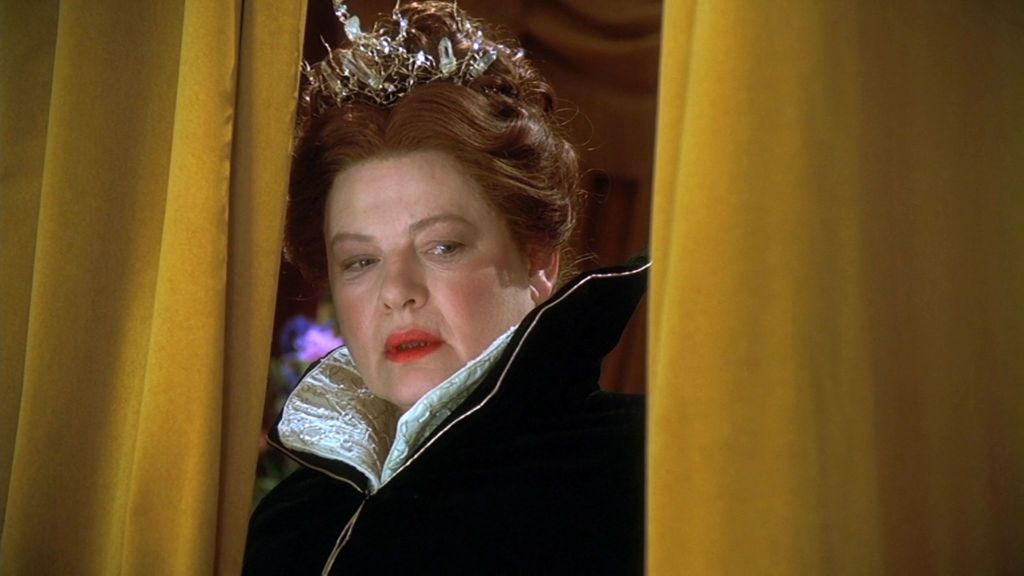
The premise still sounds like a pitch from five years ago rather than 26. Virginia Lewis is a waitress in Manhattan with a miserable job and a janitor father, Tony. A golden retriever turns up in Central Park, and the dog is actually Prince Wendell, heir to the Fourth Kingdom, transformed by his stepmother the Evil Queen. A magic traveling mirror drags Virginia and Tony into the Nine Kingdoms, which is the world after happily ever after: Snow White and Cinderella are history now, several generations back, and their descendants run these places as functioning states with borders and politics. Their guide is Wolf, a half-human con man with obvious appetites who falls for Virginia immediately. Earth, it turns out, is the tenth kingdom, and it is where the Queen came from.
That structure, real person falls into the fairy-tale world and finds it has aged, is the exact engine Once Upon a Time ran on from 2011 to 2018 and that Grimm built a police procedural around. Neither show has ever credited The 10th Kingdom, and its creators point to other sources entirely. So the honest claim here is priority rather than influence. This was on NBC in prime time in 2000, and nothing else on American television looked like it.
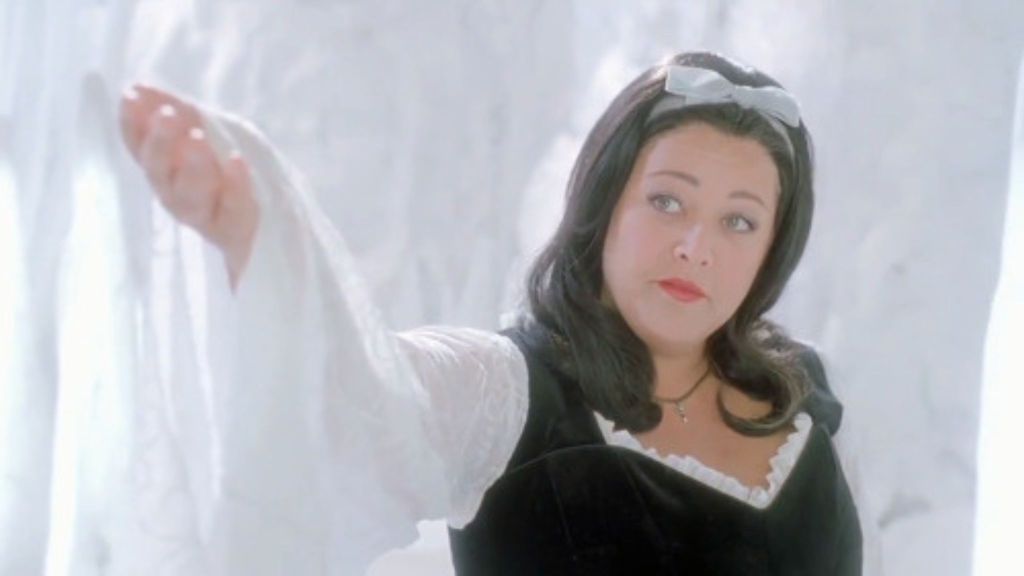
The talent was not an accident either. Simon Moore wrote it, and Moore was no fantasy hack. He had written Traffik, the British miniseries Steven Soderbergh remade as the Oscar-winning Traffic that same year, and he had won an Emmy writing Gulliver’s Travels for these same producers in 1996. NBC greenlit this on the strength of that, and he spent a decade on the script. The cast included Camryn Manheim as Snow White, fresh off an Emmy for The Practice, Dianne Wiest as the Evil Queen with two Oscars on her shelf, and Rutger Hauer, Ann-Margret, John Larroquette and Ed O’Neill filling out the Nine Kingdoms.
What Actually Happened to It, and Why It Survived Anyway
Then the network flinched. NBC had built it as a February sweeps event, the ratings period networks schedule their biggest swings around, and then moved the remaining four hours to after sweeps ended. The premiere drew 14 million viewers, a triumph by today’s standards and a disappointment in 2000 for something this expensive. Critics were brutal, with one trade review calling it a fairy tale “six hours too long.” It went to the Emmys with a single nomination, in main title design, and won it. The same producers’ Merlin had taken six Emmys two years earlier on two thirds of the budget.
By the measures a network uses, it failed. And then it refused to go away. The audience score sits at 95% from the people who actually watched it. A Blu-ray arrived in 2015, fifteen years after broadcast, which does not happen to shows nobody wants. A fan group founded in 2003 is still running. A petition for a sequel has collected more than 18,000 signatures since 2017, and Moore has announced a sequel novel following Wolf and Virginia’s daughter, describing it as a possible blueprint for a new adaptation. No network has bitten, which puts it on a long list of fantasy shows fans keep asking to see revived.
Personally, I think the 2000 reviews were not wrong about the length, because ten hours of anything is a big ask. But they were reviewing it as a miniseries, which was the only format available to them, and the thing they called bloated is what would now be called a season of television. Give this eight episodes on a streamer with a marketing budget and nobody says obese, they say ambitious. It showed up twelve years early for the format that would have made it work.
The strangest part is how easy it is to check for yourself. A ten-hour miniseries with two Oscar winners in it, made for a reported $44 million, is currently free.
The 10th Kingdom streams free with ads on Tubi, The Roku Channel, Pluto TV and Plex. Is it worth the ten hours? Let us know in the comments.


