4 TV Sequel Shows That Were Actually Better Than the Original, And How They Did It: A Practical Look
The obvious answer to the question of sequel shows better than the original is Better Call Saul, and the obvious answer does not hold up once the numbers are sitting next to each other. Better Call Saul beats Breaking Bad on Rotten Tomatoes by 2 points, 98% to 96%, and it loses on everything else that keeps score. It sits a point lower on Metacritic, 86 to 87. It sits half a point lower on IMDb, 9.0 to 9.5. And it went 0 for 53 at the Primetime Emmys, the most nominations any series has ever collected without converting a single one, across the same years that Breaking Bad won 16. That is not an argument against the show, which is magnificent, and the two are close enough that taste can reasonably settle it in either direction. It does mean the claim is worth testing rather than repeating, because the sequel was better is something people say constantly and hardly anybody checks against a record.
Two rules were applied to everything below. A sequel show means a later series that shares continuity with an earlier one and carries its timeline forward rather than retelling it, which lets in continuations and spinoffs and keeps out reboots and remakes. Every pairing also has to show a measurable gap in favor of the sequel, in review aggregates or in awards, rather than the warm feeling that the newer one was better. The more interesting half of the assignment is the second one, which is how each of them managed it. None of these four shows pulled ahead because somebody hired better writers for it. Each one got access to something structural that the original was never allowed to have, whether that was a different way of reaching an audience, a different length of story, a smaller and more fixed cast, or a decision to stop making the show altogether and begin a new one in its place.
4) Star Trek: The Next Generation Beat The Original Series By Escaping The Network Entirely

Star Trek: The Next Generation is the only pairing here that wins on every measure available, and the margins are not close. It holds 92% on Rotten Tomatoes from 77 critic reviews, against Star Trek: The Original Series at 75% from 60. On IMDb it sits at 8.7 to the original’s 8.4, and it ranks 110th on the site’s Top 250 television chart, which The Original Series does not appear on at all. The Television Academy credits The Next Generation with 17 Primetime Emmy wins. The Original Series won none from 13 nominations, 3 of which went to Leonard Nimoy for playing Spock, in 1967, 1968 and 1969, and all 3 of those were losses.
What opened that gap was not a creative decision. The Original Series lived on NBC’s schedule and died on it, cancelled after 3 seasons and 79 episodes. The Next Generation was sold directly to individual stations in first-run syndication, reaching roughly 210 of them, which meant no network could cancel it and no network Standards and Practices department had a say in what it did. That bought the show something almost nothing in the 1960s could have survived without, which was permission to be bad for two years. Seasons 1 and 2 are genuinely poor, and a network would have pulled it long before season 3, which is when it turned into the show people actually remember.
The other advantage was depth of cast. The Original Series was Kirk, Spock and McCoy with a bridge crew arranged behind them, while The Next Generation built out Data, Worf and Chief O’Brien with enough interior life that any one of them could carry a full hour, which is how a syndicated show ends up making “The Inner Light” and “The Measure of a Man,” both of which sit near the top of most rankings of the franchise.
3) Doctor Who‘s 2005 Revival Opened The Widest Gap By Changing How Long A Story Runs

Star Trek won by escaping a network. Doctor Who won by changing the size of a story, and it opened the widest gap of the four in the process. The BBC has always treated the 2005 series as a continuation rather than a reboot, counting it as the 27th season overall, which is what makes it eligible here rather than in a list about remakes. The revival carries an average season score of 90% on Rotten Tomatoes across 424 critic reviews, against 68% across 211 for the 1963 to 1989 run.
The awards record runs the same direction. The revival has won 6 Hugo Awards for Best Dramatic Presentation, Short Form, all of them between 2006 and 2012, along with a Peabody in 2013, and the classic series won neither. In 2006 it also took the first BAFTA Television Awards in the show’s history, 2 wins from 6 nominations, for Best Drama Series and the audience-voted Pioneer Award. Audiences are less sold than critics are, with the revival’s Popcornmeter sitting at 64% against the classic run’s 80%, though that classic figure rests on a far smaller pool of ratings, and the revival’s most recent seasons are its weakest work.
Almost all of the gap traces back to one structural change. Classic Doctor Who told its stories as serials of four to seven parts, each part running roughly 25 minutes, a shape inherited from 1960s children’s television and the studio economics attached to it, where every installment ended on a cliffhanger and none of them had to satisfy anyone on its own. The revival made the 45-minute episode the default unit instead. Three of the 13 episodes in the 2005 run were still two-parters, so this was a change of default rather than an abolition, but the effect showed up immediately, because a new viewer could start almost anywhere and an episode had to earn an ending rather than defer one for a week. The revival added something the classic run never really committed to, which was a companion with a life she could lose. Rose Tyler came with a mother, a boyfriend and a council flat, and the show kept going back to all three.
2) Frasier Beat Cheers By Making The Room Smaller
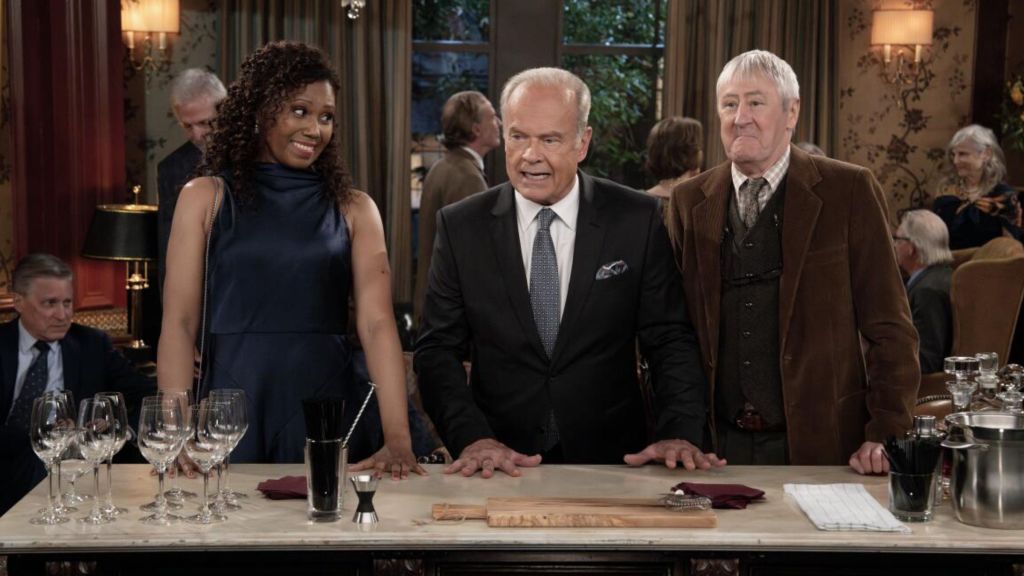
Doctor Who won by shortening its stories. Frasier won by shrinking its world, and it did so against a parent that ran exactly as long, 11 seasons each on NBC, which makes this the cleanest like-for-like comparison American television has to offer. Frasier won 37 Primetime Emmys to Cheers‘ 28, taking a record that had stood since The Mary Tyler Moore Show and holding it until Game of Thrones passed it in 2016. It won Outstanding Comedy Series 5 years running from 1994 to 1998, a run Modern Family has since matched and nobody has beaten. Cheers won that category 4 times, in 1983, 1984, 1989 and 1991. The Television Academy has Cheers converting 117 nominations into 28 wins and Frasier converting 108 into 37, so the parent show was nominated more often and won less.
The narrowing was deliberate. A bar is an open set, which sounds like a gift to a writers’ room and works in practice as a problem, because anybody at all can come through the door and so somebody has to keep inventing people to come through it. Frasier‘s creators built their show around three fixed settings instead, an apartment, a radio station and a coffee house, and around four people who never changed across 11 seasons: two insufferable brothers, the blue-collar ex-cop father who raised them, and a housekeeper who refuses to be impressed by any of it. That friction regenerates itself without a single guest star, and it gave the show a farce engine of lies and mistaken identity that a bar cannot sustain. It also had David Hyde Pierce, and Cheers never found a second lead who could play against its first quite that well.
None of that is a verdict on the parent show, and the man at the center of both complicates the comparison in a way worth stating plainly. James Burrows co-created Cheers and directed 237 of its 275 episodes. He also directed 32 episodes of Frasier, including the pilot, and won the 1993 Emmy for Outstanding Directing for a Comedy Series for it. He died on June 19, 2026, at 85. Whatever gap opened up between these two shows, the line between them runs directly through him, and he is standing on both sides of it.
1) Dragon Ball Z Beat Dragon Ball By Ending The Show And Starting A New One
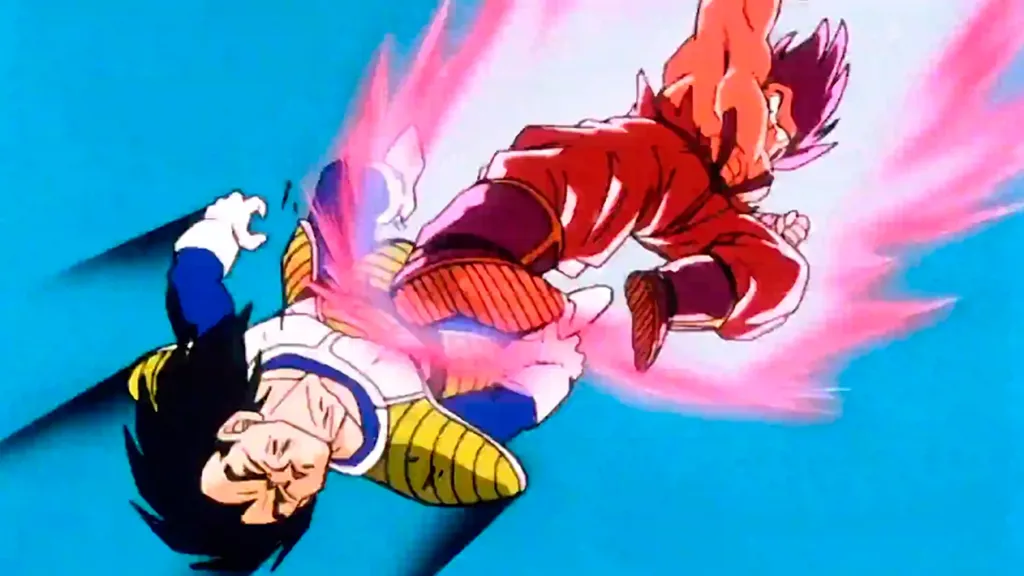
The three pairings above are all live action in English, and the sharpest structural break of the four happened in Japanese animation. Toei Animation adapted Akira Toriyama’s Dragon Ball manga into a series that ran 153 episodes between 1986 and 1989, and on reaching chapter 195 the studio did not simply carry on with it. It ended the show and launched a separately titled one. Dragon Ball Z ran a further 291 episodes through January 1996 and adapted 325 of the manga’s 519 chapters. The audience verdict on the two is consistent across the largest samples available anywhere. On MyAnimeList, Dragon Ball Z scores 8.21 from about 915,000 users against Dragon Ball‘s 7.98 from about 732,000. On IMDb it is 8.8 to 8.5, and Dragon Ball Z ranks 71st on the Top 250 television chart while its parent does not chart at all.
Neither series has ever won anything from a recognized awards body, so this pairing rests on scores and on reach rather than on trophies. Two changes produced both. The first was format. Dragon Ball was structurally a picaresque, a run of self-contained quests and periodic tournaments played largely for comedy, and Dragon Ball Z rebuilt the show around long continuous sagas driven by one escalating antagonist at a time. Giving 325 manga chapters 291 episodes of room is what converted an episodic adventure show into serialized escalation, and the power-scaling structure that came out of it is the template most of the shonen genre has worked from ever since.
The second change happened in the United States, and it is where the measurable gap actually shows up. Cartoon Network began stripping Dragon Ball Z daily on Toonami from August 31, 1998, giving a serialized show the daily appointment slot that serialization rewards, and Funimation moved the English-language production in-house from episode 54 in September 1999, dropping a great deal of the censorship the earlier syndicated version had imposed. By the week ending September 22, 2002, Nielsen had it as the highest-rated program on all of cable among boys aged 9 to 14. The 1986 series never received anything close to that treatment in the United States, and the gap in the scores follows the gap in the exposure.
The pattern across all four is that the sequel did not simply try harder than its parent. Each one got access to something the original was structurally denied: syndication instead of a network schedule, a single hour instead of a serial, four fixed characters instead of a room anyone could walk into, and a clean break instead of a continuation. That is also why the list is short, and why the most famous candidate for it did not make the cut. Being better written is not enough to beat a beloved original, because the original set the terms everyone remembers it by. What beats it is a show that quietly changes the terms. Line the awards and the scores up next to each other and most of the famous upsets turn out to be preferences rather than results.