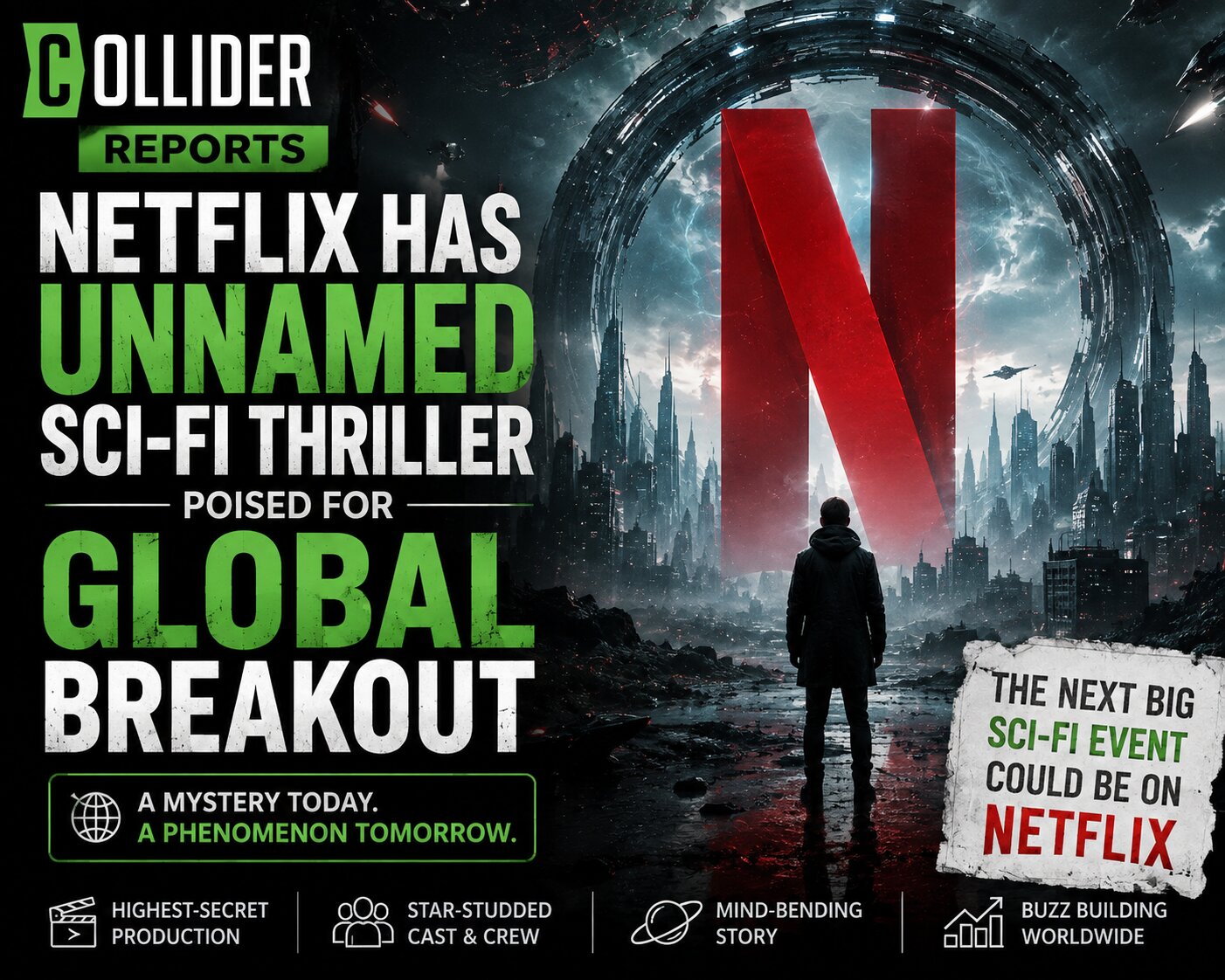
Collider Reports Netflix Has Unnamed Sci-Fi Thriller Poised for Global Breakout
Entertainment outlet Collider published a story on August 16, 2026, declaring that Netflix has secured its “next global sci-fi sensation” in the form of an upcoming thriller. The headline makes a bold claim, yet the streaming service itself has not issued a press release, social-media announcement, or slate reveal that identifies the project by name.
What the Report Says—and What It Doesn’t
According to the Collider piece, the unnamed feature is being positioned internally as a potential breakout on the scale of previous Netflix genre hits such as Bird Box, The Adam Project, or the Knives Out sequels. However, the article does not disclose:
- The film’s title
- Director or screenwriter
- Lead cast members
- Production status (pre-production, shooting, post)
- Target release quarter or year
- Budget range or production partners
Until Netflix or a verified trade publication (e.g., The Hollywood Reporter, Variety, Deadline) confirms specifics, the project remains officially unannounced.
Netflix’s Recent Sci-Fi Track Record
Context matters when evaluating claims of a “next global sensation.” Over the past five years, Netflix has released a mix of original and acquired science-fiction titles with widely varying commercial and critical outcomes:
| Title | Year | Reported Viewership (First 28 Days) | Rotten Tomatoes Critics |
|---|---|---|---|
| Bird Box | 2018 | 89 M households* | 64% |
| The Adam Project | 2022 | 233 M hours viewed | 67% |
| Spiderhead | 2022 | 78 M hours viewed | 38% |
| The Mother (action-thriller with sci-fi elements) | 2023 | 249 M hours viewed | 43% |
| Atlas | 2024 | 150 M hours viewed | 19% |
*Netflix’s legacy metric; later titles measured in hours viewed. Figures are self-reported by Netflix and not independently audited.
The data shows that high viewership does not always correlate with critical acclaim, and the “sensation” label often reflects marketing spend and algorithmic placement as much as audience enthusiasm.
How Netflix Typically Rolls Out Major Genre Titles
When Netflix has a high-priority science-fiction film, the rollout pattern usually follows a recognizable sequence:
- Trade announcement – Deal closed with director/writer/star attached (often 12-18 months before release).
- First-look image or teaser – Dropped via Netflix’s social channels and Tudum site.
- Festival premiere or press screening – Venice, Toronto, or SXSW for prestige positioning.
- Global marketing blitz – Trailers, brand partnerships, behind-the-scenes content.
- Release – Simultaneous worldwide drop on the service.
None of these steps have been publicly observed for the project referenced by Collider.
Why the Timing Matters
August 2026 sits between the summer blockbuster corridor and the awards-season festival circuit. If a Netflix sci-fi thriller were targeting a Q4 2026 or Q1 2027 launch, industry insiders would typically expect at least a title announcement by now. The absence of one suggests either:
- The film is slated for later in 2027 or 2028.
- Netflix is experimenting with a compressed, secrecy-driven marketing window.
- The Collider report reflects internal optimism not yet matched by a formal greenlight or acquisition.
What to Watch For Next
Readers looking for confirmation should monitor:
- Netflix’s investor-day presentations (usually quarterly).
- Official Tudum blog and @NetflixFilm social accounts.
- Major trade outlets for acquisition or production-start notices.
- Film-rating board listings (BBFC, MPA, etc.), which often leak titles months ahead.
Bottom Line
Collider’s reporting indicates Netflix believes it has a high-potential science-fiction thriller in the pipeline. That is newsworthy in itself—streamers rarely publicize internal “next big thing” designations. However, without a title, talent attachments, or a release window, the project remains in the realm of informed industry speculation rather than confirmed fact. We will update this story when verifiable details emerge.
Disclaimer: This article is based solely on the Collider headline and publicly available historical data. No independent confirmation of the specific film’s existence, title, or schedule has been obtained.
Topic source: Collider — Read source