Hidden Gems: 10 Stand-Alone Sci-Fi Films That Deserve Your Weekend Attention
Streaming libraries are overflowing with space operas, superhero crossovers, and legacy sequels, but some of the most inventive science-fiction storytelling happens in stand-alone films that never spawned a franchise. These movies arrive, make their case, and leave — no post-credits teases, no cinematic universe obligations. Below are ten original sci-fi features that critics and cult audiences champion, yet remain surprisingly unknown to mainstream viewers. Each is a complete narrative you can finish in a single sitting this weekend.
Why Stand-Alone Sci-Fi Matters
Franchise fatigue is real. When every blockbuster serves as a pilot for three more installments, narrative stakes often dissolve into setup. Stand-alone films, by contrast, must earn their ending in two hours. That constraint forces tighter scripts, bolder conceptual swings, and conclusions that actually resolve. The titles below prove that a single film can explore artificial intelligence, time loops, parallel realities, or first contact with more depth than many multi-film sagas.
1. Moon (2009)
Duncan Jones’ directorial debut confines Sam Rockwell to a lunar helium-3 mine with only a chatty robot (voiced by Kevin Spacey) for company. What begins as a character study of isolation mutates into a bioethical thriller about identity and corporate exploitation. Clint Mansell’s minimalist score and practical-effects production design make the claustrophobic setting feel vast. Despite a modest budget, Moon delivers a twist that recontextualizes everything preceding it — without cheating.
2. Coherence (2013)
Shot in five nights on a micro-budget in director James Ward Byrkit’s living room, Coherence turns a suburban dinner party into a multiverse nightmare when a passing comet fractures reality. The actors improvised from scene outlines rather than a locked script, lending the escalating paranoia a documentary immediacy. No CGI spectacles here — just quantum mechanics rendered as social horror. It’s a masterclass in high-concept, low-resource filmmaking.
3. Primer (2004)
Shane Carruth wrote, directed, scored, and starred in this $7,000 time-travel puzzle that refuses to hold the viewer’s hand. Two engineers accidentally build a device that creates closed timelike curves, then tie themselves in logical knots trying to out-maneuver their own doubles. The dialogue sounds like actual engineers arguing — because it is. Primer rewards repeat viewings and flowchart-level analysis, yet its emotional core (trust, greed, consequences) remains accessible.
4. The Man from Earth (2007)
Jerome Bixby’s final screenplay unfolds entirely in a single room where a departing professor (David Lee Smith) reveals he is a 14,000-year-old Cro-Magnon who has lived through history. His colleagues — a biologist, anthropologist, archaeologist, and Christian literalist — debate the claim in real time. No flashbacks, no effects, just rigorous intellectual combat. The film feels like a philosophy seminar dramatized, and its final revelation lands harder than any CGI apocalypse.
Google News – East of Eden Netflix release date – Overview
5. Predestination (2014)
The Spierig brothers adapt Robert Heinlein’s “All You Zombies” into a temporal paradox so tight it could cut glass. Ethan Hawke plays a temporal agent chasing a terrorist through decades; Sarah Snook delivers a career-defining performance as the recruit whose life story is the case file. The narrative folds into itself with mathematical precision, yet never loses sight of the human cost of predestination. A rare time-travel film where the mechanics serve the tragedy.
6. Dark City (1998)
Alex Proyas’ noir-inflected dystopia pre-dates The Matrix by a year in exploring manufactured reality. An amnesiac (Rufus Sewell) navigates a perpetual-night metropolis where strangers (the Strangers) rewrite memories and architecture each midnight. The production design — German Expressionism meets 1940s noir — creates a tactile unreality that CGI-heavy successors struggle to match. The director’s cut restores crucial exposition the studio forced Proyas to trim.
Netflix Unveils Release Date and First Look at Florence Pugh’s ‘East of Eden’ Adaptation
7. Upstream Color (2013)
Shane Carruth’s follow-up to Primer is elliptical, lyrical, and biologically weird. A thief uses a parasitic worm to strip victims of agency; two survivors (Amy Seimetz, Carruth) find their lives entangled with a pig farmer/sound recordist and the lifecycle of the organism. Dialogue is sparse; meaning accumulates through editing, sound design, and recurring visual motifs (orchids, water, Thoreau’s Walden). It’s sci-fi as tone poem — divisive, unforgettable, and unlike anything else.
8. Prospect (2018)
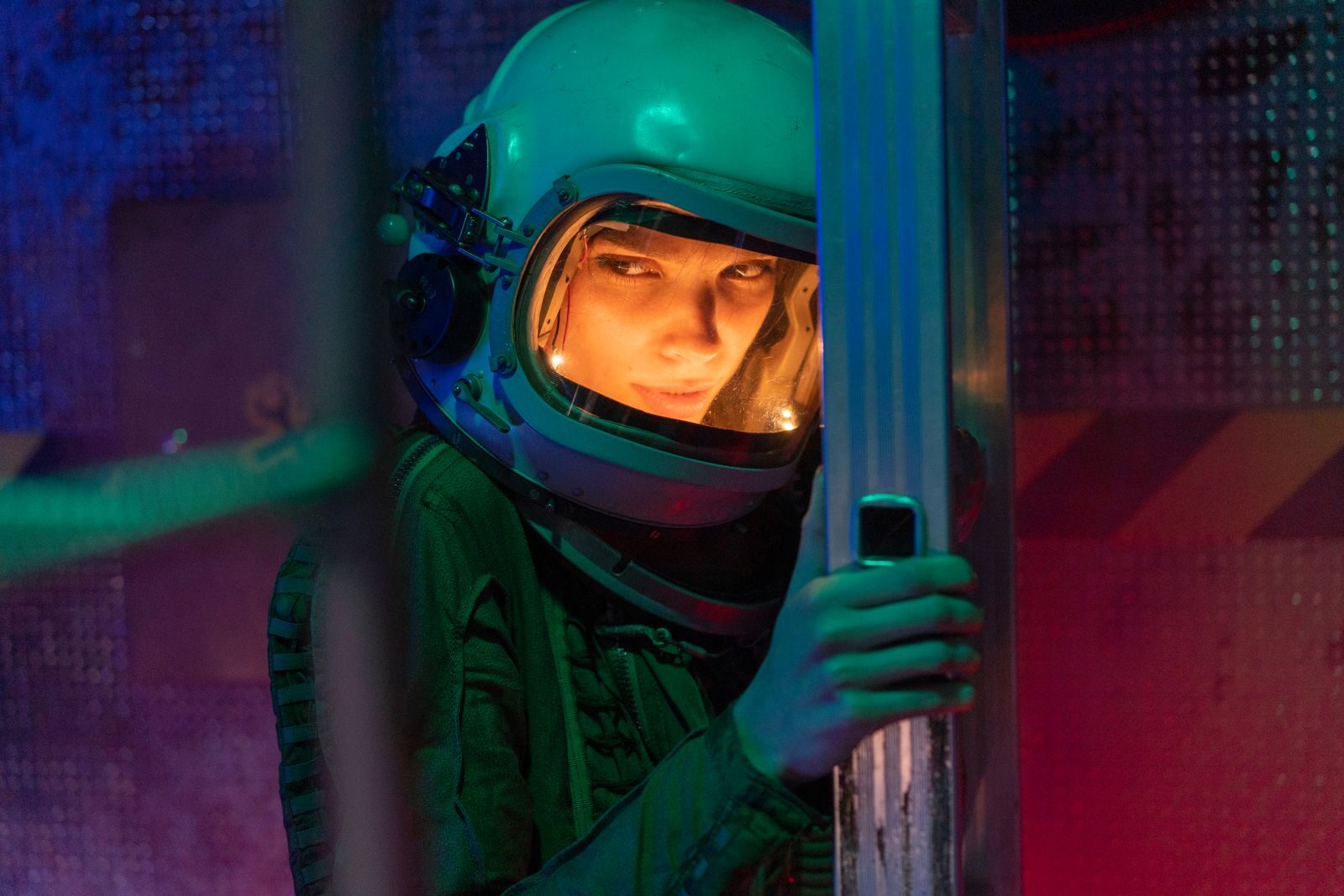
Zeek Earl and Chris Caldwell expand their 2014 short into a gritty frontier western on a toxic alien moon. A teenage girl (Sophie Thatcher) and her father (Jay Duplass) hunt valuable gems amid mercenaries and indigenous hazards. Practical prosthetics, lived-in production design, and a synth score by Daniel L.K. Caldwell ground the otherworldly setting. Prospect proves you don’t need nine-figure budgets to build a convincing off-world ecosystem.
9. After Yang (2021)
Kogonada adapts Alexander Weinstein’s short story into a quiet meditation on memory, grief, and what makes a family. When a family’s android child (Justin H. Min) malfunctions, the father (Colin Farrell) accesses the unit’s memory bank — revealing a interior life richer than anyone suspected. The film’s near-future aesthetic (modular homes, autonomous cars, clone orchards) feels lived-in, not designed. Its emotional payoff arrives not through action but through accumulated tenderness.
10. The Vast of Night (2019)
Andrew Patterson’s debut unfolds in real time over one 1950s New Mexico evening. A switchboard operator (Sierra McCormick) and a radio DJ (Jake Horowitz) investigate a mysterious audio signal. Long takes, theatrical lighting, and a framing device (a Twilight Zone-style anthology show) evoke period authenticity while the script builds dread through conversation, not creature reveals. The final tracking shot through the town is a technical marvel on a shoestring.
How to Curate Your Own Sci-Fi Weekend
Pair films by theme: Moon + Prospect for isolation-on-the-frontier; Primer + Predestination for temporal gymnastics; Coherence + The Vast of Night for micro-budget maximalism. Most are available on major streaming platforms or for low-cost rental. Turn off phones, dim lights, and let these self-contained universes expand your sense of what science fiction can do without a franchise safety net.
The Case for Originality
Hollywood’s risk aversion grows yearly, but these ten films — spanning 1998 to 2021 — demonstrate that original, idea-driven sci-fi still gets made when filmmakers embrace constraints. They also prove audiences hungry for complete stories will find them, sometimes decades later. Your weekend watchlist just got stranger, smarter, and wholly self-contained.