X-Men: Outback #4 Has Its Charms But It’s Weak and Basic (overview)
Nostalgia and the X-Men have gone hand in hand for years. One of my favorite examples of this is ’80s Phoenix nostalgia, with fans nostalgic for the classic story despite it only being a few years old (for reference, when I started reading comics, the story was only 11 years old and fans were nostalgic for Claremont; he had left the book months before). X-Men creators and fans love to bring up the past and there are times when it works. Something like New X-Men only worked so well because it was able to use nostalgia to tell new kinds of stories with old ideas. However, there are other times when X-nostalgia’s charms start to wear thin.
Lately, nostalgia hasn’t exactly been a favorite of X-Men fans. They’ve been burned by nostalgia too many times before, making them wary. In recent years, one of the best uses of X-nostalgia has been the various throwback miniseries. These minis take place in the team’s past, picking up years earlier in the continuity for books that let readers take a new look at what they already know. ’80s X-nostalgia has been a surefire means of selling comics – the ’80s were the X-Men’s best decade – leading Marvel and the team back to the Outback. X-Men: Outback went back to the team’s days in the wilds of Australia for some good old-fashioned ’80s fun from Steve Orlando and Roi Mercado. The series hasn’t exactly been lighting the sales charts on fire, with X-Men: Outback #4 giving me a good idea why. That’s not to say this is a bad comic, but it’s also not exactly a great comic.
Rating: 2.5 out of 5
| Pros | Cons |
| Orlando captured the old school feel of the X-Men comics | The story isn’t all that interesting, so it’s hard to care about it |
| Mercado’s art starts out strong | The art starts to get sketchier as it goes on and the last pages feel like they’re from a completely different artist |
| It’s nice to get a comic that is Madelyne Pryor-centric and she’s not a monster | It’s a Claremont comic without the Claremont charm |
Orlando Isn’t Able to Find the Outback Sweetspot
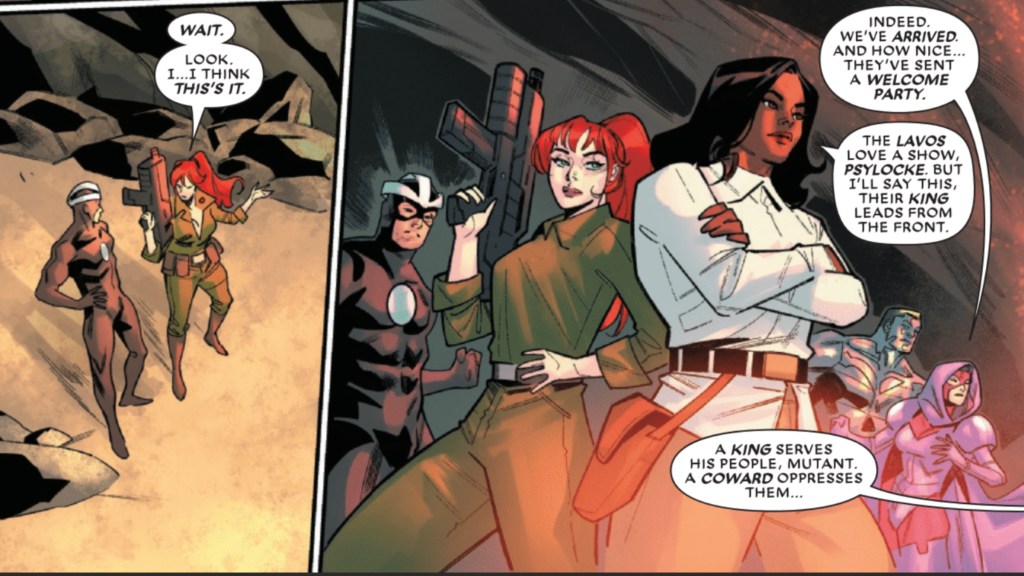
Steve Orlando has been Marvel’s go-to Scarlet Witch guy for the last few years, so getting him on a flashback X-Men miniseries is sort of a strange choice. Orlando is one of those writers who has had something of a long career in comics but has yet to give readers that one defining story that you can point at as to why you should read his books. You can tell that Orlando loves the characters he writes, something that definitely comes through on every page of this comic. As I was reading the issue, I could see Orlando doing all the Claremont things – introducing an all-new mutant, lots of characters interplay, and a weird little threat that kind of comes out of nowhere but works for the story. In some ways, I felt like this was a comic that I could have gotten back in the late ’80s – a one and done story that builds up the characters and then ends on a cliffhanger that sets up the next issue.
However, I think the problem with his issue for me is that it never does what Claremont always did – make the whole shebang compelling. So, for example, there was a subplot in the issue where you could tell Madelyne was jealous of the new mutant who showed up, especially when Havok starts to pay attention to her. It’s a perfectly fine little character arc that I cared about more because it was Maddie than because it was actually interesting. Orlando is able to do all of the ’80s X-Men stuff, giving you that nostalgia hit you’re looking for when you buy a book like this, but he’s never really able to make it work as a story on its own. If you took away the nostalgia bait, this wouldn’t really be all good of a comic. It wouldn’t be bad, but there’s nothing to keep you invested in the story itself.
Mercado’s Art Doesn’t Make Up for the Lackluster Storytelling
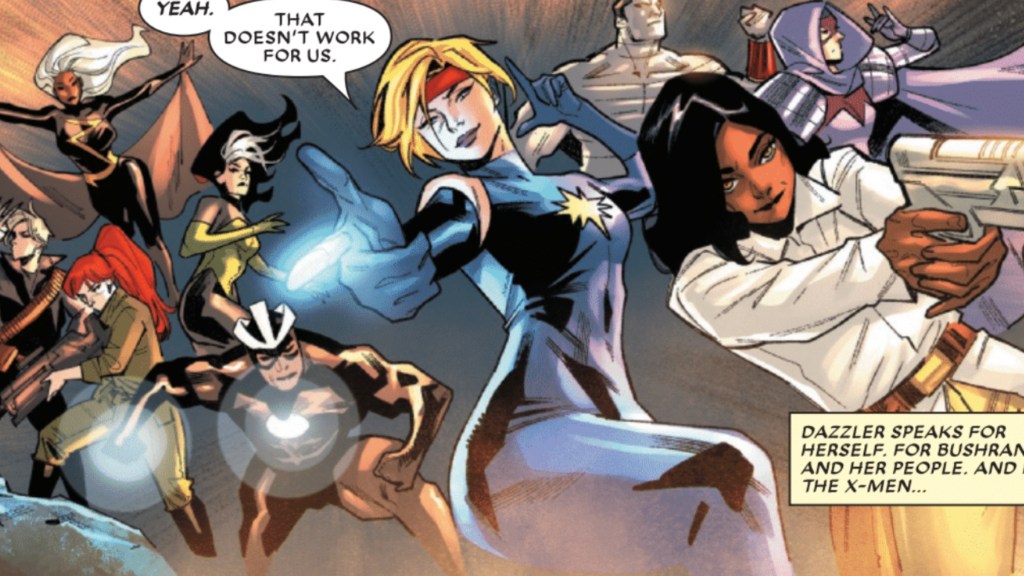
The X-Men are known for lots of things, but one of the most important has always been the art. Many of the greatest artists ever have worked on the team and in the late ’80s, the Outback era was graced with art from Marc Silvestri, with Jim Lee and Whilce Portacio both getting their starts, and fill-in artists like Rick Leonardi. My point is that when readers think “Outback Era X-Men”, they think of some of the best-looking art in the team’s history. If you’re going to do a book set in that era, you need to make sure that the book’s art is of the highest possible quality. Unfortunately, if you were doing it that way, you wouldn’t ever choose Mercado to draw the book.
That’s not to say that he’s a bad artist, but the problem comes in that his style has no real style. His art doesn’t really jump out at you at all. The book looks good for about its first half, but even then, you can see that Mercado isn’t going to be wowing you as it goes on. His figures and details are fine, but as things go on, it starts to get sketchy. Long shots have little to no detail and his figure work falls apart. The action scenes don’t really have a good flow and there’s nothing that’s going to draw your eye.
All in all, X-Men: Outback #4 is a perfect example of what happens when one of these flashback comics go wrong. Orlando did his best to give readers an old school superhero comic and, at the very least, you can see what he was doing with the structure of the issue. However, Orlando is no Claremont, who could take any premise and make it work with his deft, entertaining character-based storytelling. We never get that from this story. The art could have saved this book, but Mercado’s style doesn’t have the pizazz. That’s the problem with this book in general – it doesn’t have that spark.
X-Men: Outback #4 is on sale now.