10 Cult Films That Prove 1998 Is One of the Most Underrated Years In Horror
Think about the ’90s and the horror genre. What movies do you usually remember right away? Scream, The Blair Witch Project, The Sixth Sense, and a few others that ended up defining the decade, right? Well, 1998 in particular deserves a broader conversation, since it was a time when the genre could be pretty much anything, from a slasher to something more sci-fi-oriented. The problem is that several of these movies weren’t successful, and some were even rejected at the time, only for time to be kind to them and turn them into cult favorites for plenty of people. And the best part is really the variety — the year was incredibly diverse within the genre.
You might not agree with every film we’ve included on this list, but, in one way or another, they all have a reason to be appreciated. Here are 10 of the best examples that make it difficult to deny that 1998 had an incredibly interesting selection of horror movies.
10) Sphere
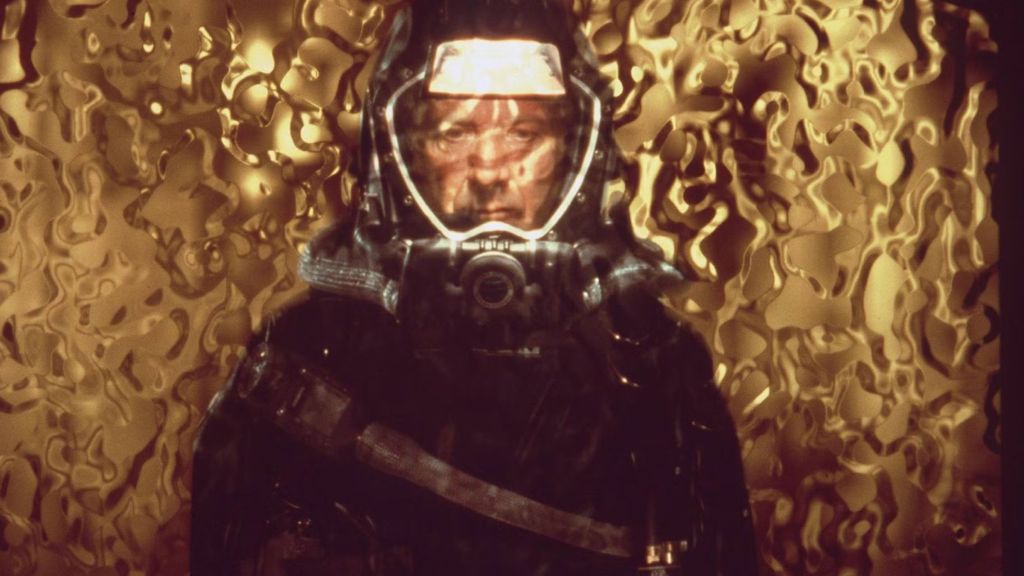
These days, it seems like nobody even remembers that Sphere existed. Honestly, that makes sense considering the theory is better than the execution in this case — but that doesn’t mean the movie is exactly bad. The story follows a group of scientists sent to the bottom of the ocean to investigate an alien spacecraft. Once inside, however, they discover a mysterious sphere that can turn thoughts into reality. And, as the movie makes very clear, giving that kind of power to a group of scared, paranoid, and emotionally unstable people is a terrible idea.
Sphere could definitely use a faster pace, since its biggest problem is its slow execution. Because of that, the premise’s full potential isn’t explored as much as it should be. Even so, the concept at the heart of the story is what still makes the film worth watching. This is a thriller that finds its horror in the possibility that your own thoughts could turn against you. 1998 had so many great movies across different genres that Sphere may have simply been overlooked, but it’s still a truly curious experience.
9) Halloween H20: 20 Years Later

Halloween kicked off the franchise in iconic fashion, but over time, a lot of people would agree that it started to lose its way. Then came Halloween H20: 20 Years Later, basically pretending that a lot of things never happened — and maybe that was the right decision. The story brings Laurie Strode (Jamie Lee Curtis) back, now living under a new identity and trying to protect her son while still carrying the trauma of the original massacre. So when Michael Myers finally shows up, Laurie isn’t just another victim; she’s someone who has been haunted by this serial killer for twenty years.
And yes, Halloween H20 isn’t exactly bold and, at times, feels like a product of the slasher wave that Scream helped popularize. It’s not the best movie in the franchise, but it’s not exactly bad, either. Bringing the original protagonist back gives the story some emotional weight, and the final confrontation works because it’s between the two of them. Could the film have been darker? Absolutely, as well as less concerned with feeling like a typical slasher. Still, it’s worth looking at as one of the better attempts to bring the franchise back to the big screen.
8) Urban Legend

Moving on from Halloween and having already mentioned Scream, here’s another slasher, because the ’90s were absolutely packed with them. However, Urban Legend has one key difference that is what makes the movie underrated, and the title itself gives it away: the kills are inspired by urban legends. The story follows a killer who starts recreating stories like the one about the murderer hiding in the backseat of a car, while Natalie (Alicia Witt), a college student, tries to figure out what’s going on before she and her friends become the next targets.
There’s something particularly fun about watching characters who know these legends just as well as the audience realize that they’re actually happening. Plus, Urban Legend has a cast full of familiar faces, a very specific late-’90s aesthetic, and a college setting that gives it an identity of its own. No, it didn’t reinvent the slasher, but it didn’t need to. The fact that it has become a cult horror movie only shows that it managed to be recognizable without being completely forgettable.
7) Bride of Chucky

By the late ’90s, the Child’s Play franchise had already gone through enough transformations for Bride of Chucky to do pretty much anything it wanted — and the movie decided to do all of it at once. Here, Tiffany (Jennifer Tilly) resurrects Chucky, believing she can bring back the man he was before he became a killer, only to end up being turned into a killer doll herself. From there, the two embark on a sort of homicidal honeymoon, arguing, killing people, and bickering like a couple who probably should have broken up decades ago. It’s not exactly a scary movie, but that was never really the priority, and that’s why it manages to be so entertaining.
The film understands that Chucky had already become a personality, not just a killer doll. And Tiffany gives it an energy that keeps it from feeling like just another sequel. Bride of Chucky is over-the-top, vulgar, and sometimes completely absurd, but at least it’s a movie with a clear idea of what it wants to be. A lot of horror features try to be funny and end up destroying their own atmosphere, right? This one does the opposite: it abandons the seriousness and commits to its own lack of common sense. It’s a fan favorite for a reason.
6) Psycho
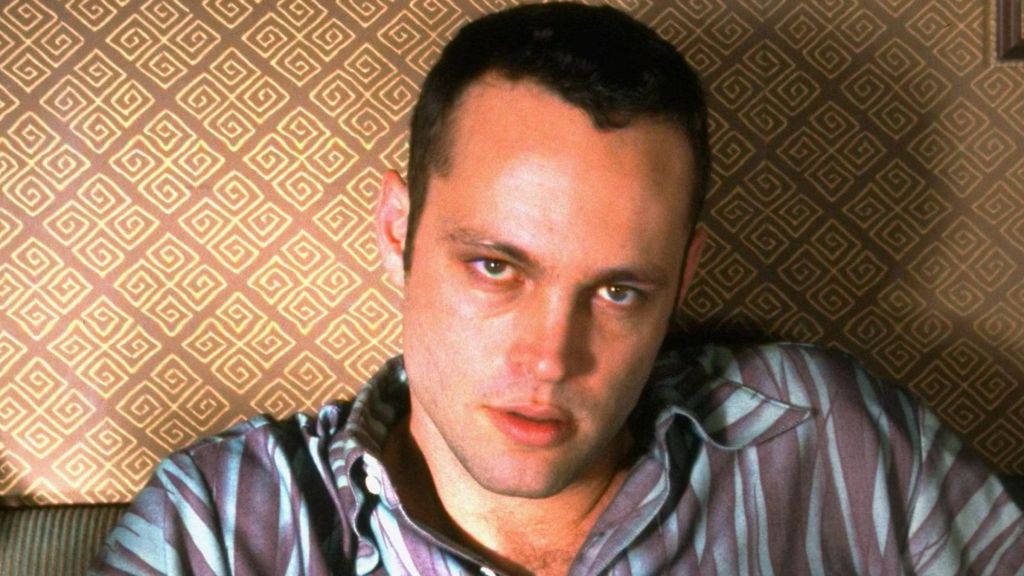
To start with, yes, the original Psycho is a thousand times better than the remake. However, the 1998 version makes this list because it’s interesting to look at it as something more than just a remake. Why? This isn’t a production trying to update the story, since it’s literally a scene-for-scene copy of the original, with only the cast being changed. The plot remains the same: Marion Crane (Anne Heche) steals money, ends up at the Bates Motel, and meets the disturbing Norman Bates (Vince Vaughn). The difference is that, in many ways, this remake is an experiment about what actually makes a scene work.
A lot of people may not agree with this, but the question the film manages to raise is: if you reproduce the same shots, cuts, and camera movements, can you reproduce the effect of the first version? For most people, the answer was no, but that doesn’t make the movie completely pointless. Its failure is what makes it intriguing. This Psycho will probably always be controversial and a little strange when it comes to horror remakes, but if you look at it as an experiment that failed in an extraordinarily specific way, it’s hard to find another movie quite like it.
5) Deep Rising
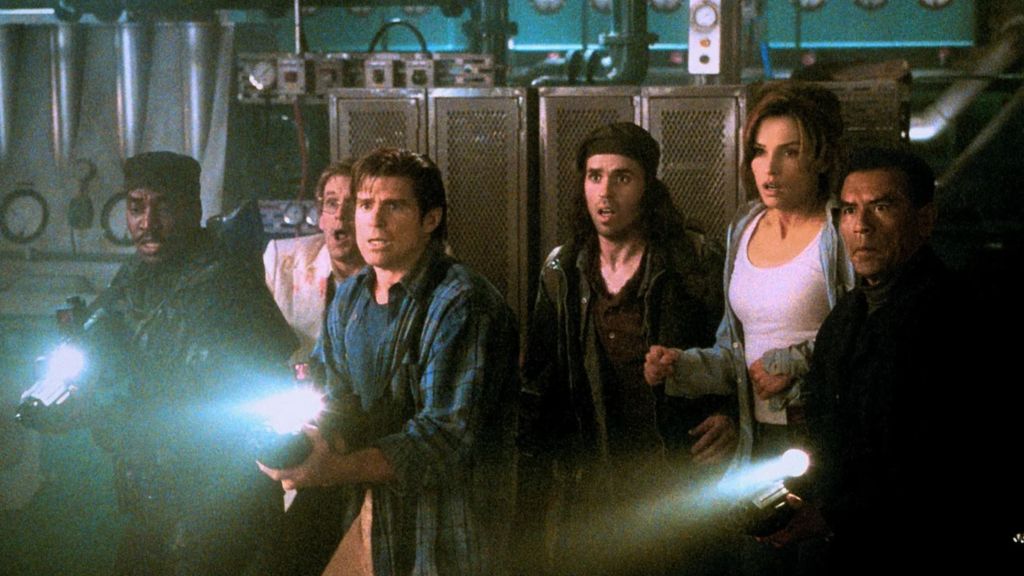
Deep Rising feels like it was created from a list of things someone thought would make a movie fun: an abandoned cruise ship, mercenaries, criminals, a giant sea creature, gruesome deaths, and jokes thrown into the middle of all of it. And somehow, it actually works. The movie follows a group that boards a massive ship and discovers that the passengers have been attacked by a creature living inside the vessel. From there, the film basically turns the ship into a maze filled with monsters and corpses. And forget anything sophisticated, because the entire point is to be the exact opposite.
This production makes it clear from the beginning that its goal is to be an over-the-top creature feature, and it gives exactly what you’d expect: creative kills, practical effects, action, and a healthy amount of chaos. It was a commercial failure, but over time it became a cult favorite because it has exactly the kind of energy that cult movies tend to have. Overall, it’s easy to understand why it didn’t work for mainstream audiences, but it’s just as easy to understand why some people eventually started defending it. Deep Rising is pure B-movie filmmaking and a pretty great example of it.
4) The Faculty
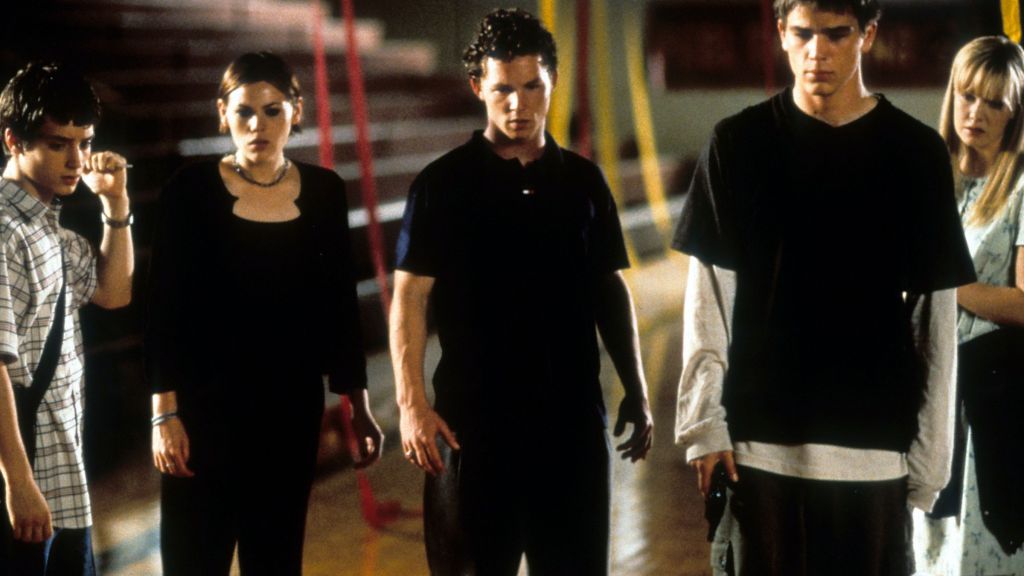
If someone wanted to explain what ’90s sci-fi horror was all about using just one movie, The Faculty would be a pretty convincing choice. It has a school full of teenagers and teachers who may have been replaced by aliens, and the film feels like it was built from practically every trend of the era while still managing to turn that mix into something of its own. More specifically, the story follows a group of students who begin to notice that their teachers are acting strangely and discover that an alien invasion is taking place inside the school. And the best part? The movie’s complete lack of pretension.
The Faculty has some very clear references (especially Invasion of the Body Snatchers), but it never spends the entire movie trying to prove that those influences are what make it good. The goal is just to be a creepy sci-fi film with teenagers, paranoia, and plenty of chaos. Besides, it’s packed with familiar faces and is now perfect to watch as a time capsule of the era. More importantly, it has aged surprisingly well, even if it tends to be remembered mostly by hardcore genre fans. It’s a movie with a lot of personality.
3) Fallen
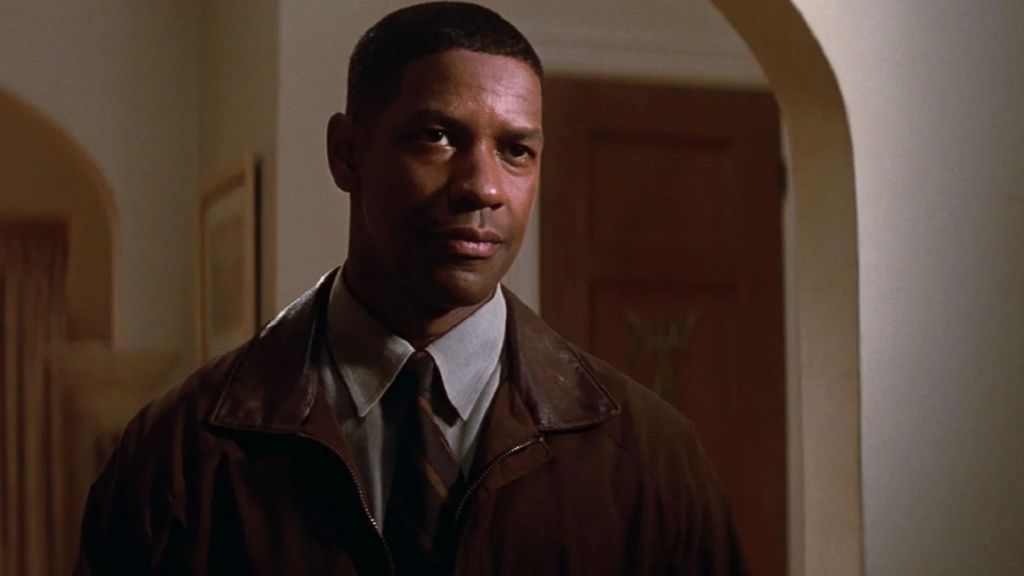
Maybe Fallen would be much more widely remembered if it had been released a few years earlier or later than 1998, because that year it ended up getting lost among other horror movies and supernatural thrillers, despite starring Denzel Washington and having a really great premise. The story follows Detective John Hobbes (Washington), who begins investigating a series of murders connected to an already-executed serial killer. The problem is that the investigation reveals something complicated: a supernatural entity can move from one person to another, meaning that pretty much anyone around Hobbes could be dangerous.
And that supernatural element is the movie’s best idea, since it takes an ordinary environment and turns it into a source of paranoia — and honestly, it doesn’t need much more than that. The enemy isn’t necessarily in one specific place; it could be anyone. On top of that, Fallen benefits from treating its absurd premise with surprising seriousness. Overall, it has its flaws, but they are easy to overlook because the entire package works so well as psychological horror. Out of everything on this list, this may be the film that most deserves to be remembered and talked about more.
2) Cube
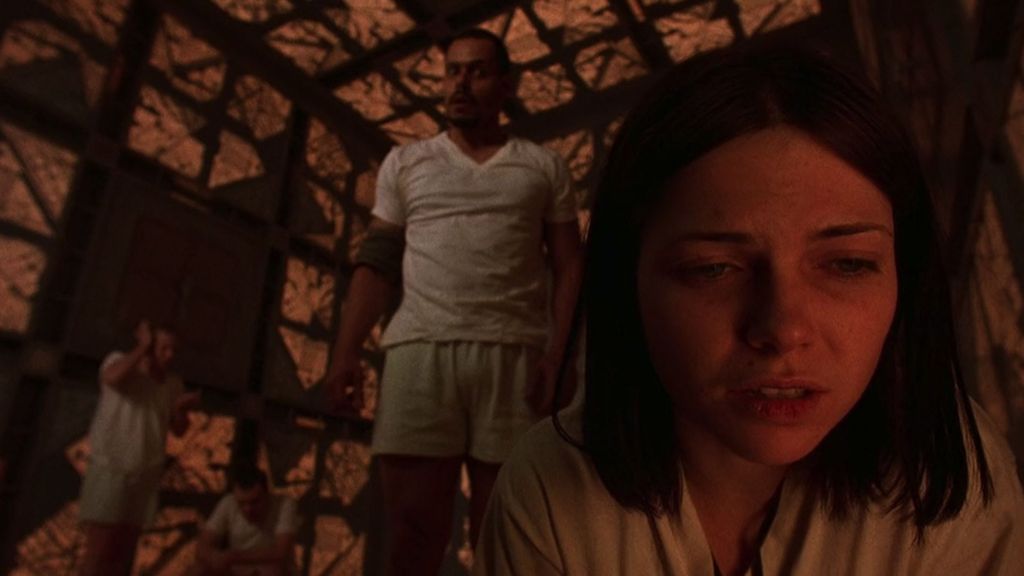
Not many people have heard of Cube. It was officially released in 1997, but arrived in the United States a year later, telling the story of several people who wake up trapped inside a structure made up of identical rooms, some of them equipped with deadly traps. From there, the characters have to figure out how the place works, but they also have to deal with each other — and, of course, the group can be just as dangerous as the traps themselves. The point of the story isn’t just to discover who built the maze or how to escape it, but to see how different people react when they’re put in this situation. It’s an experiment.
The horror comes from the paranoia, the distrust, and even the mathematics, bureaucracy, and lack of information. It’s a Canadian movie made on a relatively small budget, but it’s also an incredibly impressive demonstration of creativity. The Saw franchise and Escape Room share some of the same basic ideas, and it’s unfair that Cube doesn’t have the same reputation. Fortunately, it has become a cult favorite, and some people appreciate it for what it is. It’s pure claustrophobia, uncomfortable, and surprisingly clever in the details. You watch it without being able to stop thinking about how horrifying it would be to wake up inside that place.
1) Dark City
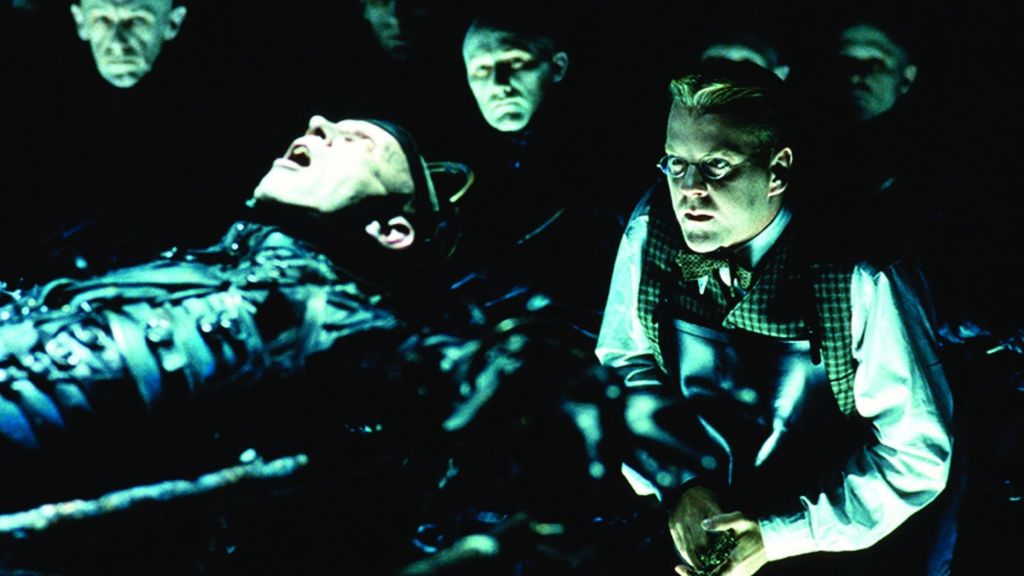
If you like sci-fi thrillers and you’ve ever gone through a list of underrated movies, chances are you’ve already come across Dark City. It had everything it needed to become a huge success, and it’s a cult classic that seems destined to be rediscovered with every new decade. The story follows John Murdoch (Rufus Sewell), a man who wakes up with no memory and discovers that he’s being accused of murders he doesn’t know whether he committed. As he tries to figure out what’s going on, he finds out that the entire city is being manipulated by the Strangers, beings who alter the architecture and memories of its inhabitants during the night.
But the world-building and the way the story develops are so good that they’re exactly what make the entire experience work. The Strangers are disturbing, the city feels like a trap, and the characters live in a world that can be reshaped at any moment by something they don’t understand. Dark City is incredibly intriguing, especially because it also manages to mix in elements of noir and fantasy. It’s a truly singular film and the best one to prove, without a doubt, that 1998 really was an underrated year among horror fans. Overall, it’s ambitious and strange, but those two qualities working together are what make it so fascinating.
What do you think? Leave a comment below and join the conversation now in the ComicBook Forum!