18 Years Ago Today, the Most Iconic 2000s Movie Day Gave Us The Original Barbenheimer
In 2023, a new Christopher Nolan movie found itself at the center of one of the biggest moviegoing events of the decade. Famously, Oppenheimer opened in theaters on the same day as Greta Gerwig’s Barbie. Rather than cannibalizing each other at the box office, both highly anticipated releases achieved a great deal of success, as cinephiles flocked to the multiplex for what was lovingly dubbed “Barbenheimer.” Barbie ultimately won the box office battle, taking in $1.447 billion worldwide, but Oppenheimer was no slouch. Nolan’s film brought in $975.8 million, an impressive accomplishment for a three-hour, R-rated historical drama. Not to mention, Oppenheimer won Best Picture and Best Director at the Oscars.
As fun as Barbenheimer was, it wasn’t the first time a Christopher Nolan film was part of this kind of phenomenon. In 2008, audiences were buzzing with anticipation for The Dark Knight, Nolan’s landmark Batman sequel that would go on to revolutionize the superhero genre (and arguably even influence the Academy to expand the Best Picture field). There was no denying that The Dark Knight was the premier cinematic event of the summer, but there was another film that dared to open on the same day, July 18, 2008, creating a proto-Barbenheimer in the process: Mamma Mia!.
Mamma Mia Held Its Own Against The Dark Knight at the Box Office
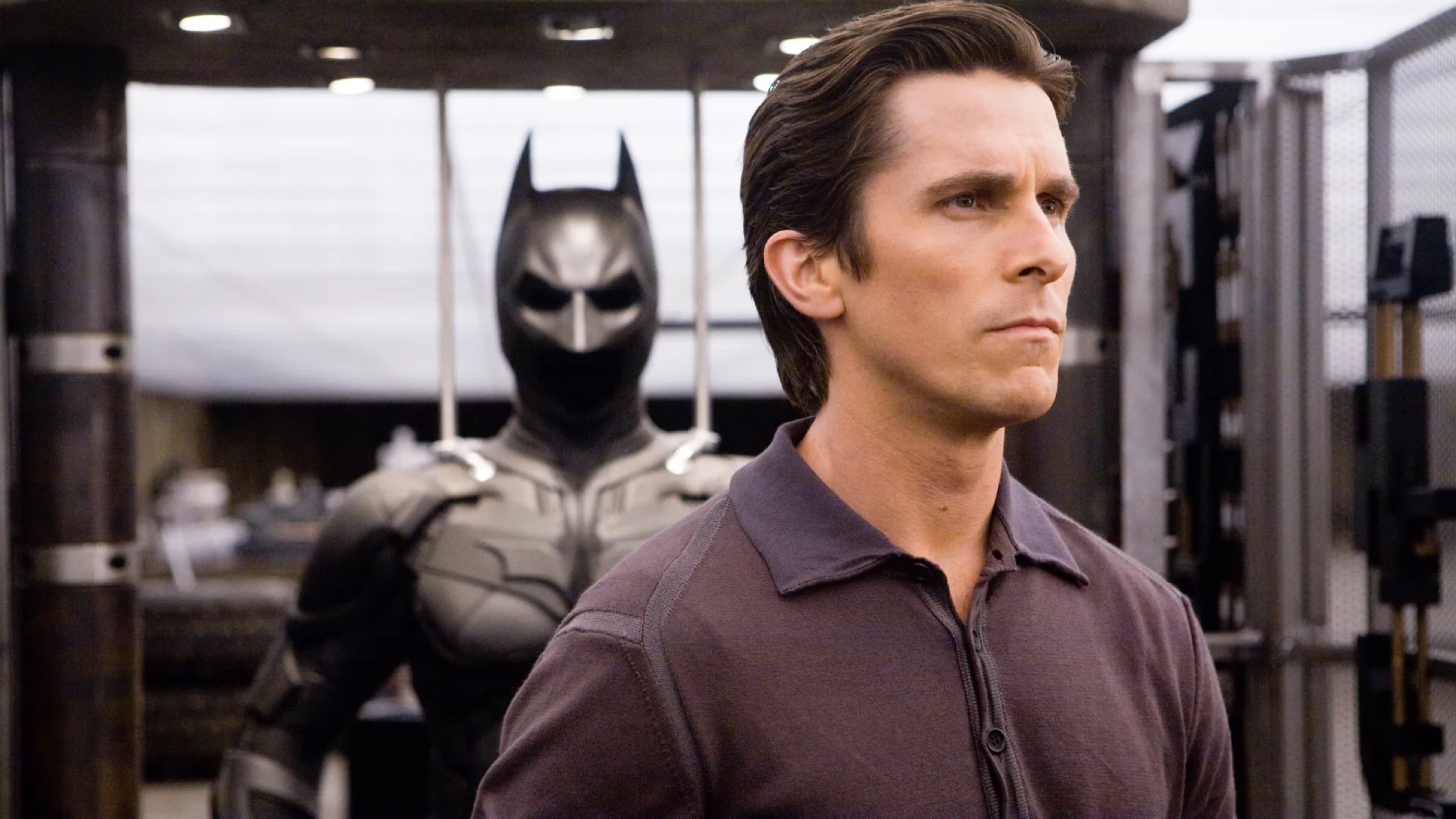
Fueled by overwhelmingly positive buzz and excitement over the late Heath Ledger’s groundbreaking performance as the Joker, The Dark Knight wasted no time leaving its mark at the box office. It came storming out of the gate with a $158.4 million domestic opening, setting the stage for an extremely lucrative theatrical run. It ended its original release with $533.3 million domestically (second-highest all time behind Titanic at the time) and $1.003 billion worldwide. It was easily the top earner of 2008, the kind of box office performance that would typically swallow other movies whole. However, Universal had the right idea when it scheduled Mamma Mia! to debut on the same day as The Dark Knight.
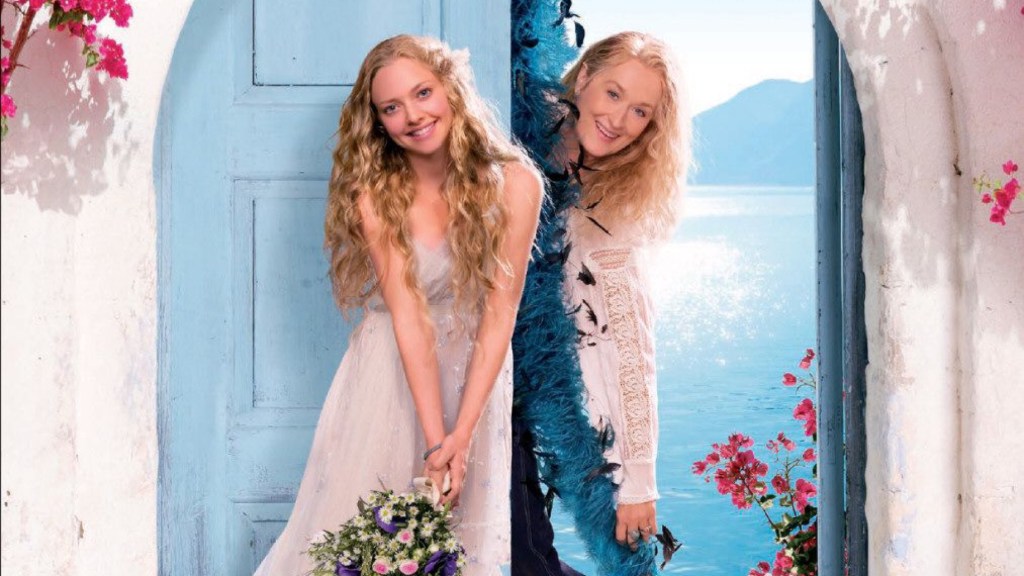
Clearly, the jukebox musical came in a very distant second during its opening weekend, posting $27.7 million domestically, but that didn’t matter. Mamma Mia! had an extremely fruitful run of its own. During its initial theatrical run (the film has been re-released multiple times), it earned $610 million worldwide. To put that number in perspective, Mamma Mia! was the fifth-highest-grossing film of 2008 globally, ahead of titles like Iron Man, WALL-E, and James Bond sequel Quantum of Solace. It accomplished this with an incredibly strong showing overseas; over 76% of Mamma Mia!‘s worldwide total ($465.7 million) came from international markets, nearly matching The Dark Knight‘s international total ($470.5 million).
This shows the power of the counter-programming option. The Dark Knight was the top pick for most moviegoers in the summer of 2008, but as hard as this might be to believe, superhero movies (even critically acclaimed ones like The Dark Knight) aren’t everyone’s cup of tea. Universal understood this, which is why the studio released Mamma Mia! directly alongside The Dark Knight. They were never expecting or hoping Mamma Mia! to outgross The Dark Knight. The goal was to give a very different target audience a moviegoing option they could enjoy during the summer. As the box office numbers illustrate, it was an incredibly savvy business decision. Mamma Mia! may not have been a critical darling (54% on Rotten Tomatoes), but it won over viewers with its sense of fun and catchy soundtrack.
Serving as an ideal counter-programming option appears to be a staple of the Mamma Mia! franchise. Ten years after the original’s Dark Knight double feature, Mamma Mia! Here We Go Again opened alongside Denzel Washington action sequel The Equalizer 2. It goes without saying that The Equalizer 2 wasn’t nearly as big of an event as The Dark Knight, but there was still a fair amount of anticipation for it as it marked Washington’s first sequel. As action fans came out to watch Robert McCall mow down more bad guys, musical fans were more than happy to check out Mamma Mia! Here We Go Again, which grossed $395 million worldwide during its run. It even came close to topping The Equalizer 2 in its opening weekend; the margin was $36 million to $34.9 million domestically.
Why Wasn’t “The Mamma Knight” As Big as Barbenheimer?

It’s amusing to look back at Christopher Nolan’s filmography and see how often one of his movies was paired with an obvious counter-programming play. Interstellar opened on the same day as Disney animated film Big Hero 6 (which won that weekend). Dunkirk premiered the same day as raunchy comedy Girls Trip. There have been times where Hollywood just lets Nolan’s latest run unopposed (nothing major opening alongside The Odyssey), but this is a trick that’s become more common than you might think. However, none of these earlier examples — including “The Mamma Knight” — were as big of an event as Barbenheimer was a few years back.
The most obvious reason why is that Barbie was not your typical counter-programming option. On the surface, Barbie and Oppenheimer seem diametrically opposed; one is a colorful fantasy comedy that explores feminism in the modern age while the other is a dark historical drama that examines the man who spearheaded the creation of the atomic bomb. But Barbie‘s appeal was much more widespread than the usual Christopher Nolan counter-programming option. It was able to crossover because it didn’t just play to a smaller, niche target demographic. The combination of the Barbie IP receiving its first live-action film (with stars Margot Robbie and Ryan Gosling front and center) plus Gerwig (who had directed Best Picture nominees Lady Bird and Little Women) made Barbie as much of an event film as the latest Nolan release. Movies don’t hit $1 billion worldwide unless they reach a large group of people.
While Mamma Mia! was obviously successful at the box office, it didn’t have the same amount of pull as Barbie. This could probably be attributed to the difference in reception. Whereas Barbie received widespread acclaim and was considered one of the best films of the year, Mamma Mia! earned far more mixed reviews. Those who aren’t interested in musicals likely didn’t feel compelled to broaden their horizons for Mamma Mia!, opting instead for repeat viewings of The Dark Knight. Because reviews for Barbie were very strong, general audiences made a point to see both it and Oppenheimer in theaters, with many going for a double feature in the same weekend.
It’s also important to keep in mind that the Mamma Mia!/Dark Knight weekend happened in a completely different era. Social media was still in its relative infancy; Twitter had only launched a couple of years prior. In contrast, Barbenheimer rode a massive wave of online anticipation. It became a massive social media campaign that reached millions of people around the world. Even the films’ respective cast and crews got in on the fun by promoting the Barbenheimer double feature. Barbenheimer was also one of the first big post-COVID movie events. Top Gun: Maverick had already come out by then, but there was still a sense of excitement about going back to the theater to see two highly anticipated releases from two of the best directors working today. It’s unlikely Barbenheimer, which had natural, grassroots origins, will ever be replicated — though Hollywood will surely try.
What do you think? Leave a comment below and join the conversation now in the ComicBook Forum!