3 Cult 1999 Sci-Fi TV Shows That Got ’90s Kids Ready for the New Millennium With Their Tech
Television’s relationship with science fiction changed shape across the 1990s, moving away from the anthology and monster-of-the-week formats that had defined the genre for decades and toward serialized, mythology-driven storytelling built to reward viewers who kept watching week after week. Cable expansion played a direct role in that shift, with the Sci-Fi Channel launching in September 1992 and giving the genre a dedicated home for the first time, while broadcast newcomers like The WB built entire schedules around younger audiences hungry for genre concepts wrapped in serialized drama. By the back half of the decade, science fiction on television had stopped being a niche experiment and had become a reliable engine for growing a loyal fanbase.
That shift collided with a very specific cultural moment as the 1990s approached its end. Above all, the Y2K bug turned ordinary anxiety about computer systems into a mainstream conversation, as banks, airlines, and government agencies scrambled to confirm their software would survive the date rollover. Meanwhile, The Matrix‘s theatrical release in March 1999 gave audiences a vivid nightmare about what happens when machines quietly take over the systems people trust. Television absorbed that same tension, with 1999 seeing the release of beloved TV shows that tapped into new technologies in front and behind the cameras.
3) Total Recall 2070
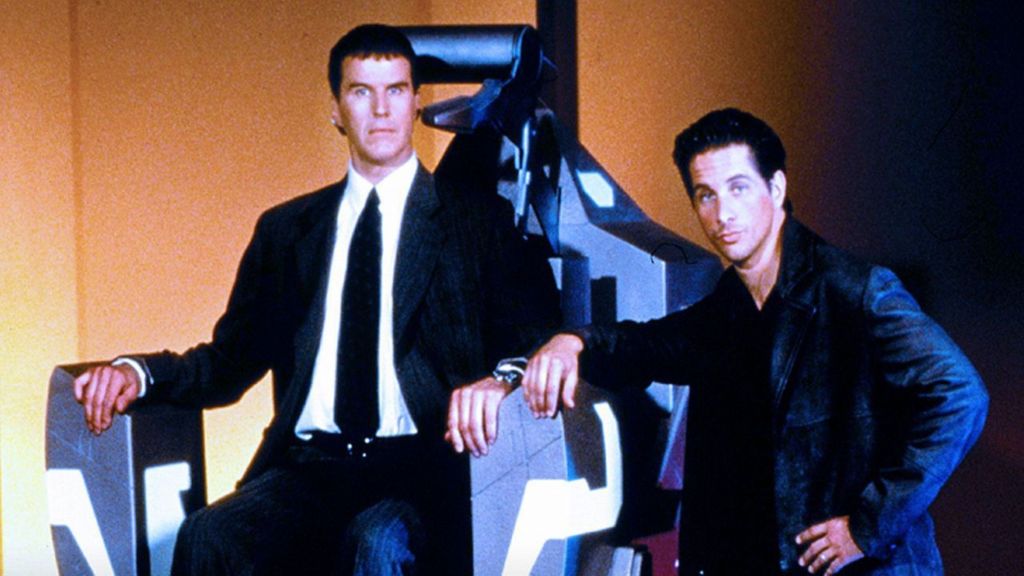
Total Recall 2070 borrowed its title from a movie it barely resembles, and that mismatch became the show’s biggest branding and the reason why it struggled to find a larger audience. Created by Art Monterastelli and shot in Toronto as a Canadian-German co-production, the series built its year-long run around Citizens Protection Bureau detective David Hume (Michael Easton) and his new partner Ian Farve (Karl Pruner), an Alpha Class android whose synthetic nature stays hidden from Hume through much of the premiere arc.
The premise of a buddy-cop procedural where one partner is secretly not human allowed the Total Recall 2070 writers to stage every case as commentary on corporate surveillance and manufactured consciousness. In addition, the production design pulled directly from Blade Runner‘s rain-slicked skylines while keeping the plotting grounded in detective-genre mechanics, drawing more from Philip K. Dick’s Do Androids Dream of Electric Sheep? than from the Arnold Schwarzenegger Total Recall. The Canadian network CHCH aired the series first in January 1999, with Showtime picking it up for U.S. broadcast later that year and airing all 22 produced episodes before cancellation left the mystery of Farve’s manufacturer and a suggested human-android DNA hybrid unresolved.
2) Harsh Realm
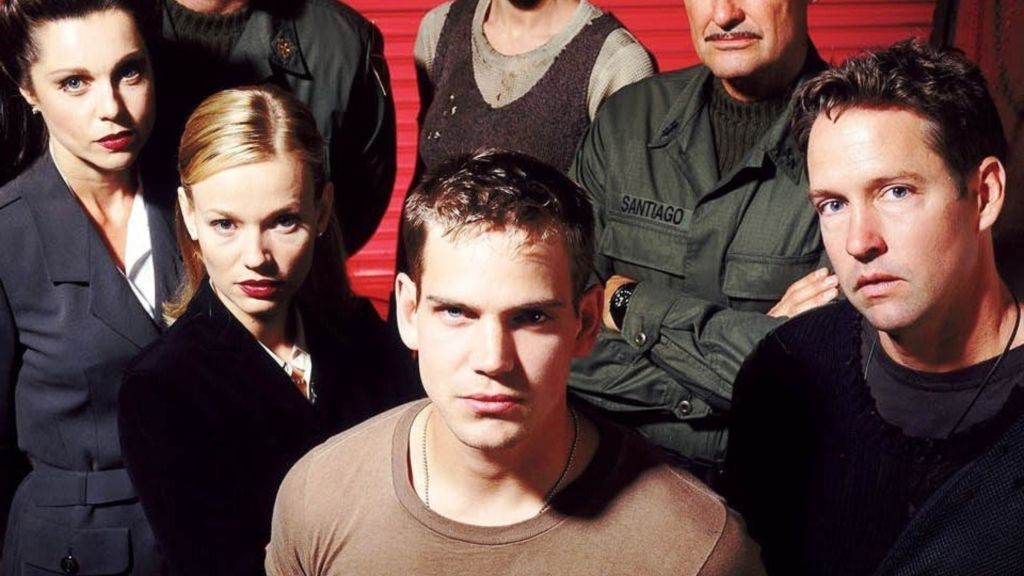
Harsh Realm gave Chris Carter, fresh off The X-Files and Millennium, room to build an entire mythology around a classified virtual reality Army program. In the series, Lieutenant Thomas Hobbes (Scott Bairstow) gets plugged into the training program only to discover it has been hijacked by Omar Santiago (Terry O’Quinn), a retired sergeant major who crowned himself dictator over five simulated states and now hunts every soldier the Army sends in to stop him.
Carter structured Harsh Realm as a war narrative dressed in science fiction, casting O’Quinn’s Santiago as a Kurtz-style warlord and pairing Hobbes with Mike Pinocchio (D.B. Sweeney), a soldier wounded during peacekeeping duty in Yugoslavia who volunteered for the simulation because his body isn’t broken inside it. Fox aired only three of the nine produced episodes in October 1999 before pulling the series over sagging ratings, a collapse Carter later blamed on the network skipping real promotion because it assumed the X-Files audience would follow him automatically. The remaining six episodes aired on FX the following spring, closing out a story that spent its short runtime asking what happens when a soldier decides the simulation is better than reality.
1) Futurama

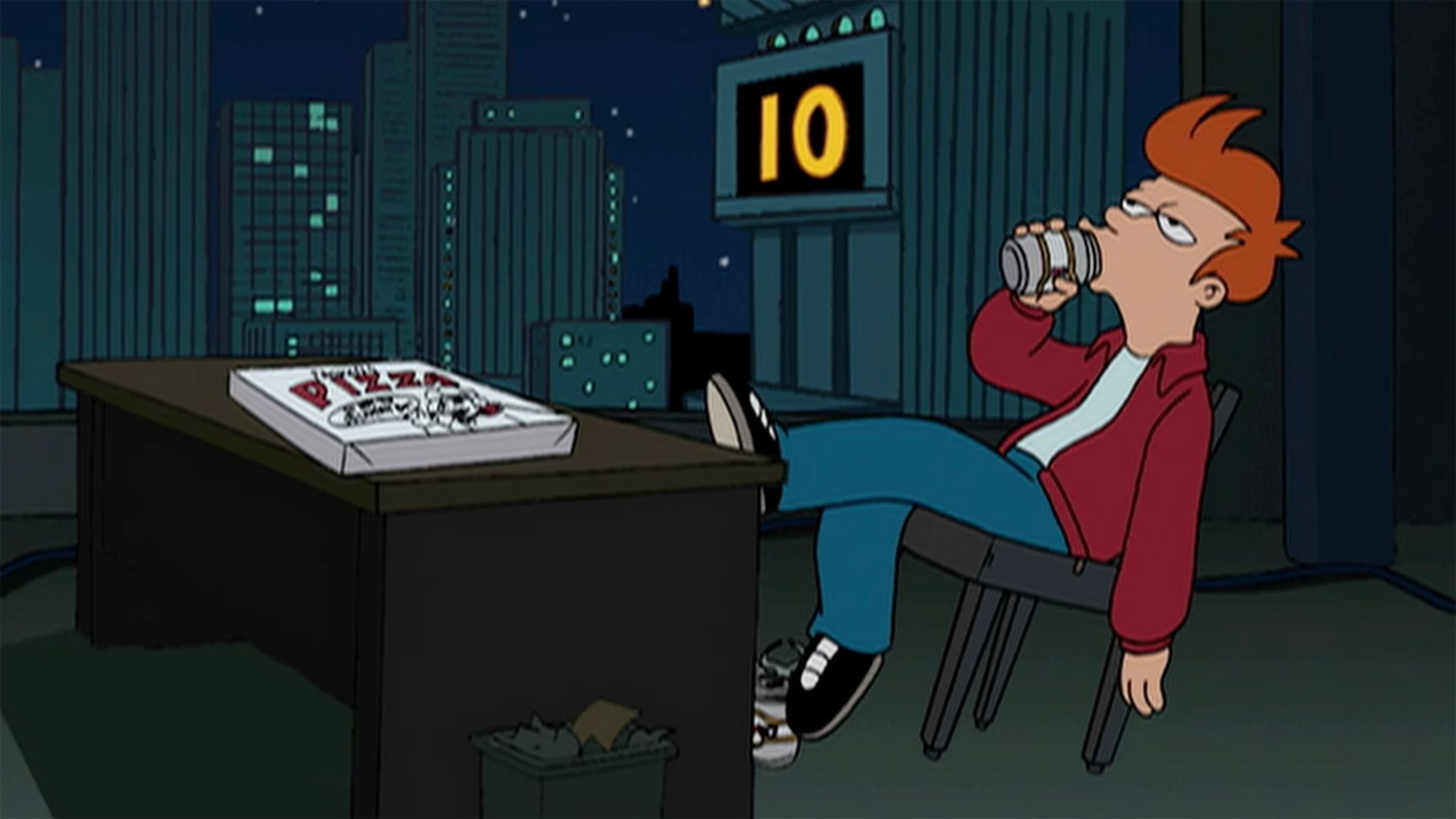
Where Harsh Realm and Total Recall 2070 used runaway technology to build paranoid dystopias, Futurama took the era’s anxieties and created a sitcom out of them, using the Y2K evening as the setting for the pilot episode. Matt Groening, developing the series with David X. Cohen after both spent years writing The Simpsons, structured the March 28, 1999 premiere around pizza delivery boy Philip J. Fry (voiced by Billy West) getting accidentally cryogenically frozen inside Applied Cryogenics at the stroke of midnight on New Year’s Eve. Fry wakes up a thousand years later in New New York City, where career assignment officer Turanga Leela (Katey Sagal), a purple-haired cyclops, and the alcohol-fueled, kleptomaniac robot Bender Bending Rodríguez (John DiMaggio) fold him into a delivery company run by his own distant descendant.
Futurama spent the next four seasons mining science-fiction tropes and hardcore fandom references, while employing writers with real math and physics doctorates on staff. Fox canceled the show in 2003 over declining ratings despite the fanbase it had built, but that fanbase kept it alive through four direct-to-video films and a decade of revivals across Comedy Central and Hulu, outlasting every network’s decision to let it go.
Which of these cult 1999 sci-fi shows do you think most successfully turned the era’s tech paranoia into something worth watching today? Leave a comment below and join the conversation now in the ComicBook Forum!