4 Most Accurate Fantasy Book Adaptations of All-Time (Including One Nobody Talks About)
Maybe out of all the genres, fantasy is the hardest one to adapt, as it involves huge, complex worlds, way too many characters, and important details, but would hardly fit into 2 or 3 hours of runtime. Every adaptation needs to make changes, but in this case, it’s understandable that more than a few things need to be left out. The big question is what gets cut and what stays, because an adaptation doesn’t need to copy the source material scene by scene to be faithful, but it does need to understand what makes the story work and actually be good. Some movies get this wrong, but there are others that seem like they came from another world thanks to how well they understood the assignment.
On this list, you’ll find 4 fantasy films that were such great adaptations that they put pretty much every other one in the genre to shame. Some of them may take a few creative liberties, but they know where to stop. They’re examples of movies that show what it means to adapt an already existing story for the screen and do it in the right and most satisfying way.
4) The Lord of the Rings Trilogy

The peak of fantasy in cinema is The Lord of the Rings, and when it comes to adaptation, it’s usually considered perfect too. However, it’s far from being a literal reproduction of J. R. R. Tolkien’s books. So, what is it doing on this list? Well, that’s not a criticism, because Peter Jackson did exactly what he needed to do: he condensed and reorganized the story without losing the core of what it’s all about. The trilogy follows Frodo (Elijah Wood) after he discovers that the ring he inherited from Bilbo (Ian Holm) is the One Ring of Sauron, putting him on a journey to destroy it before the Dark Lord can regain his power. And with that, you still get all the important events, characters, and conflicts, along with a surprising amount of the original dialogue.
Yes, Tom Bombadil is gone; Glorfindel was pretty much replaced by Arwen; Arwen’s role was expanded; Aragorn was given situations that don’t exist in the same way in the book; and some characters were changed. But the books have so many layers, so much history and description, that turning all of that into a 9-hour movie trilogy as a whole is no easy task. If it had been in the wrong hands, it very likely would have been a disaster. There are changes because every adaptation inevitably needs them, but Tolkien’s backbone remains totally intact. The team even went through versions of the scripts that strayed further from the books and, as they became more familiar with the material, kept moving back toward the original structure. Therefore, the trilogy is faithful because it knows what it can change without ceasing to be The Lord of the Rings.
3) The Green Mile

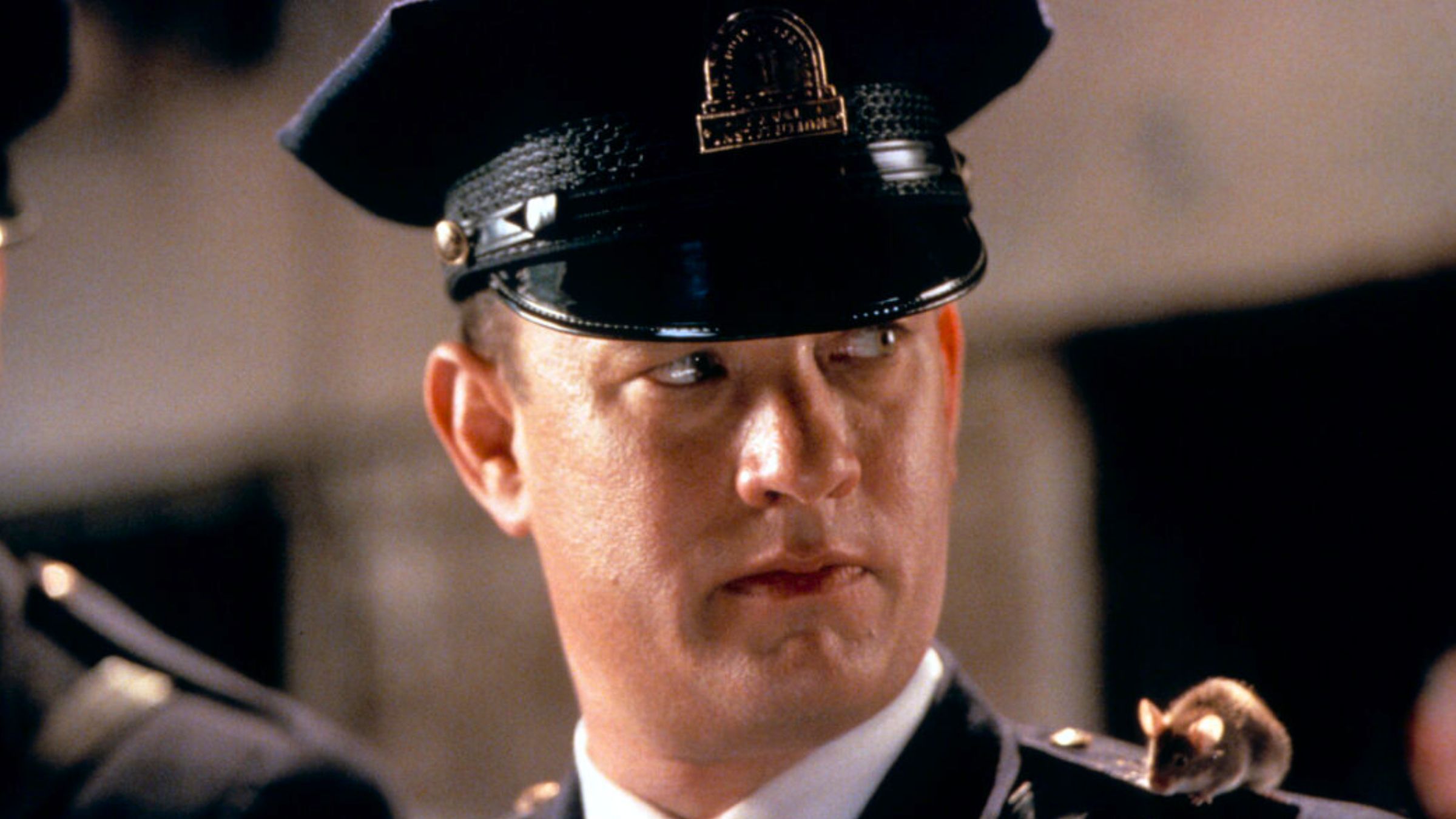
The Green Mile may seem like a supernatural drama, but Stephen King’s book is fantasy too. The story here follows Paul Edgecomb (Tom Hanks), a death row prison guard who meets John Coffey (Michael Clarke Duncan), a prisoner convicted of murdering two young girls who, despite his appearance and intimidating size, reveals that he has a supernatural ability to heal people. And the adaptation preserves what could have been the easiest thing to lose in the attempt to turn the story into a movie: the way the author mixes the supernatural with a very human story about guilt, justice, and execution. John Coffey is still the moral center of the plot, and Paul is still the character through whom we find out what really happened.
But are there any differences? Of course. The book was originally published in six volumes, so King had the space to build that story little by little, while the film obviously didn’t have that luxury, right? It was necessary to shorten the entire structure and get rid of some of the repetition and explanations that came with the serial format, but it never tried to “improve” the story by creating a new arc or changing what it was trying to say. In fact, director Frank Darabont even explained that his goal was to capture King’s voice and preserve the way the author wrote his characters, but also making the narrative more direct for the screen. The result turned out perfectly, since you can watch The Green Mile without ever reading the book and still feel like you’re experiencing the exact same story. Just a few details are different.
2) The Princess Bride

A landmark of fantasy and the ’80s, not many people know that The Princess Bride is actually an adaptation — and one that’s pretty rare to come across, because the author of the book himself wrote the screenplay. The story is still a romance and adventure, with Buttercup (Robin Wright) being separated from Westley (Cary Elwes), believing he’s dead, and being promised to Prince Humperdinck (Chris Sarandon), while a group of characters gets caught up in duels, chases, revenge, and a rescue attempt. And if you read the novel, you’ll find basically everything that’s special about the movie, and even the structure of a story being told to a child. Of course, some of the jokes and longer parts were reduced or removed, but William Goldman knew perfectly well which elements were essential for it to be the same story on screen, with the same identity.
The American Film Institute even pointed out that it was the author’s involvement that helped The Princess Bride stay faithful and, ultimately, become the classic it is today. Making an adaptation isn’t exactly a simple job, so having the person responsible for the original material involved in the process makes a huge difference. Besides, the adaptation even gives you a little taste of the book and makes you want to read it — not every movie manages to have that effect on its audience.
1) The Last Unicorn

Have you ever heard of The Last Unicorn? Probably not. And the funniest thing is that, out of all the adaptations out there, this one is considered one of the most faithful of them all. It’s an animated movie based on Peter S. Beagle’s novel and follows a unicorn who discovers that she is apparently the last of her kind, so she leaves her forest to find out what happened to the others, meeting the magician Schmendrick and Molly Grue along the way before reaching King Haggard’s kingdom and discovering his connection to the disappearance of the unicorns. At first, it seems like just another ordinary fantasy animation, but if you’ve read the book, you’ll be absolutely shocked.
This is another case where the author wrote the screenplay, but it’s almost impossible to notice any difference between the original material and the film. Overall, the story is kept almost entirely intact, including the fundamental sequence of events, the main characters, and the kind of story it is. Beagle himself stated that the adaptation came “remarkably close” to his final version of the screenplay, which shows that everyone involved in the project managed to understand the book from the inside out. The unfair part may be that The Last Unicorn isn’t remembered nearly as much as The Lord of the Rings in this regard, for example, because when something specifically from this genre is being translated into another format, it deserves credit. Fantasy is definitely not easy to translate to the screen.