8220we broke wall

“We broke wall of fear today”: Swat peace rally defies suicide attack

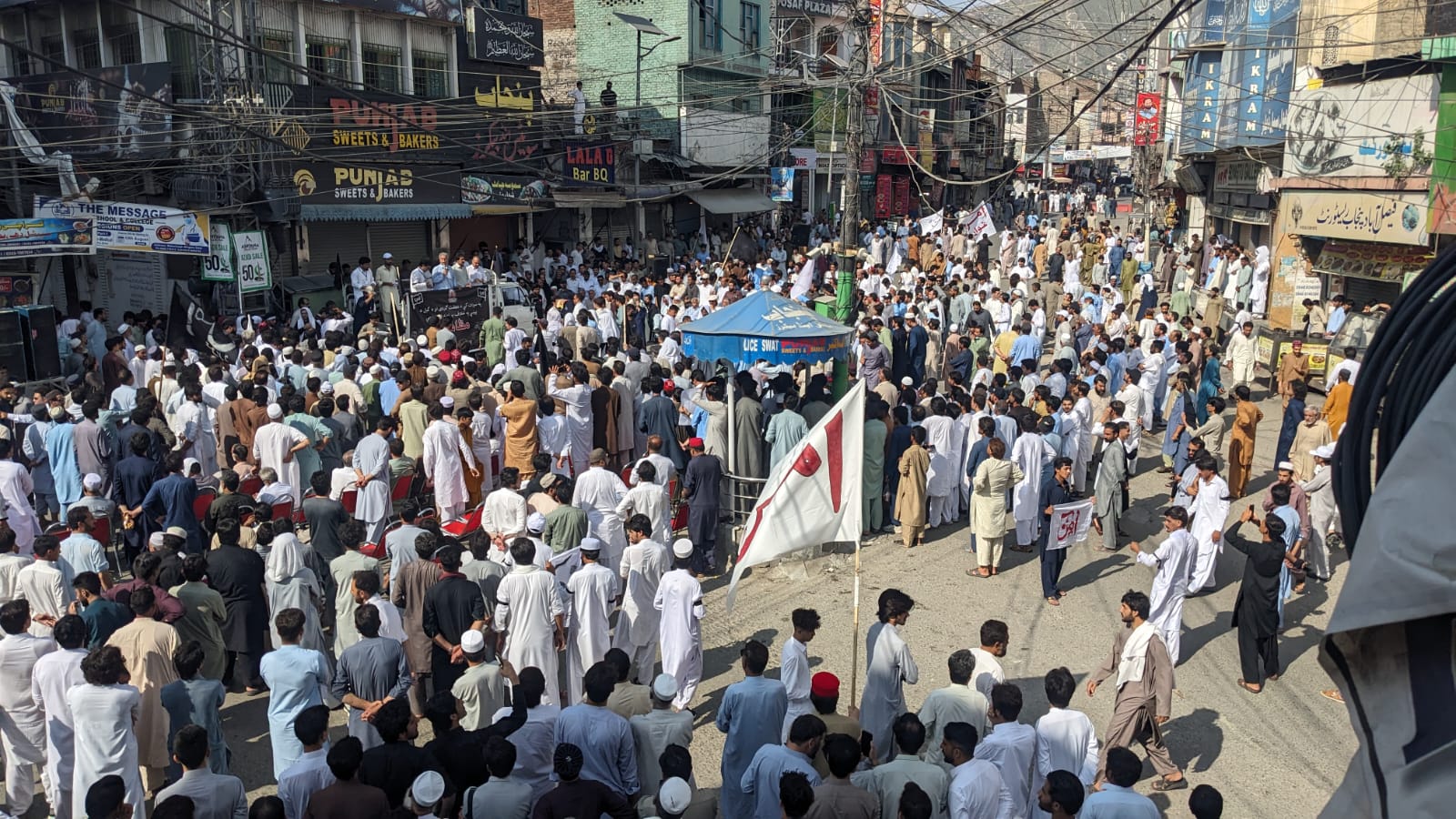
SWAT: Hundreds of people gathered in Swat on Friday for a peace rally to condemn the recent suicide bombing in Kabal and to demand lasting peace in the region. Tribal elders from the Swat Qaumi Jirga, political leaders, and local residents joined the demonstration, sending a clear message that violence would not stop them from raising their voices for peace.

Speaking at Nishat Chowk in Mingora, participants said they would continue to come out onto the streets until peace is fully restored. They declared that suicide attacks and acts of terrorism would not force them into silence.

Addressing the rally, speakers said Pashtun regions have suffered from terrorism for more than four decades. They urged the state to review its security policies and ensure the people of the region can live in peace and safety.

The speakers expressed deep sorrow over the loss of lives in the Kabal suicide bombing, describing the attack as an attempt to sabotage peace and destabilize the region. They said such efforts would no longer succeed.

They also said the bombing was intended to frighten people and discourage participation in the peace movement, but insisted the public would not be intimidated. “We broke the wall of fear today,” participants said. “We will keep coming out until our dream of peace becomes a reality.”

Mukhtiar Khan Yousafzai, a leader of the Swat Qaumi Jirga, said terrorists wanted to create fear so that their supporters could achieve their goals. “Around 20 people were martyred in this attack, but even if a thousand people were killed, the people of Swat would still stand up for peace,” he said.

Former Mingora City Mayor Shahid Ali said a single terrorist attack damages the economy of the entire Khyber Pakhtunkhwa province, especially its tourism industry. He said Swat is a valley blessed with natural beauty and valuable resources, which, according to him, are targeted by those who want instability.

He added that families, including children, would continue to join peaceful demonstrations because they would never accept a return to violence.

Speakers also recalled the sacrifices made by the people of Swat for Pakistan’s stability, saying many families lost their homes and livelihoods during years of conflict. They stressed that the people were no longer willing to endure another period of unrest.

Authorities put strict security measures in place for the rally. Walk-through gates were installed at entry points, and a heavy police presence was deployed throughout the venue.

Similar Posts

  • | |

    Aamir Muqam invites Rawalakot sit-in leaders for d…

    ISLAMABAD: Federal Minister for Kashmir Affairs and Gilgit-Baltistan Aamir Muqam has extended an offer of dialogue to protesters staging a sit-in in Rawalakot, urging demonstrators to engage in peaceful negotiations while distancing the federal government from recent controversial remarks about the region. Speaking during a televised interview, Muqam said the people of Rawalakot have always been, and will continue to remain, Kashmiris, emphasizing their historical identity and longstanding contributions to Pakistan. “The people of Rawalakot are Kashmiris, have always been Kashmiris, and will remain Kashmiris,” the minister said, stressing that the government values the sacrifices made by the residents of Poonch and other parts of Azad Jammu and Kashmir. His remarks came amid growing political tensions following comments attributed to Defence Minister Khawaja Asif, which sparked criticism and prompted strong reactions from political leaders and residents in the region. Muqam clarified that Khawaja Asif’s statement reflected his personal opinion and should not be interpreted as the official position of either the federal government or the ruling party. “The statement does not represent government policy,” he said, adding that the people of Rawalakot had rendered immense sacrifices for Pakistan during critical periods of history and deserved respect and recognition. Addressing the ongoing sit-in, the minister appealed to protesters to choose dialogue over confrontation. He said the government believes the majority of those participating in the demonstration are patriotic citizens with genuine concerns rather than individuals pursuing unlawful objectives. “I do not consider everyone at the sit-in to be terrorists,” Muqam said. “Most participants are loyal Pakistanis. They should distance themselves from elements with negative agendas and come forward for meaningful talks.” The minister reiterated the government’s willingness to resolve issues through negotiations, saying constructive engagement remained the most effective path toward restoring calm and addressing public grievances. His appeal comes as authorities continue to monitor the evolving situation in Rawalakot, where demonstrations have drawn national attention amid heightened political debate and security concerns. Political observers believe Muqam’s conciliatory tone signals an effort by the federal government to ease tensions and prevent further escalation through dialogue rather than confrontation. His reassurance regarding the identity and sacrifices of the people of Rawalakot is also being viewed as an attempt to rebuild trust following the controversy surrounding recent public statements. The government’s next steps, including any formal negotiations with protest representatives, are expected to shape developments in the coming days as officials seek a peaceful resolution to the standoff.

  • | |

    Punjab approves martyrs’ package for 14 fallen p…

    Lahore: The Punjab government has approved comprehensive martyr compensation packages for the families of 14 police personnel who lost their lives while performing their duties, reaffirming its commitment to supporting the families of fallen law enforcement officials. The decision was taken during a high-level meeting chaired by Punjab Minister for Law Rana Muhammad Iqbal Khan at the Home Department. The meeting was attended by Home Secretary Dr Ahmed Javed Qazi, Additional Inspector General Imran Arshad, Additional Secretary (Police) Kanwar Anwar Ali Khan, DIG Welfare Mehboob Rashid and other senior officials. The minister directed the relevant authorities to ensure that all financial dues, housing benefits and other entitlements are provided to the families of the martyrs without delay. Approval was granted under three different martyr packages based on the circumstances of service and sacrifice. Package-1 was sanctioned for police personnel martyred in encounters with terrorists in Bhakkar and Layyah, including Constables Muhammad Shehbaz, Muhammad Faheem and Muhammad Asad Naseer. Under this package, the families of martyred constables will receive Rs10 million, a five-marla house and other benefits. Package-2 was approved for police officials who embraced martyrdom during duty in Bahawalnagar, Sargodha, Rajanpur, Faisalabad and Gujrat. The beneficiaries include Sub-Inspectors Shahid Parvez and Amir Rizwan, Constables Muhammad Nasir and Mirza Umar Aftab Baig, and Driver Constable Iftikhar Ahmed. Under this package, the families of martyred constables will receive Rs4 million, a five-marla house and additional benefits, while the families of martyred Assistant Sub-Inspectors will receive Rs5 million, a seven-marla house and other incentives. Package-3 was approved for police personnel martyred while on duty in Bahawalnagar, Dera Ghazi Khan, Rahim Yar Khan and Sahiwal. The approved beneficiaries include Sub-Inspector Muhammad Zaman Zia, Assistant Sub-Inspector Muhammad Bashir, Constables Muhammad Bismillah, Muhammad Ramzan, Tahir-ul-Zaman Siddiqui and Muhammad Waris. Under this package, the families of martyred constables will receive Rs3.5 million and other benefits, while the families of martyred Assistant Sub-Inspectors and Sub-Inspectors will receive Rs4 million along with additional concessions. Addressing the meeting, Rana Muhammad Iqbal Khan said the welfare and protection of the families of martyrs remains one of the Punjab government’s highest priorities. He pledged that no martyr’s family would be deprived of its rightful benefits, describing the fallen officers as the pride of the nation and the country’s true heroes who laid down their lives in the line of duty. The minister also vowed that terrorists responsible for killing police personnel would be brought to justice in accordance with the law. The meeting concluded with prayers for the elevation of the ranks of the martyrs.

  • | |

    Ishaq Dar to visit UK from August 24-28

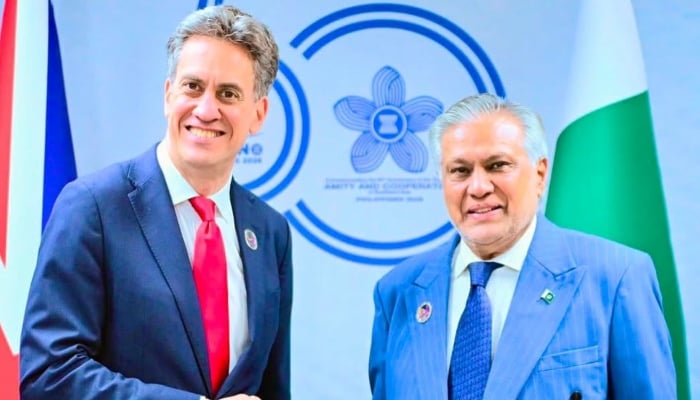
    Deputy Prime Minister and Foreign Minister Ishaq Dar will travel to the United Kingdom on an official visit from August 24 to 28, where he is scheduled to hold talks with senior British officials and meet members of the Pakistani community. According to the Foreign Office, Dar will meet UK Foreign Secretary Ed Miliband and FCDO Minister of State for Pakistan Stephen Doughty during his visit. He is also expected to hold discussions with other senior British government officials. A key focus of the visit will be the situation of Pakistani sailors held by Somali pirates. Dar is scheduled to meet the secretary-general of the International Maritime Organisation to discuss efforts to secure the release of the hostages. The MT Honour 25 oil tanker was hijacked near Somalia’s Puntland region on April 21. The vessel was carrying 17 crew members, including 10 Pakistani nationals. The prolonged captivity has raised concerns among the families of the crew, who have called for urgent efforts to secure their safe release. The Foreign Office has reaffirmed that the government remains committed to bringing the Pakistani nationals home safely. During his UK visit, Dar will also meet Commonwealth Secretary-General Shirley Ayorkor Botchwey. His schedule includes engagements with British parliamentarians and representatives of the British-Pakistani community. The visit comes as Pakistan and the UK continue to strengthen cooperation on security, migration and law enforcement. Earlier this year, the UK announced an additional £8 million in funding for joint efforts with Pakistan to tackle crime and illegal migration. The funding is intended to improve border and visa systems and strengthen law enforcement against human smuggling and trafficking networks. It will also support the return of people who do not have the legal right to remain in the UK and finance community-based programmes aimed at addressing factors contributing to irregular migration.

  • | |

    Punjab Governor ends 19-year UAF research officers…

    FAISALABAD: In a landmark decision expected to reshape the service structure of the University of Agriculture Faisalabad (UAF), Punjab Governor and UAF Chancellor Sardar Saleem Haider Khan has ordered the upgradation of the post of Research Officer with retrospective effect from April 25, 2007, bringing an end to what many describe as nearly two decades of discrimination against the university’s research cadre. The decision came after the Chancellor accepted a representation filed by Muzaffar Hussain Salik, a Research Officer at the Office of University Books and Magazines (OUBM). Besides approving the upgradation, the Chancellor declared the post of Research Officer a “Teacher of the University,” making its holders eligible for all related service, financial, seniority and pensionary benefits in accordance with the law. The dispute dates back to the implementation of the UAF Amended Service Statutes, 2007, introduced after the federal government’s policy to upgrade university teachers and teaching-equivalent positions with the concurrence of the Higher Education Commission (HEC). While several teaching and equivalent posts received the approved benefits, Research Officers and Senior Research Officers were allegedly left out despite performing comparable academic and research responsibilities. According to the representation, the exclusion created a longstanding disparity, depriving the affected employees of promotions, financial benefits, and equal treatment under the approved statutory framework. It argued that the selective implementation of the service statutes resulted in years of professional and financial disadvantage for members of the research cadre. After reviewing the legal and administrative record, the Chancellor ruled that the benefit of upgradation should be extended to Research Officers from the same effective date as Lecturers — April 25, 2007. The order effectively places the research cadre on par with other teaching-equivalent positions that had already been upgraded under the 2007 amendments. University officials and academic observers believe the decision will benefit around 66 Research Officers, Senior Research Officers and other teaching-equivalent employees, providing them with long-awaited financial relief, revised seniority, pensionary benefits and formal recognition within the university’s teaching community. The ruling has been widely welcomed by researchers, academics and legal experts, who describe it as one of the most significant service-related decisions in UAF’s recent history. They say the order reinforces the principles of equality, transparency and uniform implementation of statutory rights while setting an important precedent for public sector universities across Pakistan. For petitioner Muzaffar Hussain Salik, the decision marks the successful conclusion of a long legal and constitutional struggle. Beneficiaries have hailed the ruling as a collective victory for justice, merit and the rule of law, expressing hope that similar disparities in higher education institutions will now be addressed through fair and consistent implementation of service statutes.

  • | |

    Mohsin Naqvi says Shehbaz government will complete…

    Federal Interior Minister Mohsin Naqvi has reiterated his confidence that the government led by Prime Minister Shehbaz Sharif will complete its full five-year constitutional term, while maintaining his earlier criticism that Pakistan’s decades-old governance system requires significant reform. Speaking to the media, Naqvi said his previous remarks about the country’s system had been misunderstood. He clarified that his criticism was directed at what he described as an 80-year-old governance structure rather than the current administration. According to the interior minister, the existing system has failed to deliver the level of progress Pakistan is capable of achieving. Naqvi argued that if the country’s institutional framework had functioned effectively over the years, Pakistan would have been in a much stronger economic and administrative position today. He stressed that his comments should not be interpreted as criticism of the federal government, of which he is a member. Responding to questions about his own performance as interior minister, Naqvi said he is accountable to the prime minister and welcomes an objective assessment of every federal ministry. He suggested that the government publicly release the performance results of all ministries so citizens can evaluate how each department has performed. The interior minister also noted that he regularly attends official duties and said his attendance record stands at approximately 70 percent. He emphasized that transparency and accountability should apply across the federal cabinet. Praising Prime Minister Shehbaz Sharif, Naqvi said the premier works between 14 and 16 hours a day and has continued to pursue reforms despite challenging circumstances. He credited the government with improving tax collection, strengthening Pakistan’s diplomatic engagement, and introducing reforms in several sectors. According to Naqvi, the prime minister could achieve even greater results if Pakistan’s governance system functioned more efficiently. He argued that administrative reforms remain essential for accelerating economic growth and improving public services. Addressing political speculation, Naqvi dismissed suggestions of differences between himself and the prime minister. He said there would always be attempts to create misunderstandings but insisted that their working relationship remains strong. The interior minister concluded by expressing confidence in the stability of the coalition government. He stated that the current administration would complete its constitutional term and that Shehbaz Sharif would continue to serve as prime minister for the full five years, despite criticism from political opponents. Naqvi’s remarks come amid ongoing political debate over governance reforms, economic challenges, and the future direction of Pakistan’s political landscape.

  • AJK local government elections to begin July 27 in phases

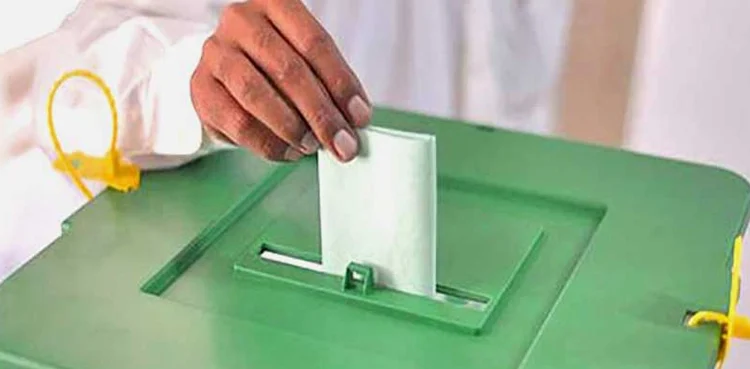
    Muzaffarabad: Chief Election Commissioner of Azad Jammu and Kashmir (AJK), Ghulam Mustafa Mughal has announced that the upcoming local government elections will be held in phases. Speaking at a press conference in Muzaffarabad, the Chief Election Commissioner said that polling for the first phase will take place in the Mirpur Division on July 27 while the second phase will be held in the Muzaffarabad Division on August 2. He further stated that voting in the third phase will be conducted in the Poonch Division on August 10. Elections for the 12 refugee seats will also be held on August 2 alongside polling in the Muzaffarabad Division. Ghulam Mustafa Mughal said that the elections will be conducted under the supervision of the Pakistan Army. He explained that the decision to hold the elections in phases was made to ensure the availability of military personnel, thereby facilitating a free, fair, transparent and peaceful electoral process.

Leave a Reply

Your email address will not be published. Required fields are marked *