National

  • | | |

    Pakistan seeks to revive Iran-US mediation efforts

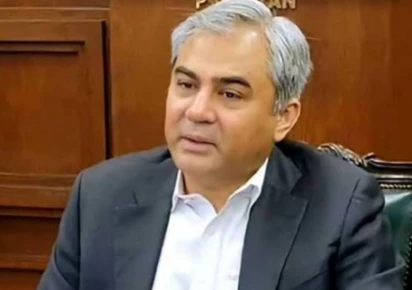
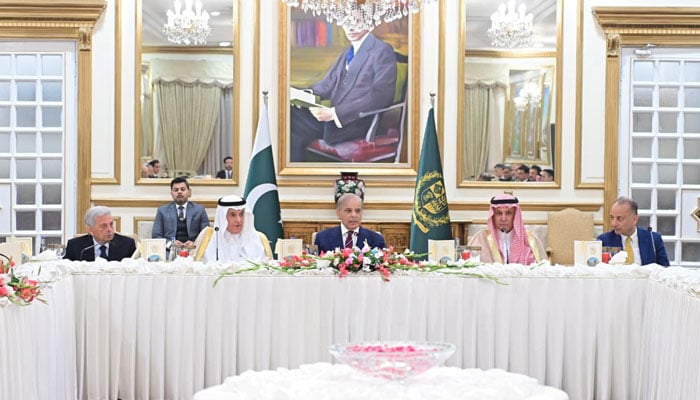
    ISLAMABAD: Pakistan is making fresh diplomatic efforts to revive its role as a mediator between Iran and the United States. Interior Minister Mohsin Naqvi travelled to Tehran on Tuesday for talks with senior Iranian officials. During his visit, he met Iranian Foreign Minister Abbas Araghchi and President Masoud Pezeshkian. The visit is aimed at keeping Pakistan’s mediation channel active. Islamabad is seeking progress on the Islamabad Memorandum of Understanding (MoU), which emerged from earlier efforts to ease tensions between Iran and the United States. Naqvi was received in Tehran by Iranian Interior Minister Eskandar Momeni. He later held discussions with Araghchi on bilateral relations and regional developments. Pakistan’s diplomatic efforts had slowed after Oman became more directly involved in talks concerning arrangements for navigation through the Strait of Hormuz. However, recent contacts between Oman and Iran appear to have created an opportunity for Islamabad to renew its broader mediation initiative. A diplomatic source said Pakistan wants to follow up on the Islamabad MoU and encourage both sides to return to a wider diplomatic process. The situation around the Strait of Hormuz remains particularly sensitive. The waterway is vital for international energy and trade routes. Iran has maintained that the Islamabad MoU remains the key framework for resolving the wider dispute. Tehran has also linked the full reopening of the Strait of Hormuz to implementation of the commitments contained in the agreement. Iran and Oman have been discussing arrangements for safer passage through the strategic waterway. Their discussions include possible shipping routes and mechanisms for managing navigation. However, Tehran has indicated that any understanding with Oman would initially address technical matters. It would not necessarily represent a complete resolution of the wider dispute. Iran has also called for concrete assurances from Washington before moving towards the next stage of negotiations. Tehran wants guarantees that can be verified rather than verbal commitments. Pakistan has continued to encourage dialogue between the two sides. Defence Minister Khawaja Asif also indicated that Washington and Tehran could be moving closer to an understanding. He said recent signals suggested that the two countries were again moving towards a possible peace arrangement or deal. Meanwhile, Pakistan has invited Iranian Foreign Minister Araghchi and Iranian Parliament Speaker Bagher Ghalibaf to visit Islamabad. Iranian officials have said the visit would take place at an appropriate time. Naqvi’s trip to Tehran is therefore significant because Islamabad is maintaining direct engagement instead of waiting for the Iranian delegation to visit Pakistan. During his meeting with President Pezeshkian, Naqvi described Pakistan-Iran relations as strong and longstanding. He conveyed Islamabad’s intention to further strengthen ties with Tehran. Pezeshkian also stressed the importance of bilateral relations. He said stronger cooperation between Pakistan and Iran could serve their national interests and contribute to regional stability. The discussions come amid broader diplomatic and security developments in the region. Pakistan recently signed a trilateral defence agreement with Saudi Arabia and Turkiye. Islamabad has maintained that the arrangement is defensive and is not directed against any country. Deputy Prime Minister and Foreign Minister Ishaq Dar also discussed the agreement with his Iranian counterpart. He briefed Araghchi on its objectives and stressed its focus on strategic cooperation and regional peace. At the same time, US President Donald Trump has adopted a tougher tone towards Iran’s negotiating team. Trump described Iranian negotiators as difficult and accused them of making commitments privately and later presenting them differently in public. He also warned that Iran’s economic problems and inflation were becoming increasingly difficult to sustain. Trump said Washington could continue applying economic pressure on Tehran. He also suggested that the United States could take stronger measures if necessary. The contrasting positions underline the difficulties facing diplomatic efforts. Pakistan is now attempting to keep communication channels open with Tehran while encouraging a broader political process involving Iran and the United States.

  • |

    Students protest Cambridge exam leaks

    ISLAMABAD: Accountability4Cambridge has called for a student protest against Cambridge Assessment International Education (CAIE) over alleged examination paper leaks during the 2026 examination cycle, saying the incidents have raised serious concerns about fairness and the credibility of Cambridge examinations. The student group said reports of leaked papers emerged in 2024 and increased in 2025, but Cambridge failed to provide sufficient public explanations or demonstrate that it had effectively strengthened its examination security system. According to Accountability4Cambridge, leaked material from several major papers circulated before scheduled examination times in 2026. The group compiled evidence from 17 alleged cases, including screen recordings showing time-zone information that it says established that the material was available before the relevant examinations. Cambridge recognised four cases and took action, but the students say the remaining evidence was not adequately addressed. The group raised the issue before the Senate Standing Committee on Federal Education and Professional Training on May 18 and again on June 16. Following the meetings, a sub-committee comprising IBCC, Cambridge, Accountability4Cambridge, the British Council, the Ministry of Education and NCCIA was formed. During a July 13 meeting, the students presented the 17 recordings and asked Cambridge to respond. After Cambridge questioned the reliability of the videos, Accountability4Cambridge sought forensic verification from the National Cyber Crime Investigation Agency (NCCIA). The group said NCCIA’s report, received on July 29, found no evidence of tampering in the submitted recordings. Accountability4Cambridge subsequently requested another sub-committee meeting to present the forensic findings. The meeting was initially scheduled for August 7 but was postponed to August 12 after Cambridge said it was unavailable. The students have also criticised Cambridge’s decision to use S1 paper marks instead of assessed marks. They argue that using compromised papers for grading could unfairly benefit students who accessed leaked material while disadvantaging those who did not. Accountability4Cambridge is demanding reversal of the S1 marking decision, lower grade thresholds for Computer Science and Mathematics, recognition of additional leaks supported by forensic evidence, publication of a detailed investigation report and a transparent mechanism for handling compromised examinations. The group has also urged schools to demand greater accountability from Cambridge. Founder Samaak Iqbal Malik said the dispute concerns the integrity of the entire examination system rather than a few individual papers. The organisation has announced a student demonstration outside the IBCC office in G-10, Islamabad, at 1pm on Wednesday, August 12, calling for immediate action before the controversy further affects students’ academic futures.

  • | |

    Sindh orders three-year appointment of Qaim Ali Sh…

    The Sindh government has directed Jinnah Sindh Medical University (JSMU) to take immediate steps for the three-year appointment of Professor Dr Nighat Shah, daughter of former Sindh chief minister Qaim Ali Shah, just one day before her scheduled retirement. The directive was issued following a decision of the Sindh Cabinet. Secretary of the Boards and Universities Department Abbas Baloch has also issued a formal notification in this regard. According to the notification, the provincial cabinet discussed the matter during its meeting held on August 5 under agenda item 16. The cabinet cited the broader public interest, continuity of specialised medical services, academic leadership, postgraduate medical education, research, innovation and institutional standards as reasons for considering the appointment. The notification initially states that the vice chancellor should consider appointing Dr Nighat Shah as a professor for three years. However, it subsequently directs the university administration to take immediate steps to process her three-year appointment. The university has also been instructed to implement the cabinet decision without delay and submit a report on the action taken to the Boards and Universities Department on a priority basis. The appointment has raised questions because the government has referred to a notification issued by the Pakistan Medical and Dental Council (PMDC) on May 19, 2026. The PMDC had allowed public medical and dental institutions to hire retired faculty members on a purely contractual basis until the age of 65. However, the council had clarified that the policy was enabling in nature and was not mandatory for any institution. Under the PMDC policy, individual institutions were allowed to make decisions according to their requirements, rules, regulations and available resources. The PMDC notification also stated that contractual appointments of retired faculty would not create any right to permanent employment, seniority or absorption into the regular cadre. It further clarified that such appointments should not adversely affect the promotion opportunities, career progression or cadre structure of junior faculty members. The case has therefore raised questions about the need for the provincial cabinet to intervene in the appointment of a particular retired faculty member when the PMDC policy leaves the decision to individual institutions. The PMDC notification is a general policy applicable to public medical and dental institutions. It does not specifically direct any institution to appoint an individual faculty member. The proposed appointment has also triggered concerns over seniority within JSMU. Associate professors Dr Shazia Naseeb, Dr Nasreen Fatima, Dr Saba Khan, Dr Iram Majid and Dr Maimoona Rehman are reportedly among those whose seniority could be affected by Dr Nighat Shah’s appointment. The issue is likely to attract further attention because the proposed appointment comes immediately before Dr Nighat Shah’s retirement. Questions are also being raised about how the decision could affect existing faculty members and their career progression.

  • | |

    Punjab boards introduce digital result cards

    All nine educational boards across Punjab have approved a new Digital Result Card System to modernise examination records and make student services more accessible. Under the new system, boards will stop issuing traditional printed result cards to students. Instead, candidates will receive digital result cards through newly developed online result portals. Students will be able to download and print their certificates from home or use commercial printing facilities when needed. The move will also end the Rs550 fee that boards currently collect from each candidate for issuing conventional result cards at the time of admission. As a result, the boards are expected to lose a significant source of revenue. The first phase of the system will cover Class IX and First Year annual examination results. Class X and Second Year students will join the digital system in the second phase. However, students whose results were scheduled for announcement on August 6 will continue to receive printed result cards under the existing system. Board officials said digital result cards for both regular and private candidates will become available online immediately after results are announced. Regular students will access their certificates through their institutions’ online portals, while private candidates will download them directly from their respective board websites. The new certificates will carry QR codes and other security features to prevent tampering and allow educational institutions and employers to verify them electronically. Officials have also confirmed that digital result cards will have the same legal and official status as conventional certificates. They will remain valid for university admissions, employment, scholarships, equivalence certificates, document verification and other academic and official requirements. The initiative marks a major shift towards paperless examination services and is expected to make the process faster, more convenient and easier for students across Punjab.

  • | |

    PTI infighting deepens as Raja, Yousafzai trade al…

    ISLAMABAD: Internal differences within the Pakistan Tehreek-e-Insaf (PTI) have intensified after a public dispute between central secretary-general Salman Akram Raja and party leader Mashal Yousafzai. The disagreement revolves around allegations linked to party tickets and internal decision-making. Both leaders have exchanged strong statements, further highlighting tensions within the party. Mashal Yousafzai had accused Salman Akram Raja of involvement in what she described as the sale of party tickets. Raja rejected the allegation and responded sharply. Raja questioned the credibility of the accusation. He said those who could not afford even a small amount to pursue a legal case had resorted to making serious allegations against him. He also questioned Yousafzai’s knowledge of the circumstances surrounding her Senate position. Raja said she did not know who had played a role in getting her elected to the Senate. Raja further stated that decisions regarding Yousafzai had been made on the instructions of PTI founder Imran Khan. He said he did not possess the authority to remove Yousafzai from the Senate. He added that not taking action against her at the party level was an act of leniency on his part. Yousafzai rejected Raja’s claims and responded with allegations of her own. She claimed that Raja had apologised to Imran Khan on one occasion but later resumed making public statements against her and others. Yousafzai also challenged Raja to take action against her if he believed he had the authority to remove her from the party. The dispute has attracted attention because both figures hold prominent positions within PTI circles. Their public exchange has brought internal disagreements into the open at a time when the party is already facing political and organisational challenges. PTI worker Shandana Gulzar also joined the debate. Gulzar accused Raja of making an incorrect statement about financial matters. She questioned the handling of funds allegedly received from the United States. She asked where the millions of rupees allegedly coming from the US had gone. Gulzar suggested that disclosure of the facts could create serious problems for those involved. The allegations made by the PTI figures have not been independently established. The dispute remains centred on competing claims made by the individuals involved. The latest confrontation has nevertheless raised questions about internal discipline and decision-making within the party.

  • | |

    JPMC doctor seeks relief amid patient death contro…

    A senior doctor at Jinnah Postgraduate Medical Centre (JPMC) has asked to step down from her responsibilities amid controversy surrounding the death of a 65-year-old patient who was shifted from the hospital’s emergency department to the National Institute of Cardiovascular Diseases (NICVD) on July 28. Dr Sanobar Sikandar, JPMC’s only senior emergency medicine specialist, submitted a request to the hospital’s Executive Director seeking relief from her duties as an assistant professor of medicine. She cited mounting professional pressure, internal interference and what she described as an unhealthy working environment. Dr Sanobar said the hospital administration criticised her after asking her to explain the circumstances surrounding the patient’s death. She said the situation had made it increasingly difficult for her to continue managing her medical, teaching and administrative responsibilities effectively. In her application, she highlighted what she described as a lack of professional respect in the emergency department, political interference and inappropriate conduct by some junior doctors. She said these issues had caused her severe mental stress and made it difficult to continue working under the prevailing conditions. The Young Doctors Association (YDA) Sindh has backed Dr Sanobar and urged the JPMC administration to address the dispute immediately. YDA Sindh Chairman Dr Mehboob Noonari said Dr Sanobar is the hospital’s only FCPS assistant professor in emergency medicine. He noted that she also serves as faculty for the FCPS programme and supervises trainee doctors. Dr Noonari warned that her departure could seriously disrupt emergency medicine training at JPMC and may even put the FCPS programme at risk of closure. He also alleged that the administration was pressuring Dr Sanobar to protect the doctor who was in charge of the night shift when the incident occurred. He questioned why the night-shift in-charge was being shielded and demanded that hospital authorities clarify the matter. The YDA chairman further claimed that senior doctors had questioned Dr Sanobar over her decision to issue an explanation regarding the patient’s death, raising concerns about the handling of the case within the hospital.

  • | | | |

    Dar condemns Houthi attack killing 3 Pakistanis

    ISLAMABAD: Deputy Prime Minister and Foreign Minister Ishaq Dar has condemned a Houthi attack on a commercial vessel in the Red Sea, saying three Pakistani nationals were killed and another was injured in the incident. Dar described the attack as a serious threat to innocent lives and maritime security. He expressed concern over the loss of Pakistani lives in the incident. The foreign minister said the Pakistani government was in contact with relevant Saudi authorities and the Yemeni government to obtain further details about the attack. He also directed Pakistan’s embassy in Riyadh to provide all possible assistance for the repatriation of the bodies of the deceased Pakistanis. The embassy has also been instructed to facilitate the injured Pakistani citizen and ensure that all necessary assistance is provided. The attack reportedly took place near the Bab al-Mandab Strait, a strategically important maritime passage connecting the Red Sea with the Gulf of Aden. According to Yemeni government and coast guard sources, Houthi forces attacked a cargo vessel in the area. The attack targeted the deck of the commercial ship. Three crew members were reportedly killed in the assault. The incident has raised fresh concerns over the safety of commercial shipping in the Red Sea. The waterway is a major international trade route used by cargo vessels travelling between Europe, Asia and the Middle East. Pakistan is continuing to coordinate with authorities in Saudi Arabia and Yemen to establish further details about the incident and assist the affected Pakistani nationals and their families.

  • |

    Flash floods cut off lower Chitral

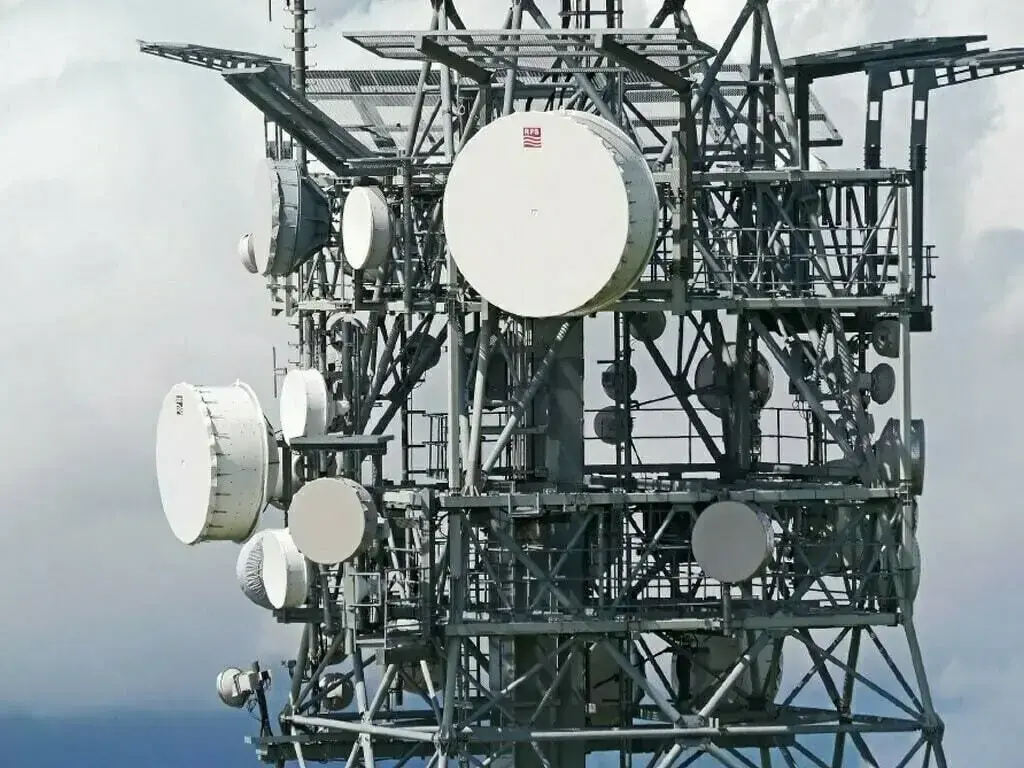
    Heavy rains have once again triggered flash floods in the Broz and Gumbas Gol streams of Lower Chitral, causing widespread damage and disrupting road connectivity. The powerful floodwaters swept away the remaining section of Gumbas Bridge, further worsening transportation problems in the area. Flood debris covered the Chitral-Peshawar Road, forcing authorities to suspend traffic. A petrol station also suffered damage as floodwaters rushed through the area. The National Highway Authority (NHA) has deployed heavy machinery to clear debris and restore the road for traffic. Meanwhile, flash floods blocked routes in Baroz Gol and Sheedi village, leaving several communities cut off from the main road network. The flooding has also disrupted communications after the main fibre-optic link was damaged, cutting internet services across affected areas. Thousands of residents remain stranded amid difficult conditions, with limited access to food, shelter and communication. The destruction has spread across a large part of Chitral. Several areas, from Sheshi Koh Valley and Drosh town in Lower Chitral to Mastuj in Upper Chitral, have suffered from damaged roads and disrupted connectivity. Authorities are continuing relief and clearance operations as heavy machinery works to reopen key routes and restore access to affected communities.

  • |

    Parties back local governments over new provinces

      Mainstream political parties have rejected the idea of creating new provinces and instead called for stronger local governments to improve governance and public service delivery. The position emerged during a day-long seminar organised by the Sustainable Development Policy Institute (SDPI), where politicians and independent experts discussed whether Pakistan needs new provinces or additional administrative units. Representatives of the PML-N, PPP, PTI and JUI opposed the creation of new provinces, while lawmakers from the MQM-P supported the proposal. Most independent experts also favoured transferring greater administrative, political and financial powers to local governments. Participants argued that Pakistan does not primarily face a shortage of resources. Instead, they said, excessive concentration of authority in provincial capitals prevents public spending from delivering its intended benefits. Several speakers also criticised the bureaucracy for weak governance and poor service delivery. PTI Secretary General Salman Akram Raja said the existing administrative structure could deliver better results if local governments received adequate powers. He argued that dividing Punjab into three provinces would still leave each province with around 40 million people and would not adequately address governance problems. Raja called for stronger constitutional safeguards for local governments and said Article 140-A, which provides for local governments, needed clearer and stronger provisions. Raja also rejected the idea of holding a national referendum on the creation of new provinces, arguing that the Constitution already provides a mechanism for altering provincial boundaries. He further opposed changes to Article 239, which governs constitutional amendments related to provincial boundaries. Minister of State for Law Barrister Aqeel Malik said political parties should first hold internal discussions on the issue before pursuing constitutional or legal changes. He also praised the 2001 local government system, saying it offered a stronger framework that should have been developed further. The seminar came weeks after Interior Minister Mohsin Naqvi described Pakistan’s governance system as having collapsed and called for the creation of new provinces. PPP leader Qamar Zaman Kaira warned that the debate could deepen existing political and administrative divisions. He said provincial chief ministers had accumulated significant power and often resisted efforts to establish genuinely strong local governments. Some participants even suggested removing the provincial tier altogether and maintaining only the federal government and fully empowered local administrative units.

  • | |

    Pakistan auto sales jump 80% in July

    Pakistan’s automobile sector started fiscal year 2026-27 on a strong note, with overall vehicle sales rising nearly 80% year-on-year in July 2026, according to data from the Pakistan Automotive Manufacturers Association (PAMA). Sales of cars, light commercial vehicles, vans, jeeps and electric vehicles reached 19,818 units during the month, compared with 11,034 units in July 2025. However, sales fell 13% month-on-month from the 22,741 units recorded in June. Analysts attributed the annual increase to stronger passenger-car demand, new vehicle launches, the entry of new manufacturers and growing auto financing. Leena Abid of Arif Habib Limited said passenger-car sales led the overall growth, jumping 141% year-on-year. She noted that June had benefited from pre-budget purchases, while uncertainty over the new Auto Policy affected bookings in July. Pak Suzuki recorded the highest sales at 10,120 units, representing a 175% year-on-year increase, although its sales declined 12% from June. Indus Motor Company sold 5,089 units, up 53% annually and 45% from the previous month. Honda Atlas Cars reported 2,640 units, marking a 76% annual increase but an 11% monthly decline. Sazgar Engineering sold 663 passenger vehicles. The two-wheeler market also performed strongly, with industry sales increasing 39% year-on-year to around 169,713 units, although volumes slipped slightly from June. Atlas Honda continued to dominate the segment. Commercial vehicles also recorded substantial annual growth. Truck sales surged 169% year-on-year, while bus sales increased 14%. Ghandhara Automobiles sold 111 trucks, up 247% annually and 31% month-on-month. Ghandhara Industries reported 424 units, a 212% year-on-year increase. Meanwhile, tractor sales rose 4% year-on-year to 1,242 units but plunged 59% from June. Al-Ghazi Tractors sold 414 units, up 29% annually, while Millat Tractors recorded 828 units, down 5% year-on-year. Analysts expect market performance to remain closely linked to the new Auto Policy, financing conditions and consumer demand in the coming months.