title Story

  • | | |

    Pakistan seeks to revive Iran-US mediation efforts

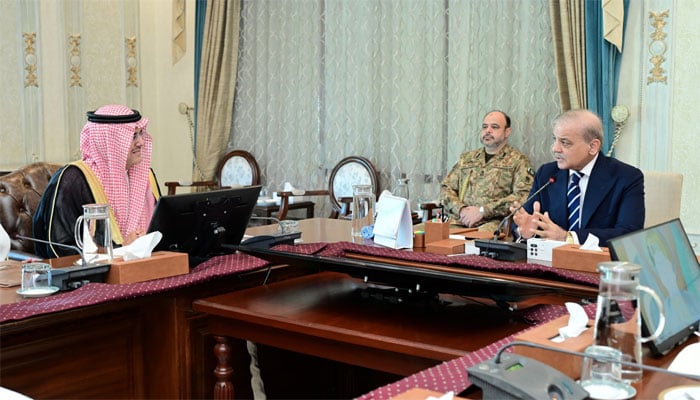
    ISLAMABAD: Pakistan is making fresh diplomatic efforts to revive its role as a mediator between Iran and the United States. Interior Minister Mohsin Naqvi travelled to Tehran on Tuesday for talks with senior Iranian officials. During his visit, he met Iranian Foreign Minister Abbas Araghchi and President Masoud Pezeshkian. The visit is aimed at keeping Pakistan’s mediation channel active. Islamabad is seeking progress on the Islamabad Memorandum of Understanding (MoU), which emerged from earlier efforts to ease tensions between Iran and the United States. Naqvi was received in Tehran by Iranian Interior Minister Eskandar Momeni. He later held discussions with Araghchi on bilateral relations and regional developments. Pakistan’s diplomatic efforts had slowed after Oman became more directly involved in talks concerning arrangements for navigation through the Strait of Hormuz. However, recent contacts between Oman and Iran appear to have created an opportunity for Islamabad to renew its broader mediation initiative. A diplomatic source said Pakistan wants to follow up on the Islamabad MoU and encourage both sides to return to a wider diplomatic process. The situation around the Strait of Hormuz remains particularly sensitive. The waterway is vital for international energy and trade routes. Iran has maintained that the Islamabad MoU remains the key framework for resolving the wider dispute. Tehran has also linked the full reopening of the Strait of Hormuz to implementation of the commitments contained in the agreement. Iran and Oman have been discussing arrangements for safer passage through the strategic waterway. Their discussions include possible shipping routes and mechanisms for managing navigation. However, Tehran has indicated that any understanding with Oman would initially address technical matters. It would not necessarily represent a complete resolution of the wider dispute. Iran has also called for concrete assurances from Washington before moving towards the next stage of negotiations. Tehran wants guarantees that can be verified rather than verbal commitments. Pakistan has continued to encourage dialogue between the two sides. Defence Minister Khawaja Asif also indicated that Washington and Tehran could be moving closer to an understanding. He said recent signals suggested that the two countries were again moving towards a possible peace arrangement or deal. Meanwhile, Pakistan has invited Iranian Foreign Minister Araghchi and Iranian Parliament Speaker Bagher Ghalibaf to visit Islamabad. Iranian officials have said the visit would take place at an appropriate time. Naqvi’s trip to Tehran is therefore significant because Islamabad is maintaining direct engagement instead of waiting for the Iranian delegation to visit Pakistan. During his meeting with President Pezeshkian, Naqvi described Pakistan-Iran relations as strong and longstanding. He conveyed Islamabad’s intention to further strengthen ties with Tehran. Pezeshkian also stressed the importance of bilateral relations. He said stronger cooperation between Pakistan and Iran could serve their national interests and contribute to regional stability. The discussions come amid broader diplomatic and security developments in the region. Pakistan recently signed a trilateral defence agreement with Saudi Arabia and Turkiye. Islamabad has maintained that the arrangement is defensive and is not directed against any country. Deputy Prime Minister and Foreign Minister Ishaq Dar also discussed the agreement with his Iranian counterpart. He briefed Araghchi on its objectives and stressed its focus on strategic cooperation and regional peace. At the same time, US President Donald Trump has adopted a tougher tone towards Iran’s negotiating team. Trump described Iranian negotiators as difficult and accused them of making commitments privately and later presenting them differently in public. He also warned that Iran’s economic problems and inflation were becoming increasingly difficult to sustain. Trump said Washington could continue applying economic pressure on Tehran. He also suggested that the United States could take stronger measures if necessary. The contrasting positions underline the difficulties facing diplomatic efforts. Pakistan is now attempting to keep communication channels open with Tehran while encouraging a broader political process involving Iran and the United States.

  • | | | |

    Dar condemns Houthi attack killing 3 Pakistanis

    ISLAMABAD: Deputy Prime Minister and Foreign Minister Ishaq Dar has condemned a Houthi attack on a commercial vessel in the Red Sea, saying three Pakistani nationals were killed and another was injured in the incident. Dar described the attack as a serious threat to innocent lives and maritime security. He expressed concern over the loss of Pakistani lives in the incident. The foreign minister said the Pakistani government was in contact with relevant Saudi authorities and the Yemeni government to obtain further details about the attack. He also directed Pakistan’s embassy in Riyadh to provide all possible assistance for the repatriation of the bodies of the deceased Pakistanis. The embassy has also been instructed to facilitate the injured Pakistani citizen and ensure that all necessary assistance is provided. The attack reportedly took place near the Bab al-Mandab Strait, a strategically important maritime passage connecting the Red Sea with the Gulf of Aden. According to Yemeni government and coast guard sources, Houthi forces attacked a cargo vessel in the area. The attack targeted the deck of the commercial ship. Three crew members were reportedly killed in the assault. The incident has raised fresh concerns over the safety of commercial shipping in the Red Sea. The waterway is a major international trade route used by cargo vessels travelling between Europe, Asia and the Middle East. Pakistan is continuing to coordinate with authorities in Saudi Arabia and Yemen to establish further details about the incident and assist the affected Pakistani nationals and their families.

  • | | |

    Naqvi’s Iran visit focused on ties, regional pea…

    ISLAMABAD: The Foreign Office on Wednesday said Interior Minister Mohsin Naqvi’s ongoing visit to Iran is focused on strengthening bilateral relations, discussing security matters and supporting efforts for peace and stability in the region. Foreign Office spokesperson Tahir Andrabi said during his weekly briefing that Naqvi, who reached Tehran on Tuesday, was meeting senior Iranian officials as part of Pakistan’s diplomatic engagement. The spokesperson said the visit provides an opportunity for Pakistan and Iran to discuss bilateral relations, security concerns and developments in the region. He added that particular attention was being given to promoting peace, stability and constructive dialogue among regional parties. Naqvi was received in Tehran by Iranian Interior Minister Eskandar Momeni. He subsequently met Iranian Foreign Minister Abbas Araghchi and President Masoud Pezeshkian, according to Iranian media reports. Pakistan’s broader mediation efforts between Iran and the United States also featured prominently in the briefing. Andrabi said Islamabad remains engaged with other friendly countries to help address tensions and create conditions for dialogue. He said Pakistan was making efforts to bring the two sides to the negotiating table and build on the Islamabad Memorandum of Understanding. According to the spokesperson, Islamabad wants diplomatic engagement to help reduce tensions and contribute to regional stability. Andrabi also said Pakistan would continue using both direct and indirect diplomatic channels to deal with obstacles to dialogue and encourage a constructive process for resolving outstanding issues. Pakistan, Saudi Arabia and Türkiye defence pact The Foreign Office spokesperson also highlighted the recently signed defence agreement between Pakistan, Saudi Arabia and Türkiye. The pact was signed in Makkah last Friday and seeks to strengthen cooperation and collective deterrence among the three countries. Under the agreement, an attack against one member is to be treated as an attack against all signatories. Andrabi described the agreement as defensive in character and said it reflected the three countries’ longstanding ties and shared responsibility for regional security. He stressed that the pact was not directed against any particular country. Instead, he said, it provides a framework for coordinated efforts to address security threats and challenges facing the member states. Pakistan rejects India’s AJK remarks The Foreign Office also rejected recent comments by India’s Ministry of External Affairs concerning alleged human rights violations in Azad Jammu and Kashmir. Andrabi termed India’s remarks baseless and questioned New Delhi’s criticism by pointing to what Pakistan describes as a record of repression in Indian-administered Jammu and Kashmir. He alleged that excessive use of force, arbitrary detentions, restrictions on political activity and extensive security powers continued to raise serious human rights concerns there. The spokesperson said India’s attempts to politicise developments in AJK could not divert attention from the situation in Indian-administered Jammu and Kashmir. He reaffirmed Pakistan’s stated commitment to protecting fundamental rights and democratic freedoms in AJK.

  • | | |

    Asif signals possible US-Iran deal amid Hormuz talks

    ISLAMABAD: Defence Minister Khawaja Asif has said the United States and Iran may be moving closer to an agreement as diplomatic efforts continue to resolve the conflict and ease restrictions around the Strait of Hormuz. Speaking to Bloomberg, Asif said recent developments had created renewed hopes for a possible peace arrangement. He said signals over the past two to three days suggested that Washington and Tehran were approaching “some sort of an arrangement.” His comments came as Qatar said separate discussions between Oman and Iran regarding the management of the Strait of Hormuz had reached an advanced stage. The waterway remains at the centre of the crisis. It is a major route for global energy supplies, with a significant share of the world’s oil and liquefied natural gas shipments passing through it. Pakistan and Qatar have been involved in diplomatic efforts aimed at reducing tensions between Iran and the United States. Pakistan has continued contacts with Iranian officials as part of these mediation efforts. On Tuesday, Iranian Foreign Minister Abbas Araghchi met Pakistan’s Interior Minister Mohsin Naqvi in Tehran. Details of their discussion were not immediately disclosed, but the meeting came amid renewed diplomatic activity over the conflict. Iran has previously said it was working with Oman on arrangements for shipping through the Strait of Hormuz. Tehran has maintained that reopening the waterway fully would depend on the United States meeting several conditions. Those demands include compensation, an easing of sanctions and guarantees against further military action, according to Iranian officials. Araghchi has said Iran and the US are not holding direct negotiations. Messages are instead being exchanged through intermediaries. US President Donald Trump has also raised the issue of compensation. He said Washington would seek payments from Iran for damage and casualties allegedly caused over several decades. Despite the diplomatic activity, tensions remain high in regional waters. Four crew members were reportedly killed in a suspected attack on a cargo vessel near the Bab el-Mandeb Strait. The incident was blamed on Houthi forces, although the group had not immediately claimed responsibility. A separate container ship was also reportedly struck while sailing through the Gulf of Oman near Pakistan. Initial reports indicated that the incident may have involved US military action. The developments have increased concerns over the safety of commercial shipping in the region. Oil prices also remained elevated because of uncertainty surrounding the Strait of Hormuz. Prices eased on Tuesday after reaching a one-week high earlier in the session as investors responded to signs of possible diplomatic progress. The crisis has placed pressure on Washington and Tehran to find a political solution. Any agreement that reduces tensions and restores normal shipping through Hormuz could have a major impact on global energy markets.

  • | | | |

    NAB clarifies Rs500 million jurisdiction threshold

    ISLAMABAD: The National Accountability Bureau (NAB) has internally clarified that inflation-based adjustments to the value of liabilities cannot be used retrospectively to bring older, lower-value corruption cases under its jurisdiction. The clarification follows the enforcement of the National Accountability (Amendment) Act 2026 on March 5. NAB has issued internal guidance for prosecutors and investigators to ensure a uniform legal position on the revised Rs500 million threshold. Under the amended law, an offence falls within NAB’s jurisdiction when it involves corruption or misconduct involving at least Rs500 million. The law also links the financial threshold to annual inflation indicators issued by the Pakistan Bureau of Statistics, with the adjustment taking effect from July 1, 2026. However, NAB’s internal interpretation distinguishes between the statutory jurisdictional threshold and the inflation-adjusted value of liabilities. The Rs500 million figure remains the basic test for determining jurisdiction. Inflation adjustment is applied only after the actual liability involved in a case has been finally determined. The guidance identifies three situations based on when the alleged offence occurred. For offences committed before July 2022, the original amount involved will be assessed according to the year in which the offence took place. No inflation adjustment will be applied retrospectively. If the final liability is Rs500 million or more, NAB will retain jurisdiction. If it is below Rs500 million, the case will fall outside NAB’s jurisdiction and may be transferred to the ordinary courts. For offences committed after July 2022, the Rs500 million threshold will initially determine NAB’s jurisdiction. Once an inquiry or investigation establishes the final amount involved, the relevant inflation index for the year in which the case reaches its final stage will be applied if the original liability is at least Rs500 million. The final reference will therefore contain both the original liability and its inflation-adjusted value. If the original liability is below Rs500 million, no inflation adjustment will be made and NAB’s jurisdiction will cease. The third category concerns continuing offences that began before July 2022 but continued after that date. Such cases will be treated in the same manner as offences committed after July 2022. The guidance further states that once the original liability has been finally established and the inflation-adjusted amount has been calculated, the resulting figure will be considered final. It will not be repeatedly revised on the basis of inflation increases in subsequent years. According to the internal legal position, linking the financial threshold to inflation was intended to keep the threshold realistic and relevant over time and prevent inflation from reducing its practical value. NAB has also clarified that the amendment was not intended to retrospectively expand the bureau’s jurisdiction or disadvantage accused persons. The 2026 amendments made another significant change by expanding provisions concerning the transfer of cases falling outside NAB’s jurisdiction. The relevant provision now extends to pending appeals as well, whereas the earlier framework was primarily limited to inquiries, investigations and trials.

  • | | |

    Zardari, Shehbaz stress youth empowerment on World…

    ISLAMABAD: President Asif Ali Zardari and Prime Minister Shehbaz Sharif have highlighted the importance of empowering young people for Pakistan’s future. In their separate messages on World Youth Day, both leaders described the country’s youth as a valuable national asset. They stressed the need to provide young people with education, employment, skills and opportunities to contribute to national development. President Zardari said empowering young people was an investment in Pakistan’s future. He said the energy, creativity and determination of the country’s youth were among Pakistan’s most valuable assets. He said quality education, decent employment and innovation were among the common aspirations of young people. According to the president, around 67% of Pakistan’s population is below the age of 30. He said this made young people the country’s largest human resource. Zardari also highlighted the role of young women in national development. He said their potential and leadership were essential for Pakistan’s social and economic progress. The president said the Prime Minister’s Youth Programme was providing young people with opportunities in education, skills development, employment and entrepreneurship. He urged young people to adopt values of honesty, compassion and tolerance. He said empowering them to play an active role in national development was an urgent need. Zardari added that a strong, inclusive and prosperous Pakistan could be built through the meaningful participation of young people. Prime Minister Shehbaz Sharif also described the country’s youth as an invaluable asset. In his message on World Youth Day, the prime minister said this year’s theme was “Different circumstances, shared aspirations.” He said young people around the world live under different circumstances. However, their dreams, ambitions and hopes for a better future remain similar. Shehbaz said Pakistani youth were the architects of the country’s bright future. He noted that young Pakistanis had brought recognition to the country in different fields at both national and international levels. The prime minister said their abilities and full potential were essential for building a prosperous, peaceful and strong Pakistan. He added that the government’s priorities included using all available national resources to support the mental, physical, intellectual and academic development of young people.

  • | | |

    Rawalpindi police say attacker killed after Mall R…

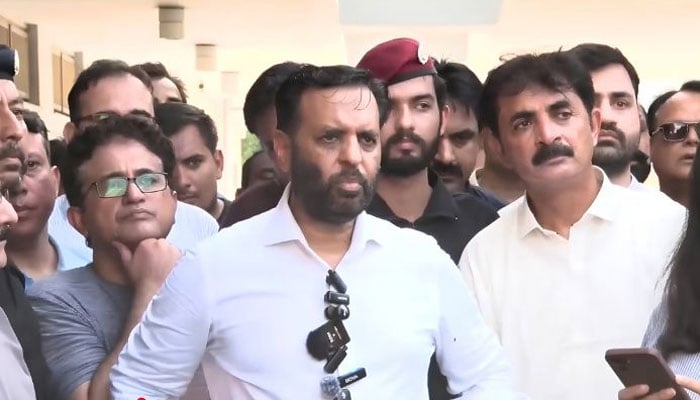
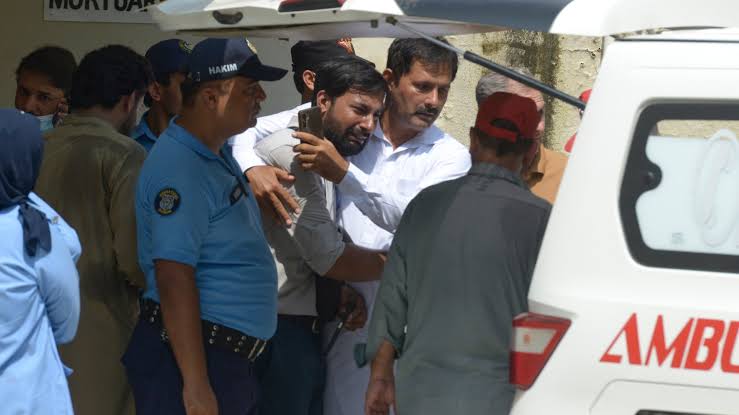
    RAWALPINDI: A man identified as Muhammad Hussain was killed after he allegedly opened fire at security forces on Mall Road in Rawalpindi on Tuesday, according to the Rawalpindi police. The incident took place on August 11, 2026, at around 11:15am. According to the police spokesperson, Muhammad Hussain opened fire at a patrol team of the security forces while they were present on Mall Road. The firing left one member of the security forces’ patrol team injured. The injured official was taken for medical treatment, while security personnel immediately responded to the attack. Police said the security forces returned fire after the shooting. Muhammad Hussain was killed during the exchange of fire. The police spokesperson said security personnel acted promptly after the attack. The area was secured following the incident. According to police, investigators also recovered a mobile phone and other items from the deceased man. Officials said the material recovered from his possession could provide further evidence about the incident and his activities. Police said the recovered mobile phone and other belongings are being examined as part of the investigation. Officials are expected to determine whether the material contains information linked to the shooting or other activities. The Rawalpindi police spokesperson further claimed that Muhammad Hussain was affiliated with a particular political party. However, the police statement did not provide further details about the nature of his alleged affiliation. Authorities are continuing to investigate the incident. Further details are expected as investigators examine the recovered material and gather additional evidence. The incident caused concern in the area. Security personnel remained alert following the shooting, while the circumstances surrounding the attack are being investigated.

  • | | |

    Security forces kill five militants in Panjgur ope…

    Security forces have killed five militants during an intelligence-based operation in Panjgur district of Balochistan, according to the Inter-Services Public Relations (ISPR). The operation was conducted after security agencies received intelligence about the presence of militants in the area. Security personnel moved into the suspected location and carried out the operation. Five militants were killed during the operation, ISPR said. A significant quantity of weapons and ammunition was also recovered from the militants. The recovered weapons and ammunition were taken into custody. They were later destroyed by the security forces, according to ISPR. Following the operation, security personnel launched a clearance and search operation in the surrounding area. The search operation is aimed at checking the area for any remaining militants and possible hideouts. Security forces are also examining the area for additional evidence and material linked to militant activities. ISPR said the operation was part of ongoing efforts to eliminate terrorism from Balochistan. The military’s media wing said security forces remain determined to prevent militant groups from carrying out attacks. It further said efforts would continue against terrorism allegedly being carried out with foreign support and assistance. Security forces have intensified operations against militant networks in different parts of the province. Authorities have repeatedly stressed the need for intelligence-based operations to identify and target militant elements. The latest operation in Panjgur comes amid continued security efforts in Balochistan

  • | | |

    Naqvi meets Araghchi in Tehran amid US-Iran mediat…

    Pakistan’s Interior Minister Mohsin Naqvi held talks with Iranian Foreign Minister Abbas Araghchi in Tehran on Tuesday as diplomatic efforts continue to ease tensions between Iran and the United States. The meeting focused on regional developments and matters of mutual interest. Iranian state media reported that the two ministers also discussed diplomatic and bilateral issues. The meeting took place against the backdrop of continuing efforts to find a diplomatic way forward in the US-Iran conflict. Pakistan has remained engaged with regional partners as part of efforts to support dialogue and reduce tensions. Iranian officials said Naqvi is expected to hold additional meetings with senior authorities during his visit to Tehran. Discussions are expected to cover bilateral relations, regional developments and issues affecting both countries. The visit also comes around a month after Iranian Interior Minister Eskandar Momeni visited Islamabad. During that visit, Pakistani and Iranian officials held discussions on bilateral cooperation and regional matters. Pakistan has maintained diplomatic contacts with both sides during the recent crisis. Islamabad has also sought to encourage dialogue as tensions between Tehran and Washington have increased. Pakistan, along with Qatar, previously played a role in diplomatic efforts aimed at bringing Iran and the United States closer to an understanding. These efforts contributed to a memorandum of understanding between the two sides in June. The latest meeting between Naqvi and Araghchi is therefore being viewed in the context of Islamabad’s broader diplomatic engagement with Tehran. Officials have not released detailed information about the specific issues discussed during Tuesday’s meeting. Further details are expected after Naqvi completes his scheduled engagements with Iranian officials.

  • | | |

    Trump says US controls Strait of Hormuz

    US President Donald Trump has claimed that the United States is now controlling the Strait of Hormuz. Trump said the US Navy had cleared the entire waterway of naval mines. He made the remarks while speaking to reporters at the Oval Office. The Strait of Hormuz is a major international shipping route. It is also an important passage for global energy supplies. Any disruption in the area can affect international trade and energy markets. Trump was asked about the next steps following recent talks with Iran. However, he declined to provide details about what the United States would do next. The US president also indicated that Washington could increase pressure on Iran. He did not give specific details about what further action could be taken. Trump has also announced plans to seek compensation from Iran. The demand is linked to Americans who were killed or injured in various conflicts involving Iran. He had earlier said that Iran should provide compensation to the families of those killed aboard the US Navy destroyer USS Cole. Trump said his administration was seeking compensation for people who had been killed or wounded in different conflicts. He argued that Iran should be held responsible for the losses. According to Trump, Iran had not previously demanded compensation during earlier negotiations or discussions at different levels. He said Tehran had now unexpectedly raised such a demand. Trump said his decision to seek compensation from Iran would be made in response to the Iranian demand. The latest statements come as tensions between Washington and Tehran remain high. Trump has continued to signal that the United States is prepared to take further action if necessary. However, he did not reveal whether the US would pursue additional military or diplomatic measures.