fixes sept hearing
| | |

SC fixes Sept 16 hearing on Imran’s medical tran…

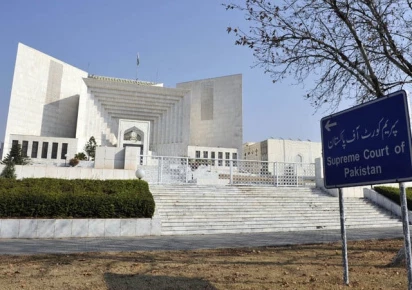
ISLAMABAD: The Supreme Court has fixed September 16 for hearing a contempt petition filed by Uzma Khanum, sister of PTI founder and former prime minister Imran Khan, over the alleged non-implementation of the court’s order regarding his medical treatment.

The petition was submitted after the government took Imran Khan to the Pakistan Institute of Medical Sciences (PIMS) instead of shifting him to Shifa International Hospital, as directed by the Supreme Court in its August 18 order.

The court had also directed arrangements for regular meetings between Imran Khan and his family.

PTI had challenged the government’s decision and filed a contempt petition through Uzma Khanum. The petition was returned after the Supreme Court registrar raised certain objections. The party later resubmitted it after addressing the objections.

Speaking outside the Supreme Court, PTI Chairman Barrister Gohar Khan said the party wanted the matter to be heard at the earliest. He said the PTI founder’s health remained the party’s primary concern.

Gohar urged the authorities to facilitate meetings between Imran Khan and his family members. He maintained that the Supreme Court’s August 18 order had not been implemented in its original form.

Uzma Khanum also submitted an application seeking an early hearing. She expressed concern over what she described as a deterioration in Imran Khan’s health and argued that further delay could have serious consequences.

The application alleged that the government had failed to follow the Supreme Court’s directions. It maintained that if authorities required clarification about the order, they should have approached the court instead of taking a different course of action.

The government, meanwhile, has filed a review petition challenging the August 18 order. It has described the directive as discriminatory and sought its reconsideration.

Imran Khan was taken to PIMS on August 21 for a medical examination and was later returned to Adiala Jail after doctors declared him medically fit.

The government has maintained that security concerns prompted the decision to use PIMS instead of Shifa International Hospital. Information Minister Attaullah Tarar said the security situation involving PTI workers affected the planned transfer.

The Supreme Court had also declined an immediate hearing of petitions seeking contempt proceedings and review of its August 18 order. The government’s review petition is therefore expected to be heard according to the court’s schedule.

Gohar said PTI wanted Imran Khan’s sister, Dr Uzma, and his personal physician, Dr Faisal Sultan, to be included in the medical board. He also called for the medical tests recommended by Imran Khan’s doctors to be conducted.

The PTI chairman said the party was currently focusing on Imran Khan’s health rather than political matters. He described the issue as a humanitarian concern and urged the authorities to implement the Supreme Court’s directions.

Gohar also questioned the detention of Imran Khan’s physician, Dr Faisal Sultan, who was taken to Shifa International Hospital. He asked why the doctor was detained for several hours while Imran Khan was not transferred to the same facility.

He reiterated that a Supreme Court order should be followed unless the court itself modifies, reviews or suspends it.

Gohar said PTI also recognised the importance of security arrangements and did not want any violation of security protocols. However, he claimed the party had not been informed in advance that security concerns would prevent Imran Khan’s transfer to Shifa International Hospital.

Similar Posts

  • | |

    Wet spring fuels costly disease battle for Canadia…

    Canadian farmers growing durum, spring wheat, canola and pulse crops have spent the growing season battling an unusually aggressive wave of crop diseases triggered by the wettest year the country has seen this decade. Jake Leguee, who farms roughly 19,000 acres, or about 7,689 hectares, of durum, wheat, lentils, flax and spring wheat in southeastern Saskatchewan, said he sprayed his entire operation with fungicide this year to keep disease pressure under control. He said the costs associated with that level of treatment add up quickly. The sudden surge in crop disease during early summer poses a serious threat to both the quantity and quality of Canada’s harvest this year. Canada ranks as the world’s top exporter of canola, durum wheat, dry peas and oats, and stands among the leading global suppliers of high protein spring wheat, making the outcome of this year’s harvest significant well beyond its own borders. The disease outbreak traces back to an extremely wet spring and early summer that left soils saturated with moisture, creating ideal conditions for fungal disease once temperatures turned hot and humid. That combination has forced many farmers into a difficult decision this season, choosing between spending additional money on crops that may not turn a profit given elevated fertilizer and input costs, or investing further to protect whatever yield remains in the field. For farmers like Sabourin, the level of moisture and frequency of rain throughout the season left little room for debate about whether to apply fungicide. Leguee said it will take several more weeks before he knows whether he applied the right fungicides in the right locations at the right time. He said his crops look healthy so far, with the exception of his lentils, though he cautioned that disease damage can sometimes hide inside kernels and pods that appear fine from the outside. That uncertainty means the ultimate quantity and quality of Canada’s export crops remain unresolved just as full scale harvesting gets underway across the prairies. Leguee said farmers will not have a clear picture of how the season played out until combines actually move through the fields, adding that fungicide treatment does not always deliver the results growers hope for.

  • |

    Powerful 7.4 magnitude earthquake hits western Colombia, killing at least 111

    A powerful 7.4 magnitude earthquake struck western Colombia on Monday, killing at least 111 people and injuring dozens more in what authorities have confirmed is the country’s strongest earthquake of the 21st century. The massive tremor struck at a depth of 107 kilometres, with its epicentre located near Chocó. Despite occurring deep beneath the Earth’s crust, the intense seismic shock waves triggered widespread destruction across densely populated urban valleys throughout western Colombia and the primary coffee-growing regions. In Pereira, a four-story building collapsed into rubble, while video footage from Manizales captured the catastrophic collapse of one of the side towers of the city’s historic neo-Gothic cathedral. Severe building collapses and casualties were also reported in Cali, where local residents formed human chains alongside emergency responders to shovel away fallen concrete and pull survivors from trapped spaces. Thrusting the administration into its first major crisis just days after his inauguration, President Abelardo De La Espriella declared a national state of emergency. In a live television address, De La Espriella announced that all available state and military resources were being deployed to western Colombia, confirming that the national government’s immediate priority remains the location and rescue of victims trapped beneath collapsed structures. Severe regional communications outages initially delayed casualty reporting from rural zones near the epicentre in Chocó, where Governor Nubia Carolina Córdoba confirmed at least 12 fatalities and scores of injuries. Meanwhile, Colombia’s civil aviation authority halted flight operations across key regional airports, including facilities in Pereira, Manizales, Quibdó, Armenia, Cartago, and Buenaventura, while structural engineers assess airfield and terminal safety. The Colombian Geological Service recorded over 20 aftershocks following the initial quake and warned that additional tremors remain likely. Sitting directly along the seismically active Pacific Ring of Fire, western Colombia previously suffered a devastating magnitude 6.2 earthquake in 1999 that claimed more than 1,000 lives across the same region.

  • | |

    Jamaat-e-Islami announces 15-day protest against p…

    Jamaat-e-Islami (JI) has announced a sit-in outside the Governor House in Sindh today against the government’s decision not to reduce the petroleum levy. The party has also prepared a 15-day schedule for the protest campaign. JI chief Hafiz Naeemur Rehman said an increase in petroleum product prices leads to higher costs across the country and puts additional pressure on ordinary citizens. He criticised what he described as an unequal tax system, saying the country’s elite class was not paying its fair share of taxes while poor people continued to struggle with rising expenses. Naeemur Rehman also alleged that privileged groups enjoyed various benefits without paying their due share, while taxes were not being properly collected from the incomes of owners of independent power producers (IPPs). Meanwhile, JI Karachi chief Munim Zafar said the government had already collected around Rs100 billion more than its targeted revenue from the petroleum levy. He accused the government of turning the petroleum levy into a major source of revenue after failing to achieve its broader tax collection targets. The JI has also announced a protest sit-in in Lahore against the petroleum levy. The demonstration will be held at Charing Cross on The Mall. The party has been demanding a reduction in the petroleum levy, arguing that lower fuel-related charges could help ease inflationary pressure on households and businesses. JI leaders said their protests would continue until the government addressed their concerns and provided relief to citizens facing rising living costs.

  • | | |

    Security forces kill five militants in Panjgur ope…

    Security forces have killed five militants during an intelligence-based operation in Panjgur district of Balochistan, according to the Inter-Services Public Relations (ISPR). The operation was conducted after security agencies received intelligence about the presence of militants in the area. Security personnel moved into the suspected location and carried out the operation. Five militants were killed during the operation, ISPR said. A significant quantity of weapons and ammunition was also recovered from the militants. The recovered weapons and ammunition were taken into custody. They were later destroyed by the security forces, according to ISPR. Following the operation, security personnel launched a clearance and search operation in the surrounding area. The search operation is aimed at checking the area for any remaining militants and possible hideouts. Security forces are also examining the area for additional evidence and material linked to militant activities. ISPR said the operation was part of ongoing efforts to eliminate terrorism from Balochistan. The military’s media wing said security forces remain determined to prevent militant groups from carrying out attacks. It further said efforts would continue against terrorism allegedly being carried out with foreign support and assistance. Security forces have intensified operations against militant networks in different parts of the province. Authorities have repeatedly stressed the need for intelligence-based operations to identify and target militant elements. The latest operation in Panjgur comes amid continued security efforts in Balochistan

  • |

    Iran denies holding talks with US

    Iran has dismissed reports of ongoing negotiations with the United States, saying there are currently no direct talks between the two countries, while confirming that discussions with Oman are focused solely on establishing a temporary maritime route through the Strait of Hormuz. Iranian Foreign Ministry spokesperson Esmaeil Baghaei said the consultations with Oman are aimed at ensuring safe navigation in the strategic waterway and should not be interpreted as an agreement to fully reopen the strait. He maintained that the security situation in the region remains unchanged and insisted that any broader decision regarding the Strait of Hormuz would depend on regional developments. Baghaei also said there are no plans for Iranian or American delegations to meet in the coming days, rejecting speculation that formal negotiations are currently underway. His remarks came after US President Donald Trump announced that Washington expected to begin talks with Iran and suggested that diplomatic efforts had prompted him to cancel a planned military operation. Trump said discussions involving Saudi Arabia, the United Arab Emirates, Qatar and Iran had encouraged the United States to pursue diplomacy instead of military action. The US president said he preferred reaching a negotiated settlement but warned that military options remained available if diplomacy failed. He expressed hope that an agreement could eventually address both navigation through the Strait of Hormuz and concerns over Iran’s nuclear programme. Meanwhile, regional tensions remain high despite renewed diplomatic efforts. Reports emerged that an explosion occurred near a commercial tanker off the coast of Oman. Maritime authorities said the vessel and its crew were safe, while an investigation into the incident is underway. In another development, Iraq’s state oil marketing company reportedly offered significant discounts on Basrah crude exports to encourage buyers to lift cargoes from facilities inside the Strait of Hormuz, reflecting continuing uncertainty in regional energy markets. Iran also announced the execution of two men convicted of spying for Israel’s intelligence agency, saying they had provided sensitive military information to foreign operatives. The uncertainty surrounding the Strait of Hormuz continues to affect global energy markets. The waterway handles a significant share of the world’s oil and liquefied natural gas shipments, making any disruption a major concern for international trade and energy security.

  • | |

    Punjab imposes 60-day ban on swimming in water bod…

    The Punjab government has imposed a 60-day ban on swimming in dams, rivers, canals, ponds and lakes across the province. The restriction has been introduced under Section 144 of the law. The Punjab Home Department issued a notification announcing the ban. According to the notification, people will also be prohibited from bathing in rainwater accumulated on streets, roads and open areas. The government has also restricted boating without official permission in the province. The ban applies to the water bodies covered under the notification. Officials said the restrictions were imposed to protect human lives during the ongoing monsoon season. Water levels have increased in several dams, rivers, canals, ponds and lakes across Punjab. Heavy rainfall has also created pools of standing water in different areas. Authorities fear that entering these waters could increase the risk of drowning and other accidents. The government has therefore moved to prevent people from swimming or bathing in potentially dangerous locations. The Home Department said the restrictions would remain in place for 60 days. Citizens have been advised to cooperate with the authorities and avoid entering rivers, canals, dams and other water bodies. The ban comes as Punjab continues to experience monsoon rains. Several parts of the province have already faced heavy rainfall, flooding and rising water levels. Officials have urged residents to remain cautious, particularly in areas where water levels are rising. People have also been advised to follow official warnings and avoid unnecessary activities near flooded areas.

Leave a Reply

Your email address will not be published. Required fields are marked *