rs22 billion allocated
| | |

Rs22 Billion allocated to PIMS, 14 newborns dead

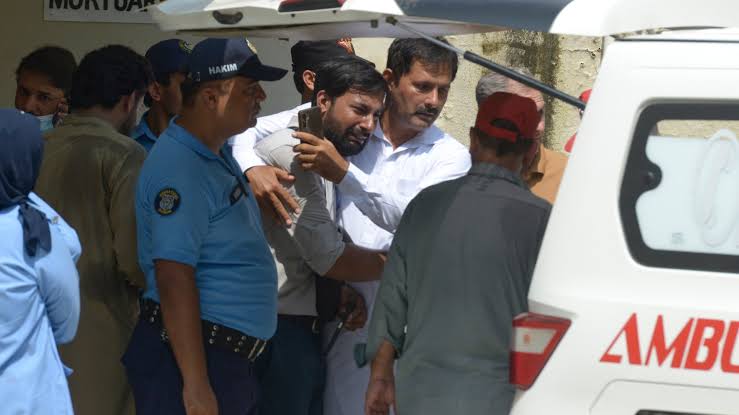
ISLAMABAD: A deadly fire at the Pakistan Institute of Medical Sciences (PIMS) on August 26 resulted in the deaths of at least 14 newborns, raising serious questions about safety standards, hospital management and the use of public funds.

The tragedy has brought renewed attention to the financial resources provided to the country’s major public hospitals. Federal government records show that approximately Rs22 billion was allocated to PIMS over the past three years. Despite these substantial allocations, the hospital continues to face staff shortages, maintenance concerns and problems with essential equipment

Official budget figures show that PIMS received an allocation of Rs6.84 billion during the previous financial year. However, the hospital spent approximately Rs7.51 billion, exceeding its approved budget by around Rs670 million.The institution also received an additional Rs660 million in supplementary funds during the year.For the current financial year, the government’s allocation for PIMS has been increased to approximately Rs7.63 billion.

Questions have also been raised over funds allocated for repair and maintenance. The federal government had previously provided Rs500 million under this category, while only Rs230 million has been earmarked for the current year.

These figures have prompted concerns over whether available resources are being effectively utilised and whether sufficient priority is being given to basic safety, maintenance and patient care.

Despite receiving billions of rupees in government funding, PIMS is reportedly operating with a significant shortage of staff.

Hospital data indicates that 949 sanctioned positions remain vacant. These include 385 doctors, 363 nurses and 201 paramedical staff.

Such shortages can place additional pressure on existing employees and affect the hospital’s ability to provide timely care. Understaffed wards can also make emergency response more difficult, particularly in critical departments where patients require continuous monitoring.

The PIMS fire has therefore intensified questions about whether staffing gaps and inadequate resources played any role in the tragedy. Determining the exact causes, however, will require a transparent and independent investigation.

The concerns surrounding PIMS are part of a broader debate over safety and accountability in Pakistan’s public hospitals.

A review of reported incidents between 2016 and 2026 has highlighted several cases involving alleged negligence and failures in healthcare facilities across the country.

In June 2025, 20 children, including 15 newborns, reportedly died at DHQ Hospital Pakpattan, with oxygen shortage cited as a possible factor. In October 2020, seven patients died at Khyber Teaching Hospital Peshawar following an oxygen supply failure.

In November 2024, a three-year-old child reportedly fell into an open manhole inside Children’s Hospital Lahore.

Other reported incidents across different cities have involved alleged treatment delays, incorrect injections, oxygen-related problems and unsafe hospital infrastructure.

The PIMS tragedy has once again raised questions about whether increasing government allocations are producing meaningful improvements in public healthcare.

The government has ordered an inquiry into the fire, which is expected to determine the circumstances surrounding the deaths and identify any negligence or safety failures. For the families who lost their newborns, however, no investigation can undo the loss.

The central question now is whether the billions allocated to PIMS have been used effectively and whether hospital authorities maintained adequate staffing, equipment, fire-safety systems and infrastructure.

If a major public hospital receiving billions in government funding cannot guarantee basic safety for vulnerable patients, accountability must extend beyond temporary suspensions or administrative changes.

The tragedy has highlighted the urgent need for stronger oversight, transparent financial management, adequate staffing and enforceable safety standards across Pakistan’s public healthcare system.


Similar Posts

  • | |

    Kelly Osbourne pays heartfelt tribute to Ozzy on f…

    Kelly Osbourne has shared an emotional tribute to her late father, rock legend Ozzy Osbourne, marking the first anniversary of his death with a deeply personal message about love, loss, and grief. The television personality took to Instagram on July 22 to reflect on the profound impact her father’s passing has had on her life, nearly one year after the music icon died at the age of 76.  Ozzy Osbourne, the legendary frontman of Black Sabbath and one of heavy metal’s most influential figures, passed away on July 22, 2025, following health complications related to Parkinson’s disease and other medical conditions. His death marked the end of an extraordinary career that spanned more than five decades and left a lasting mark on the world of rock music.  In her heartfelt Instagram post, Kelly described grief as something that changes a person forever. She wrote that she not only mourns the loss of her father but also the version of herself that existed before experiencing such heartbreak. She reflected on how losing someone so important transforms every part of life, making even joyful moments feel different.  Kelly also admitted that she still finds herself wishing she could call her father for advice, share exciting news with him, or simply hear one of his jokes again. She described the pain of missing him as something she carries every day, adding that despite the heartbreak, being Ozzy’s daughter remains one of the greatest blessings of her life.  The touching tribute comes after several months in which Kelly has continued to honor her father’s memory. Earlier this year, she shared an emotional Father’s Day message and even got a tattoo inspired by Ozzy’s signature black sunglasses, a symbol closely associated with the legendary rocker throughout his career.  Fans from around the world flooded the comments section of Kelly’s tribute with messages of support, remembering Ozzy not only as the “Prince of Darkness” but also as a devoted husband, father, and cultural icon. Many thanked the Osbourne family for continuing to celebrate his legacy while openly sharing their grief.  As the first anniversary of Ozzy Osbourne’s passing is observed, tributes continue to pour in from family, friends, fellow musicians, and fans. For Kelly, however, the day is about much more than remembering a rock legend. It is about honoring the father who shaped her life, supported her through every challenge, and left behind memories that continue to guide her even in his absence. 

  • |

    Telecom operators invest $178.57 million in Pakistan’s 5G rollout

    Pakistan’s major telecom operators have invested an estimated $178.57 million in the deployment of 5G networks across the country up to June 2026, the Senate has been informed. The investment details were presented in a written reply submitted by the Ministry of Information Technology and Telecommunications in response to a question raised by Senator Samina Mumtaz Zehri. According to the government’s data, Zong emerged as the largest investor in the country’s 5G rollout, committing around $98.9 million by June 2026. Jazz followed with an investment of approximately $59.67 million, while Ufone invested an estimated $20 million during the same period. The figures were based on information provided directly by the respective mobile network operators. No Foreign Investment Target Set for 5G Minister for Information Technology and Telecommunications Shaza Fatima Khawaja told the Senate that the government had not imposed any specific foreign direct investment (FDI) target on telecom companies as part of the country’s 5G rollout policy. She said the Policy Directive for the Spectrum Auction, issued on January 6, 2026, did not include a requirement for operators to attract a particular amount of foreign investment for the deployment of 5G services. The minister clarified that the investment figures presented before the Senate represented data supplied by the operators themselves. Operators Plan Additional 5G Investment Telecom companies are also preparing to increase their investment in 5G infrastructure during fiscal year 2026-27. Jazz has projected an additional investment of approximately $30.33 million, while Zong expects to spend around $39.9 million on further 5G deployment during the year. A specific investment projection for Ufone was not available at this stage. According to the written response, the company’s future investment figures will be shared once its ongoing merger-related activities are completed. The government also noted that Ufone’s previously reported $20 million investment in the 5G rollout was an estimated figure. More Than 1,100 Sites Upgraded to 5G The Senate was also informed that mobile operators had upgraded 1,136 sites to support 5G services across Pakistan by June 2026. Punjab recorded the highest number of upgraded sites, with 587 locations, reflecting the province’s large subscriber base and extensive telecom infrastructure. The regional breakdown showed:  Punjab: 587 5G-upgraded sites  Sindh: 262 sites  Islamabad Capital Territory: 192 sites Khyber Pakhtunkhwa: 64 sites Balochistan: 31 sites No 5G-upgraded sites were reported in Gilgit-Baltistan or Azad Jammu and Kashmir in the province-wise figures submitted to the Senate. Pakistan Has 10,499 Fiberized Sites The government’s response also provided an update on the country’s broader telecom infrastructure, particularly the expansion of fiber-optic connectivity. Pakistan had a total of 10,499 fiberized telecom sites, with the overall fiberization rate standing at approximately 17.2 percent. Punjab had the largest number of fiberized sites at 6,153, followed by Sindh with 2,121 and Khyber Pakhtunkhwa with 953. The figures for other regions were: Islamabad: 521 fiberized sites Balochistan: 417 sites Gilgit-Baltistan: 196 sites Azad Jammu and Kashmir: 138 sites Despite having fewer fiberized locations in absolute numbers, Gilgit-Baltistan recorded the highest fiberization rate at 36.3 percent. Islamabad ranked second with a rate of 30.4 percent. Meanwhile, Azad Jammu and Kashmir recorded the lowest fiberization rate at 9.5 percent. 5G Expansion Linked to Digital Connectivity The continued investment by telecom operators is expected to support the expansion of high-speed mobile connectivity and strengthen Pakistan’s digital infrastructure. The deployment of 5G technology is also being viewed as an important step toward improving mobile broadband capacity, supporting digital businesses and enabling emerging technologies that require faster and more reliable networks. With operators planning further investment during FY2026-27, the scale of Pakistan’s 5G network is expected to expand further. However, the pace of deployment will also depend on infrastructure development, fiberization, spectrum utilization and the completion of ongoing corporate and regulatory processes.

  • | | |

    13 militants killed in Balochistan operation: secu…

    QUETTA: Security forces continued intelligence-based operations under Operation Azm in Balochistan, carrying out another targeted raid against suspected militants in Mastung district. According to security sources, the latest operation resulted in the killing of several militants, bringing the total number of militants killed during the ongoing operation to 13. Security sources said the operation was conducted in the Khad Kocha area of Mastung after intelligence reports indicated the presence of armed militants in the region. Troops launched a coordinated operation and engaged the suspects during the raid. According to the sources, several militants were killed during the exchange. Officials did not disclose the exact number of militants killed in the latest action but confirmed that the overall death toll in the operation has now reached 13. The operation also targeted militant infrastructure in the area. Security sources said multiple hideouts allegedly linked to the group referred to as Fitna al-Hindustan were destroyed. They added that dismantling these hideouts is part of broader efforts to disrupt militant activities and prevent future attacks. During the operation, security personnel recovered a cache of weapons, ammunition, explosives and materials allegedly used to manufacture improvised explosive devices (IEDs). Officials said the recovered items would be examined as part of the ongoing investigation. Sources further claimed that several militants were injured during the operation. However, the exact number of those wounded has not been confirmed, and no official details have been released regarding their identities. Security officials said intelligence-based operations are continuing across different parts of Balochistan to eliminate militant networks and improve the overall security situation. They added that such operations are being carried out on the basis of intelligence information to target suspected militant hideouts. According to security sources, the campaign against militant groups will continue until terrorist networks are dismantled and peace and stability are restored across the province. They reiterated the commitment of security forces to maintain pressure on armed groups through sustained intelligence-led operations.

  • |

    Current Petroleum prices to remain unchanged until…

    The federal government has announced that current petroleum product prices will remain unchanged until July 27. According to sources from the Petroleum Division, petrol will continue to be sold at Rs335.18 per litre, while high-speed diesel will remain at Rs383.46 per litre. The price of kerosene oil has also been maintained at Rs301.14 per litre. This decision comes after the government introduced a daily fuel price revision mechanism on July 18 to reflect fluctuations in the international market. Since then, prices have seen multiple adjustments. On July 18, petrol became more expensive by Rs5.44 per litre and diesel by Rs31.05 per litre. Due to the closure of international markets, prices were revised on July 21, with petrol decreasing by Rs0.35 per litre while diesel increased by Rs5.71 per litre. Subsequent revisions saw petrol and diesel prices rise by Rs4.93 and Rs7.15 per litre on July 22, followed by further increases of Rs6.39 and Rs7.83 per litre on July 23. On July 24, petrol was hiked by Rs4.40 and diesel by Rs3.62 per litre. The latest decision to freeze prices until July 27 provides temporary relief to consumers after a series of increases driven by volatility in global oil markets. The daily price revision mechanism, introduced amid rising geopolitical tensions in the Middle East, aims to ensure timely adjustments to international market trends. However, the frequent changes have drawn criticism from dealers and consumers alike. The government has assured that it is monitoring the situation closely and will continue to make adjustments as needed to balance the impact on the economy and the public. The current freeze offers a brief respite before the next scheduled revision, with consumers hoping for stability in the coming days.

  • |

    Afghan fathers struggle as girls remain barred from secondary schools

    KABUL: Afghan fathers are facing growing distress as their daughters remain unable to continue their education beyond primary school under restrictions imposed by the Taliban authorities. Families across Afghanistan say the education ban is creating deep emotional and financial pressure. Some fathers are openly questioning the policy, despite their religious beliefs and support for other government measures. The Taliban administration has defended the restrictions as temporary and based on its interpretation of religious principles. However, many Afghan men say they cannot understand why girls should be prevented from receiving secondary education. A United Nations survey conducted last year found that about nine out of 10 Afghan men considered it important for girls to attend secondary school. Nearly two-thirds also viewed supporting a daughter’s education as a religiously commendable act. Girls were barred from secondary schools after the Taliban returned to power in 2021. Women were later also prohibited from attending universities. The restrictions have affected a large number of young Afghan women and girls. For many families, the approaching end of primary education has become a source of fear. Fathers worry that their daughters will lose their chance to pursue higher education and build professional careers. One father, identified as Ahmad, said he had never imagined that his daughters could be forced to stop studying. His wife is a mathematics teacher who is also unable to continue teaching secondary-level students. Ahmad said his eldest daughter is approaching the end of primary school. The family has considered private and underground educational options, but the cost is difficult to manage. Another father, a doctor identified as Mohammad, said he had always wanted his daughters to attend leading universities. He believes women are essential to Afghanistan’s development and should have opportunities beyond household responsibilities. His daughters are approaching the age when they will be forced to leave formal schooling. The family has considered sending them abroad, including to Pakistan, but changing regional circumstances have made that option difficult. Some families have turned to private schools that secretly provide general education alongside religious studies. These institutions often charge high fees and may not provide recognised graduation certificates. Parents also fear that authorities could take action against schools operating outside official restrictions. This leaves families caught between protecting their children and trying to continue their education. Another father from Kandahar said his young daughter has a strong interest in astronomy. She asks questions about the solar system, gravity and science. The girl reportedly asked her father how she could continue learning if she could not study beyond the sixth grade. Her question has become a painful reminder of the limited opportunities available to girls. Some families have moved to Kabul in search of better educational opportunities. Others are relying on online courses, home schooling and secret classes. The restrictions are also affecting children emotionally. Parents say many girls feel frustrated, isolated and uncertain about their future. One father said his teenage daughter often stays at home and becomes deeply upset when she thinks about her education. He said he sometimes leaves the room because he cannot control his emotions and ends up crying privately. Another family has created a home-schooling routine using old secondary-school textbooks. The parents try to maintain a school-like schedule so their daughters can continue learning. However, the parents say home education cannot fully replace a formal school environment. They worry about the lack of recognised qualifications, social interaction and access to trained teachers. Some girls have also begun attending secret classes. Their families remain concerned about possible consequences if the authorities discover them. The prolonged restrictions have created uncertainty for an entire generation of Afghan girls. Parents fear that years without formal education will limit their daughters’ future opportunities

  • | |

    Cher forced to pay legal fees after winning royalty battle

    Pop icon Cher has secured a major legal victory against her late ex-husband’s widow over music royalties, but the win has arrived alongside an expensive setback that leaves the singer absorbing over $1 million in legal fees. ​The long-running dispute stems from a multi-year courtroom battle between Cher and Mary Bono, the widow of her former musical partner and ex-husband, Sonny Bono. Following their 1978 divorce, Cher was granted a permanent 50 percent stake in the composition and recording royalties generated by the iconic duo’s music catalog, including timeless classics like “I Got You Babe” and “The Beat Goes On.” ​However, tension flared in 2016 when Mary Bono attempted to invoke termination provisions under federal copyright law, which allow original creators and their surviving heirs to reclaim copyright grants after a specified window of time. Relying on this provision, royalty payments to Cher were eventually halted in 2021, prompting the singer to file a lawsuit in federal court to enforce her long-standing rights. ​In late 2025, U.S. District Judge John A. Kronstadt ruled decisively in Cher’s favor, affirming that her right to receive a share of the song royalties was a binding contractual obligation established during her 1978 divorce settlement rather than a copyright grant subject to termination. As part of that decision, Cher was awarded over $418,000 in withheld composition royalties, confirming her ongoing entitlement to collect her share directly. ​Following that victory, Cher’s legal team filed a motion seeking to recoup $1,023,605 in attorney fees from Mary Bono, arguing that the widow had unnecessarily prolonged the litigation by introducing frivolous defenses. However, in a newly issued ruling, Judge Kronstadt denied Cher’s request for legal fee reimbursement. ​The judge clarified that because the lawsuit turned on interpreting California state contract law rather than federal copyright law, the automatic fee-shifting provisions typical of federal copyright cases did not apply. Consequently, Cher remains responsible for covering the substantial $1 million legal bill accumulated over four years of intense courtroom maneuvering. ​Despite the heavy financial cost of the litigation, the core ruling protects Cher’s long-term rights to the lucrative Sonny & Cher music catalog, ensuring her financial interests remain fully intact moving forward.

Leave a Reply

Your email address will not be published. Required fields are marked *