title Story

  • | | |

    5 terrorists killed in Panjgur operation

    Security forces have killed five suspected terrorists, including a key commander of Fitna al-Hindustan, during an intelligence-based operation in Balochistan’s Panjgur district, according to security sources. The operation took place in the Sarkini and Chhedgi areas of Panjgur under Operation Radd-ul-Fitna 3. Security forces conducted the raid after receiving intelligence about the presence of armed militants in the area. According to the sources, the operation resulted in the death of Fitna al-Hindustan commander Wazir, son of Jamal, along with four other militants. The security forces also recovered four motorcycles, machine guns, other heavy weapons and a large quantity of ammunition from the militants’ possession. Security sources said the militants had allegedly been involved in a range of criminal and terrorist activities, including extortion, kidnapping, robbery and attacks against traders and local residents. Their activities had created fear and insecurity among people in the area. Following the successful operation, security forces have launched a clearance operation in the surrounding areas to locate and eliminate other members of the militant network. Officials said the security operation would continue until the area was fully cleared of remaining threats. Interior Minister Mohsin Naqvi praised the security forces for their successful intelligence-based operation in Panjgur and commended their professional capabilities. Naqvi said the country’s security personnel remained a source of pride for the nation and were working to eliminate terrorism from Balochistan. He said the entire nation stood united against terrorism and supported the security forces in their efforts to restore peace and stability. The latest operation comes as security forces continue intelligence-led actions against militant groups across Balochistan as part of broader counterterrorism efforts.

  • | | | |

    Iran says Pakistan-Turkey-Saudi pact not aimed at Tehran

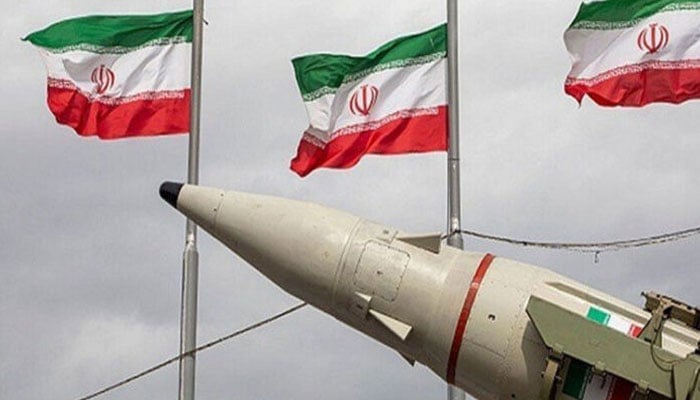
    Iran has said it has no reason to believe that the new security agreement between Pakistan, Turkey and Saudi Arabia is aimed against Tehran. Iranian Foreign Ministry spokesperson Esmaeil Baghaei said the agreement should not be viewed as a direct threat to Iran. He said the new regional security arrangement reflects a broader change in how countries in the Middle East are approaching their security needs. Baghaei said regional states are increasingly recognising that the United States cannot guarantee long-term security in the region. He also accused Washington of contributing to instability in the Middle East. He said regional security arrangements could help strengthen stability if they take into account the political and historical realities of the region. He also called for such arrangements to be broad and inclusive. Baghaei said Iran would not resume direct negotiations with the United States while Washington continues to violate an interim agreement between the two sides. Iran has also linked the reopening of the Strait of Hormuz to several demands from Washington. Iranian Foreign Minister Abbas Araghchi said Tehran and Oman were close to finalising an agreement on new shipping routes through the strategic waterway. He said the agreement was in its final stages. However, Araghchi stressed that an agreement with Oman would not automatically lead to the reopening of the strait. He said the United States would first need to meet several conditions set by Tehran. Iran is demanding compensation for damage caused by US attacks. It is also calling for an end to US military threats and sanctions against Iran. Iran has further demanded an end to attacks against its regional allies. Other demands include the removal of restrictions on Iranian shipping and the release of frozen Iranian assets. The Strait of Hormuz is a major international route for oil and gas shipments. Its prolonged closure has raised concerns over global energy supplies and shipping. Iran and the United States are currently not holding direct talks. Tehran says it will not enter direct negotiations while Washington continues to breach the interim agreement reached earlier this year. Messages between the two countries are being exchanged through intermediaries. Iran has also made a major change in its national security leadership. Former Revolutionary Guards commander Mohsen Rezaei has been appointed secretary of the Supreme National Security Council. Rezaei replaces Mohammad Bagher Zolghadr, who had been appointed to the position in March. No official reason was given for the change. The move, however, comes at a sensitive time for Iran as tensions with the United States and Israel remain high. Rezaei, 71, is a senior figure in Iran’s political and security establishment. He led the Islamic Revolutionary Guard Corps from 1981 to 1997. He served during much of the Iran-Iraq war. He later spent more than two decades as secretary of Iran’s Expediency Discernment Council. Rezaei also served as vice president for economic affairs from 2021 to 2023 under former President Ebrahim Raisi. Iran’s Supreme Leader Mojtaba Khamenei has also appointed Rezaei as his representative on the Supreme National Security Council. Zolghadr has been appointed as Khamenei’s political adviser. The Supreme National Security Council coordinates Iran’s security and foreign policy. It includes senior military, intelligence and government officials. Meanwhile, differences between the United States and Israel are reportedly growing over military operations across the region. Israeli broadcaster Channel 13 reported that Washington is pushing Israel to move toward ending fighting on three fronts. These include Gaza, Lebanon and Iran. US Central Command chief Admiral Brad Cooper reportedly conveyed the message during a visit to Israel. Washington wants progress toward reducing military operations and closing the three active fronts. Israeli officials, however, have indicated that they want to maintain freedom to act against Iran. Israeli military officials reportedly told their US counterparts that Israel intends to retain the ability to strike Iran if Tehran continues developing its nuclear programme or rebuilding its ballistic missile capabilities. Washington is also pushing for further Israeli withdrawals from positions in southern Lebanon. In Gaza, the United States is seeking progress toward a broader settlement. It is also supporting the deployment of a multinational force in the territory. Israeli security officials have reportedly objected to some US demands. These include reducing military operations and targeted killings in Gaza. The developments point to growing differences between Washington and Tel Aviv over how to manage conflicts involving Iran, Lebanon and Gaza. At the same time, the United States appears to be adopting a more cautious approach toward Iran. Tehran, however, continues to link the reopening of the Strait of Hormuz to major concessions from Washington.

  • | | | |

    PM Shehbaz takes tough steps to drive growth: mini…

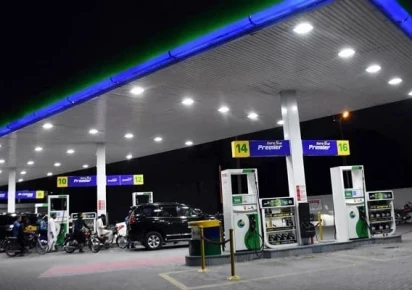
    Federal Petroleum Minister Ali Pervaiz Malik has said Prime Minister Shehbaz Sharif has taken difficult decisions to put Pakistan on the path of development. In a statement, Malik said the government had focused on practical politics and decisions aimed at strengthening the country. He said the Pakistan Muslim League-Nawaz believes in practical political work. He also praised former prime minister Nawaz Sharif for making Pakistan a nuclear power. According to Malik, Pakistan’s nuclear capability has strengthened its position and security in the region. The minister also welcomed the Makkah Joint Defence Agreement between Pakistan, Saudi Arabia and Türkiye. He said the agreement was a source of pride for the nation. Malik said Pakistan’s next major target should be economic progress. He stressed the need to achieve stronger results in the economic sector. The petroleum minister also indicated that there could be positive news regarding petroleum product prices. He said a reduction in prices could provide relief to consumers. Malik further said Pakistan had emerged as an important country for regional peace and security. He praised the capabilities and professionalism of the country’s armed forces. He said the world had witnessed the skills and operational capabilities of Pakistan’s military. He added that these capabilities had strengthened Pakistan’s role in promoting regional stability. The minister also acknowledged the economic difficulties faced by Pakistan during the Iran-US conflict. He said the situation created challenges for the country at the economic level. Malik maintained that Pakistan must now focus on economic achievements. He said stronger economic performance would be an important step towards securing long-term national progress.

  • | | | |

    Iran rules out US talks until demands are met

    Iran has ruled out direct negotiations with the United States for now, saying Washington must first comply with the terms of an interim agreement reached in June. Iranian Foreign Minister Abbas Araghchi said on Sunday that Tehran and Washington were not holding direct talks. He said messages were still being exchanged through intermediaries. Araghchi also reiterated Iran’s position on the Strait of Hormuz. He said the strategic waterway would not reopen simply because Iran and Oman reached an agreement on shipping arrangements. According to Iranian reports, Tehran and Muscat are close to finalising an understanding on a temporary shipping route. However, Iran says the route can only be used after other conditions are met. The Strait of Hormuz has remained at the centre of the wider conflict. Iran has repeatedly linked its reopening to demands directed at Washington. Iranian officials have called for an end to US threats and military action. They have also demanded the lifting of sanctions and blockades and the release of Iranian assets. Iran’s Revolutionary Guard has separately warned that the strait will remain closed until Tehran’s conditions are accepted. The force accused its opponents of shifting their focus toward reopening the vital waterway. The strait is one of the world’s most important energy routes. A significant share of global oil and gas shipments normally passes through it. Oman, meanwhile, said discussions with Iran over arrangements for shipping through the waterway had been positive and constructive. Muscat also urged all sides to avoid actions that could undermine the negotiations. Iranian President Masoud Pezeshkian has suggested that the current situation could provide an opportunity for an agreement. He said Iran remained united and strong despite the ongoing conflict. The diplomatic uncertainty comes as tensions continue to affect commercial shipping in the region. The United Arab Emirates said Iran had attacked a vessel linked to its state-owned oil company while it was travelling through the Strait of Hormuz. No injuries were reported. The United Kingdom Maritime Trade Operations agency also reported that a vessel caught fire after being struck by an unidentified projectile. The fire was later brought under control, with no environmental damage reported. Iranian authorities have not immediately commented on the individual incident. Saudi Arabia reports fires at energy facilities Tensions have also spread across the Gulf. Saudi Arabia said firefighters had extinguished a blaze at an Aramco facility in Jizan. The Saudi Energy Ministry said there were no fatalities. Yemen’s Houthi movement claimed responsibility for an attack on the site, saying it had used a drone in response to alleged Saudi strikes in Yemen. A separate explosion was also reported in the industrial area of Jubail. Regional sources said gas facilities were targeted and that a fire broke out. The exact cause remained unclear. It was not immediately established whether the incidents in Jizan and Jubail were connected. US defence industry ordered to increase weapons production Meanwhile, the United States has asked its defence industry to accelerate weapons production amid shortages linked to the war with Iran. US Deputy Defence Secretary Steve Feinberg reportedly instructed defence companies to submit plans aimed at speeding up deliveries and increasing production of critical military equipment. The demand comes amid reports of pressure on US ammunition supplies, including stocks of Patriot missile interceptors. The Trump administration has maintained that the United States has substantial weapons reserves and that additional supplies are being manufactured and delivered. The conflict has also triggered threats from armed groups in the region. The leader of Iraq’s Harakat Hezbollah al-Nujaba, Akram al-Kaabi, has threatened retaliation for US-Saudi strikes on sites belonging to Iraq’s Popular Mobilisation Forces. The group has warned that further military action could lead to a response. Iranian military officials, meanwhile, have claimed that the United States and Israel failed to achieve their objectives against Iran. They have praised the country’s military preparedness and vowed to continue resisting pressure. With the Strait of Hormuz still closed and negotiations remaining indirect, the prospect of restoring normal shipping remains uncertain. Iran insists that reopening the waterway depends on Washington accepting its conditions. The United States, meanwhile, has linked the lifting of its blockade to Iran fulfilling commitments under any future agreement.

  • | | |

    Pakistani leaders praise Makkah Agreement as histo…

    Federal ministers, ministers of state, cabinet members and parliamentarians have welcomed the Makkah Agreement between Pakistan, Türkiye and Saudi Arabia. They described the agreement as a major step towards peace, security and stability in the region. The leaders said the agreement reflects a shared vision among the three countries. They said it could strengthen cooperation and improve regional security. Federal Minister Ahsan Iqbal said Pakistan had achieved a historic diplomatic success. He said the defence agreement could help open a new chapter of peace and stability in the region. Information Minister Attaullah Tarar also welcomed the agreement. He described it as a milestone for peace and security. He said the people had welcomed the development. Federal Minister Owais Leghari said the defence agreement between Pakistan, Saudi Arabia and Türkiye was a positive development. He said it would help strengthen the security of the three countries and contribute to peace in the region. Tariq Fazal Chaudhry said the agreement reflected the vision of the leadership of the three countries. He said it would further strengthen bilateral and trilateral relations. He added that the agreement could also promote unity among Muslim countries. He described it as a new source of hope for the Muslim world. Tariq Fazal Chaudhry said the agreement was an important step towards greater unity among Muslim countries. Amir Muqam said Pakistan was achieving significant diplomatic successes under the leadership of Prime Minister Shehbaz Sharif. Abdul Aleem Khan said the agreement would promote brotherhood and cooperation among Islamic countries. He congratulated the nation and the Muslim Ummah on the development. Minister of State Shaza Fatima said Pakistan was increasingly being recognised as a country committed to peace. She said the historic agreement would help strengthen Pakistan’s position internationally. Rana Sanaullah said signing the agreement in the holy city of Makkah was a matter of honour for Pakistan. He said the agreement between the brotherly countries could create new opportunities for peace and cooperation. He also praised the efforts of Prime Minister Shehbaz Sharif and Field Marshal Asim Munir in making the agreement possible. Sanaullah said stronger cooperation among Muslim countries could contribute to their development and prosperity. Daniyal Chaudhry described the Makkah joint defence agreement as a major diplomatic and security milestone for Pakistan. He said the leadership of Prime Minister Shehbaz Sharif and Field Marshal Syed Asim Munir had played an important role in achieving the historic agreement.

  • | | |

    New committee to review Mir Raza case today

    A new investigation committee will hold an important meeting today to review the Mir Raza Ali murder case. The meeting will be chaired by DIG Aamir Farooqi. The committee will conduct a fresh and impartial investigation into the case. It will examine all aspects of the incident. Investigators will identify and collect any new evidence linked to the case. The evidence will be properly preserved and examined. Physical, technical, circumstantial and forensic evidence will also be reviewed. The committee will closely examine the victim’s injuries and clothes. It will also compare the two conflicting post-mortem reports. Investigators have been directed to take all possible steps to reach a conclusion. The team will submit its findings to the relevant court within the given timeframe. Daily progress reports will also be prepared. Additional officers may be included in the investigation if required. The committee will also record statements from members of the medical board involved in the first post-mortem. Doctors and experts who conducted the first post-mortem are expected to be questioned. They may also be given a detailed questionnaire. Investigators will try to determine the evidence behind the first post-mortem findings. The report had stated that the bullet entered through the chest and exited through the back. The team will also examine how forensic evidence was documented and preserved during the initial investigation. The second post-mortem report gave a different assessment of the bullet’s direction. Investigators will therefore compare both reports in detail. They will also examine the injuries, clothing and other forensic material. Meanwhile, investigators have obtained details about Mir Raza Ali’s movements on the night of July 28. Details of his final phone calls and messages have also been collected. According to the investigation, Mir Raza spoke to two people through three phone calls that night. He reportedly spoke to a person named Ali at 2:13am and again at 2:16am. His final call was answered by his friend Abdullah. The two spoke for more than three minutes.

  • | |

    Karachi lights up for Pakistan-Saudi-Turkey defenc…

    KARACHI: Karachi lit up in a striking display of friendship and solidarity after Pakistan, Saudi Arabia and Türkiye signed a defence agreement in Makkah, with prominent government and historic buildings decorated in the colours and flags of the three countries. The city’s landmarks were transformed with special lighting, creating a festive atmosphere as Pakistanis welcomed the development involving the two brotherly Muslim countries. The Sindh Assembly building became one of the most prominent symbols of the occasion, with the national flags of Pakistan, Saudi Arabia and Türkiye displayed prominently on the building. The Sindh Secretariat was also illuminated with specially arranged lights reflecting the colours associated with the three nations. The decorations gave the government complex a distinctive appearance and drew attention from people passing through the area. Another major attraction was Karachi’s historic Frere Hall, which was illuminated with colourful lights to mark the defence agreement. The landmark’s nighttime appearance quickly caught the attention of residents and visitors, adding a celebratory touch to the city. Flags of Pakistan, Saudi Arabia and Türkiye were also displayed along important roads and at other prominent locations across Karachi. The coordinated decorations were aimed at expressing solidarity with the three countries and highlighting their longstanding fraternal ties. The development comes as Pakistan, Saudi Arabia and Türkiye seek to strengthen cooperation in areas of mutual interest. The defence agreement signed in Makkah has drawn considerable attention in Pakistan, particularly because of the close political, economic and strategic relationships among the three countries. For Karachi, however, the agreement was reflected not through speeches or official statements alone but through the city’s skyline and landmarks. From the Sindh Assembly to Frere Hall, the green, red and national colours created a powerful visual message of friendship. The illuminated landmarks offered residents a memorable glimpse of the occasion, turning parts of Karachi into a colourful tribute to the growing bonds among Pakistan, Saudi Arabia and Türkiye.

  • | | | |

    Iran sets six conditions for reopening Strait of Hormuz

    Iran has set six conditions for the United States to allow the full reopening of the Strait of Hormuz. The demands were presented by Mohammad Bagher Zolghadr, secretary of Iran’s Supreme National Security Council. He warned that Tehran would not reopen the strategic waterway unless Washington changed its policy towards Iran. Zolghadr said the first condition was that the United States must not threaten Iran under any circumstances. He also said Washington must avoid any language or action that insults the dignity of the Iranian people. The second condition calls for a permanent end to what Iran describes as war and aggression against the country and its allies. These include Lebanon, Palestine, Yemen and Iraq. Iran’s third demand is the lifting of the naval blockade imposed on the country. Tehran has also called for the withdrawal of US forces from areas surrounding Iran. The fourth condition concerns compensation for damage caused to Iran during the war. Zolghadr said Iran must receive full compensation for the losses it suffered. The fifth demand is the removal of what Tehran considers unfair and illegal sanctions imposed on the Iranian people. Iran’s sixth condition calls for the unconditional release of Iranian assets that have been seized or frozen abroad. Tehran wants these assets returned to the Iranian people. The Strait of Hormuz is a key international shipping route. It connects the Persian Gulf with the Gulf of Oman and the wider Arabian Sea. A disruption in the waterway could have major consequences for global energy supplies and international trade. Iran has repeatedly stressed the strategic importance of the strait. Any decision regarding its reopening could therefore have wider regional and international implications. Zolghadr also said Iran would maintain its position regardless of whether the situation develops into further conflict or diplomatic negotiations.

  • | | |

    Army captain martyred, seven militants killed in H…

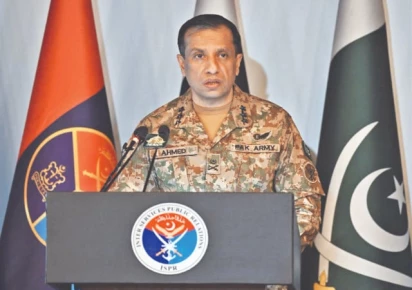
    Army captain martyred, seven militants killed in Hangu operation A Pakistan Army captain was martyred during an intelligence-based operation in Hangu district of Khyber Pakhtunkhwa, while security forces killed seven militants, according to the military’s media wing. The operation was carried out on August 7 after security agencies received information about the presence of militants in the area. Security forces launched the raid after confirming the reported militant presence. Troops engaged the militants at their hideout. Seven militants were killed during the exchange of fire. Captain Hamza Akram, 27, was also martyred during the operation. He belonged to Narowal district. According to the Inter-Services Public Relations (ISPR), Captain Hamza was leading his troops from the front. He continued pursuing the militants during the firefight and lost his life while performing his duty. Security forces recovered weapons and ammunition from the militants’ possession. The military said the killed militants were involved in attacks against security personnel and law enforcement agencies. They were also linked to attacks targeting civilians. A clearance operation was launched after the main engagement. Security personnel searched the surrounding area to ensure that no militants remained there. Three militants killed in Mastung operation In a separate operation in Balochistan, security forces killed three militants in Mastung district. The operation was conducted in the Kambela and Asimabad areas as part of Operation Rad-ul-Fitna-3. Security forces carried out an extensive search and clearance operation across an area of around 68 square kilometres. Three militants were killed during the operation. The bodies of two of the militants were recovered. Four other militants were injured, including a key commander identified as Shaukat Mama, according to security sources. Security personnel also detained 12 suspects for questioning during the operation. Militant hideouts were dismantled during the clearance activity. Security forces also removed flags associated with the militant group from the cleared areas. The latest operations come amid continued security challenges in Khyber Pakhtunkhwa and Balochistan. Both provinces have witnessed a significant number of militant attacks in recent years. Security forces have intensified intelligence-based operations to target militant networks, their hideouts and support structures.

  • | |

    Senate, NA leaders vow closer coordination for Par…

    ISLAMABAD: The leadership of Pakistan’s Senate and National Assembly has agreed to strengthen cooperation between the two houses of Parliament, with the aim of promoting democratic stability, improving legislation and ensuring a more effective parliamentary system. Senate Chairman Syed Yousaf Raza Gilani met National Assembly Speaker Sardar Ayaz Sadiq and Deputy Speaker Syed Ghulam Mustafa Shah at his residence in Islamabad on Saturday. The meeting focused on parliamentary affairs, matters of national importance and coordination between the two legislative houses. According to a statement issued by the Senate Secretariat, the participants stressed that closer institutional coordination was essential for strengthening parliamentary democracy and ensuring the smooth functioning of the system. Gilani said effective communication and cooperation between the Senate and National Assembly were necessary to uphold strong democratic traditions and reinforce an effective parliamentary structure. He also emphasised the importance of maintaining close liaison between the two houses, saying institutional coordination would contribute to the stability and effectiveness of Parliament. Sadiq, meanwhile, said collaboration between parliamentary institutions needed to be further strengthened to ensure effective legislation and better respond to public expectations. The leaders also discussed the overall situation in the country and exchanged views on issues of national importance. During the meeting, they agreed on the need to keep national interests at the forefront, uphold the supremacy of the Constitution and work towards greater democratic stability. They further reaffirmed their commitment to promoting mutual respect and effective communication between parliamentary institutions. The agreement comes as Parliament continues to play a central role in legislative and constitutional affairs, making coordination between its two houses important for ensuring that legislation and parliamentary business proceed smoothly. The Senate and National Assembly form the two chambers of Pakistan’s bicameral Parliament, with the National Assembly representing the population and the Senate providing equal representation to the federating units. The Senate chairman’s emphasis on cooperation also reflects a broader focus on strengthening parliamentary institutions and improving their capacity to perform constitutional responsibilities. A day earlier, Gilani inaugurated a newly modernised office complex of the Senate Secretariat at Parliament House. Addressing the ceremony, he described the upgrade as part of efforts to improve institutional capacity and modernise parliamentary operations. He said strong democratic institutions required modern systems, efficient infrastructure and a professional working environment. The upgraded facilities, according to the Senate, are intended to improve service delivery and enable the Secretariat to better support Parliament in carrying out its constitutional duties. With the latest meeting, the parliamentary leadership has signalled that stronger coordination between the Senate and National Assembly will remain a key priority in efforts to consolidate democratic institutions and ensure a stable parliamentary system.