ispr calls india8217s
| | |

ISPR calls India’s ‘Operation Sindoor&…

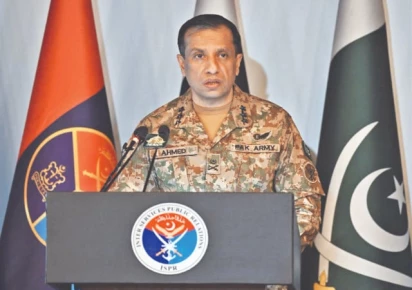
Pakistan has strongly rejected what it described as India’s attempt to reshape the history of the 2025 military confrontation through a recently produced documentary on “Operation Sindoor,” calling the production a highly dramatized and factually distorted portrayal of events.

In a statement, Pakistan said the documentary relied on selectively edited interviews, emotional narration and cinematic reconstructions to present a version of the conflict designed primarily for domestic political consumption. It argued that the production failed to provide an objective account of the military engagements and instead sought to portray a disputed outcome as an unequivocal Indian victory.

Pakistan also questioned the documentary’s chronology surrounding the Pahalgam incident of April 22, 2025. It said India had subsequently claimed that the alleged perpetrators of the incident were identified and eliminated on July 28, nearly three months after Operation Sindoor. Islamabad argued that this timeline raised questions about India’s assertion that the May 7 operation was specifically intended to punish those responsible for the Pahalgam attack.

The statement further rejected India’s claim of “100 percent mission success,” maintaining that Pakistani forces had effectively responded to the Indian offensive during what Pakistan refers to as Marka-e-Haq. Islamabad claimed that eight Indian military aircraft were shot down during the confrontation and said Pakistan later launched Operation Bunyanum Marsoos, targeting military installations with precision-guided rockets and missiles, precision air-launched munitions, loitering munitions and artillery.

Pakistan said the documentary itself contained admissions that undermined its portrayal of decisive Indian dominance. According to Islamabad, references by Indian military officials to Pakistani missile and drone activity, prolonged engagements along the Line of Control and the activation of Indian air-defence systems demonstrated that the confrontation involved significant military exchanges on both sides.

The Pakistani statement also challenged New Delhi’s account of how hostilities ended. It noted that the documentary acknowledged communication between the two countries’ Directors General of Military Operations and an agreed cessation of military activity. Islamabad said this account was inconsistent with portraying the conclusion of the conflict as an unconditional Indian military victory, particularly given the role of international diplomatic engagement in facilitating the ceasefire.

Pakistan further accused the documentary of presenting contradictory explanations for India’s approach to escalation. While the production reportedly emphasised surprise attacks, precision strikes and escalation dominance, it simultaneously portrayed India as deliberately restricting the scope of the conflict and offering Pakistan an opportunity to withdraw.

Islamabad described the documentary as an attempt to create a politically convenient narrative rather than an impartial military assessment. It maintained that cinematic reconstructions and official claims could not alter the chronology of events, the military engagements or the losses suffered during the confrontation.

Pakistan said it had no need to construct an alternative narrative around Marka-e-Haq, arguing that battlefield developments, diplomatic interactions and subsequent statements by Indian officials provided sufficient material for assessing the conflict.

Reaffirming its stated commitment to regional peace and stability, Pakistan said its armed forces remained prepared to protect the country’s sovereignty and territorial integrity. It warned that any future military escalation would receive a strong response, while asserting that no subsequent narrative or media production could change the actual course of events on the battlefield.

Similar Posts

  • | |

    Lil Wayne reveals he recorded music over the phone…

    Lil Wayne has opened up about one of the most challenging periods of his life, revealing that he continued making music even while serving an eight-month sentence at New York City’s Rikers Island in 2010. During a recent appearance on the Keep Secrets podcast, the Grammy-winning rapper shared how his passion for music never faded, even behind bars. The 43-year-old artist explained that he found a creative way to keep recording despite the restrictions of prison life. According to Lil Wayne, he would use the prison phone system to record verses, calling producers and collaborators who would capture his vocals on the other end of the line. Although the audio quality was far from perfect, he said it allowed him to continue writing and creating music during one of the most difficult chapters of his career. Lil Wayne, whose real name is Dwayne Michael Carter Jr., was sentenced to eight months at Rikers Island after pleading guilty to attempted criminal possession of a weapon stemming from a 2007 incident. He entered the correctional facility in March 2010 and was released in November of the same year after serving approximately eight months. Reflecting on that time, the rapper said music became a source of motivation and helped him stay mentally focused. Rather than letting prison halt his creativity, he used every opportunity he could find to keep working on new material. His determination to remain productive, even under difficult circumstances, demonstrated the dedication that has defined much of his career. Lil Wayne has long been regarded as one of hip-hop’s most influential artists, with a catalog that includes hit albums such as Tha Carter III, Tha Carter IV, and Tha Carter V. Throughout his career, he has earned multiple Grammy Awards and inspired a new generation of rappers with his distinctive style and lyrical creativity. During the podcast conversation, Wayne also reflected on the importance of resilience. He suggested that difficult experiences can shape an artist’s perspective and fuel creativity rather than stop it. His willingness to adapt, even while incarcerated, highlights the relentless work ethic that has kept him relevant in the music industry for decades. Fans have responded with admiration to the revelation, praising Wayne’s determination to continue making music despite the limitations he faced. Many said the story offers a new appreciation for the effort that went into his work during that period. More than 15 years after his release, Lil Wayne’s latest comments provide a rare behind-the-scenes look at how he stayed connected to his craft while incarcerated. His story serves as a reminder that, for some artists, creativity can endure even in the most challenging environments, proving that passion often finds a way to overcome obstacles.

  • | |

    Pakistan’s military tightens grip on Islamis…

    Munir’s family background feeds into this shift as well. He is the son of an imam and considers himself a devout, conservative Muslim, and religious identity remains deeply woven into Pakistan’s state institutions. Even so, he has pushed the country toward international engagement through cryptocurrency partnerships, foreign investment deals, a mediating role in the conflict between the United States and Iran, and a mutual defence pact with Saudi Arabia. Data shared with a foreign news agency by the Armed Conflict Location and Event Data Project, a group that tracks conflict incidents worldwide, shows the scale of the shift. Pakistan averaged more than seven blasphemy related riots or attacks annually between 2021 and 2024, but recorded only one such incident over the past twelve months. Economic pressure appears to have played a significant role in prompting the crackdown. Two Pakistani government sources said officials grew alarmed during the summer of 2025 that rising hostility from fundamentalist groups toward France and other European countries threatened to jeopardize a European Union duty waiver covering Pakistani exports. Nearly a third of Pakistan’s total exports go to the EU, and losing that preferential access could have dealt a severe blow to the national economy. Neither the European Commission nor Pakistan’s commerce ministry responded to requests for comment on the matter. Washington has added its own pressure over religious freedom concerns. The US Commission on International Religious Freedom, a government watchdog, recommended last year that Pakistan be placed back on a list of countries of particular concern due to its blasphemy laws, a designation Islamabad has firmly rejected. Analyst Abdul Basit of Singapore’s S. Rajaratnam School of International Studies said worsening insurgent violence in Balochistan and Khyber Pakhtunkhwa, Pakistan’s two most mineral rich provinces, likely added urgency to Munir’s campaign, particularly since he has pitched foreign investment in the country’s mining sector to American officials over the past year. Basit noted that religious groups have lost favor within the state’s priorities, though he cautioned that the militias driving these regional insurgencies are not formally tied to the newly banned Islamist organizations, even if both draw recruits from the same pool of young, radicalized men. Elizabeth Threlkeld, who directs the Stimson Center’s South Asia program, said the open question going forward is whether Pakistan can sustain this level of focus over time. Crackdown targets country’s largest fundamentalist movement The largest of the groups swept up in the crackdown, Tehreek e Labbaik Pakistan, built its identity around the slogan “Death to blasphemers” before authorities banned it late last year. Many of its leaders now sit in jail, its mosques have been sealed shut and its financial accounts frozen. A previously undisclosed government document that laid the groundwork for the ban argued the organization had become a serious threat to Pakistan by damaging both domestic stability and the country’s standing internationally. A spokesperson for the group pointed to a statement it issued last year describing the ban as illegal and unconstitutional. The move against Tehreek e Labbaik follows earlier crackdowns on groups such as Lashkar e Taiba and Jaish e Muhammad, which Pakistan pursued under pressure from the Financial Action Task Force, the international body that monitors terrorism financing. Basit linked the newest crackdown to a period of internal reflection within Pakistan over its historical backing of the Afghan Taliban, whom Islamabad now blames for stoking Islamist insurgencies against the Pakistani state from across the border. The Taliban government in Kabul has dismissed that accusation as baseless, and a spokesperson for its foreign ministry declined to comment further, describing Pakistan’s crackdown as an internal matter. For Pakistan’s Christian, Shia and Ahmadi communities, the change in atmosphere has been dramatic. In the past, suspects in blasphemy related killings, including police officers, were sometimes greeted with rose petals or celebratory receptions, and individuals accused of burning churches or minority mosques often received public praise. Blasphemy remains a capital offense under Pakistani law, and even a rumor of an accusation has historically been enough to spark riots or lynchings. Human rights organizations say victims’ families have rarely obtained justice, since judges and lawyers have often been too frightened to take on such cases. Officer Malik said everyone who confronted the crowd during last month’s incident in Karachi felt genuine fear. The Christian family targeted that day was eventually moved to safety, and an initial investigation has since found the accusations against them to be false. Group’s military links trace back a decade Tehreek e Labbaik formed in 2015 while its founder was imprisoned for shooting and killing a Pakistani provincial governor in 2011 over his support for a Christian woman accused of blasphemy. That gunman, a former police bodyguard, was later convicted and executed months after the group’s founding. Analysts have long suspected the group’s creation received at least tacit support from Pakistan’s military establishment, including its intelligence services, as a tool to keep civilian governments and mainstream political parties in check. Following violent riots led by the group in 2017, then army chief General Qamar Javed Bajwa referred to its protesters as the country’s own people. Pakistan’s Supreme Court later ordered the military and intelligence agencies to stay out of politics but stopped short of directly tying them to the organization. Analysts and former officials say the effects of years of tolerance for the group will not disappear simply because of a ban, and that the shock felt by its supporters could still trigger backlash. Ihsan Ghani, who served as Pakistan’s counter terrorism chief during the 2017 riots, said he worries the group could resurface at full strength if its usefulness to the state changes again. He compared decades of state backed nurturing of the movement to something that cannot simply be switched on and off at will. Within Pakistan’s minority communities, the sudden shift still feels fragile. One of the Christian women rescued during last month’s incident in Karachi said she and her family are now physically safe, but admitted the fear has not fully faded.

  • |

    Taliban seeks improved ties with Pakistan

    The Taliban administration has expressed its desire to reduce tensions and improve relations with Pakistan, saying that continued disputes serve the interests of neither country. Taliban spokesperson Zabihullah Mujahid said both sides should work to resolve outstanding issues through dialogue and cooperation. He noted that the closure of border crossings and restrictions faced by Afghan traders have contributed to strained relations and disrupted bilateral trade. Mujahid said the Taliban wants these issues to be addressed to facilitate smoother cross-border movement and strengthen economic ties between the two neighboring countries. He also acknowledged that trade with Pakistan has been affected in recent months, adding that Afghanistan has increased its economic engagement with Iran while pursuing new projects aimed at developing the country’s mineral resources. However, analysts have raised concerns over the transparency of some of the reported mining agreements and questioned whether sufficient oversight and accountability mechanisms are in place. The remarks come at a time when Pakistan and Afghanistan continue to face challenges in bilateral relations, including border management, trade disruptions and broader security concerns.

  • |

    Ro Khanna supports call to enforce ICC warrant against Netanyahu

    US Democratic Congressman Ro Khanna has backed New York City Mayor Zohran Mamdani’s call for Israeli Prime Minister Benjamin Netanyahu to be arrested if he enters US jurisdiction under an arrest warrant issued by the International Criminal Court. Khanna said the United States should cooperate with the international court and uphold international law regardless of who is involved. Speaking during an interview on Capitol Hill, the California lawmaker said the US president should enforce ICC arrest warrants for any individual wanted by the court, including both Netanyahu and Russian President Vladimir Putin if they were to enter American jurisdiction. He argued that respecting international law is essential to protecting human rights and maintaining a rules based international order. According to Khanna, US authorities should act on such warrants rather than ignoring them. The International Criminal Court issued an arrest warrant for Netanyahu in 2024, accusing him of alleged war crimes and crimes against humanity connected to Israel’s military campaign in Gaza following the Hamas attack in October 2023. Israel has strongly rejected the accusations and criticized the court’s decision, maintaining that its military actions were carried out in self defense. Khanna’s remarks come after his recent visit to the occupied West Bank, where he said he was briefly detained by Israeli settlers and members of the Israeli military while visiting a Palestinian village. The congressman suggested the incident had strengthened his views on the importance of accountability and respect for international law. Khanna, who is considered a possible Democratic presidential candidate for the 2028 election, also joked that detaining potential future US presidents was unlikely to improve relations with Washington. New York City Mayor Zohran Mamdani has also been outspoken on the issue. He recently said he had explored whether city authorities could arrest Netanyahu if the Israeli leader visits New York for the United Nations General Assembly later this year. Mamdani later acknowledged that a city mayor does not have the legal authority to carry out such an arrest but argued that the federal government could take action if it chose to do so. Mamdani has publicly stated that he believes anyone facing charges before the International Criminal Court should be held accountable through legal proceedings. His comments have attracted significant attention in the United States, where debate over the Gaza conflict and Washington’s relationship with Israel remains deeply divided. President Donald Trump has firmly rejected any suggestion that Netanyahu could be arrested while visiting the United States. Earlier this week, Trump stated that the Israeli prime minister would not face arrest under any circumstances during his stay in the country, making clear that his administration would not enforce the ICC warrant. Khanna responded by accusing Trump of ignoring international law and failing to prioritize human rights. He argued that refusing to cooperate with the International Criminal Court damages America’s credibility and weakens the international legal system. He also suggested that enforcing the ICC warrant could strengthen Washington’s influence over Israel, particularly after reports that Netanyahu continued military operations in Lebanon despite US pressure to observe a ceasefire. According to Khanna, accountability should apply equally to all leaders regardless of their position or political alliances. He said individuals facing serious allegations before an international court should not expect to travel freely without legal consequences. Netanyahu is expected to travel to Washington next week for talks with President Trump. The meeting will be their first face to face discussion since the United States and Israel carried out joint military strikes against Iran earlier this year. During the visit, Netanyahu is also expected to attend the funeral of Republican Senator Lindsey Graham, who was widely regarded as one of Israel’s strongest supporters in the US Congress. The visit is likely to attract international attention as debate continues over the ICC warrant, the war in Gaza and the future of US policy toward Israel.

  • |

    Punjab approves Shuhada Package for 14 martyred police families

    Lahore: Provincial Minister for Law Rana Muhammad Iqbal Khan chaired an important meeting at the Home Department regarding the provision of financial assistance and residential facilities to the families of martyred police personnel under the Government of Punjab’s Shuhada Package. The meeting was attended by Secretary Home Dr. Ahmad Javed Qazi, Additional Inspector General of Police Imran Arshad, Additional Secretary (Police) Kanwar Anwar Ali Khan, DIG Welfare Mehboob Rashid and other senior officials. The meeting approved financial assistance, residential houses and other benefits under the Government of Punjab’s Shuhada Package for the families of 14 police personnel who embraced martyrdom in the line of duty in Bhakkar, Layyah, Bahawalnagar, Sargodha, Rajanpur, Faisalabad, Gujrat, Dera Ghazi Khan, Rahim Yar Khan and Sahiwal. Package-1 was approved for Constable Muhammad Shahbaz and Constable Muhammad Faheem, who were martyred in the terrorist attack on Dajal Check Post in Bhakkar, and for Constable Muhammad Asad Naseer, who embraced martyrdom while fighting terrorists in Layyah. Package-2 was approved for the families of Sub-Inspector Shahid Pervaiz of Bahawalnagar, Sub-Inspector Amir Rizwan of Sargodha, Constable Muhammad Nasir of Rajanpur, Driver Constable Iftikhar Ahmad of Faisalabad and Constable Mirza Umar Aftab Baig of Gujrat. Package-3 was approved for the families of Sub-Inspector Muhammad Zaman Zia, Assistant Sub-Inspector Muhammad Bashir and Constable Muhammad Waris of Bahawalnagar, Constable Muhammad Bismillah of Dera Ghazi Khan, Constable Muhammad Ramzan of Rahim Yar Khan and Constable Tahir-ul-Zaman Siddiqui of Sahiwal. The meeting was informed that under Package-1, the family of a martyred constable will receive Rs. 10 million, a five-marla house and other benefits. Under Package-2, the family of a martyred constable will receive Rs. 4 million, a five-marla house and other benefits, while the family of a martyred Assistant Sub-Inspector will receive Rs. 5 million, a seven-marla house and other benefits. Under Package-3, the family of a martyred constable will receive Rs. 3.5 million and other benefits, while the families of martyred Assistant Sub-Inspectors and Sub-Inspectors will receive Rs. 4 million along with other prescribed benefits. Addressing the meeting, Provincial Minister for Law Rana Muhammad Iqbal Khan said that the martyrs are the pride of the nation, the crown of our heads and the true heroes of the homeland. He said the sacrifices made by brave police personnel in protecting the country, maintaining law and order and safeguarding the public will always be remembered. He directed that all financial dues, residential facilities and other benefits for the families of martyrs be provided without delay, adding that no negligence or unnecessary delay would be tolerated. He further stated that no injustice would be allowed against any martyr’s family and that the Government of Punjab would continue extending full support to the bereaved families. The Provincial Minister further stated that terrorists responsible for martyring police personnel in the line of duty would be brought to justice in accordance with the law and that the fight against anti-state elements would continue with full determination. The meeting concluded with prayers for the elevation of the ranks of the martyrs, the security and prosperity of Pakistan, and patience and strength for their bereaved families.

  • |

    BTS faces backlash over Chris Brown concert appearance

    BTS is facing renewed criticism online after members J-Hope and RM were seen attending Chris Brown’s concert, adding to the backlash surrounding the group’s recent collaboration with Google Gemini. On Thursday, August 13, J-Hope, whose real name is Jung Ho-seok, shared several videos on Instagram showing himself and RM enjoying the concert. The two BTS members could be seen dancing and singing along to the performance. Their appearance quickly sparked a strong reaction among fans on social media. Many ARMY members expressed disappointment over the decision to attend the concert, pointing to the controversies and allegations that have surrounded Brown over the years. The criticism comes at a difficult time for BTS, as the group is already facing backlash over its collaboration with Google Gemini. Some fans have raised concerns about artificial intelligence and its potential environmental impact, while others have criticized the group for promoting the technology. Several fans took to X to express their frustration, with some questioning how BTS members could support the AI campaign while also attending Brown’s concert. The hashtags “ARMYAgainstAI” and similar variations have also been used by fans opposing the collaboration. For some fans, the combination of the Gemini campaign and the concert appearance has intensified their disappointment. Others argued that members of BTS should be held accountable for the choices they make, particularly because a large part of the group’s global fanbase is made up of women. The controversy surrounding J-Hope and RM comes as BTS continues preparations for its highly anticipated Arirang World Tour. The tour began in April in South Korea and has been one of the group’s biggest projects since returning to group activities. Meanwhile, another BTS member, V, recently shared a worrying update about his health. During a recent livestream, V, whose real name is Kim Tae-hyung, revealed that he has been dealing with hearing problems for more than two years. He explained that he has been receiving treatment for hearing loss affecting one ear. V described the difference in his hearing between his two ears, saying that if the hearing in his left ear is at 100 percent, his right ear is only around 30 percent. The revelation concerned fans, particularly as BTS is currently involved in a major world tour. Many supporters have expressed concern for V and hope that his condition improves. With BTS facing criticism over both the Gemini collaboration and the concert appearance, the group remains at the center of intense online discussion. At the same time, V’s health revelation has shifted some attention toward the singer’s wellbeing as fans continue to support the members during their busy touring schedule.

Leave a Reply

Your email address will not be published. Required fields are marked *