plans sweeping new
| |

EU plans sweeping new sanctions on Russia

The European Union is preparing its most extensive round of sanctions against Russia since the war in Ukraine began, with the proposed measures aimed primarily at Moscow’s military-industrial complex.

EU foreign policy chief Kaja Kallas told German newspaper Die Welt that the new sanctions would significantly increase pressure on Russia and could raise the number of sanctioned Russian individuals and entities by about one-third. EU diplomatic sources said the European External Action Service is expected to propose sanctions against around 1,600 people and entities linked to Russia’s defence sector.

The proposed measures would include asset freezes as well as travel and transaction restrictions. The EU has already sanctioned nearly 3,000 Russian individuals and companies.

According to EU diplomatic sources, the new list could be presented to member states in early September, with formal adoption targeted for October. Unlike broader sanctions packages, the proposed designations are not expected to include new sector-wide restrictions, a move intended to speed up approval.

Kallas said the EU would continue increasing economic pressure until Moscow ends its war in Ukraine. However, EU sanctions require unanimous approval from all member states, and previous measures have faced delays because of disagreements among countries.

The latest move comes as the EU seeks to strengthen its pressure on Russia while avoiding the lengthy disputes that have complicated previous sanctions packages.

Similar Posts

  • | | | |

    Israeli raids, settlement plans deepen West Bank t…

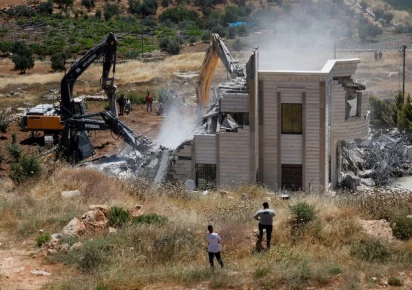
    RAMALLAH: Tensions across the occupied West Bank intensified on Monday as Israeli forces reportedly destroyed water pipelines, detained Palestinians and ordered families to leave their homes ahead of a planned demolition. While a new settlement plan near Jerusalem raised fresh concerns over the expansion of Israeli settlements. The latest developments have added to growing pressure on Palestinian communities already facing restrictions on movement, damage to agricultural land and disruptions to basic services. Palestinian human rights activist Aref Daraghmeh said Israeli forces destroyed water pipelines in the Atouf and Ras al-Ahmar areas of Tubas governorate. The areas, located in the northern Jordan Valley, have experienced repeated military operations in recent months. According to Daraghmeh, agricultural land has been cleared, water networks damaged and artesian wells filled in, causing significant losses for farmers who depend on the land and water supplies for their livelihoods. The destruction of water infrastructure has particular significance in the Jordan Valley, where Palestinian farming communities rely heavily on limited water resources. Brothers detained during raid In another operation in the northern Jordan Valley, Israeli forces detained two Palestinian brothers in the Ein al-Hilweh area, according to local sources cited by Anadolu. Meanwhile, Israeli troops raided the village of Tell, southwest of Nablus, and ordered residents to leave several homes ahead of the planned demolition of a house belonging to Palestinian Farouq Ramadan. Ramadan was killed on July 24 during an attack in the village, according to Palestinian sources. They said he had disarmed and killed one of the attackers before being shot dead. Three other members of his family were also killed and four Palestinians were injured during the incident, the sources said. Near Ramallah, agricultural land east of Jaljaliya village was also set on fire, Palestinian official news agency Wafa reported. Palestinian civil defence crews later brought the blaze under control. Village council head Osama Nazmi said an Israeli outpost had been established in the area about a year ago and that Palestinian homes belonging to residents from nearby Al-Mazraa Al-Sharqiya had subsequently been seized. New settlement plan raises alarm At the same time, Palestinian officials said Israel had advanced plans for a new settlement containing approximately 650 housing units south of Jerusalem. The Palestinian Jerusalem Governorate said Israel’s District Planning and Building Committee had deposited the plan for the proposed “Nofei Rachel” settlement. The project would cover approximately 27 dunams, or 6.7 acres, near Palestinian homes, according to the governorate. Palestinian authorities warned that the consequences would extend beyond the construction of the housing units, arguing that the development could affect Palestinian movement, urban growth and the ability of local communities to expand. They described the plan as part of a broader Israeli policy of expanding settlements and restricting Palestinian development. Israeli rights organisation Ir Amim separately said Israel had advanced three major settlement projects involving more than 3,400 housing units in East Jerusalem in recent weeks. The developments have renewed international concerns about settlement expansion. The United Nations and most countries regard Israeli settlements established in territory occupied since 1967 as illegal under international law. Critics say continued settlement construction threatens the possibility of establishing a viable Palestinian state alongside Israel. West Bank caught in wider conflict The latest events come as the Israeli-Palestinian conflict continues to reverberate across the region. According to figures cited by Palestinian authorities, violence in the West Bank has intensified alongside the wider war that began after the October 2023 Hamas attack on Israel. The situation has also drawn attention to the issue of Palestinian remains held by Israel. Report: Israel holds 1,700 Palestinian bodies Israel is holding the remains of around 1,700 Palestinians for possible use in future exchanges, Israeli newspaper Haaretz reported, citing two unnamed sources familiar with recent discussions within Israel’s security establishment. According to the report, Shin Bet chief David Zini supports retaining the bodies in case Israeli citizens are captured or disappear in the future. The Israeli military is also reportedly supportive of the position. Haaretz reported that most of the remains are believed to belong to Palestinians from Gaza who participated in the October 7, 2023 attack on Israel or subsequent fighting. However, the newspaper also reported that some of the bodies belong to Palestinians who were not involved in combat. The issue has raised legal questions inside Israel. Legal experts cited by Haaretz questioned whether authorities have the power to retain the remains of Palestinians who have not been proven to have taken part in fighting. The Palestinian National Campaign for the Retrieval of Martyrs’ Bodies and Disclosure of the Fate of the Missing said in October 2025 that Israel was holding around 1,500 bodies of Palestinians from Gaza at the Sde Teiman military facility in southern Israel. A crisis extending beyond borders The developments in the West Bank are unfolding against the backdrop of the devastating Gaza conflict. Palestinian health authorities say tens of thousands of Palestinians have been killed and injured since October 2023, while much of Gaza’s infrastructure has been destroyed or severely damaged. The reported destruction of water pipelines in the West Bank, the proposed settlement expansion and the continued disputes over Palestinian remains highlight how the conflict affects not only major political centres but also ordinary families, farmers and communities. For Palestinians living in areas such as Tubas, Nablus and the outskirts of Jerusalem, the immediate concerns are often deeply personal: access to water, the safety of their homes, the ability to farm their land and the uncertainty of what another military raid may bring. As settlement plans move forward and military operations continue, hopes for a reduction in tensions remain overshadowed by developments that are reshaping the landscape of the occupied West Bank.

  • |

    Coal drops below half of China’s power mix for first time ever

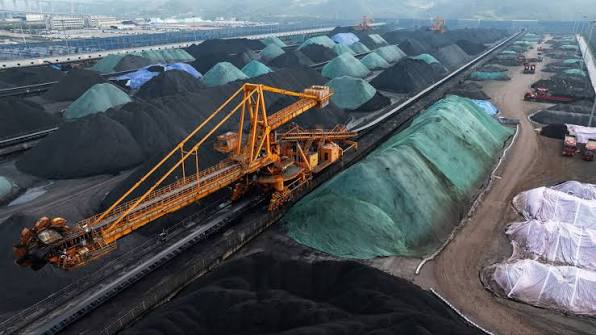
    China has reached a turning point in its energy story. For the very first time, coal supplied less than half the country’s electricity over a six-month stretch, according to officials who spoke on Thursday. Between January and June, coal made up 49.7 percent of total power generation. That figure came from Xing Yiteng, a senior official at the energy administration’s planning office. It marks a steep fall from 65.5 percent back in 2016, based on earlier government data. Clean energy sources picked up the slack. Renewables reached 41.2 percent of the total mix, crossing the 40 percent line for the first time ever. Wind and solar alone made up nearly a quarter of all power generated, a huge leap from just under 10 percent in 2020. The remaining share came from natural gas and nuclear plants. Despite this progress, experts warn that coal use in raw terms might actually increase this year. Electricity demand across China is rising quickly, driven by more electric vehicles on the road, a boom in AI-related data centers, and steady growth in exports. Beijing has pledged that coal use will peak no later than 2030, with wind and solar expected to reach 30 percent of the power mix by then. Gao Yuhe, who works as a project manager at Greenpeace East Asia, thinks that milestone might actually arrive two years early, by 2028. She credited this to the rapid spread of home solar systems paired with battery storage, along with more flexible electricity markets that make better use of renewable supply. China still burns far more coal than most major economies, mainly because it has large domestic reserves and limited natural gas access. For comparison, coal accounted for just 17 percent of America’s utility-scale power output last year, with natural gas covering 41 percent. China’s coal reliance, though, remains lower than India’s, where coal and lignite made up 69 percent of electricity generation last year. Interestingly, China still imported close to 500 million metric tons of coal last year, even with domestic output reaching 4.83 billion tons, mostly to supply power plants along the coast. If coal consumption keeps falling, major exporters like Indonesia, Mongolia, Australia, and Russia could feel the impact, depending on global price trends. Meanwhile, coal remains central to China’s coal-to-chemicals industry, where many facilities continue relying on cheap, locally produced coal to stay competitive.

  • |

    Rajab Butt’s emotional fan encounter triggers online trolling

    Rajab Butt is among Pakistan’s most popular and widely discussed YouTubers, with a massive fan base that closely follows his personal and professional life. Known for sharing updates about his family, lifestyle and daily activities, Rajab has built a strong connection with his viewers over the years. His followers are often referred to as the “Rajab Family,” and the YouTuber has previously spoken about how emotionally attached many of his fans are to him. However, a recent video involving one of his female fans has taken social media by storm and sparked a wave of mixed reactions online. The video shows a female fan meeting Rajab Butt in person. According to the footage circulating on social media, the moment she saw the YouTuber, she became overwhelmed with emotion and suddenly burst into tears. She appeared visibly emotional while standing in front of Rajab, who remained there as she struggled to contain her feelings. The unexpected reaction quickly attracted attention after the video began spreading across social media platforms. While some viewers appeared surprised by the intensity of the fan’s emotions, others turned the incident into a subject of criticism and trolling. Several social media users questioned why the fan became so emotional after meeting Rajab. Some found the scene uncomfortable to watch, while others accused the entire interaction of being staged for attention and views. A few commenters also suggested that the reaction appeared exaggerated and described the video as scripted. One social media user expressed embarrassment over the scene, while another criticized the fan’s reaction and claimed that the moment seemed deliberately created for the camera. Another commenter simply dismissed the incident as unnecessary, reflecting the growing criticism surrounding the viral clip. The reactions have highlighted the complicated relationship between online personalities and their followers. For influencers with millions of viewers, fan encounters can sometimes become highly emotional moments, particularly when followers have spent years watching their content and developing a personal connection with the creator. At the same time, viral moments involving public figures often attract criticism, especially when viewers believe that a reaction may have been exaggerated or staged. In Rajab’s case, the fan’s emotional response has quickly become a topic of discussion, with social media users divided over whether it was a genuine display of admiration or simply another viral moment. Rajab Butt has not publicly clarified whether the interaction was spontaneous or planned. For now, the video continues to circulate online, while users remain divided between those who understand the fan’s emotional reaction and those who believe the entire scene was unnecessary or scripted. The incident once again demonstrates how closely Rajab’s fans follow him and how even a brief interaction can quickly become a major talking point across social media.

  • | |

    Balochistan to bring 1.8 million out-of-school chi…

    The Balochistan government has approved the implementation of a large-scale non-formal education programme aimed at bringing 1.8 million out-of-school children back into the education system. The decision was made during a meeting chaired by the provincial chief secretary, where officials reviewed plans to expand access to education for children who have been unable to attend formal schools due to various social and economic challenges. Under the initiative, children who have missed out on formal education will be provided with alternative learning opportunities through a structured non-formal education system. The programme is designed to help them continue their studies and improve literacy across the province. Officials said the project will be implemented over the next five years. For the current fiscal year, the provincial government has allocated Rs8 billion to launch and support the initiative. The chief secretary said the programme will operate under the supervision of the Social Welfare Department, which will oversee its implementation and ensure educational services reach children in underserved communities. Special priority will be given to children between the ages of 9 and 16, a group considered most vulnerable to dropping out of school or never enrolling in formal education. The initiative is expected to expand educational access, reduce the number of out-of-school children, and improve learning opportunities for thousands of young people across Balochistan.

  • | |

    Hilaria Baldwin opens up about years-long eating d…

    Hilaria Baldwin is shedding light on one of the most personal chapters of her life, opening up about her years-long battle with an eating disorder and the challenges that have continued throughout her recovery. The wellness entrepreneur and wife of actor Alec Baldwin recently spoke candidly about her health journey, explaining that although she has made significant progress, recovery is not something that happens overnight. Instead, she described it as a lifelong process that requires constant care, self-awareness and compassion. Reflecting on her experience, Hilaria revealed that she struggled with an eating disorder for years before seeking the help she needed. Looking back, she admitted she did not fully understand the seriousness of the condition at first and said it affected both her physical and emotional well-being. (people.com⁠) According to Hilaria, recovery has involved learning to rebuild a healthier relationship with food and with herself. She explained that while there have been moments of progress, there have also been setbacks, making it important to remain patient throughout the process. She stressed that healing is rarely a straight path and encouraged others facing similar struggles to seek professional support rather than trying to manage everything alone. (people.com⁠) During the conversation, Hilaria also spoke about how becoming a mother influenced her perspective on health. Raising seven children with Alec Baldwin encouraged her to focus less on appearance and more on overall well-being, balance and setting a positive example for her family. She said motherhood helped shift her priorities and reminded her of the importance of treating herself with kindness. The podcast host acknowledged that conversations about eating disorders can be uncomfortable, but she believes speaking openly may help reduce stigma. By sharing her own experience, she hopes others will realize they are not alone and that recovery is possible with the right support system. Mental health experts have long emphasized that eating disorders are complex medical conditions that can affect people regardless of age, gender or background. Recovery often involves medical care, nutritional guidance and psychological support tailored to each individual’s needs. Hilaria’s latest comments have been met with support from many fans, who praised her willingness to discuss such a deeply personal issue publicly. Her honesty has also sparked wider conversations about body image, mental health and the importance of seeking help without shame. For Hilaria, the journey continues, but she says she now approaches it with greater understanding and self-compassion. Her message is ultimately one of hope: healing may take time, but every step forward matters.

  • | |

    Essential commodity prices surge sharply over one …

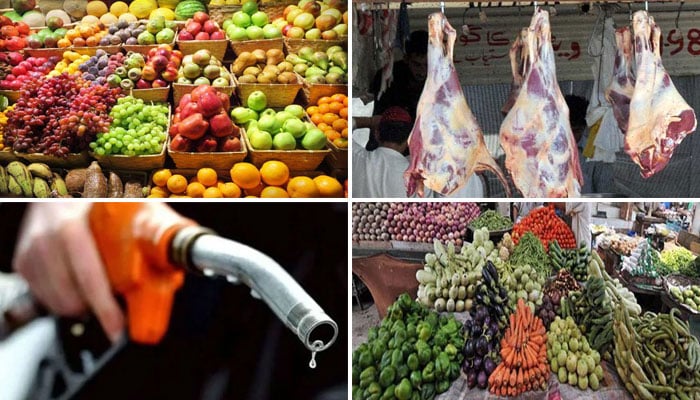
    Prices of several essential commodities have increased significantly across Pakistan over the past year, putting additional pressure on household budgets. According to the latest data released by the Pakistan Bureau of Statistics (PBS), major increases were recorded in the prices of several food items and fuel products. Onion prices recorded the highest increase among the commodities listed by the statistics agency. The price of onions rose by 132.52% in one year. Tomato prices also increased sharply by 93.21%, while flour became 62.25% more expensive during the same period. Fuel prices also witnessed substantial increases. According to the PBS, LPG became 51.69% more expensive over the year. Diesel prices increased by 33.08%, while petrol became 27.65% more expensive. The rise in fuel prices can also affect transportation and the cost of goods and services. Several meat and fruit prices also increased during the year. The price of bananas rose by 17.66%, while mutton became 15.98% more expensive. Beef prices increased by 13.54%, adding to the cost of commonly consumed food items. However, some essential commodities became cheaper during the same period. Potato prices declined by 30%, while sugar became 19.10% cheaper. Chicken prices also decreased by 17.68%, providing some relief to consumers. The statistics also showed a decline in the prices of eggs and pulses. Egg prices fell by 17.41% over the year, while chana dal became more than 13% cheaper. Masoor dal prices declined by 12.29%, while jaggery became 6% cheaper. The latest figures show mixed price trends in the country. While consumers received some relief from lower prices of potatoes, sugar, chicken, eggs and pulses, sharp increases in onions, tomatoes, flour and fuel continued to add pressure to household expenses. The data highlights the significant changes in the prices of everyday necessities over the past year.

Leave a Reply

Your email address will not be published. Required fields are marked *