punjab university rejects
| |

Punjab University rejects allegations, alleges sme…

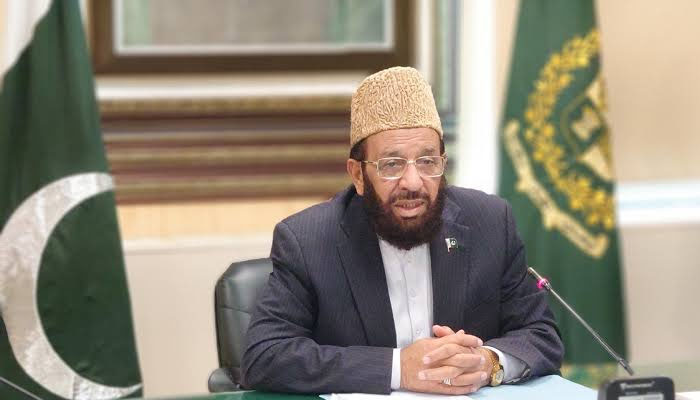
LAHORE: Punjab University has strongly denied allegations recently levelled by two former female athletes, describing the claims as part of a coordinated campaign aimed at damaging the institution’s reputation during its ongoing admissions season.

According to university spokesperson Dr. Khurram Shehzad, Punjab University has witnessed an unprecedented response to admissions this year, with more than 85,000 applications received for various academic programmes by July 31. The university also recorded its highest-ever participation in the entry test, while the application deadline remains August 4. He claimed that the institution’s success had prompted certain groups to launch what he termed a deliberate propaganda campaign.

The spokesperson said the controversy involving the two former sports students stemmed from disciplinary issues rather than the serious allegations circulated on social media. He maintained that the matter originated after a dispute between members of the girls’ sports hostel and disagreements related to team selection.

According to the university, the students were involved in repeated altercations with fellow athletes, prompting the hostel administration to initiate an inquiry. Pending the outcome of the investigation, the students concerned were instructed to vacate the hostel. However, the university alleged that they refused to comply and later became involved in another confrontation, after which police were called following an emergency complaint. The incidents led the hostel inquiry committee to hold emergency meetings and ultimately order the closure of the girls’ sports hostel.

The university further stated that one of the former athletes was not selected for the baseball team because of disciplinary concerns rather than sporting performance. It alleged that she later threatened to leave the university if she was not included in the squad and voluntarily applied to withdraw her original academic documents. During the document collection process, the university claims she, along with another former student and several others, attempted to pressure the administration by threatening to release a video portraying an alleged suicide attempt if their demands were not met.

Punjab University said both students voluntarily collected their academic documents and left the institution. It also claimed that one of them subsequently joined another university’s sports team while Punjab University went on to win the championship without her.

The university said it possesses evidence supporting its position and confirmed that faculty members, staff, and female students from the Department of Sports have submitted a formal complaint to the cybercrime authorities against the two former athletes and individuals allegedly involved in what it described as an organised campaign against the institution. The administration condemned attempts to use former students for what it called vested interests and reaffirmed its commitment to protecting the university’s reputation through legal channels

Similar Posts

  • |

    Electricity tariff may rise by Rs2.50 per unit as July FCA pushes recovery above Rs34bn

    ISLAMABAD: Electricity consumers across Pakistan could face an additional burden of around Rs2.50 per unit as the government moves to recover more than Rs34 billion through the July 2026 monthly Fuel Charges Adjustment (FCA), according to sources. The proposed increase is expected to affect consumers of distribution companies (Discos) as well as K-Electric, with the final adjustment to be determined by the National Electric Power Regulatory Authority (Nepra) after reviewing the relevant power purchase and generation costs. Sources said the expected positive FCA for July has largely been driven by higher electricity consumption during the peak summer season and greater reliance on expensive generation sources. Among the key factors behind the anticipated increase are the use of liquefied natural gas (LNG) procured from the spot market and furnace oil to meet additional electricity requirements, particularly during periods of high demand. June FCA already approved The expected July adjustment comes after Nepra approved a positive FCA of Re0.7503 per unit for electricity consumed in June 2026. The adjustment was lower than the Rs1.20 per unit sought by the Central Power Purchasing Agency-Guaranteed (CPPA-G). Under the FCA mechanism, variations in fuel costs and other electricity generation and purchase-related expenses are passed on to consumers through periodic adjustments. For July, CPPA-G will submit its relevant claims to Nepra, which will examine the costs and determine the admissible adjustment before issuing separate decisions for the respective distribution companies. Multiple costs to be examined The regulator is expected to assess several components included in the FCA claim before determining the final amount recoverable from consumers. Separate adjustments will subsequently be calculated for each Disco after taking into account electricity purchased through CPPA-G, bilateral arrangements with small power producers and captive power producers, as well as electricity supplied under net-metering arrangements. The final impact on consumers could therefore vary depending on the individual power procurement mix and applicable tariff structure of each distribution company. Expensive generation raises concerns The expected tariff increase has emerged at a challenging time for Pakistan’s industrial sector, where electricity prices remain a major concern for manufacturers and exporters. Industrial consumers are already facing pressure from elevated production costs, while exporters are also dealing with uncertainty caused by deteriorating security and economic conditions in the Middle East. The latest FCA discussion has also brought the issue of partial-loading charges under scrutiny. During a recent hearing, Nepra raised questions over approximately Rs4.9 billion in partial-loading costs and asked CPPA-G to explain the reasons behind the additional expenditure and measures being considered to control it. Solar power changes demand pattern CPPA-G told the regulator that the partial-loading charges were not primarily the result of inefficient operation by power plants. Instead, the agency attributed the costs largely to changes in electricity consumption patterns caused by the rapid expansion of rooftop solar generation. According to CPPA-G, daytime demand from the national grid has declined as more consumers generate electricity through rooftop solar systems. Conventional power plants are consequently required to operate below their optimum capacity during solar-generation hours. However, demand rises again in the evening when solar generation falls, forcing grid-connected power plants to increase generation quickly. This change in the daily demand curve has created additional operational costs for the power system. The authority noted that partial-loading charges recorded in June 2026 were around Rs1 billion higher than the corresponding amount in June 2025, highlighting the growing financial impact of the changing electricity demand pattern. Plant shutdowns could increase costs The Independent System and Market Operator (ISMO) also informed the regulator that shutting down power plants during periods of lower demand would not necessarily provide a cheaper solution. According to ISMO, taking plants completely offline to avoid partial-loading charges could result in substantial start-up expenses when the units are required again to meet evening demand. The issue has therefore become increasingly important as the rapid growth of distributed solar generation continues to alter the traditional pattern of electricity consumption. Exporters seek cheaper fuel options Amir Sheikh, a prominent textile exporter, called for the removal of the levy imposed on high-speed diesel and furnace oil-related generation costs, arguing that furnace-oil-based power plants could offer an alternative to expensive RLNG-fired generation under certain circumstances. He maintained that allowing more flexible use of available generation sources could help reduce the overall cost of electricity, particularly during periods when LNG prices remain elevated. Sheikh also proposed a change in the way FCA-related surcharges are calculated. He suggested that the additional charges should be recovered on the basis of projected electricity consumption rather than only through the conventional mechanism, similar to the approach followed under quarterly tariff adjustments (QTA). Falling demand creates another challenge Another concern raised during the discussion was the continuing decline in electricity demand and its possible implications for future tariff adjustments. Rehan Javed highlighted the potential impact of lower electricity consumption on the power sector’s financial structure, particularly as fixed system costs are spread over a smaller volume of electricity sales. The Ministry of Energy’s Power Division, however, said the decline in demand was largely linked to the increasing number of consumers using net-metering facilities. The ministry maintained that although distributed solar generation was changing electricity consumption patterns, its impact on future quarterly tariff adjustments would not necessarily be as severe as feared by industrial consumers. Government seeks to avoid costly LNG purchases The Power Division further explained that electricity demand was being managed in a manner designed to reduce dependence on expensive RLNG spot-market cargoes. Officials said excessive reliance on spot LNG during the summer could significantly increase power generation costs and ultimately translate into higher electricity tariffs for consumers. The government is therefore attempting to balance electricity availability, fuel costs and demand management while dealing with the changing structure of Pakistan’s power market. If Nepra ultimately approves an FCA close to the expected Rs2.50 per unit, consumers could face another substantial increase in their electricity bills. The final adjustment, however, will depend on Nepra’s assessment of CPPA-G’s July claim and the costs deemed

  • |

    UAE to charge music licensing fees at cafes, hotels and malls

    DUBAI: The United Arab Emirates is set to introduce licensing fees for playing music at cafes, hotels, malls and other commercial venues. According to UAE authorities, a music licence will be required for commercial use of music from December. The new fee will apply to businesses and commercial establishments that play music for customers. The licence will remain valid for one year. Businesses will be required to renew it annually to continue using music commercially. Authorities said educational institutions and government organisations will be exempt from the licensing fee. Non-commercial events will also not be required to pay the fee. The new licensing system has been introduced to protect the copyright and intellectual property rights of singers and other music creators. Officials said the system is intended to ensure that artists and rights holders receive appropriate protection when their music is used commercially. Authorities have also warned that action may be taken against establishments that play music without obtaining the required licence. The new rules are expected to affect a wide range of commercial venues across the UAE, including hospitality and retail businesses.

  • | |

    Mir Raza murder probe hits geo-fencing hurdles, po…

    KARACHI: Investigators probing the murder of young businessman Mir Raza are facing challenges in completing geo-fencing around the crime scene, with the passage of several days making it harder to accurately reconstruct movements in the area. According to investigative sources, the crime scene is located near a hilly area that has been subjected to geo-fencing. Mobile towers belonging to three different telecom companies are situated around the location, allowing investigators to collect data on mobile activity in the vicinity. Sources said geo-fencing has so far produced location data covering several blocks of Gulistan-i-Jauhar. However, because considerable time has elapsed since the incident, investigators are finding it difficult to establish which individuals were present near the crime scene at the relevant time. Police have also collected various pieces of evidence from the surrounding area. Investigators reportedly conducted a search within a radius of around 500 metres from the location where the body was found. Meanwhile, the newly formed investigation committee has obtained details linked to Mir Raza’s smartwatch. Investigators are now attempting to retrieve the device’s complete data, which could potentially provide additional information about his movements and activities before his death. The investigation remains ongoing as authorities work to combine digital records, physical evidence and device data to determine what happened in the final hours of Mir Raza’s life.

  • |

    Anam Uzair conquers Pakistan’s first 100km trail

    Pakistani mountaineer and trail runner Anam Uzair has achieved another major milestone by winning the country’s first 100-kilometre Galiyat Mountain Trail Ultra Marathon. The demanding race took participants through challenging mountain terrain, dense forests and areas exposed to natural and wildlife-related risks. Anam delivered an outstanding performance to secure victory in the gruelling competition. Speaking about her achievement, Anam said she was dedicating the victory to all Pakistani women, especially female runners. She said she hoped to take on more difficult and unique challenges in the future and represent Pakistan on the international stage. Anam acknowledged that completing the 100km trail was far from easy. She said she was aware of the dangers involved in mountain activities and trail running. According to her, participants had to remain alert to severe weather conditions, including the possibility of lightning. She said trail running in Galiyat also presented a significant challenge because of the region’s wildlife. Recalling one of her training experiences, Anam said she had previously completed a 40km trial run as preparation for the ultra marathon. During that run, she spotted a leopard sitting on her route about 200 feet away. She said the experience initially highlighted the dangers of running through the mountainous terrain. However, facing such challenges gradually helped her overcome her fear. Anam said she now trains every day and considers physical fitness an essential part of life. She urged people to make regular exercise and training part of their lifestyle, regardless of whether they participate in competitive events. She said fitness should not be limited to professional athletes or runners. Anam also revealed that she already has another challenging goal in mind for the future. She said she intends to take on the next difficult challenge for Pakistan and hopes to continue bringing recognition to the country through mountaineering and trail running. Her victory in the inaugural 100km Galiyat Mountain Trail Ultra Marathon marks another significant achievement in Pakistan’s growing endurance sports community.

  • | |

    Content creator killed in broad-daylight shooting …

    TAXILA: A female TikTok content creator was shot dead and her teenage sister critically wounded in a broad-daylight attack near the Taxila bypass on GT Road, police said. According to police sources, the sisters were travelling in their car when a motorcyclist intercepted them near the bypass and opened fire. Both sustained multiple bullet wounds, while their vehicle lost control and crashed into a dumper. The content creator died at the scene, while her critically injured sister was initially taken to Tehsil Headquarters Hospital, Taxila, before being shifted to Islamabad for further treatment. The victim’s brother told police that he had nominated two suspects in the case, alleging that a financial dispute between the woman and the accused had led to the targeted attack. Police registered a case and launched an investigation into the shooting. In a separate incident in Attock, police registered a target-killing case following the shooting deaths of two brothers in Malho village, within the jurisdiction of Rango Police Station in Hazro. Meanwhile, a 13-year-old boy drowned while swimming in a village pond in the Chappri area of Jand. Rescue 1122 officials recovered the boy’s body and shifted it to Tehsil Headquarters Hospital. Police registered a case and began an investigation into the incident.

  • | |

    Pakistan unveils four-year Hajj policy

    The government has introduced a four-year Hajj policy covering arrangements from 2027 to 2030. Federal Minister for Religious Affairs Sardar Muhammad Yousaf presented the policy on Wednesday. He described it as a major step toward improving and modernising Hajj arrangements in Pakistan. Speaking at a briefing, the minister said this was the first time the government had introduced a four-year Hajj policy. He said the initiative would provide a long-term framework for organising the pilgrimage. Yousaf said the policy had been prepared under the guidance of Prime Minister Shehbaz Sharif. It focuses on technology, transparency and improved services for pilgrims. According to the minister, the new framework aims to bring Pakistan’s Hajj arrangements closer to international standards. It will also introduce several new facilities for pilgrims. For the first time, applicants will have access to a registration and waiting-list system. The government expects the system to make the process more organised and transparent. The minister said the government and private Hajj schemes would retain their existing quota division. Sixty per cent of the quota will remain with the government scheme, while private operators will receive 40 per cent. The Ministry of Religious Affairs will continue to oversee and regulate Hajj arrangements. It will also monitor the performance of private Hajj companies. Under the new policy, applicants will be able to enter the pilgrims’ list after paying 10 per cent of the required amount. The government has also planned greater transparency in procurement. Purchases made in Pakistan and Saudi Arabia will be carried out through transparent procedures. Yousaf said any money remaining after meeting the required expenses would be returned to the pilgrims. The measure is aimed at improving financial transparency and protecting the interests of Hajj applicants. The government also plans to change the way private Hajj companies are monitored. Their registration and oversight will not depend only on the quota allocated to them. Instead, their performance will be an important factor in determining their registration and continued participation in the Hajj programme. A digital complaint-resolution system is also being introduced. Pilgrims will be able to submit complaints and seek quick action through the new system. An appeal mechanism will also be established. This will provide pilgrims with another channel to challenge decisions or seek resolution of their complaints. The minister said the government would also improve training programmes for Hajj pilgrims. The aim is to prepare pilgrims more effectively before their departure for Saudi Arabia. The Hajj Muhafiz Scheme will continue under the new policy. The government considers the scheme an important part of its arrangements for pilgrims. Yousaf said the new policy had been developed in line with Saudi Arabia’s Vision 2030. The framework is intended to improve coordination and service delivery during the pilgrimage. The minister said the government’s objective was not limited to managing logistical arrangements. It also wanted to ensure that Pakistani pilgrims received a dignified and comfortable Hajj experience. The estimated cost of the government Hajj package is expected to remain between Rs1.2 million and Rs1.3 million. However, the final cost may depend on various arrangements and expenses associated with the pilgrimage. Yousaf also clarified that any increase or decrease in Pakistan’s Hajj quota would require a decision from the federal cabinet. He said Pakistan had received recognition and awards for its Hajj arrangements in the past. The government now wants to further improve the system through long-term planning and greater use of technology. The four-year policy is expected to provide greater continuity in Hajj preparations. Officials believe the long-term framework will also make planning easier for both the government and pilgrims.

Leave a Reply

Your email address will not be published. Required fields are marked *