pti backs new
| |

PTI backs new provinces with constitutional consen…

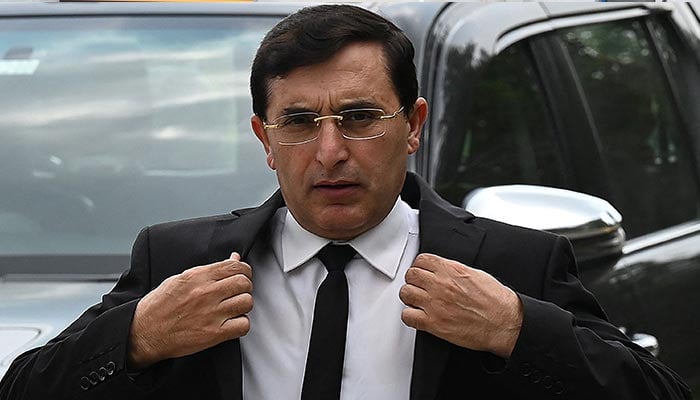
PTI Chairman Gohar Ali Khan has voiced support for the creation of new provinces, saying administrative reforms are needed to improve governance, but stressed that any such move must be carried out strictly under the Constitution and with broad political consensus.

Speaking during a television interview on Thursday, Gohar described the formation of new provinces as a national necessity. However, he emphasized that constitutional requirements must be fulfilled, including securing a two-thirds majority in the relevant provincial assemblies before any proposal could move forward.

The PTI chairman also expressed skepticism about Prime Minister Shehbaz Sharif completing his full five-year constitutional term, though he did not elaborate on the reasons behind his remarks.

The debate over creating new provinces gained momentum after Interior Minister Mohsin Naqvi recently argued that Pakistan’s governance system had become ineffective and required major structural reforms, including the establishment of additional administrative units. Naqvi later clarified that his comments reflected concerns about the country’s governance over several decades rather than criticism of the current government.

The proposal has drawn mixed political reactions. Murad Ali Shah firmly rejected any suggestion of dividing Sindh, stating that the provincial assembly has repeatedly passed unanimous resolutions opposing such a move. He maintained that any change would require constitutional approval through a two-thirds majority in the concerned assembly.

Meanwhile, Prime Minister’s Adviser Rana Sanaullah distanced the government from Naqvi’s remarks, describing them as the minister’s personal opinion. He said any discussion on creating new provinces should take place in parliament and follow the constitutional process.

Sanaullah noted that establishing new provinces involves complex constitutional, financial and administrative considerations, including representation in parliament and resource distribution.


Similar Posts

  • Russian Man Causes Chaos on Flight, Denied Entry to Thailand

    BANGKOK – A Russian passenger was denied entry to Thailand after causing significant disruption on a flight from Vietnam, behaving erratically, stripping off his clothing, and attempting to force open an aircraft door mid-flight. British Airways Upgrades Passenger Who Tackled Drunk Russian on Flight to Bangkok The incident occurred on January 29, 2026, aboard Thai […]

  • | |

    Petrol price reduced slightly as diesel price incr…

    The State Bank of Pakistan (SBP) has decided to keep its benchmark policy interest rate unchanged at 11.50% following the latest meeting of its Monetary Policy Committee (MPC). The decision reflects the central bank’s cautious approach as it continues to monitor inflation, economic growth, and global developments that could influence Pakistan’s financial outlook. The policy rate has remained at 11.50% since April 27, with policymakers choosing to maintain the current stance despite recent inflationary pressures. During the meeting, the committee reviewed key economic indicators, inflation trends, and the potential impact of geopolitical tensions in the Middle East on Pakistan’s economy. Speaking at a press conference, SBP Governor Jameel Ahmad said inflation had eased significantly during the first half of the fiscal year. Average inflation between July and February stood at 5.5%, remaining within the lower end of the central bank’s target range. However, rising global oil prices, higher food costs, and increased shipping expenses triggered by tensions in the Middle East placed renewed pressure on prices in the following months. According to the central bank, inflation rose to 11.7% in May before easing slightly to 11.1% in June. The governor expressed optimism that inflation would begin to decline again from July, with a more noticeable improvement expected after September. For the current fiscal year, the SBP projects average inflation to remain close to 7%. The governor also highlighted improvements in Pakistan’s broader economic indicators. He noted that the country’s current account deficit narrowed significantly during the previous fiscal year to $139 million, while the current fiscal year’s deficit is expected to remain between zero and one percent of GDP. Strong remittance inflows have played a major role in supporting the external sector, with overseas Pakistanis expected to send around $44 billion this fiscal year, up from $41.6 billion in the previous year. The SBP also expects exports to improve gradually with government support, stronger performance from the information technology sector, and growth in food exports. While imports have increased, improved external financing has helped meet the country’s payment needs without creating excessive pressure on foreign exchange reserves. Pakistan’s foreign exchange reserves are projected to remain around $20.2 billion by the end of the year, while the country is expected to meet its external debt obligations through a combination of repayments, refinancing arrangements, and continued financial inflows. The central bank reaffirmed that it will continue to monitor domestic and international economic developments before making any future changes to monetary policy.

  • | |

    NCCIA summons Asad Toor over ‘false information?…

    The National Cyber Crime Investigation Agency (NCCIA) has summoned journalist Asad Ali Toor for questioning over allegations of spreading false or misleading information online. According to the notice issued by the agency, the state has been named as the complainant in the case. The inquiry relates to allegations of the dissemination, transmission or public display of information described as false or fake. The proceedings have been initiated under Section 26A of the Prevention of Electronic Crimes Act (Peca) 2016, which deals with the dissemination of false and fake information. The NCCIA has directed Toor to appear before its Cybercrime Reporting Centre in Islamabad at 11am on July 31. The notice warned that failure to appear without a lawful reason could result in the inquiry continuing in his absence. The agency said non-compliance could also lead to action under Section 174 of the Pakistan Penal Code, which concerns failure to attend when ordered by a public servant. Toor confirmed receiving the summons through a post on X. He shared an image of the notice and accompanied it with verses by revolutionary poet Faiz Ahmed Faiz. The development has also raised concerns among journalist organisations over press freedom and the treatment of journalists facing legal proceedings. The National Press Club (NPC) in Islamabad criticised the notice and expressed concern over what it described as growing pressure on the media. The press club said freedom of expression is protected under the Constitution. It argued that journalists should not face legal pressure or retaliation simply for carrying out their professional responsibilities or expressing critical views. The NPC called on relevant institutions to perform their duties within the framework of the law, the Constitution and fundamental rights. It also stressed that free, responsible and safe journalism is essential for a healthy democratic system. The press body urged authorities to withdraw the notice and ensure that journalists’ constitutional and legal rights are protected. It also warned that measures restricting press freedom could create further insecurity among members of the journalist community. This is not the first time Toor has faced legal action under cybercrime laws. He was arrested in 2024 in a case registered under Peca over allegations of running a campaign against state institutions. His arrest at the time prompted criticism from sections of the journalist community. He was subsequently released.

  • | |

    Fazlur Rehman welcomes SC order for Imran’s hosp…

    Jamiat Ulema-e-Islam-Fazl (JUI-F) chief Maulana Fazlur Rehman has welcomed the Supreme Court’s decision to transfer Pakistan Tehreek-e-Insaf (PTI) founder Imran Khan to hospital. Speaking to reporters outside Parliament, Fazlur Rehman described the decision as a positive development. He said the hospital transfer should have been ordered much earlier. The JUI-F chief said the current political situation in the country should be assessed carefully before drawing conclusions. He also called for issues concerning the provinces to be discussed openly rather than reduced to simple political positions. Fazlur Rehman said the opposition had an important responsibility in a parliamentary system. He said opposition parties should identify weaknesses and shortcomings in government policies. He stressed that debates on provincial matters should focus on both principles and practical realities. According to him, political issues require serious discussion instead of being viewed only through the lens of support or opposition. The JUI-F chief also criticised what he described as a tendency in journalism to divide every issue into opposing camps. He said drawing a rigid line between supporting and opposing a position had contributed to worsening national problems. His remarks came after the Supreme Court ordered Imran Khan’s transfer to Shifa International Hospital for medical treatment. The court also directed authorities to facilitate regular meetings between Imran and his family. The ruling has been welcomed by several political figures, including members of the opposition. The court has also ordered the formation of a medical board to assess Imran’s condition and directed that his personal physician be given access.

  • | |

    AJK elections, two polling stations set up in Mult…

    MULTAN: Preparations are in full swing in Multan for the second phase of the Azad Jammu and Kashmir (AJK) elections, with authorities establishing two polling stations to facilitate voters registered in the constituency. According to election officials, the polling stations have been set up for LA-42 Valley-III, where a total of 966 registered voters are expected to cast their ballots. Polling for the second phase of the AJK elections is scheduled to take place on August 2. Police said comprehensive security arrangements have been finalised to ensure a peaceful voting process. A total of 295 police personnel have been deployed at the two polling stations to maintain law and order and provide security for voters, polling staff and election materials. Election authorities said all necessary arrangements are being completed ahead of polling day. Officials confirmed that ballot papers, ballot boxes and other election materials will be delivered to the polling stations before voting begins. The contest in the constituency is expected to be closely watched, with four candidates in the race. The main competition is anticipated between Pakistan Muslim League-Nawaz (PML-N) candidate Syed Wajid Ali and Pakistan Peoples Party (PPP) candidate Asim Sharif Butt. The second phase of the AJK elections will cover three districts of Muzaffarabad Division as well as 12 refugee seats, making it a key stage in the electoral process. Authorities have urged voters to cooperate with security personnel and follow election rules to ensure a smooth and transparent polling process. Officials expressed confidence that the arrangements in Multan will enable eligible voters to exercise their democratic right in a safe and orderly environment.

  • |

    Global chip market set to cross $1 trillion as AI demand surges

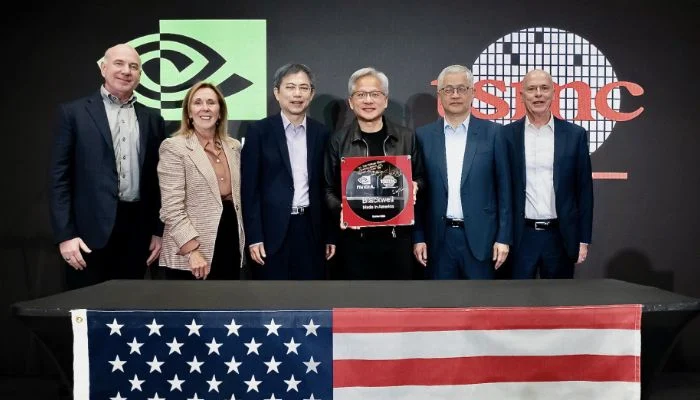
    The global semiconductor industry is on track to surpass $1 trillion in annual revenue in 2026, driven largely by the rapid expansion of artificial intelligence infrastructure. AI-related chips are reshaping the semiconductor business. Although advanced AI processors represent only a tiny share of total chip shipments, they are expected to generate almost half of the industry’s overall revenue this year. The surge reflects the enormous investment being made in AI data centres around the world. The five largest global technology hyperscalers have allocated more than $600 billion to AI data-centre infrastructure in 2026. The growing demand is also increasing the importance of advanced chip manufacturing. Producing a sophisticated 3-nanometre processor can take around six months, highlighting the complexity and limited capacity of the global supply chain. Taiwan Semiconductor Manufacturing Company (TSMC) remains central to the production of the world’s most advanced processors. The company manufactures an estimated 90% of the most sophisticated chips, making it a critical supplier for the rapidly expanding AI industry. This concentration has also raised concerns about supply-chain vulnerability. Any major disruption to advanced chip production could affect technology companies, AI developers and governments that are investing heavily in artificial intelligence. Nvidia has emerged as one of the biggest beneficiaries of the AI boom. The company reported revenue of $215.9 billion, strengthening its position as a leading supplier of processors used to train and operate advanced AI models. The chip industry’s challenges extend beyond processors. High-bandwidth memory (HBM), which is essential for AI computing, has become another major supply constraint. Much of the available HBM production capacity is already committed through 2026. The global memory market is also expected to generate substantial revenue, with estimates putting fiscal 2026 revenue at around $594.7 billion. The figures underline how quickly AI is transforming the global semiconductor industry. Demand is shifting toward fewer but far more valuable advanced chips, while manufacturers face pressure to expand capacity and secure critical components. As AI investment continues to grow, semiconductor production is increasingly becoming a strategic issue for technology companies and governments. The ability to manufacture advanced processors and memory at scale could determine how quickly the next phase of AI development progresses.

Leave a Reply

Your email address will not be published. Required fields are marked *