ajk elections two
| |

AJK elections, two polling stations set up in Mult…

MULTAN: Preparations are in full swing in Multan for the second phase of the Azad Jammu and Kashmir (AJK) elections, with authorities establishing two polling stations to facilitate voters registered in the constituency.

According to election officials, the polling stations have been set up for LA-42 Valley-III, where a total of 966 registered voters are expected to cast their ballots. Polling for the second phase of the AJK elections is scheduled to take place on August 2.

Police said comprehensive security arrangements have been finalised to ensure a peaceful voting process. A total of 295 police personnel have been deployed at the two polling stations to maintain law and order and provide security for voters, polling staff and election materials.

Election authorities said all necessary arrangements are being completed ahead of polling day. Officials confirmed that ballot papers, ballot boxes and other election materials will be delivered to the polling stations before voting begins.

The contest in the constituency is expected to be closely watched, with four candidates in the race. The main competition is anticipated between Pakistan Muslim League-Nawaz (PML-N) candidate Syed Wajid Ali and Pakistan Peoples Party (PPP) candidate Asim Sharif Butt.

The second phase of the AJK elections will cover three districts of Muzaffarabad Division as well as 12 refugee seats, making it a key stage in the electoral process.

Authorities have urged voters to cooperate with security personnel and follow election rules to ensure a smooth and transparent polling process. Officials expressed confidence that the arrangements in Multan will enable eligible voters to exercise their democratic right in a safe and orderly environment.

Similar Posts

  • | |

    Gen Z group behind India’s cockroach protest…

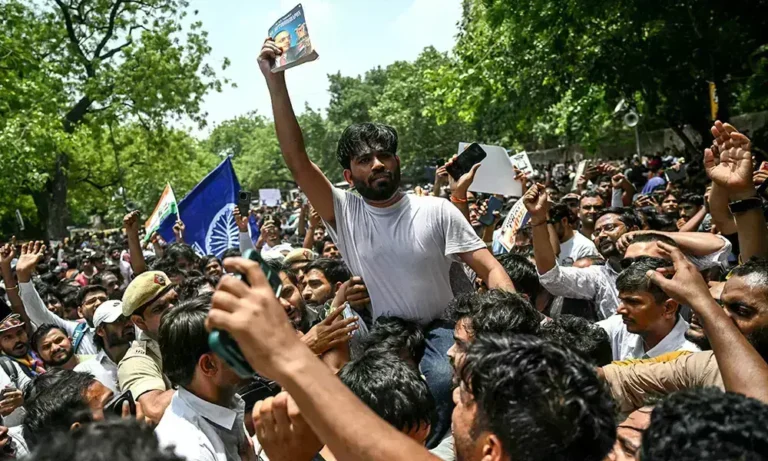
    The Cockroach Janta Party, the youth movement that forced a top Indian minister to quit, says it has no plans yet to contest elections despite its growing influence among young voters. Abhijeet Dipke, the founder of the group, told a foreign news agency on Tuesday that the organization intends to stay focused on grassroots mobilization rather than rush into formal politics. The statement comes weeks after protests led by Dipke swept through Delhi and spread to other parts of the country, ultimately pressuring Prime Minister Narendra Modi’s education minister to step down. Speaking from his family home in Maharashtra, Dipke said the group wants to first understand what young Indians actually want before deciding its next move. He announced that supporters would gather for a two day meeting starting Wednesday to map out priorities for the movement going forward. “The purpose will be to form the agenda for the Cockroach Janta Party and discuss how we can take this social movement forward,” Dipke said, as well wishers arrived at his home carrying flowers and gifts. Dipke made clear that entering electoral politics is not on the table for now, though he left the door open for the future. He said he would only consider building a formal party if a clear majority of supporters pushed for it, and that any decision to contest elections would come later, guided by public sentiment rather than a fixed timeline. He argued that Indian politics does not currently need another party competing for power. Instead, he said, the country requires a broader public campaign aimed at restoring faith in institutions that have lost credibility among ordinary citizens. Dipke said the group’s immediate priority is to give voice to the frustrations of India’s youth, many of whom, in his view, no longer trust the country’s political class, judiciary or press. He emphasized the importance of listening directly to young people before setting any formal agenda, saying it was necessary to understand their actual concerns rather than assume them. Dipke made these comments while still recovering from typhoid, which he contracted during the weeks he spent camped out during the Delhi demonstrations. A hero’s welcome at home Following the 36 day protest, Dipke traveled back to his hometown of Chhatrapati Sambhajinagar, where hundreds of supporters lined up outside his home to greet him, many carrying flowers in celebration of the movement’s success. Dipke’s rise to prominence has been rapid. After returning to India in June from his studies in the United States, he became a household name almost overnight when his call to protest against leaked medical entrance exam papers pulled tens of thousands of young demonstrators onto the streets of the capital. The pressure campaign achieved a significant result on July 25, when Education Minister Dharmendra Pradhan resigned from his post. Authorities had attempted to disperse the crowds using tear gas and baton charges, but the demonstrations continued regardless. In the aftermath, the government announced tougher legal penalties for those involved in leaking exam papers and formed a committee to reassess the broader examination system. The stakes attached to these entrance exams are enormous for India’s youth. Millions of students spend years preparing for them, viewing a strong result as their surest route to stable, well paying careers and financial security for their families. Wary of political traps Dipke explained that he is avoiding a formal political launch partly out of concern that the government could use investigations or legal pressure to undermine the party’s leadership if it formalized too quickly. He also said he has no intention of aligning the movement with any existing political party, even as opposition figures in India have tried to capitalize on the rare momentum the protests created against Modi’s government. Some of that caution appears to draw on regional experience. In neighboring Bangladesh, a youth led party that emerged after mass protests ousted long time leader Sheikh Hasina in 2024 went on to perform poorly in this year’s elections, a result that may be shaping how Dipke approaches the question of formal politics in India. Political observers say the true test of whether young Indians’ frustration translates into votes will come in elections scheduled for next year in Uttar Pradesh, India’s most populous state, along with Punjab and Modi’s home state of Gujarat. A bigger risk for the ruling Bharatiya Janata Party could emerge in the 2029 general election if the Cockroach Janta Party evolves into a formal political force by then. Political analyst Amitabh Tiwari said the movement is unlikely to cause major damage to the BJP in upcoming state elections but could grow into a more serious factor by the time of the next general election. He added that if the group builds a party structure, continues championing youth causes and sustains its current momentum, it stands a real chance of attracting broader support. Security concerns following the protests remain high. More than a dozen police officers have been stationed outside Dipke’s family home after he received threats on social media once his profile surged following the initial call to protest in May, a period in which the Cockroach Janta Party’s Instagram following grew to 22 million within days. Dipke said his greatest worry is not for his own safety but for that of his parents. He expressed relief at being back home and said he trusts that government provided security will keep his family safe in the coming weeks. The episode adds to a growing pattern across South Asia, where youth led movements have increasingly forced political concessions from long entrenched governments, even when those movements stop short of transforming into electoral parties themselves.

  • Bay of Bengal system weakens, rain expected in Sindh

    Karachi -The Pakistan Meteorological Department (PMD) has forecast rain in Sindh beginning this evening. According to the PMD, the intense low-pressure system that developed over the Bay of Bengal has started to weaken. The system has downgraded from a deep depression to a depression and is currently located near southern Madhya Pradesh, India. Over the next 12 hours, it is expected to weaken further into a low-pressure area. The department said the system is likely to pass near parts of Sindh. Under its influence, monsoon currents from the Arabian Sea and the Bay of Bengal are entering the upper and central regions of Pakistan while a westerly weather system is also affecting the country’s northern areas. The PMD said that Tharparkar, Umerkot, Sanghar, Hyderabad and surrounding areas are expected to receive intermittent rainfall from this evening or tonight through August 2. In addition, Karachi is likely to experience rain from the evening of August 1 through August 2. Light to moderate rainfall is expected in most parts of the city while some suburban areas may receive heavy showers.

  • | |

    Iranian commander claims US, Israel failed to meet…

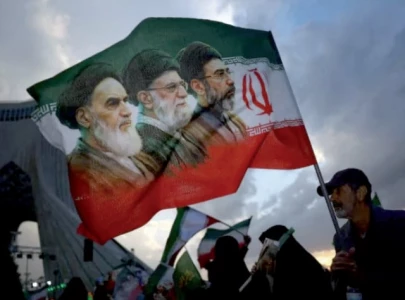
    TEHRAN: Iran’s Revolutionary Guard has claimed that the United States and Israel failed to achieve their objectives during the conflict with Iran, as Tehran indicated that negotiations with Oman over the Strait of Hormuz were nearing an agreement but would not immediately lead to the waterway’s reopening. Brig Gen Hassan Zadeh, commander of the Islamic Revolutionary Guard Corps’ Mohammad Rasulullah Corps in Tehran, said Iran’s military preparedness and public support had helped the country withstand the US and Israeli campaign. Speaking during an inspection of upgraded air-defence units, Zadeh said Washington and Tel Aviv had failed to accomplish their stated goals and were now facing questions from their own populations and political circles. Meanwhile, Iranian Foreign Minister Abbas Araqchi said talks with Oman over a temporary shipping arrangement in the Strait of Hormuz were progressing. However, he stressed that an agreement on a shipping route alone would not be sufficient to reopen the strategically important waterway. Iran has linked the reopening of the strait to several conditions, including an end to US threats and attacks, the lifting of sanctions and blockades, compensation for losses and the release of Iranian assets. Tehran has also rejected the previous traffic separation system used by vessels passing through the waterway. Oman described its discussions with Iran as positive and constructive while urging all sides to avoid actions that could undermine the negotiations. Muscat also condemned recent attacks on ships travelling through the strait without assigning responsibility. The developments come amid continued disruption to shipping in the Strait of Hormuz, a crucial route for global energy supplies. The United Arab Emirates said an oil-related vessel had been struck by a missile while transiting the waterway, although no injuries were reported. The UK Maritime Trade Operations agency also reported that a vessel caught fire after being hit by an unidentified projectile. The fire was later extinguished, with no environmental damage reported. The United States has said it expects an agreement that could restore commercial shipping and allow restrictions on Iranian ports to be eased. US Central Command said more than 30 vessels had been permitted to pass through the area for humanitarian purposes, while dozens of others had been stopped or subjected to military action. Iranian officials, however, maintain that the strait will only be reopened once Washington accepts Tehran’s demands. Iranian authorities have also warned that any future shipping arrangement must provide Iran with greater control over maritime traffic. The prolonged disruption has contributed to rising energy costs and increased prices for food and other essential goods in Iran, adding further pressure on the country’s economy as negotiations continue.

  • |

    Govt extends austerity measures to control expenditure

    The federal government has formally extended its existing austerity policy into the ongoing 2026-27 fiscal year as part of a continued effort to manage public spending and restrict non-essential state expenditures. Following an official decision reached by the federal cabinet to maintain spending controls across public sector institutions, the Ministry of Finance issued a detailed notification on Tuesday outlining the continuation of these operational guidelines. Under the reinforced financial regulations, the government has mandated the immediate abolition of all public sector positions across federal departments that have remained vacant for the past three years. Furthermore, the policy maintains a complete, ongoing prohibition on the creation of any new posts, while also extending strict limitations on the procurement of new machinery, official equipment, and public sector vehicles. In addition to procurement restrictions, the federal government has kept in place its ban on state-funded medical treatment abroad for officials, as well as restrictions on non-essential foreign travel funded at the government’s expense. However, the Ministry of Finance specified that certain essential service categories will remain exempt from the purchase ban. These exemptions cover ambulances, specialised mobile medical vehicles, fire-fighting engines, buses and vans intended for educational institutions, waste and garbage collection vehicles, and operational motorcycles.

  • | |

    President approves Nishan-i-Imtiaz for Strategic C…

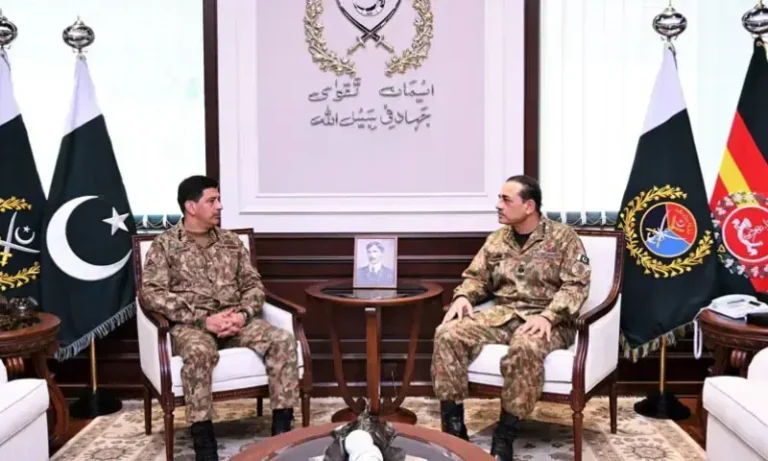
    President Asif Ali Zardari has approved the conferment of the Nishan-i-Imtiaz (Military) on General Syed Aamer Raza, the newly appointed Commander of the National Strategic Command (NSC). The announcement was made by the President’s Secretariat through a post on X, stating that the country’s highest civilian office had endorsed the prestigious military honour for General Raza in recognition of his distinguished service. General Raza has previously received the Hilal-i-Imtiaz (Military) and the Sitara-i-Basalat, reflecting a career marked by operational leadership and professional excellence. His latest recognition comes shortly after his promotion to the rank of four-star general and appointment as Pakistan’s first Commander of the National Strategic Command. The position was created as part of the sweeping reforms introduced under the 27th Constitutional Amendment, which reshaped the country’s higher defence structure. Under the new framework, the office of the Chairman Joint Chiefs of Staff Committee was abolished and replaced by the position of Chief of Defence Forces, a role currently held concurrently by Field Marshal Asim Munir as Chief of Army Staff. The National Strategic Command serves as the unified operational headquarters for Pakistan’s strategic forces, bringing together the strategic commands of the Army, Navy and Air Force under one command. Despite this restructuring, the National Command Authority, chaired by the prime minister, remains the country’s highest decision-making body on nuclear policy and strategic employment. General Raza was appointed to the post by Prime Minister Shehbaz Sharif on the recommendation of the Chief of Defence Forces. As provided under the amended Army Act, the appointment carries a three-year tenure. Before assuming his new responsibilities, General Raza served as Chief of General Staff, where he supervised key operational planning and played a central role in implementing military reforms introduced after the constitutional changes. He also oversaw organisational restructuring following last year’s conflict with India, including the establishment of the Army Rocket Force Command. Commissioned into the 6th Lancers in 1988 after graduating from the Officers Training School (OTS), General Raza has held several important command and staff appointments throughout his military career. These include commanding an armoured regiment, an armoured brigade, an infantry brigade in South Waziristan, an infantry division and Lahore’s IV Corps. He has also served as Chairman of Heavy Industries Taxila, Director General Weapons and Equipment, and Chief of Staff at II Corps.

  • | |

    Rabbis challenge Zohran Mamdani over Israel rhetor…

    New York City Mayor Zohran Mamdani met with Jewish religious leaders at City Hall as rabbis raised concerns about his public criticism of Israel and its potential impact on Jewish New Yorkers. The closed-door meeting brought together 10 rabbis representing Reform, Conservative, Reconstructionist and Orthodox Jewish communities. It was organized by the Mayor’s Office to Combat Antisemitism as part of efforts to strengthen communication with Jewish communities and address concerns about safety and antisemitism. Several participants urged Mamdani to reconsider the tone and frequency of his comments about Israel. They argued that his criticism of the Israeli government could contribute to feelings of insecurity among Jewish residents, particularly amid continuing concerns about anti-Jewish hate in New York City. Rabbi Rick Jacobs, president of the Union for Reform Judaism, spoke directly to the mayor during the discussion. Jacobs said he was willing to work with Mamdani’s administration but argued that the mayor’s repeated criticism of Israel was causing harm. The conversation was reportedly candid but respectful, with participants also discussing practical concerns affecting Jewish communities across the city. Rabbi Rachel Timoner said Mamdani listened carefully and responded with care during the meeting. Rabbi Jon Leener, meanwhile, encouraged City Hall to focus on issues such as security around synagogues rather than making unnecessary comments about the Israel-related conflict. The meeting comes as Mamdani’s administration continues to emphasize its commitment to combating antisemitism. The mayor appointed Phylisa Wisdom to lead the Mayor’s Office to Combat Antisemitism in February, describing Jewish safety, respect and belonging as priorities for his administration. Mamdani has repeatedly distinguished between criticism of Israel’s government and antisemitism. During a May news conference, he said his administration had a responsibility to keep Jewish New Yorkers safe while maintaining his position on Israeli government policies. He also said criticism of a government should not be confused with hatred toward people of a particular faith. City Hall has also highlighted its broader efforts to address anti-Jewish hate, including increased funding for hate-crime prevention and security initiatives. The administration has said its approach should go beyond responding to incidents and focus on preventing antisemitism. The latest City Hall meeting reflects the continuing challenge facing Mamdani as he attempts to maintain dialogue with New York’s diverse Jewish communities while remaining outspoken about the Israeli-Palestinian conflict. For the rabbis involved, the central issue remains Jewish safety and the atmosphere in New York City. For the mayor, the meeting provides another opportunity to demonstrate that political disagreements over Israel can coexist with his stated commitment to protecting and supporting Jewish New Yorkers.

Leave a Reply

Your email address will not be published. Required fields are marked *