|

Govt extends austerity measures to control expenditure

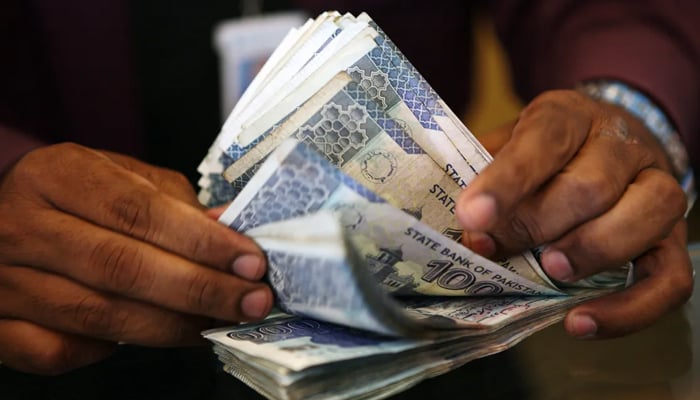
The federal government has formally extended its existing austerity policy into the ongoing 2026-27 fiscal year as part of a continued effort to manage public spending and restrict non-essential state expenditures.

Following an official decision reached by the federal cabinet to maintain spending controls across public sector institutions, the Ministry of Finance issued a detailed notification on Tuesday outlining the continuation of these operational guidelines.

Under the reinforced financial regulations, the government has mandated the immediate abolition of all public sector positions across federal departments that have remained vacant for the past three years.

Furthermore, the policy maintains a complete, ongoing prohibition on the creation of any new posts, while also extending strict limitations on the procurement of new machinery, official equipment, and public sector vehicles.

In addition to procurement restrictions, the federal government has kept in place its ban on state-funded medical treatment abroad for officials, as well as restrictions on non-essential foreign travel funded at the government’s expense.

However, the Ministry of Finance specified that certain essential service categories will remain exempt from the purchase ban. These exemptions cover ambulances, specialised mobile medical vehicles, fire-fighting engines, buses and vans intended for educational institutions, waste and garbage collection vehicles, and operational motorcycles.

Similar Posts

  • |

    Shah Rukh Khan’s King set for major box office clash in December

    Shah Rukh Khan’s upcoming action thriller King is gearing up for one of the biggest box office battles of the year as its scheduled December release places it alongside several highly anticipated Hollywood blockbusters. Directed by Siddharth Anand, King is set to arrive in cinemas on December 24, a date that will also see the release of major international films including Avengers: Doomsday, Dune 3, and Jumanji: Open World. The crowded release window is expected to create intense competition both in India and overseas, making it one of the most closely watched clashes of the holiday season. Among the Hollywood titles, Avengers: Doomsday is widely expected to be the strongest rival. The Marvel franchise has built an enormous fan base in India over the years, with several of its previous films enjoying record-breaking openings and impressive box office collections. Its popularity could present a significant challenge for King, particularly when it comes to attracting audiences during the festive period. The competition is expected to be even tougher in international markets. With three major Hollywood franchises arriving simultaneously, exhibitors may face difficult decisions regarding screen allocation and show timings. Large-scale global releases often dominate multiplex schedules, leaving less room for other films, even those led by major stars. Despite these challenges, the makers of King have shown confidence in the film’s potential and have reportedly decided to stick with the planned release date. Rather than avoiding the clash, the production team appears determined to let the film compete head-to-head with some of the biggest releases of the year. Industry observers believe that only a project of King’s scale, backed by Shah Rukh Khan’s global popularity, has the ability to stand alongside such powerful Hollywood franchises. The actor remains one of India’s biggest box office draws, and expectations surrounding the film have continued to grow since its announcement. Adding to the excitement is the fact that King will mark the first full-fledged on-screen collaboration between Shah Rukh Khan and his daughter, Suhana Khan. Fans are eager to see the father-daughter duo share screen space in what is expected to be a high-octane action entertainer. The film also boasts an impressive ensemble cast featuring Deepika Padukone, Abhishek Bachchan, Raghav Juyal, and Rani Mukerji in key roles, further raising anticipation among moviegoers. International distribution is being handled by Yash Raj Films, whose extensive global network and experience in releasing Indian films overseas could help maximize the film’s reach. Their expertise is expected to play an important role in securing favorable screens and show schedules across key international territories. As the countdown to December begins, King is shaping up to be one of the most talked-about releases of the year. Whether it can hold its own against three major Hollywood franchises remains to be seen, but the film’s star power, large-scale production, and strong cast have positioned it as a formidable contender in what promises to be an exciting holiday box office showdown.

  • Punjab prison reforms reviewed at CM task force meeting

    Lahore – An important meeting of the Chief Minister Punjab Task Force for Prisons was held at the Home Department. Task Force Chairman Rana Manan Khan chaired the meeting. IG Prisons Mian Salik Jalal, Additional Secretary Prisons Roman Burana, DIG Prisons Shaukat Feroz, Chief Psychologist Prisons Sadia Zafar and other relevant officials attended the meeting. The meeting received a detailed briefing on the Chief Minister Punjab’s Prison Reforms Agenda. It was informed that under the Chief Minister Punjab Prison Health Programme, every inmate undergoes medical tests as well as a psychological assessment upon admission to prison. The briefing revealed that 96,110 inmates have undergone health screening so far while psychological assessments and screenings of 107,851 inmates were completed from January to June. The meeting was informed that the Chief Minister Punjab Literacy Programme has been launched to provide education to inmates in prisons across Punjab. So far, 11,968 inmates have received education under the programme. For the convenience and welfare of inmates, Chief Minister Punjab Prison Welfare Stores have also been established in all prisons. Inmates have visited these stores 161,489 times with purchases worth Rs. 306 million made so far. The meeting also reviewed progress on the construction of new women’s prisons in Lahore, Faisalabad and Rawalpindi as well as a plan to increase inmate capacity through the construction of new prisons and additional barracks across Punjab. Task Force Chairman Rana Manan Khan said that efforts are continuing to reform inmates by providing them with a better prison environment and opportunities for training. He said citizens can book prison visits online from home to meet inmates in prisons across Punjab. So far, more than 60,000 citizens have visited inmates through the “Mulaqat App.” He added that a modern system has been introduced for the sale of products manufactured by inmates in prison industries enabling their hard work to be converted into economic support. The Task Force Chairman further said that after Faisalabad, Mianwali and Dera Ghazi Khan, Central Jail Lahore is also being shifted to solar power. He directed that the installation of modern cameras and other equipment in prisons across Punjab under the Safe Jail Project should be completed at the earliest.

  • |

    TikTok star Cesar Gastelum shot dead during livestream in Mexico

    Mexican social media influencer Cesar Gastelum was shot and killed while livestreaming in Culiacan. The city sits in the northwestern state of Sinaloa, a region long troubled by unrest. Gastelum had built a following of nearly 600,000 people on TikTok. He was known mainly for his comedy content and light-hearted videos. At the time of the attack, he was streaming live outside a fast-food restaurant with friends. Footage from the livestream showed two helmeted individuals approaching on a motorcycle. The driver reportedly opened fire directly at Gastelum during the broadcast. The attack unfolded in real time as viewers watched the stream online. A security official in Sinaloa confirmed Gastelum’s death shortly after the incident. Authorities said a major security operation was launched in response. Details about a possible motive have not yet been released publicly. According to Reuters, the killing adds to a pattern of violence in the region. Culiacan, the state capital, has seen ongoing clashes between rival criminal groups. These factions have been fighting for territorial control across the city for some time. Sinaloa has repeatedly made headlines in recent years over organised crime activity. The state is widely associated with one of Mexico’s most powerful drug cartels. Public killings and targeted attacks have periodically disrupted daily life in the region. The incident has drawn comparisons to another high-profile case from last year. In May 2025, Mexican beauty influencer Valeria Marquez was killed in a similar way. She was shot while livestreaming from a salon in Zapopan, Jalisco. Marquez, who was 23 at the time, was killed after a man entered the salon. Prosecutors said he opened fire before fleeing the scene afterward. Her case was later investigated using femicide protocols by local authorities. Both cases have renewed concern over the safety risks facing content creators in Mexico. Livestreaming has increasingly placed influencers in vulnerable, exposed situations during public appearances. Digital rights groups have previously called for stronger protections for online creators. Authorities have not indicated whether the two cases are connected in any way. Investigations into Gastelum’s death remain ongoing as officials gather further information. No arrests have been announced at this time.

  • | |

    Millions left in the dark as Cuba’s power grid c…

    HAVANA: Millions of Cubans were left without electricity after the country’s national power grid collapsed late Sunday, triggering another nationwide blackout and deepening an energy crisis that has already strained daily life across the Caribbean island. The state-owned power operator, Union Eléctrica de Cuba, confirmed the grid failure in brief statements posted on social media but did not immediately disclose the cause of the latest outage or provide a timeline for restoring electricity. The blackout affected much of the island, home to nearly 10 million people, and comes after three nationwide power failures in July, raising fresh concerns about the reliability of Cuba’s ageing electricity infrastructure. Residents in Havana and other major cities reported streets falling into darkness as homes, businesses and public services were left without power. The repeated outages have disrupted transportation, communications and essential services, adding to the hardships already faced by many Cubans. Energy experts say the country’s power system has come under increasing pressure as fuel supplies continue to shrink. Cuba has struggled to secure sufficient oil imports following tighter US sanctions and a reduction in support from traditional suppliers. The situation worsened after the United States imposed an oil blockade under President Donald Trump following Washington’s recognition of political changes in Venezuela earlier this year. Venezuela had long been Cuba’s primary source of crude oil, while fuel shipments from Mexico have also declined amid growing US pressure. With limited access to imported fuel, many of Cuba’s ageing thermal power plants have been forced to operate below capacity, making the national grid increasingly vulnerable to large-scale failures. In response to the worsening crisis, Havana has cautiously begun opening parts of its tightly controlled energy sector. The government recently approved its first foreign-backed fuel import venture and authorized nearly 200 Cuban businesses to participate in wholesale fuel distribution in an effort to improve fuel availability. Despite those reforms, analysts warn that restoring stability to Cuba’s electricity system will require significant investment in modern infrastructure and a more reliable supply of fuel. Authorities have not yet announced when power will be fully restored, while emergency teams continue working to stabilize the grid. The latest nationwide blackout underscores the growing challenges facing Cuba’s energy sector as economic pressures, ageing infrastructure and fuel shortages continue to test the resilience of the country’s electricity network. With blackouts becoming increasingly frequent, many residents fear the crisis could worsen unless long-term solutions are found.

  • | |

    Marc Anthony welcomes eighth child with wife Nadia Ferreira

    Latin music superstar Marc Anthony and his wife, former Miss Universe Paraguay contestant Nadia Ferreira, have officially welcomed their second child together, a baby girl named Myla, making the Grammy-winning singer a father of eight. ​The couple announced the joyous news through a joint Instagram post, sharing heartwarming photographs of their newborn alongside their three-year-old son, Marco. In their shared caption, the couple expressed their deep gratitude for the arrival of their daughter, writing: ​”What a great blessing to be able to share with you the arrival of our precious MYLA. You can’t imagine the happiness we have at home, we are over the moon.” ​Anthony, 57, and Ferreira, 27, first announced they were expecting again in January 2026 during their third wedding anniversary celebration. They later confirmed in March that they were expecting a girl by sharing a photo featuring tiny pink baby shoes. ​The birth of baby Myla marks another expansive chapter for Anthony’s blended family. In addition to his two children with Ferreira, the singer is father to six older children from previous relationships: daughter Arianna and son Chase with Debbie Rosado; sons Cristian and Ryan with ex-wife Dayanara Torres; and 18-year-old twins Max and Emme with ex-wife Jennifer Lopez.

  • | |

    Indian rupee hits record low against dollar

    The Indian rupee has dropped to its lowest level on record against the US dollar, highlighting increasing pressure on the country’s currency amid challenging global economic conditions. For the first time in history, one US dollar has reached the value of 97 Indian rupees, marking a new record low for the Indian currency. The latest decline reflects growing concerns over external economic pressures and weakening investor confidence. According to international reports, the Reserve Bank of India (RBI) stepped into the foreign exchange market to support the rupee and limit further losses. Central bank intervention is aimed at reducing excessive volatility and preventing sharp fluctuations in the value of the currency. The latest depreciation comes only a few months after the rupee had already reached a previous record low of 96.96 per US dollar in May 2026. The fall to 97 rupees per dollar now represents the weakest exchange rate ever recorded for the Indian currency. Economists say several factors are driving the rupee’s decline. One of the biggest reasons is the sharp rise in global crude oil prices, which has significantly increased India’s import bill. As one of the world’s largest importers of crude oil, India requires large amounts of US dollars to pay for energy imports, increasing demand for the American currency. Experts also point to the strengthening of the US dollar in international markets, continued foreign investment outflows and growing pressure from expensive imports. These factors have reduced demand for the rupee while increasing demand for dollars, causing further depreciation. Market analysts warn that a weaker rupee could increase the cost of imported goods, including fuel, machinery and industrial raw materials. Higher import costs may also contribute to inflation and raise production expenses for businesses across different sectors of the economy. Financial experts believe the Reserve Bank of India will continue monitoring developments closely and may introduce additional measures if market volatility continues. The central bank is expected to use its foreign exchange reserves and other monetary tools to stabilise the currency and restore investor confidence.

Leave a Reply

Your email address will not be published. Required fields are marked *