punjab prison reforms

Punjab prison reforms reviewed at CM task force meeting

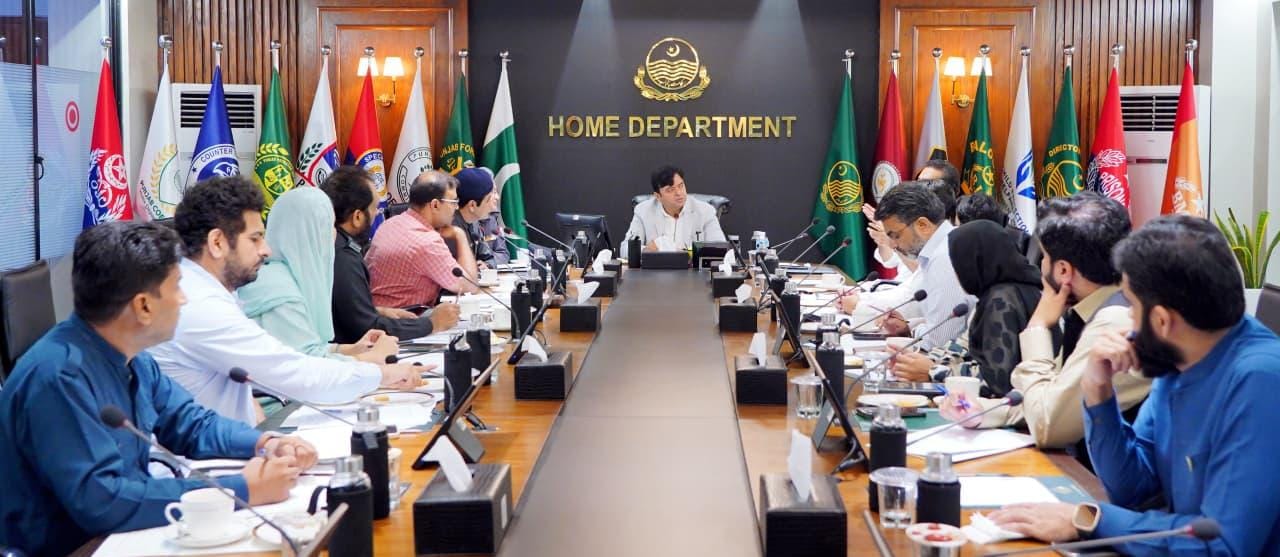
Lahore – An important meeting of the Chief Minister Punjab Task Force for Prisons was held at the Home Department. Task Force Chairman Rana Manan Khan chaired the meeting.

IG Prisons Mian Salik Jalal, Additional Secretary Prisons Roman Burana, DIG Prisons Shaukat Feroz, Chief Psychologist Prisons Sadia Zafar and other relevant officials attended the meeting.

The meeting received a detailed briefing on the Chief Minister Punjab’s Prison Reforms Agenda. It was informed that under the Chief Minister Punjab Prison Health Programme, every inmate undergoes medical tests as well as a psychological assessment upon admission to prison.

The briefing revealed that 96,110 inmates have undergone health screening so far while psychological assessments and screenings of 107,851 inmates were completed from January to June.

The meeting was informed that the Chief Minister Punjab Literacy Programme has been launched to provide education to inmates in prisons across Punjab. So far, 11,968 inmates have received education under the programme.

For the convenience and welfare of inmates, Chief Minister Punjab Prison Welfare Stores have also been established in all prisons. Inmates have visited these stores 161,489 times with purchases worth Rs. 306 million made so far.

The meeting also reviewed progress on the construction of new women’s prisons in Lahore, Faisalabad and Rawalpindi as well as a plan to increase inmate capacity through the construction of new prisons and additional barracks across Punjab.

Task Force Chairman Rana Manan Khan said that efforts are continuing to reform inmates by providing them with a better prison environment and opportunities for training.

He said citizens can book prison visits online from home to meet inmates in prisons across Punjab. So far, more than 60,000 citizens have visited inmates through the “Mulaqat App.”

He added that a modern system has been introduced for the sale of products manufactured by inmates in prison industries enabling their hard work to be converted into economic support.

The Task Force Chairman further said that after Faisalabad, Mianwali and Dera Ghazi Khan, Central Jail Lahore is also being shifted to solar power.

He directed that the installation of modern cameras and other equipment in prisons across Punjab under the Safe Jail Project should be completed at the earliest.
Similar Posts

  • Punjab, Korean delegation agree to boost livestock and agriculture cooperation

    Lahore – A Korean delegation led by CHO SOK JAE met with Punjab Minister for Livestock and Agriculture Syed Ashiq Hussain Kirmani. Secretary Livestock Ahmad Aziz Tarar was also present on the occasion. Additional Secretary Technical Dr. Usman Tahir, Director General Production Dr. Naeem Kanwar, Director Communication Dr. Khaliq Shafi and senior officials of the Agriculture Department also attended the meeting. The meeting included a detailed discussion on the use of modern technology, mutual cooperation, investment and the promotion of trade relations in the livestock and agriculture sectors. The Korean delegation said that it was working on advanced technology for first-generation potato seed which could prove to be an effective alternative to the conventional seed currently imported into Pakistan. According to the delegation, their first-generation seed could help achieve higher yields thereby increasing the productivity and potential of the agricultural sector. The delegation also introduced an advanced blood-based pregnancy testing kit for animals. According to the delegation, the kit can detect pregnancy in animals through a blood sample as early as 28 days after conception with results available in approximately 30 minutes. The delegation also expressed interest in producing the testing kit locally in Pakistan. On the occasion, Provincial Minister Syed Ashiq Hussain Kirmani invited the Korean delegation to invest in Pakistan’s livestock and agricultural sectors. He said that the Punjab government welcomed the promotion of modern technology and international cooperation. In this regard, the Provincial Minister appointed Director General Production Dr. Naeem Kanwar as the focal person to evaluate the blood pregnancy testing kit and prepare a technical report. The Provincial Minister directed that the kit be practically tested at government livestock farms and that a comprehensive technical report be prepared and submitted. This would help determine the future course of action regarding the effective use of this technology.

  • | |

    Ishaq Dar arrives in Manila for ASEAN Forum

    Deputy Prime Minister and Foreign Minister Ishaq Dar arrived in Manila, Philippines, on Wednesday to attend the 33rd ASEAN Regional Forum (ARF) Ministerial Meeting. The visit reflects Pakistan’s continued engagement with regional and international partners on key political, economic, and security issues. Dar reached Manila with a high-level delegation. During his visit, he will participate in the ARF plenary session and hold several bilateral meetings with foreign ministers and senior officials from participating countries. These meetings are expected to focus on strengthening diplomatic ties, expanding economic cooperation, and discussing regional developments. Upon his arrival, Dar was welcomed by senior officials of the Philippine Department of Foreign Affairs, Pakistan’s Ambassador to the Philippines Asima Rabbani, and officials of the Pakistani Embassy. The ASEAN Regional Forum is one of the region’s most important diplomatic gatherings. It brings together foreign ministers and senior representatives from ASEAN member states and partner countries to discuss peace, security, and regional cooperation. This year’s meeting will focus on several pressing international issues. Participants will exchange views on growing geopolitical tensions, regional security challenges, energy security, food supply concerns, trade cooperation, and the impact of ongoing global conflicts. The situation in Myanmar will also be high on the agenda. Leaders are expected to review efforts to implement ASEAN’s Five-Point Consensus and discuss ways to support peace and stability in the country. The continuing tensions between the United States and Iran are also expected to feature prominently during discussions. Delegates will assess the impact of the conflict on regional security, global energy markets, and international trade. Senior diplomats from major world powers are attending the forum. These include representatives from the United States, China, India, Japan, Australia, South Korea, Russia, the United Kingdom, and the European Union. The meeting provides an opportunity for bilateral engagements and dialogue on shared global challenges. ASEAN countries are also expected to discuss measures to strengthen regional energy cooperation. Member states are exploring ways to improve oil-sharing mechanisms to reduce the impact of possible disruptions in global energy supplies.

  • | |

    PIMS gets Rs22bn in three years amid staffing, saf…

    ISLAMABAD: The Pakistan Institute of Medical Sciences (PIMS) has received a total budget of around Rs22 billion over the past three years, according to official budget documents obtained by Minute Mirror. The financial figures have come under scrutiny following the deadly fire in the Mother and Child Health (MCH) Ward on August 26. The incident has raised questions about the hospital’s financial management, staffing levels, maintenance and fire safety arrangements. According to the documents, PIMS was allocated Rs6.84 billion during the previous financial year. However, the hospital spent Rs7.51 billion, exceeding the allocated amount by around Rs670 million, or Rs67 crore. For the current financial year, the federal government has allocated Rs7.63 billion to PIMS. The hospital has also been provided Rs500 million, or Rs50 crore, under the repair and maintenance head in the current budget. The allocation has attracted particular attention after the fire. Questions are now being raised about whether adequate funds were used to maintain electrical systems, hospital infrastructure and fire safety equipment. The financial questions have emerged alongside a serious staffing shortage at PIMS. The hospital has 949 vacant positions against 2,451 sanctioned posts. The vacancies include 385 doctors and clinicians, 363 nurses and 201 paramedical staff. Health experts have questioned how a major public hospital receiving billions of rupees in government funding continues to face shortages of medical personnel and concerns about infrastructure and safety. They say staffing gaps can place additional pressure on existing employees and affect patient care, emergency response and hospital management. The August 26 fire has intensified these concerns. Prime Minister Shehbaz Sharif took notice of the incident and directed Federal Health Minister Mustafa Kamal to visit PIMS and assess the situation. Minister of State for Interior Talal Chaudhry said the prime minister had also ordered a high-powered investigation into the tragedy. The Establishment Division subsequently suspended National Health Services Secretary Muhammad Aslam Ghauri for 120 days. Capt. (Retd.) Muhammad Mahmood, Secretary Housing and Works, was given additional charge of the Health Secretary for three months. The developments have increased calls for the investigation to examine not only the immediate cause of the fire but also the hospital’s broader administrative and financial arrangements. A senior officer, speaking on condition of anonymity, claimed that authorities had repeatedly been informed about shortages of staff, equipment and safety facilities. The officer questioned whether the Rs50 crore allocated for repair and maintenance would be used to address fire safety and infrastructure requirements. The official spending figures have also raised questions about the reasons for the previous year’s expenditure exceeding the approved allocation by Rs67 crore. However, the available figures alone do not establish financial wrongdoing. A detailed audit would be required to determine how the additional expenditure was incurred, whether it was properly authorised and where the funds were spent. PIMS is part of a wider staffing problem affecting federal healthcare facilities in Islamabad. More than 1,470 positions are reportedly vacant across four major government hospitals. Besides PIMS, the Polyclinic Hospital has 439 vacant positions, the National Institute of Rehabilitation Medicine has 29, while the Federal General Hospital has more than 57 vacancies. The combination of large public allocations, vacant positions and concerns over hospital infrastructure has prompted calls for greater transparency in the use of government funds. The key questions now facing authorities include whether maintenance funds were adequately utilised, who authorised spending beyond the allocated budget, whether previous warnings were acted upon and whether the investigation into the PIMS fire will examine possible administrative or financial failures. A comprehensive audit and transparent investigation could help determine whether the problems resulted from insufficient resources, poor utilisation of available funds, weak oversight or administrative failures. Officials have yet to make public a detailed audit of PIMS expenditure or announce a firm timeline for filling the hospital’s vacant positions.

  • |

    Storm disrupts flights at Lahore airport

    Severe thunderstorms and heavy rain around Lahore’s Allama Iqbal International Airport disrupted flight operations, causing delays and forcing one incoming flight to divert to Multan. Airport sources said strong winds, rain, and deteriorating weather conditions made takeoffs and landings difficult. Authorities also forecast that visibility could fall to around 1,500 metres, further affecting flight operations. A private airline flight, PA-471, travelling from Jeddah to Lahore, could not land at Allama Iqbal International Airport due to the adverse weather. After circling in the air for some time, the aircraft diverted to Multan Airport and landed there. The passengers remained on board while the aircraft underwent refuelling. Once weather conditions improved, the flight departed Multan and returned safely to Lahore. Meanwhile, several other flights also faced delays. Airport sources reported disruptions involving flights arriving in Lahore from Karachi, Kuwait, Tashkent, Skardu, and Riyadh. The adverse weather conditions have created operational challenges for airlines, with airport authorities and flight crews closely monitoring the situation to ensure safe takeoffs and landings.

  • PAAM rejects DRAP Rules 2026, warns alternative medicine sector

    ​LAHORE: Kashif Aslam Malik, Chairman of the Pakistan Association of Alternative Medicine (PAAM), has completely rejected the proposed DRAP Rules 2026, labeling them an unscientific plot against the local alternative pharmaceutical industry, Homeopathy, and Unani medicine. He stated that the allopathic pharmaceutical bureaucracy within the Drug Regulatory Authority of Pakistan (DRAP) is attempting to forcefully impose itself on the alternative medicine sector. In reality, the 5-year Pharm.D curriculum completely lacks education and technical training on homeopathic potentization, Unani herbal formulation, or nutraceutical manufacturing. He questioned the legal and scientific authority of allopathic pharmacists who have never studied these disciplines to act as self proclaimed experts and draft policies for this sector. ​Kashif Aslam Malik emphasized that under the universal principle of “right expertise for the right job,” the regulatory framework, registration, and licensing for alternative medicines must strictly be developed under the direct supervision of qualified specialists in Homeopathy, Unani, and Nutraceutical sciences. Imposing these unilateral rules and rigid allopathic SOPs will bankrupt over 80% of small and medium-sized enterprises (SMEs), resulting in widespread unemployment for thousands of homeopathic doctors, Unani practitioners, and industrial workers, while depriving the public of affordable, natural healthcare options. PAAM demands an immediate halt to these rules, the formation of a committee comprising specialized alternative medicine experts, and the establishment of an independent authority modeled after India’s Ministry of AYUSH. He warned that if DRAP attempts to force these rules through, PAAM will unite all industry stakeholders to fight a nationwide battle across the media, judiciary, and public spheres.

  • | |

    Pakistan seeks $10b in US backstop facility

    Pakistan has formally requested a 10 billion dollar exchange stabilisation facility from the United States to boost its foreign exchange reserves and stabilise its economy, according to a source familiar with the development. The request, addressed to US Treasury Secretary Scott Bessent, seeks a Bilateral Exchange Stabilisation Support Facility with a maturity period of up to five years. This move follows Pakistan’s involvement in facilitating negotiations regarding the Iran war, an effort that elevated the country’s diplomatic standing and fueled expectations of economic support from Washington and international partners. If approved, the 10 billion dollar facility would help replenish Pakistan’s central bank reserves, reduce downward pressure on the rupee, and decrease dependency on multilateral lenders. It would also provide financial flexibility as Islamabad continues implementing strict fiscal and monetary measures mandated under its 7 billion dollar International Monetary Fund programme. These IMF-guided measures have required politically challenging tax hikes, spending cuts, and structural reforms to ensure fiscal discipline. Neither the Pakistani Ministry of Finance nor the US Treasury immediately responded to requests for comment regarding the proposal. US Exchange Stabilisation Facilities, typically administered through the Exchange Stabilisation Fund, are rare financial mechanisms that provide foreign governments with dollars, currency swaps, or guarantees. These backstops differ from the Federal Reserve’s permanent standing swap lines with major foreign central banks. A 2025 financial package provided to Argentina represented the first new exchange stabilisation facility granted to a foreign government since Uruguay in 2002, alongside Mexico’s long-standing swap agreement dating back to the 1940s. Pakistan narrowly avoided a debt default in 2023 by securing a 3 billion dollar IMF standby arrangement, which was later succeeded by the current 7 billion dollar Extended Fund Facility. However, its foreign reserves remain heavily dependent on official loans, debt rollovers, and financial deposits from bilateral partners like Saudi Arabia and China. This reliance leaves the country vulnerable to delays in IMF disbursements and shifts in bilateral support, as demonstrated in April when Pakistan repaid approximately 3.5 billion dollars to the United Arab Emirates, representing a fifth of its reserves, while receiving 3 billion dollars in fresh backing from Saudi Arabia. Despite these vulnerabilities, Pakistan’s central bank projected in January that its foreign exchange reserves could approach their 2021 historical high, reaching 20 billion dollars by the close of 2026. In April, rating agency Fitch noted that compliance with the IMF programme has enhanced Pakistan’s funding capacity, while rebuilt foreign exchange buffers offer a cushion against economic shocks stemming from Middle East instability. However, Fitch cautioned that escalating global energy costs and potential supply disruptions could rapidly erode these reserve buffers. Furthermore, foreign direct investment in Pakistan remains constrained due to recurring external account crises, policy shifts, security concerns, historical restrictions on profit repatriation, and a narrow export base. The nation’s credit rating remains firmly in speculative-grade territory, limiting access to international capital markets and keeping borrowing costs high. To navigate these economic pressures, Islamabad has sought deeper engagement with the Trump administration through various commercial and investment initiatives. These efforts include signing a stablecoin agreement for cross-border transactions with an affiliate of World Liberty Financial, advancing a memorandum of understanding to redevelop the Pakistan International Airlines-owned Roosevelt Hotel in New York with the US government, and encouraging US investment in the domestic mining sector, where the US Export-Import Bank announced 1.2 billion dollars in financing for the Reko Diq project.

Leave a Reply

Your email address will not be published. Required fields are marked *