| |

Pakistan seeks $10b in US backstop facility

Pakistan has formally requested a 10 billion dollar exchange stabilisation facility from the United States to boost its foreign exchange reserves and stabilise its economy, according to a source familiar with the development.

The request, addressed to US Treasury Secretary Scott Bessent, seeks a Bilateral Exchange Stabilisation Support Facility with a maturity period of up to five years.

This move follows Pakistan’s involvement in facilitating negotiations regarding the Iran war, an effort that elevated the country’s diplomatic standing and fueled expectations of economic support from Washington and international partners.

If approved, the 10 billion dollar facility would help replenish Pakistan’s central bank reserves, reduce downward pressure on the rupee, and decrease dependency on multilateral lenders.

It would also provide financial flexibility as Islamabad continues implementing strict fiscal and monetary measures mandated under its 7 billion dollar International Monetary Fund programme.

These IMF-guided measures have required politically challenging tax hikes, spending cuts, and structural reforms to ensure fiscal discipline.

Neither the Pakistani Ministry of Finance nor the US Treasury immediately responded to requests for comment regarding the proposal.

US Exchange Stabilisation Facilities, typically administered through the Exchange Stabilisation Fund, are rare financial mechanisms that provide foreign governments with dollars, currency swaps, or guarantees.

These backstops differ from the Federal Reserve’s permanent standing swap lines with major foreign central banks.

A 2025 financial package provided to Argentina represented the first new exchange stabilisation facility granted to a foreign government since Uruguay in 2002, alongside Mexico’s long-standing swap agreement dating back to the 1940s.

Pakistan narrowly avoided a debt default in 2023 by securing a 3 billion dollar IMF standby arrangement, which was later succeeded by the current 7 billion dollar Extended Fund Facility.

However, its foreign reserves remain heavily dependent on official loans, debt rollovers, and financial deposits from bilateral partners like Saudi Arabia and China.

This reliance leaves the country vulnerable to delays in IMF disbursements and shifts in bilateral support, as demonstrated in April when Pakistan repaid approximately 3.5 billion dollars to the United Arab Emirates, representing a fifth of its reserves, while receiving 3 billion dollars in fresh backing from Saudi Arabia.

Despite these vulnerabilities, Pakistan’s central bank projected in January that its foreign exchange reserves could approach their 2021 historical high, reaching 20 billion dollars by the close of 2026.

In April, rating agency Fitch noted that compliance with the IMF programme has enhanced Pakistan’s funding capacity, while rebuilt foreign exchange buffers offer a cushion against economic shocks stemming from Middle East instability.

However, Fitch cautioned that escalating global energy costs and potential supply disruptions could rapidly erode these reserve buffers.

Furthermore, foreign direct investment in Pakistan remains constrained due to recurring external account crises, policy shifts, security concerns, historical restrictions on profit repatriation, and a narrow export base.

The nation’s credit rating remains firmly in speculative-grade territory, limiting access to international capital markets and keeping borrowing costs high.

To navigate these economic pressures, Islamabad has sought deeper engagement with the Trump administration through various commercial and investment initiatives.

These efforts include signing a stablecoin agreement for cross-border transactions with an affiliate of World Liberty Financial, advancing a memorandum of understanding to redevelop the Pakistan International Airlines-owned Roosevelt Hotel in New York with the US government, and encouraging US investment in the domestic mining sector, where the US Export-Import Bank announced 1.2 billion dollars in financing for the Reko Diq project.
Similar Posts

  • | |

    Whoopi Goldberg defends Elliot Page’s casting in The Odyssey

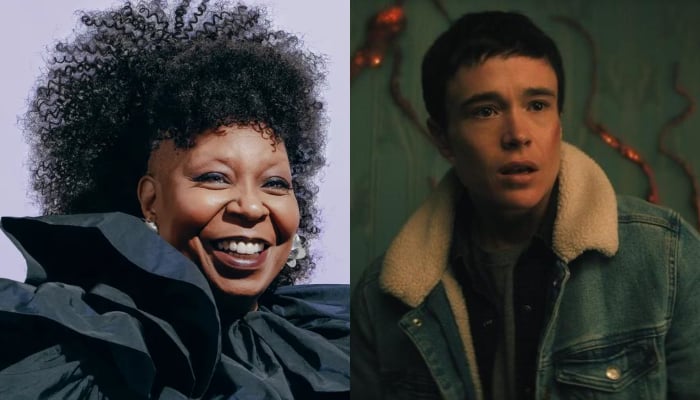
    Whoopi Goldberg has stepped forward to defend the casting of Elliot Page in Christopher Nolan’s The Odyssey, delivering a pointed and characteristically direct response to the wave of criticism that has been directed at the actor since the film’s release. Speaking on Tuesday’s episode of The View, Goldberg addressed the backlash head-on after a clip was played of conservative commentator Ben Shapiro describing Page’s role as an “absolute puzzler” and taking aim at the actor’s appearance and voice. Goldberg’s response was blunt and unapologetic. “A lot of conservatives who see this are going to feel the same way. That’s okay,” she said. “But I don’t understand. Why go see the movie? If you don’t want to see it, don’t go see it. Why do you care who’s cast in it?” She continued: “I don’t understand this idea that if we hate it, everybody must hate it because we hate it for this reason. You don’t like Elliot Page? Don’t go see the damn movie. Don’t do it. We will be okay if you don’t go see it.” Page, who is trans, plays Sinon in the film, a cousin of Matt Damon’s Odysseus. The casting drew significant online criticism, some of it amplified after Elon Musk weighed in on social media, initially claiming incorrectly that Page would be playing the warrior Achilles. Despite the inaccuracy being pointed out, the backlash continued and widened. Page is not the only cast member to have faced criticism over their casting. Lupita Nyong’o, who plays both Helen of Troy and her sister Clytemnestra in the film, has also been subjected to racially charged criticism over her dual role, highlighting a pattern of commentary around the film’s diverse ensemble that goes well beyond questions of artistic interpretation. Fellow View panelist Alyssa Farah Griffin also pushed back on the criticism during the segment, arguing that the film’s themes of family, faith and the consequences of war are broad and universal enough to resonate across different audiences, including those who had voiced objections before seeing the film. What the controversy has not managed to do is dent the film’s commercial performance. The Odyssey opened in theatres on July 17 and crossed $300 million worldwide within days, making it one of the biggest releases of Christopher Nolan’s career and one of the year’s most significant box office events so far. For Goldberg, the message was simple: the film exists, it is performing, and those who object to its casting choices have every right to stay away. What they do not have, in her view, is the right to demand that everyone else feels the same.

  • | |

    President Zardari approves civil awards for 355 pe…

    ISLAMABAD: President Asif Ali Zardari has approved civil awards for 355 Pakistani and foreign personalities in recognition of their outstanding services and achievements in various fields. The awards will be presented at a special ceremony on Pakistan Day, March 23, next year. The recipients include prominent figures from politics, public service, entertainment, sports, journalism, law enforcement, medicine and other sectors. Among the personalities from the entertainment industry, singers Tarannum Naz and Nisho Begum will receive the Sitara-i-Imtiaz. Actors Ghazala Kaifi, Sania Saeed and Maria Wasti, along with singer Zohaib Hassan, will be honoured with the Tamgha-i-Husn-i-Karkardagi. Singer Shiraz Uppal will receive the Tamgha-i-Imtiaz. In sports, shooter Kishmala Talat and former Test cricketer Sadiq Mohammad will be awarded the Tamgha-i-Husn-i-Karkardagi for their contributions and achievements. Several senior government officials and political figures have also been included in the awards list. Deputy Prime Minister and Foreign Minister Ishaq Dar, Interior Minister Mohsin Naqvi, Federal Ministers Ahsan Iqbal and Muhammad Aurangzeb, and Minister of State Bilal Azhar Kayani will receive the Nishan-i-Imtiaz. Director General Intelligence Bureau Fawad Asadullah, Attorney General Mansoor Usman Awan, Federal Board of Revenue Chairman Rashid Mahmood Langrial, Finance Secretary Imdadullah Bosal and Commerce Secretary Jawad Paul will receive the Sitara-i-Imtiaz. Chairman Pakistan Ulema Council Allama Hafiz Tahir Mahmood Ashrafi will be awarded the Tamgha-i-Imtiaz, while Federal Minister Engineer Amir Muqam will receive the Hilal-i-Imtiaz for public service. Zobia Khursheed Raja of Azad Kashmir will receive the Tamgha-i-Shujaat for her bravery in confronting rioters. She reportedly risked her life to rescue an injured police officer who was surrounded by rioters. A total of 46 martyrs of law enforcement agencies will be awarded the Sitara-i-Shujaat. Group Captain Asim Tariq Shaheed will also receive the same honour. Drug Regulatory Authority of Pakistan CEO Dr Ubaidullah will receive the Sitara-i-Imtiaz, while Punjab Saaf and Suthra Authority Director General Babar Sahib Din will be awarded the Tamgha-i-Imtiaz. Senior journalists Saleh Zafar and Haji Nawaz Raza will receive the Sitara-i-Imtiaz. Journalists Ammar Masood, Maria Zulfiqar, Adil Shahzeb and Hamad Hassan will be honoured with the Tamgha-i-Imtiaz. Two physicians associated with Quaid-e-Azam Muhammad Ali Jinnah, Dr Jal Ratanji Patel and Dr Jal Dabu, will be conferred the Nishan-i-Quaid-i-Azam posthumously. The list also includes prominent foreign figures. Saudi Prince Saud bin Naif will receive the Hilal-i-Pakistan, while Turkish Foreign Minister Hakan Fidan, Defence Minister Yasar Guler and Trade Minister Omer Bolat will each be awarded the Sitara-i-Pakistan. Dr Khalid Abbas Al-Asadi and Dr Paul Jacob Bhatti will receive the Tamgha-i-Imtiaz in recognition of their services.

  • Teen girl summits khushal gang

    A 14 year old girl from Pakistan’s Balochistan province has achieved an inspiring milestone by climbing one of the country’s highest mountains despite facing family concerns and difficult training. Malika Khilji became the first young girl from Balochistan to reach the top of Khushal Gang a 6,040 meter high peak making history with her achievement. she had always loved sports but growing up she had very few opportunities to take part. When she got the chance to learn mountaineering she decided to follow her passion. She explained that she received a training scholarship from the Alpine Club of Pakistan and the Balochistan Institute for Tourism Hospitality and Culture Management where she began formal mountain climbing training. Malika shared that her family was not supportive at first. She said girls in her community often have limited opportunities but her brother encouraged her and convinced their parents to let her join the expedition. Before attempting Khushal Gang she practiced on the hills around Quetta. However she had little experience with technical climbing. During the expedition she used professional climbing equipment for the first time and faced harsh weather conditions. The toughest part of  the climb came at around 3 a.m. during the final push to the summit when she had to climb a steep wall of snow. Feeling exhausted she almost decided to turn back. Her guide encouraged her by reminding her that she could become the first girl from Balochistan to reach the summit.  Inspired by those words she continued climbing and successfully reached the top. Malika said she hopes to keep climbing more mountains represent Pakistan proudly and encourage other girls to believe in themselves and chase their dreams.

  • | |

    Arooj Aurangzeb calls out support for Indian Gen Z

    Arooj Aurangzeb is a name that carries real weight in Pakistan’s student activism circles. In 2019, she went viral after a video of her reciting a powerful poem during the student solidarity march spread rapidly across social media. She was protesting alongside thousands of other students who were demanding the restoration of student unions and proper political representation for young people within the country’s institutions. The videos from that movement were electric, emotional and widely shared, including hers. Seven years later, she is back in the public conversation, but this time it is not because of a protest. It is because of a contradiction she says she can no longer stay quiet about. When Indian students began protesting over the NEET paper leak at Jantar Mantar, demanding justice and systemic reform in the country’s examination system, Pakistani social media users responded with visible enthusiasm. Support poured in from across the border, with many Pakistanis praising the Indian Gen Z for their courage, awareness and refusal to be silent. Arooj Aurangzeb watched that wave of support and felt something shift inside her. She took to social media to point out what she saw as a glaring and painful inconsistency. While Pakistanis were celebrating the Indian protesters and calling their movement inspiring, many of those same people had ridiculed, trolled and dismissed her and her fellow students when they took to the streets in 2019 for exactly the same kind of systemic change. She did not hold back. She highlighted the irony directly, asking how the same people who mocked Pakistani students fighting for their rights could turn around and feel so moved by Indian Gen Z doing the same thing. Her post was not framed as anti-India. It was framed as a question about selective empathy and the way Pakistanis sometimes extend more admiration to voices from abroad than to those speaking up at home. The internet did not respond with silence. Reactions were divided and sharp. Some users sided with her immediately. “We never stand by our own heroes,” one person wrote, capturing the frustration that Arooj was articulating. Others pushed back, with one commenter arguing that the dynamics of Indian and Pakistani Gen Z are completely different and that direct comparisons were unfair. Another raised a pointed question of their own, asking why so many Pakistani revolutionaries eventually leave the country on foreign visas, a remark that suggested the critique went both ways. Arooj Aurangzeb’s voice in 2019 was a reminder that young Pakistanis were willing to stand up and demand something better. Her voice in 2026 is a reminder that those same young people are still watching, still paying attention, and still asking why the recognition they deserved then continues to be denied while admiration flows so freely elsewhere.

  • | |

    Yasir Nawaz’s sister says ‘Dar-e-Nijat’ mirr…

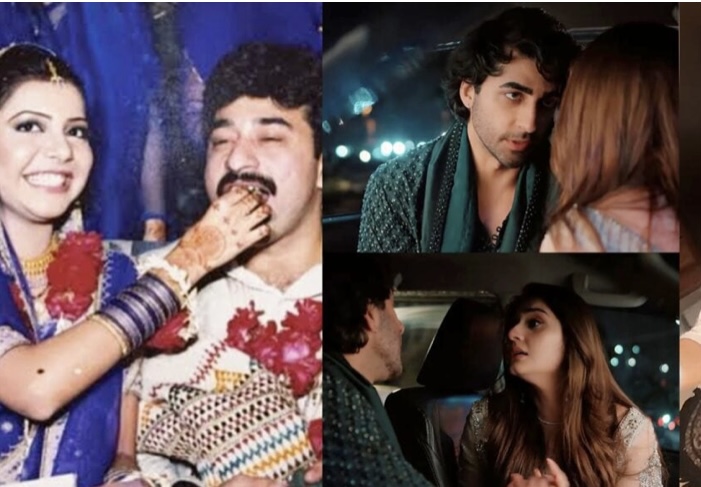
    Pakistani drama Dar-e-Nijat has caught viewers’ attention with its emotional storyline, spiritual themes and complicated relationships. But the drama recently became even more personal after Anzalna Nawaz, sister of actor and director Yasir Nawaz, revealed that the early part of the story strongly resembles her own teenage experience. Anzalna, a social media influencer, said she started watching Dar-e-Nijat partly because she admires actor Sheheryar Munawar. However, she quickly noticed similarities between the drama’s central character, Zaryab, and her own younger self. She admitted that, like Zaryab, she was once deeply in love as a teenager. (Reviewit.pk⁠) According to Anzalna, the boy she loved was also in college. She recalled one particularly impulsive moment from her youth when her family was preparing for Yasir Nawaz’s engagement. While her relatives were busy attending the celebrations at Nida Yasir’s family home, Anzalna secretly left to meet her boyfriend. She said she even went to his car and persuaded him to meet her. Looking back, Anzalna described her behavior as foolish and admitted that she did not think about her father or her three brothers at that moment. The incident was especially significant because Anzalna came from a conservative Baloch family. She explained that she was the only daughter and had always been treated with considerable affection by her family. Her father, however, strongly disapproved of the boy she loved. (Reviewit.pk⁠) When Anzalna returned home, the family celebration was still taking place. Her brothers were angry, while her father reportedly remained quiet but was deeply disappointed by what had happened. Today, Anzalna looks back at that period with regret. She acknowledged that she had allowed her feelings for someone to become more important than a special family occasion. She also suggested that the boy was ultimately not worth the sacrifices she made for him. This personal confession gives Dar-e-Nijat an interesting emotional dimension. The drama follows Zaryab, a young woman whose intense romantic attachment becomes part of a much larger journey involving family expectations, relationships and spirituality. The series, written by Umera Ahmed, explores the contrast between worldly desires and spiritual growth. (Pakistani Cinema⁠) Anzalna’s revelation does not mean that Dar-e-Nijat is officially based on her life. Rather, she has identified a striking resemblance between its early storyline and her own teenage experiences. Her confession also highlights why stories about young love can feel deeply personal. Teenage relationships can make emotions feel overwhelming, sometimes causing people to make decisions they later reconsider. For Anzalna, Dar-e-Nijat appears to have brought back memories of a chapter she now views with greater maturity. Her willingness to discuss those mistakes publicly has also made viewers curious about what happened next in her real-life story. She has hinted that there are more details she may share in the future, leaving audiences waiting to hear the rest of her personal journey.

Leave a Reply

Your email address will not be published. Required fields are marked *