yasir nawazs sister
| |

Yasir Nawaz’s sister says ‘Dar-e-Nijat’ mirr…

Pakistani drama Dar-e-Nijat has caught viewers’ attention with its emotional storyline, spiritual themes and complicated relationships. But the drama recently became even more personal after Anzalna Nawaz, sister of actor and director Yasir Nawaz, revealed that the early part of the story strongly resembles her own teenage experience.

Anzalna, a social media influencer, said she started watching Dar-e-Nijat partly because she admires actor Sheheryar Munawar. However, she quickly noticed similarities between the drama’s central character, Zaryab, and her own younger self. She admitted that, like Zaryab, she was once deeply in love as a teenager. (Reviewit.pk⁠)

According to Anzalna, the boy she loved was also in college. She recalled one particularly impulsive moment from her youth when her family was preparing for Yasir Nawaz’s engagement. While her relatives were busy attending the celebrations at Nida Yasir’s family home, Anzalna secretly left to meet her boyfriend.

She said she even went to his car and persuaded him to meet her. Looking back, Anzalna described her behavior as foolish and admitted that she did not think about her father or her three brothers at that moment.

The incident was especially significant because Anzalna came from a conservative Baloch family. She explained that she was the only daughter and had always been treated with considerable affection by her family. Her father, however, strongly disapproved of the boy she loved. (Reviewit.pk⁠)

When Anzalna returned home, the family celebration was still taking place. Her brothers were angry, while her father reportedly remained quiet but was deeply disappointed by what had happened.

Today, Anzalna looks back at that period with regret. She acknowledged that she had allowed her feelings for someone to become more important than a special family occasion. She also suggested that the boy was ultimately not worth the sacrifices she made for him.

This personal confession gives Dar-e-Nijat an interesting emotional dimension. The drama follows Zaryab, a young woman whose intense romantic attachment becomes part of a much larger journey involving family expectations, relationships and spirituality. The series, written by Umera Ahmed, explores the contrast between worldly desires and spiritual growth. (Pakistani Cinema⁠)

Anzalna’s revelation does not mean that Dar-e-Nijat is officially based on her life. Rather, she has identified a striking resemblance between its early storyline and her own teenage experiences.

Her confession also highlights why stories about young love can feel deeply personal. Teenage relationships can make emotions feel overwhelming, sometimes causing people to make decisions they later reconsider.

For Anzalna, Dar-e-Nijat appears to have brought back memories of a chapter she now views with greater maturity. Her willingness to discuss those mistakes publicly has also made viewers curious about what happened next in her real-life story.

She has hinted that there are more details she may share in the future, leaving audiences waiting to hear the rest of her personal journey.


Similar Posts

  • |

    Hyderabad police issue 45 e-challans

    Hyderabad Police have issued 45 e-challans for various traffic violations after introducing the e-challan system in the city. According to a police spokesperson, SSP Hyderabad Shahzeb Chachar directed officers to use modern technology to strengthen traffic law enforcement. Officers issued the challans through a mobile application after recording violations at different locations. DSP Hussainabad Ghulam Akbar, DSP Traffic Latifabad Masood Arain and SO Auto Bhan Faisal Ali supervised the operation. Police are paying particular attention to violations on Auto Bhan Road, including parking in no-parking areas, driving in the wrong direction, one-way violations and signal jumping. SSP Shahzeb Chachar has instructed officers to take action against traffic violators without discrimination and ensure motorists follow traffic rules. Hyderabad Police have also urged citizens to park only in designated areas, follow the correct direction of traffic and obey signals and other road regulations.

  • |

    Tallulah Willis marries Justin Acee in intimate wedding ceremony

    Tallulah Willis has officially entered a new chapter of her life after marrying musician Justin Acee in an intimate wedding ceremony over the weekend. The youngest daughter of Hollywood stars Bruce Willis and Demi Moore exchanged vows with Acee on Saturday, August 8. The private celebration brought together family and close friends as the couple marked the beginning of their married life. Tallulah made a memorable entrance in a custom-designed Balenciaga wedding gown created by the fashion house’s creative director, Pierpaolo Piccioli. The sophisticated dress was a particularly significant creation for Piccioli, as it was among his first bridal designs for Balenciaga. The gown reportedly required hundreds of hours of detailed craftsmanship. According to sources, approximately 712 hours were spent creating the dress, including around 405 hours dedicated to construction and alterations. An additional nine hours were reportedly needed to complete the accompanying veil, making the bridal look a major undertaking. For Tallulah, however, the wedding was about much more than fashion. During her final fitting, she reflected on the meaning behind her relationship with Acee and the commitment they had made to one another. She explained that early in their relationship, the couple decided they would consciously choose each other every day. That idea also became part of the symbolism surrounding their wedding rings. Tallulah revealed that she worked with her friend and designer Karina Noel to create her engagement ring. The word “everyday” was incorporated into the inside of both the engagement ring and wedding band, representing the couple’s promise to continue choosing one another throughout their marriage. Speaking about her hopes for the wedding, Tallulah said she wanted the celebration to feel magical, but not in a predictable or conventional way. She hoped for something unexpected and personal that reflected her own personality. Family also played an important role in the wedding preparations. Tallulah’s older sisters, Rumer Willis and Scout Willis, were involved in the celebrations, while their mother, Demi Moore, was also part of the special occasion. Tallulah first revealed that she and Acee were engaged in December 2024. At the time, she shared a photograph showing the couple’s hands positioned over a path decorated with rose petals. She accompanied the romantic announcement with the simple caption, “Everyday,” a phrase that has since become closely connected to their relationship. Tallulah is the youngest of Bruce Willis and Demi Moore’s three daughters. Her sisters Rumer and Scout have also pursued careers in the entertainment industry. Bruce Willis is additionally the father of two younger daughters, Mabel and Evelyn, whom he shares with his wife, Emma Heming Willis. With the wedding now marking a new beginning for Tallulah and Acee, the couple’s emphasis on choosing each other “everyday” reflects the personal meaning behind their celebration. From the carefully crafted Balenciaga gown to the sentimental details hidden inside their wedding rings, the ceremony appeared to combine high fashion, family and deeply personal symbolism.

  • |

    FIFA’s $20bn plan shakes football power balance

    FIFA’s plan to bring private equity investment into global football is opening a new chapter in its long-running struggle with Europe over the sport’s power, finances and commercial control. The world football governing body, led by President Gianni Infantino, is considering the creation of a subsidiary valued at around $20 billion. The proposed company would manage the World Cup and other major FIFA events. Under the plan, outside investors could acquire stakes of up to 20% in the new entity. The proposal has already triggered strong opposition from European football authorities. UEFA has criticised the idea and accused FIFA of putting the “soul” of football at risk by allowing private investors greater access to the sport’s most valuable competitions. Infantino has defended the proposal as an effort to make football’s financial system more inclusive. He has described the initiative as a form of “democratisation” that could allow more football nations to benefit from the sport’s growing commercial revenues. The plan could also provide financial incentives to FIFA’s 211 member associations. Under the proposal, each association could receive up to $20 million in immediate funding for special projects. Further grants of $20 million or more could be provided during subsequent four-year cycles. Such funding could prove particularly attractive to smaller and emerging football nations that depend heavily on FIFA for financial support. FIFA already generates billions of dollars through broadcasting rights, sponsorships and other commercial agreements. The organisation had set a revenue target of $13 billion for its previous four-year cycle, which included the latest World Cup and the Club World Cup. However, FIFA’s financial strength remains smaller than the overall commercial value of European football. UEFA reported that Europe’s top club competitions generated around €4.4 billion during the 2024-25 season alone. Football competitions across Europe generated more than €40 billion during the same period, according to Deloitte’s annual football finance review. The continent’s five major domestic leagues — the Premier League, Bundesliga, LaLiga, Serie A and Ligue 1 — accounted for more than half of that revenue. FIFA has spent decades trying to reduce Europe’s dominance over the global game. The organisation’s leadership has repeatedly sought to give greater influence to football associations in Africa, Asia and Latin America. Former FIFA president João Havelange was a major figure in that effort. He expanded the World Cup and built political support among smaller football nations, helping shift the balance of influence within FIFA. Successive FIFA presidents continued that approach. Infantino has expanded the World Cup from 32 teams to 48, increasing opportunities for countries outside Europe’s traditional football powers. The FIFA president has also suggested that a 64-team World Cup could be considered for the 2030 centenary tournament. The idea followed calls from South American football’s governing body CONMEBOL for an expanded competition. The proposal has faced criticism from European football officials. LaLiga president Javier Tebas has accused FIFA of damaging the sport. His criticism reflects wider concerns in Europe about the growing number of international competitions and the commercial expansion of FIFA. FIFA has previously attempted to attract external investment into its competitions. A proposed expansion of the Club World Cup backed by a consortium led by SoftBank in 2018 failed to materialise after strong resistance from UEFA. The latest private equity proposal could face a similar challenge. However, Infantino has a major advantage within FIFA’s political structure. The organisation’s decisions are determined by its global membership rather than European football alone. FIFA has 211 member associations, meaning support from Africa, Asia, Latin America and other regions could allow Infantino to advance the plan despite European opposition. Experts believe the financial incentives could make the proposal attractive to developing football nations. Eric Windholz, an associate professor at Monash University’s law faculty, said countries in the Global South could find the plan appealing because their domestic football competitions generate far less commercial income than major European leagues. The regional football authorities have also reacted cautiously

  • |

    Japan earthquake disrupts auto and chip production as death toll rises to 34

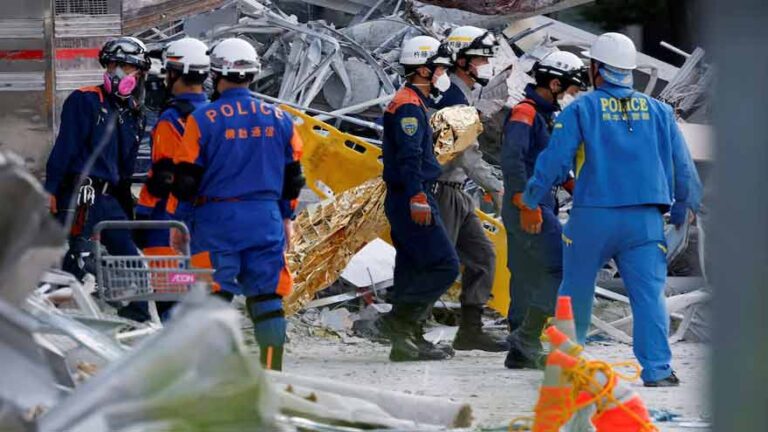
    A powerful earthquake that struck Japan’s Kumamoto region has killed at least 34 people and disrupted major manufacturing operations, exposing the continued vulnerability of the country’s industrial supply chains. The 7.1 magnitude quake damaged roads, interrupted essential services and forced several automobile and semiconductor companies to suspend production, raising concerns about delays across global supply networks. The earthquake struck on Tuesday, causing widespread destruction in southern Japan. Thousands of households were left without basic utilities while damaged roads and transport links made it difficult for businesses to continue normal operations. Kumamoto is one of Japan’s most important manufacturing regions and plays a key role in producing vehicles, auto parts and semiconductors used around the world. Toyota has temporarily suspended production at three factories in Fukuoka until August 5 because of concerns about employee safety and disruptions affecting suppliers and transport companies. The company has also decided to halt operations at one of its plants in Aichi, located more than 600 kilometres from the disaster zone, showing how shortages of essential components can quickly affect factories far from the earthquake’s epicentre. One of Toyota’s major suppliers, Aisin, also suffered disruptions at its factory near the hardest hit area. The company manufactures engines, doors and other vehicle parts for Toyota, Nissan and Daihatsu. Aisin said it plans to restart production gradually after confirming that facilities are safe and product quality can be maintained. However, it has not announced when full operations will resume. Trucks carrying supplies, including portable toilets, were seen entering the factory as recovery work continued. Local businesses reported that water services had been interrupted although electricity remained available. The latest disaster has revived memories of the 2016 Kumamoto earthquake, which caused severe damage to the same Aisin plant and forced Toyota to suspend production across Japan because of shortages of a critical door component. Industry officials said smaller suppliers further down the supply chain may also have been affected this time, increasing the risk of continued production delays. Auto parts manufacturer Denso said one of its suppliers had already reported damage while several others were still assessing conditions. Nissan has suspended some production at its two vehicle plants in Kyushu because of delays in receiving parts. Mitsubishi Motors has also halted certain production lines at its factory in Okayama as the effects of the earthquake continue to spread through the manufacturing sector. Kumamoto has also become one of Japan’s leading centres for semiconductor production in recent years. The region is often referred to as the country’s Silicon Valley because of its concentration of advanced chip manufacturers. Taiwan Semiconductor Manufacturing Company, the world’s largest contract chipmaker, evacuated workers from its Kumamoto plant immediately after the earthquake. The company later confirmed that operations had started to resume within a few hours. Other semiconductor companies are expected to take longer to recover. Renesas said damage at one of its facilities included fallen ceiling panels, cracked walls and water leaks. The company plans to restart production in stages beginning on August 5. Tokyo Electron announced that it expects to resume production next week, while Sony said efforts are continuing to restore operations at its semiconductor factory in Kumamoto. Although the number of deaths is lower than the more than 260 people killed in the 2016 earthquake, this disaster has still caused significant human and economic losses. Nearly half of the fatalities occurred inside commercial buildings. Nine people died when severe structural damage struck a Nippon Paper Industries mill near the epicentre. Another seven people lost their lives at an Aeon shopping mall where authorities believe a gas explosion occurred more than an hour after the initial earthquake. The disaster has once again highlighted the challenge Japan faces in protecting both its population and its globally important manufacturing industry from natural disasters.

  • | |

    Torrential rains trigger flash floods in Upper Dir…

    Torrential rainfall has caused widespread disruption in Upper Dir, where flash floods and overflowing streams have damaged roads, washed away infrastructure, and stranded travelers across several parts of the district. According to rescue officials, the continuing downpours have significantly affected transportation and raised concerns about public safety. Rescue 1122 reported that floodwaters near the Inkar Madrasa area swept across the main highway, forcing authorities to close the road to all types of traffic. The closure resulted in long queues of vehicles, leaving commuters and tourists stranded while waiting for conditions to improve. Emergency responders have been monitoring the situation and coordinating relief efforts in the affected areas. The heavy rains also washed away a connecting bridge and damaged multiple roads, disrupting access between nearby communities. Rising water levels in seasonal streams have further complicated rescue and recovery operations, making travel difficult and increasing the risk for people living near flood-prone areas. According to rescue officials, one vehicle was swept away by floodwaters in a rain-fed stream. However, no fatalities had been reported at the time of the latest updates. Authorities continue to assess the extent of the damage while emergency teams remain on standby to respond to any additional incidents caused by the severe weather. Officials have urged residents, tourists, and motorists to avoid unnecessary travel until weather conditions improve. They have also advised the public to stay away from rivers, streams, and flood channels, where rapidly rising water levels can pose a serious threat to life and property. Heavy monsoon rains frequently trigger flash floods and landslides in northern Pakistan, disrupting transportation and damaging critical infrastructure. Authorities are continuing to monitor weather conditions closely and have appealed to the public to follow official advisories and cooperate with rescue teams. Travelers planning to visit Upper Dir are encouraged to check road conditions before departing and remain alert for further weather updates as rescue and restoration efforts continue.

  • | |

    Houthis claim missile and drone attack on Saudi oil tankers

    Yemen’s Houthi movement has claimed responsibility for attacking two Saudi oil tankers in the Red Sea, marking a major escalation in regional tensions and raising fresh concerns over the security of one of the world’s busiest maritime trade routes. Houthi military spokesperson Yahya Saree said the group targeted the tankers, identified as ENCELA and LAYLIA, because they allegedly violated the maritime blockade the Houthis imposed on Saudi Arabia earlier this week. According to the spokesperson, the operation involved ballistic missiles, cruise missiles and drones. He claimed the strikes caused fires aboard both vessels and forced nearly 10 other commercial ships to abandon their planned routes and turn back. Saudi authorities have not officially commented on the Houthi claims. However, the United Kingdom Maritime Trade Operations (UKMTO), which monitors maritime security in the region, confirmed receiving a report from the captain of a tanker that an unidentified projectile had struck the vessel, sparking a fire. The crew managed to respond to the incident, and no casualties or environmental damage have been reported. The attack comes just days after the Houthis announced a maritime blockade against Saudi Arabia, saying the move was retaliation for recent military actions in Yemen. The group accused Riyadh of maintaining a long-standing blockade on areas under Houthi control and vowed to respond with similar measures at sea. The latest developments have increased fears over shipping through the Red Sea and the Bab al-Mandeb Strait, a strategic waterway linking the Red Sea to the Gulf of Aden. The route is vital for global energy supplies and international trade, carrying millions of barrels of crude oil and petroleum products every day. Shipping security in the region has already been under pressure because of wider Middle East tensions. Any prolonged disruption in the Bab al-Mandeb Strait could further affect global oil markets, increase transport costs and delay commercial shipping.

Leave a Reply

Your email address will not be published. Required fields are marked *