butcher bosnia ratko
|

‘Butcher of Bosnia’ Ratko Mladic dies at 84 in…

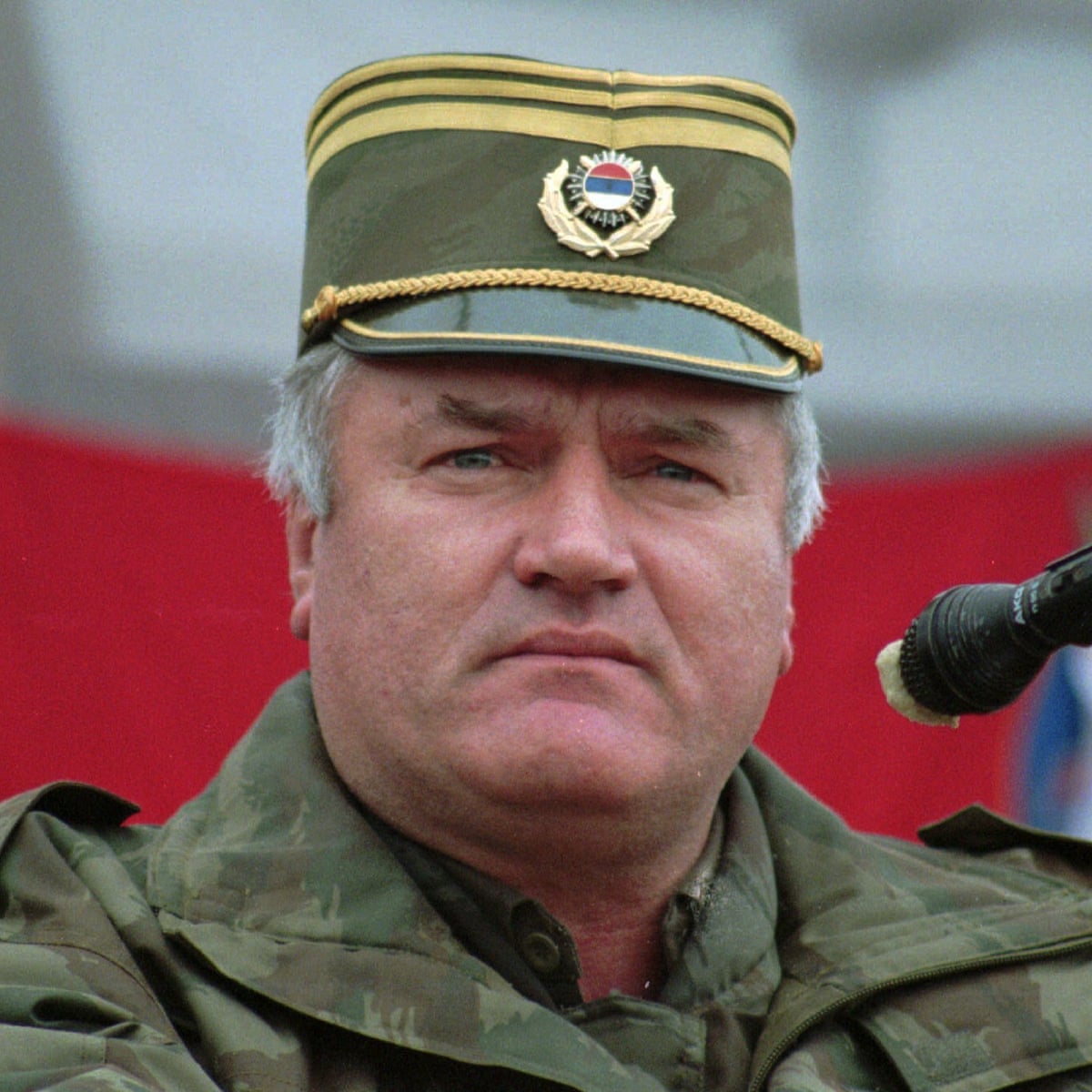
THE HAGUE: Ratko Mladic, the former Bosnian Serb military commander convicted of genocide, war crimes and crimes against humanity over some of the worst atrocities of the Bosnian war, has died at the age of 84 while serving a life sentence in The Hague.

Mladic died in a United Nations detention facility in the Netherlands after suffering several strokes and a prolonged deterioration in his health, Serbian state broadcaster RTS reported. A UN official also confirmed his death. His death was reported on Thursday, August 27, and comes more than three decades after he became one of the most notorious figures of the 1992-95 Bosnian War.

Known internationally as the “Butcher of Bosnia,” Mladic commanded Bosnian Serb forces during the conflict that followed the breakup of Yugoslavia. His name became inseparable from the 1995 Srebrenica massacre, when more than 8,000 Bosniak Muslim men and boys were killed after the town had been designated a UN-protected safe area.

The killings at Srebrenica are regarded as the worst atrocity in Europe since the Second World War. International judges later concluded that Mladic played a central role in the operation, including the forcible removal of civilians and the execution of thousands of men and boys.

The massacre was followed by attempts to conceal evidence, with victims buried in mass graves and, in some cases, their remains later moved to secondary locations.

Mladic was indicted by the International Criminal Tribunal for the former Yugoslavia in 1995 but remained at large for another 16 years. He was finally arrested in Serbia in May 2011 and transferred to The Hague.

In 2017, the tribunal convicted him of genocide, crimes against humanity and war crimes and sentenced him to life imprisonment. His appeal was rejected in 2021, leaving the life sentence intact.

Throughout his trial and appeal, Mladic denied responsibility for the crimes and repeatedly attacked the tribunal’s legitimacy. He remained an admired figure among some Serbian nationalists, even as survivors and victims’ families continued to regard him as a symbol of the violence inflicted on Bosnia’s Muslim population.

In his final years, Mladic’s family and lawyers repeatedly sought permission for him to receive treatment in Serbia or be released on humanitarian grounds because of his worsening health. Those requests were rejected. RTS reported that a recent request to allow him to spend his final days at home was also turned down.

His death closes the life of one of the most infamous commanders of the Balkan wars, but the wounds left by Srebrenica and the wider Bosnian conflict remain deeply embedded in the region’s history.

Similar Posts

  • | |

    Transporters join fuel dealers’ strike against d…

    Transport associations across Pakistan have announced support for the Petroleum Dealers Association’s demands and warned of a possible suspension of transport services following a planned shutdown of petrol pumps. The All Pakistan Public Transport Owners Association said public transport operations could also come to a halt if fuel stations close at midnight. Association President Nadeem Hussain said the transport sector would support the petrol dealers’ stance against the government’s policy of fixing petrol and diesel prices on a daily basis. He demanded that the government withdraw the daily fuel pricing mechanism, saying it has created uncertainty and increased financial pressure on transport operators. Hussain said frequent changes in fuel prices directly affect transport businesses because fuel is one of the biggest operating costs for public transport owners. He warned that a continued increase in petroleum prices could further burden both transporters and passengers. The Pakistan Mini Mazda Goods Transport Association also announced its support for the strike call by petrol station owners. Association President Sher Ali Chaudhry said mini Mazda vehicles would stop operating from midnight as part of the protest against daily increases in petroleum prices. He criticized the government’s decision to revise fuel prices regularly, saying it has made it difficult for transporters to manage expenses and maintain their services. Chaudhry said rising fuel costs have severely affected the transport sector, increasing operational expenses and reducing the income of vehicle owners and drivers. Both transport associations urged the government to reconsider the current fuel pricing policy and take steps to provide relief to transporters.

  • Damaged Ta Kwai Temple in Surin at Risk of Collapse, Access Barred

    SURIN – The ancient Ta Kwai temple in Surin province, heavily damaged during recent Thai-Cambodian border clashes, is now at risk of structural collapse, authorities warned on Tuesday. Public access remains strictly prohibited due to both the unstable ruins and uncleared landmines in the surrounding area. Border Clashes Escalate as Cambodian Rockets Strike Surin’s Ta […]

  • | |

    Nirmal Purja’s body recovered after deadly Broad Peak avalanche

    Renowned British-Nepali mountaineer Nirmal Purja’s body has been recovered from Broad Peak in Pakistan, days after a devastating avalanche claimed the lives of members of his international climbing team. Rescue officials confirmed that Purja’s remains were found at an altitude of around 5,700 metres on Sunday. Search teams also located three additional bodies on the mountain, although their identities have not yet been officially confirmed. The fatal avalanche struck the 8,047-metre Broad Peak in the Karakoram mountain range during a climbing expedition. Authorities earlier confirmed that at least 10 climbers from different countries lost their lives in the tragedy. Purja, 43, was leading the multinational expedition when the avalanche occurred. Before his body was recovered, rescue teams had already retrieved the remains of American climber Mallory Geis, Omani mountaineer Nadhira Ahmed Abdullah Al Harthy, and Nepalese climber Pur Bahadur Gurung. Rescue operations continue in the difficult high-altitude terrain, with officials working to recover the remaining victims. The recovered bodies are being transported to a nearby base camp before further arrangements are made. Purja was regarded as one of the world’s greatest mountaineers. Born in Nepal, he later served in the British Army and spent several years with the elite Special Forces before pursuing a career in high-altitude climbing. He gained global recognition in 2019 after completing the ascent of all 14 mountains above 8,000 metres in just 189 days, breaking the previous world record by several years. His remarkable achievement was later featured in the widely acclaimed Netflix documentary 14 Peaks: Nothing Is Impossible. At the time of the accident, Purja was attempting another historic milestone by becoming the first climber to summit all 14 peaks above 8,000 metres twice without supplemental oxygen. His death has prompted tributes from leaders and members of the international mountaineering community. Britain’s Prince William expressed deep sorrow over the loss, describing Purja as an outstanding soldier and one of the world’s finest climbers. Nepalese officials also praised his courage, determination and lasting contribution to mountaineering.

  • | | |

    Acid traces found in Mir Raza Ali’s body, police…

    KARACHI: Fresh forensic findings in the death of businessman Mir Raza Ali have raised further questions over the circumstances surrounding his death, with sources saying acid traces were detected in his stomach, lungs and on parts of his body. According to sources familiar with the investigation, severe acid-related damage was found in Ali’s lungs, while traces were also detected on his hands and feet. His clothing reportedly contained acid traces as well as sweat believed to belong to another person. The investigation took another turn after police sealed a guesthouse near the location where Ali’s body was discovered. Six people working at the guesthouse were taken into custody for questioning, bringing the total number of detained individuals in the case to 21. Their statements have also been recorded as investigators attempt to establish what happened before Ali’s death. The latest developments came a day after Ali’s body was exhumed and examined by a medical board before being reburied. The second post-mortem reportedly found a gunshot wound entering from the back, along with multiple signs of physical violence. The medical examination also revealed fractured ribs and several injuries to Ali’s head and face, adding to concerns surrounding the circumstances of his death. Ali, an IBA graduate and businessman, was found dead in Karachi’s Gulistan-e-Jauhar area last month after he went missing on July 28. His father rejected suggestions that his son had died by suicide and maintained that he had been murdered. Meanwhile, Ali’s parents have opposed the proposed formation of a judicial commission, saying the police should be allowed to continue their investigation. Family lawyer Jibran Nasir said the parents had conveyed their decision in writing to the Karachi mayor, Sindh interior minister and additional inspector general. Nasir said the family currently saw no need for a judicial commission and wanted the police investigation to proceed according to law. The Sindh government had earlier announced plans to establish a judicial commission headed by high court judges. Sindh Home Minister Zia Lanjar said the decision was taken following consultations with Chief Minister Murad Ali Shah, describing the commission as necessary to investigate the case. Separately, Sindh Senior Minister Sharjeel Inam Memon has approached the National Cyber Crime Investigation Agency over social media allegations linking him and his son, Rawal Memon, to Ali’s death. Through his lawyer, Memon submitted a complaint to the NCCIA Karachi Zone, accusing certain social media accounts of spreading what he termed false, fabricated and malicious claims. The complaint alleges that social media posts linked a guesthouse near the crime scene to Memon and claimed that his son travelled to London shortly after the incident. Rawal Memon, who is currently in London, rejected the allegations and described them as an organised smear campaign. The complaint further alleged that online posts questioned the medical investigation and accused Memon and his political party of shielding individuals allegedly connected to Ali’s death. With forensic findings, multiple detentions and competing calls for a judicial inquiry now surrounding the case, investigators face mounting pressure to determine how Mir Raza Ali died and identify those responsible.

  • | | | |

    Gen Aamer Raza honoured with Nishan-i-Imtiaz

    Commander National Strategic Command General Syed Aamer Raza has been conferred the Nishan-i-Imtiaz (Military), one of Pakistan’s highest military honours. President Asif Ali Zardari conferred the prestigious award on General Syed Aamer Raza during a ceremony held at Aiwan-e-Sadr in Islamabad. President Zardari, Prime Minister Shehbaz Sharif, Field Marshal Syed Asim Munir and the chiefs of the armed services attended the ceremony. Deputy Prime Minister and Foreign Minister Ishaq Dar, the chairman of the Senate, federal ministers and other senior government officials were also present. The ceremony was held to recognise General Aamer Raza’s services and contributions in his capacity as Commander National Strategic Command. General Raza has previously received two major military honours, the Hilal-i-Imtiaz (Military) and the Sitara-i-Basalat. Before his latest appointment, he was serving as Chief of General Staff. The position is considered one of the Pakistan Army’s key operational assignments. During his tenure, he was involved in implementing organisational changes following the 27th Constitutional Amendment. He also oversaw restructuring within the military after last year’s conflict with India. The changes included the creation of the Army Rocket Force Command, as part of efforts to strengthen the army’s organisational and operational capabilities. General Raza began his military career as a cavalry officer. He trained at the Officers Training School and was commissioned into the 6th Lancers in 1988. Over the course of his career, he held several important command positions. These included command of an armoured regiment and an armoured brigade. He also commanded an infantry brigade in South Waziristan. Later, he served as the commander of an infantry division. His senior field appointments included command of Lahore-based IV Corps, one of the Pakistan Army’s major corps formations. General Raza has also held a number of important institutional and staff positions. He headed Heavy Industries Taxila, a major defence production organisation. He also served as Director General of Weapons and Equipment. In another senior assignment, he worked as Chief of Staff at II Corps. His professional background has largely focused on conventional military operations, command responsibilities and force development. Unlike some senior officers associated with Pakistan’s strategic institutions, General Raza has not served in the Strategic Plans Division or the Army Strategic Forces Command. He has also not held an appointment directly linked to the country’s strategic missile programme.

Leave a Reply

Your email address will not be published. Required fields are marked *