Middle East

  • Profiling Iran’s new wartime security and military command

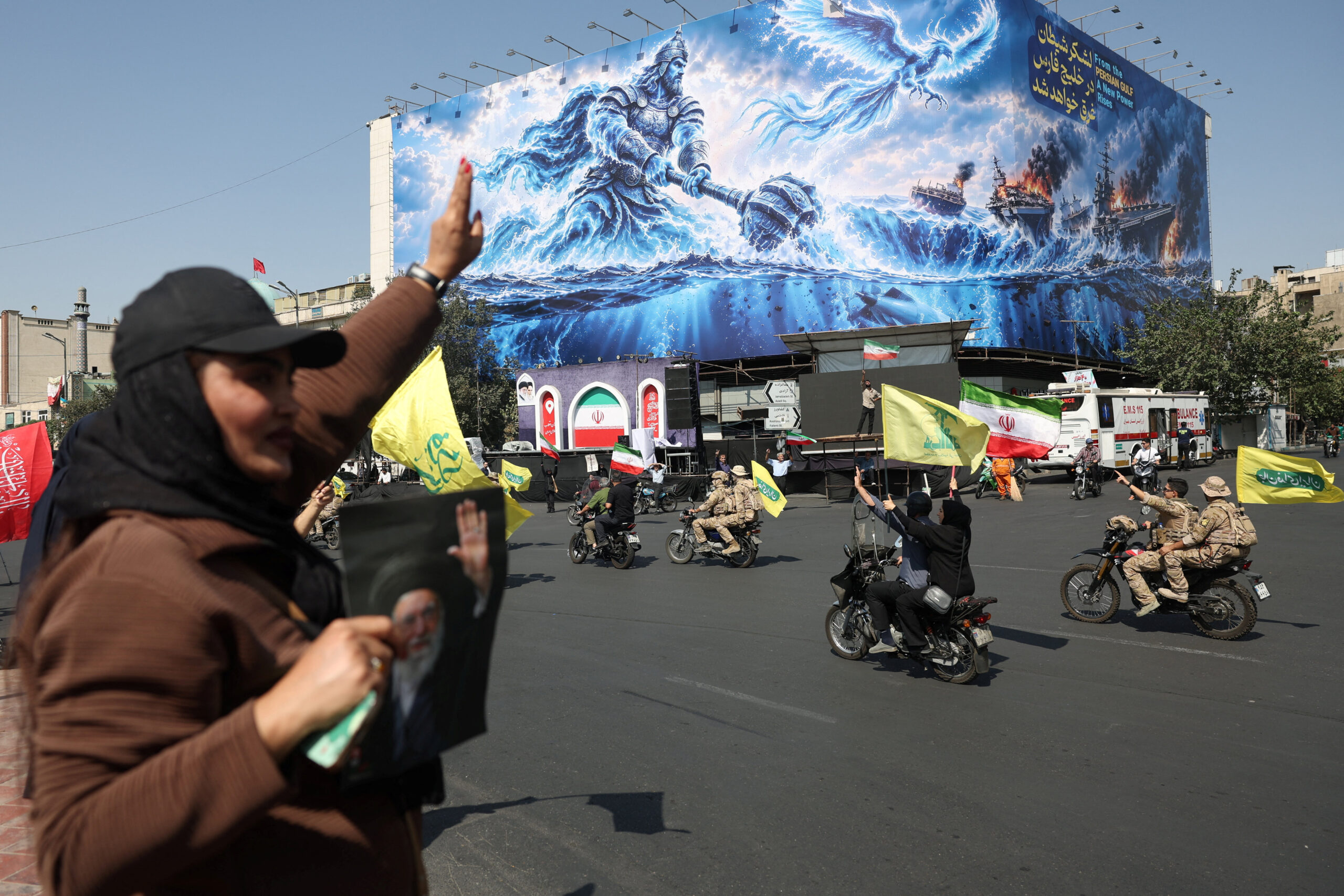
    Following intense regional conflict involving the United States and Israel, Iran’s Supreme Leader has restructured top security and defense establishment. The new decrees assign trusted and seasoned veterans to lead critical institutions. The list includes the Supreme National Security Council (SNSC), the General Staff of the Armed Forces, the Islamic Revolutionary Guard Corps (IRGC), the IRGC Navy and the Basij paramilitary organization. Mohsen Rezaei will be Head of the Supreme National Security Council (SNSC) His role is of Secretary and Supreme Leader’s Representative to the SNSC (replacing Mohammad Baqer Zolqadr). He’s from Khuzestan province. Rezaei was active in anti-Pahlavi underground movements prior to 1979. He also spent time in prison under the Shah’s regime. He studied mechanical engineering before being named the first formal commander of the IRGC in 1981 at age 27. His expertise includes leading  IRGC through the eight-year Iran-Iraq War (1980–1988), remained at its helm until 1997. He subsequently served as secretary of the Expediency Council until 2021 and was Vice President for Economic Affairs under Ebrahim Raisi (2021–2023). Sanctioned by the US Treasury in 2020, Rezaei steps into the SNSC post following Zolqadr’s reassignment as political adviser. Maj. Gen. Ali Abdollahi will be Chief of the General Staff of the Armed Forces He is appointed as Chief of the General Staff, the supreme military coordinating body for both the regular military (Artesh) and the IRGC. He belongs to northern Gilan province. Abdollahi fought as an IRGC commander in the 1980s and later served as deputy to Aerospace commander Mohammad Baqer Qalibaf between 1987 and 1991. He has served as a senior law enforcement official in the early 2000s, governor of Semnan and Gilan provinces during Mahmoud Ahmadinejad’s presidency, and deputy interior minister for security. Prior to this elevation, he commanded the Khatam al-Anbiya Central Headquarters. He succeeds Abdolrahim Mousavi.  Brig. Gen. Kioumars Heydari will be  Deputy Chief of the General Staff He is assigned the position of Deputy Chief of the General Staff (replacing Mohammad-Reza Gharaei Ashtiani). He’s from Kermanshah province. Heydari brings an extensive career in the regular military (Artesh) rather than a pure IRGC background. He initially enlisted as a volunteer Basiji during the Iran-Iraq War before formally joining the army in 1984. He has ccommanded egional army headquarters. He also served as deputy coordinator and later commander of the Army Ground Forces (2016–2025), and was appointed deputy commander of the Khatam al-Anbiya Central Headquarters. He has been sanctioned by OFAC, the European Union, and the United Kingdom. Maj. Gen. Ahmad Vahidi as Commander-in-Chief of the IRGC Vahidi will be Top Commander of the Islamic Revolutionary Guard Corps (succeeding Mohammad Pakpour). He is a native of Fars province. Vahidi joined the IRGC shortly after the 1979 Revolution and served on the front lines against Iraq. Vahidi headed IRGC intelligence during the Iran-Iraq War and later became the first commander of the elite Quds Force. He has extensive political experience, having served as deputy defense minister, defense minister, interior minister, and president of the National Defence University. He was serving as deputy IRGC commander before being promoted to lead the Guard Corps.  Maj. Gen. Mostafa Izadi as Deputy Commander of the IRGC Izadi will be Deputy Commander of the IRGC (replacing Ahmad Vahidi). A four-decade veteran of the Guard Corps who commanded forces in Kurdistan Province as well as the Hamzeh Sayyed al-Shohada and Najaf Ashraf headquarters during the Iran-Iraq War. He has served in several post-war positions include IRGC deputy operations chief, IRGC Ground Forces commander, deputy chief of the General Staff of the Armed Forces (1993–2006), and head of the Cyber and Emerging Threats Headquarters at Khatam al-Anbiya. Rear Adm. Ali Ozamaei as Commander of the IRGC Navy He will be Commander of the IRGC Naval Forces (succeeding Alireza Tangsiri). Originally from Hormozgan province, Ozamaei entered service during the Iran-Iraq War before transferring into the naval branch. He has served as deputy commander of the 1st Naval District and spent over a decade (2012–2025) commanding the 5th Naval District in Bandar Lengeh along the Persian Gulf. He was deputy navy commander before stepping into the top naval post during high-stakes maritime tensions surrounding the Strait of Hormuz. Hossein Taeb as Commander of the Basij Organisation He will be the head of the Basij Volunteer Paramilitary Force (succeeding Alireza Soleimani). He was born in Tehran, Taeb joined the IRGC in the aftermath of the revolution. Hossein Taeb has formerly served as IRGC deputy for cultural affairs, commander of the Basij, and spent over a decade (2009–2022) as head of the powerful IRGC Intelligence Organisation. He was later assigned as an advisor to the IRGC commander and is subject to US State Department sanctions.

  • |

    Dictator Bashar al-Assad sentenced to death for war crimes

    In a historic ruling issued by the Fourth Criminal Court in Damascus, Syria’s transitional judicial authorities have sentenced deposed former President Bashar al-Assad to death in absentia. Broadcast live on state television, the verdict marks the first official criminal conviction against the long-serving dictator since his regime collapsed in late 2024. Presiding Judge Fakhareddine al-Aryan announced the decision before a packed courtroom and crowds gathered outside the judicial complex in the Syrian capital. The court found Assad guilty of masterminding state-sponsored atrocities. The charges include the intentional murder of civilians and children under 15, widespread torture, systemic forced disappearances, and unlawful detentions. In his declaration, Judge al-Aryan stated that as the regime’s highest authority, Assad systematically deployed state institutions, security apparatuses and military forces to execute war crimes. The crimes against humanity targeting the Syrian populace. The former president, several prominent figures from his inner circle received identical capital sentences. Among those convicted in absentia were Assad’s younger brother, Maher al-Assad, the former commander of the military’s notorious 4th Armored Division. There’s also former Defense Minister Fahd Jassim al-Freij and several high-ranking intelligence commanders. However, one of the trial’s most striking visual moments occurred inside the courtroom itself. Atef Najib, a maternal cousin of Assad and the former head of political security in Daraa province, stood in the defendant’s dock. He was wearing a prison uniform inside a protective security cage. Najib, who was apprehended in early 2025, was tried in person and sentenced to death for orchestrating the initial violent crackdown in Daraa in 2011. The crackdown involved the detention and brutal torture of teenage students accused of scrawling anti-regime graffiti on school walls. This ignited the peaceful pro-democracy protests that eventually escalated into a full-scale, 14-year civil war. Judge al-Aryan noted that Najib showed no remorse throughout the proceedings. The legal action represents a cornerstone of the transitional justice framework established under Ahmed al-Sharaa, who assumed leadership of Syria’s interim administration following the December 2024 offensive that ended five decades of rule by the Assad dynasty. Over the course of the conflict, more than 500,000 people were killed, millions were displaced, and tens of thousands vanished into a brutal network of state prison facilities. Head of the National Transitional Justice Authority, Abdel Basset Abdel Latif, characterized the court’s judgment as a landmark moment in delivering delayed justice to millions of victims. Despite the symbolic weight of the verdict, enforcing Assad’s sentence remains complex. Following the collapse of Damascus in December 2024, Assad and his immediate family fled to Moscow, where they were granted political asylum by Russian authorities. While Syria’s transitional leadership continues to formally request his extradition, Russia has thus far refused to hand over the former leader.   International human rights observers have voiced mixed reactions to the proceedings.  The significance of addressing decades of unchecked state violence organizations such as Human Rights Watch reaffirmed their principled opposition to the death penalty. Urging that transitional justice mechanisms strictly maintain international fair-trial standards and long-term legal integrity as Syria attempts to rebuild its judicial institution.

  • |

    Tehran and Muscat near maritime route agreement

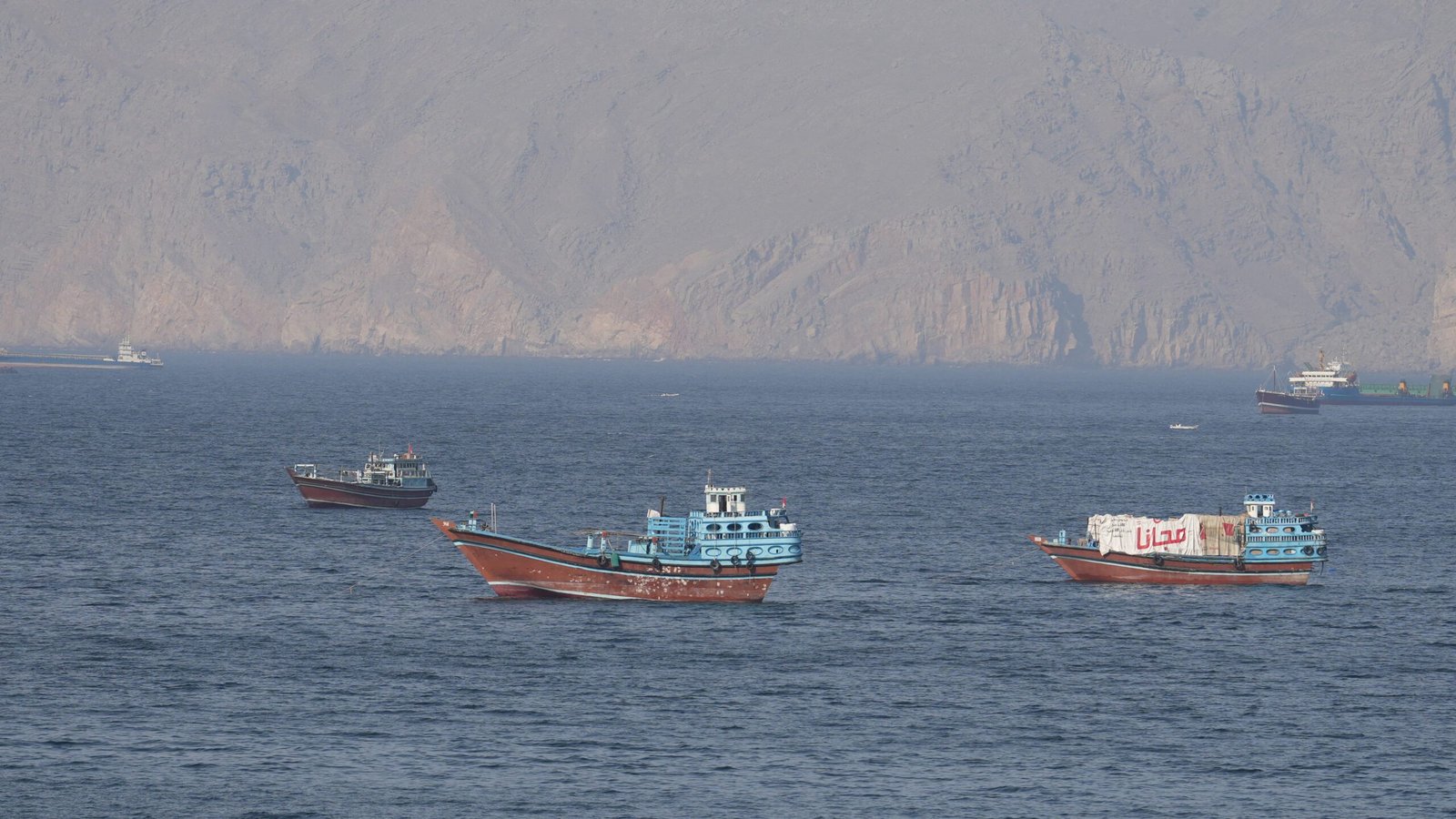
    Diplomatic attempts to restore stability to one of the world’s most vital energy corridors have reached a critical juncture. Iranian officials confirmed on Saturday. Tehran and Muscat are on the verge of finalizing a bilateral accord to establish a temporary shipping traffic scheme through the Strait of Hormuz. However, Iranian leadership made clear that signing the bilateral agreement with Oman will not lead to an immediate unblocking of the maritime bottleneck. Speaking on the technical negotiations, Iranian Foreign Minister Abbas Araqchi stated that talks regarding a revised passage framework with Oman are very close to completion. Total resumption of commercial transit remains contingent on broader geopolitical demands. Chief among Tehran’s requirements is financial restitution from Washington for damage incurred during the five-month regional military escalation that began in late February. An explicit end to American naval blockades targeting Iranian harbors. The current conflict trace back to late February 2026. The time following joint strikes by American and Israeli forces against Iranian targets. Subsequent hostilities severely disrupted commercial navigation which historically accommodates twenty percent of global petroleum and natural gas shipments. In Washington, senior administration officials signaled cautious optimism over the ongoing discussions between the neighboring Gulf nations. A U.S. official indicated that the White House anticipates a formal pact between Iran and Oman shortly, noting that once a verifiably secure mechanism for unhindered merchant shipping is announced, the United States stands ready to lift its naval blockade against Iranian ports. Despite the encouraging diplomatic signals regarding traffic management, military rhetoric and actions on the water demonstrate that significant friction remains. Statements released by Iran’s Islamic Revolutionary Guard Corps (IRGC) emphasized that political prerequisites set for the United States operate independently of the maritime route negotiations with Oman. According to IRGC spokesman Hossein Mohebbi, the physical opening of the shipping lanes to international traffic will only occur after Washington agrees to Iran’s broader security conditions and ceases interference in regional affairs. Compounding the volatility, maritime safety concerns flared anew on Saturday when the United Arab Emirates reported that a missile strike had hit a commercial tanker linked to its national oil company while navigating the strait. Although no casualties were reported onboard, the incident highlights the fragile security landscape even as diplomats work to establish temporary transit corridors.   The proposed bilateral framework aims to replace the prior international traffic separation system with a updated protocol, temporarily managing maritime movement while complex legal and technical standards are finalized. Yet, as Tehran leverages its geographic posture over the waterway to press for broader economic and security guarantees, international observers remain attentive to whether technical shipping agreements can effectively de-escalate the wider confrontation.

  • | |

    Holy Trinity: Pakistan-Saudi Arabia-Türkiye

    The historic partnership between Pakistan and Saudi Arabia is undergoing its most significant structural evolution in decades. For over half a century, the relationship functioned on a familiar security-for-capital framework. Islamabad offered military training, troop deployments, and strategic depth, while Riyadh responded with essential financial bailouts, discounted oil facilities, and employment opportunities for millions of Pakistani expatriates. However, recent diplomatic breakthroughs headlined by the Strategic Mutual Defence Agreement (SMDA) and its subsequent expansion into a trilateral security pact alongside Türkiye mark a decisive leap forward. The bilateral relationship is rapidly shifting away from transactional, crisis-driven assistance toward a formalized, institutionalized strategic and economic alliance. Evolution of the Security Paradigm Historically, military collaboration between the two nations relied on informal arrangements, temporary troop rotations along Saudi borders, and specialized training programs. The formalization of a mutual defense clause that an attack on either nation constitutes an aggression against both fundamentally alters this dynamic. Amid growing uncertainty regarding traditional Western security guarantees and volatile regional dynamics across the Gulf, Riyadh views Pakistan’s battle-tested military capacity and nuclear deterrent as a critical regional shield. Pakistan’s recent military deployments demonstrate that this pact goes beyond mere symbolic diplomatic language. The inclusion of Türkiye creates a formidable defense ecosystem. This framework combines Turkish aerospace technology and defense manufacturing, Pakistani operational combat experience, and Saudi financial capital. Replacing Short-Term Bailouts with Direct Capital Parallel to the defense realm, bilateral economic engagement is abandoning the reactive annual renewal model. Previously, Pakistan relied on periodic, short-term central bank deposits from Riyadh to stabilize its foreign exchange reserves. The new paradigm prioritizes long-term equity investments and sovereign economic integration. Anchor Investments in Key Sectors: Alignment with Saudi Arabia’s Vision 2030 framework has unlocked direct equity participation in Pakistan’s primary assets, including the Reko Diq copper-gold project, renewable energy grid upgrades, and critical transport infrastructure. Institutionalized Energy Buffer: Unscheduled deferred-payment oil arrangements are being structured into permanent facilities, providing Pakistan with predictability against global energy spikes while directly binding Saudi economic interests to Pakistan’s financial solvency. Labor Mobility and Tech Integration: Both nations are working toward transforming low-skilled migrant flows into a skills compact, alongside integrating digital payment gateways to streamline direct remittance flows into Pakistani bank accounts. Geopolitical Constraints and Regional Realities While the formalization of ties guarantees structural support, it introduces diplomatic challenges across major geopolitical arenas. Pakistan shares a 900 km border with Tehran and cannot sustain an overtly hostile western neighbor. Islamabad will actively position itself as a diplomatic bridge and mediator rather than acting as a military proxy in Middle Eastern disputes. Saudi Arabia maintains robust, multi-billion-dollar trade ties and strategic partnerships with New Delhi. Riyadh will keep its security pact with Pakistan separate from its commercial ties with India, preserving its broad economic balance in South Asia. Formal security commitments increase the risk of being drawn into distant Middle Eastern flashpoints. Pakistan will face  pressure to provide military backing during future regional crises, limiting the neutrality it previously maintained.   This institutional consolidation reshapes both South Asian and Gulf dynamics. Pakistan secures long-term economic stability and elevated geopolitical status, while Saudi Arabia anchors its defense architecture with proven regional partners.

  • | |

    Beyond faith and defense

    The historical partnership between Pakistan and the Kingdom of Saudi Arabia stands as one of the most enduring bilateral relationships in the contemporary Muslim world. This history is anchored in shared Islamic values and a profound spiritual connection to the holy sanctuaries of Makkah and Medina. This alliance predates the modern era of Saudi oil wealth. The bond was formalized through the landmark Treaty of Friendship in 1951. It established an early blueprint for solidarity, ideological alignment and mutual support during crisis. Over the past seven decades, this connection has expanded from religious affinity into strategic collaboration. The Art of Strategic Neutrality Defense cooperation forms a central pivot of the bilateral relationship. Since the 1960s, the Pakistani military has played an instrumental role in advising, training, and building the infrastructure of the Saudi armed forces. Contingents of Pakistani troops have historically been deployed inside the Kingdom for defensive purposes, notably safeguarding the Holy Mosques during regional upheavals such as Operation Desert Storm. Moreover, thousands of Saudi defense personnel have undergone advanced training in Pakistani military institutions over the decades. However, the military relationship has also required careful navigation.  When conflict erupted in Yemen (2015), Pakistan’s parliament adopted a stance of strict neutrality to avoid inter-state Middle Eastern disputes, particularly while its domestic forces were actively engaged in counter-terrorism campaigns like Operation Zarb-e-Azb. Despite initial friction, Riyadh acknowledged Islamabad’s geopolitical constraints. This mature understanding was demonstrated when former Pakistani Army Chief General Raheel Sharif was appointed to lead the Islamic Military Counter Terrorism Coalition (IMCTC), focusing strictly on combating global extremism rather than taking sides in regional power struggles. Economic Interdependence and Human Capital Beyond defense, economic cooperation has provided crucial stability to Pakistan’s financial landscape. Saudi Arabia has repeatedly acted as a financial cushion. The country delivered multi-billion-dollar bailout packages, balance-of-payment assistance and deferred-payment oil supplies during economic hardship. Historically, this financial dynamic was complemented by administrative leadership. Pakistani economist Anwar Ali served as the Governor of the Saudi Arabian Monetary Agency from 1958 to 1974. He played a pivotal role in organizing the Kingdom’s modern financial infrastructure. Human capital remains another essential driver of this relationship. Over 2.7 million Pakistani expatriates reside and work within Saudi Arabia. Spanning critical sectors such as healthcare, engineering, construction, and information technology, these workers contribute directly to Saudi Arabia’s physical and economic development while generating vital remittance flows that sustain Pakistan’s domestic economy. Furthermore, administrative initiatives like the “Road to Makkah” project and reductions in visa fees have significantly streamlined pilgrimage procedures for millions of Pakistani citizens traveling for Hajj and Umrah. Geo-Economics, Vision 2030, and the Future of CPEC As both nations adjust to global realities, the bilateral partnership is changing into modern geo-economic framework. Saudi Crown Prince Mohammed bin Salman’s Vision 2030. The Kingdom aims to diversify its economy away from oil dependency by investing in global supply chains. A key element of this transformation includes multi-billion-dollar investment commitments in Pakistan. Furthermore, a proposed mega-oil refinery at the deep-sea port of Gwadar.   Ultimately, geopolitical challenges occasionally test bilateral diplomatic alignment. However, the strategic, economic and institutional ties between Islamabad and Riyadh continue to adapt. After all, it’s a dynamic future built on mutual survival and shared prosperity.