netanyahu set remain
|

Netanyahu set to remain caretaker after inconclusive Israeli election

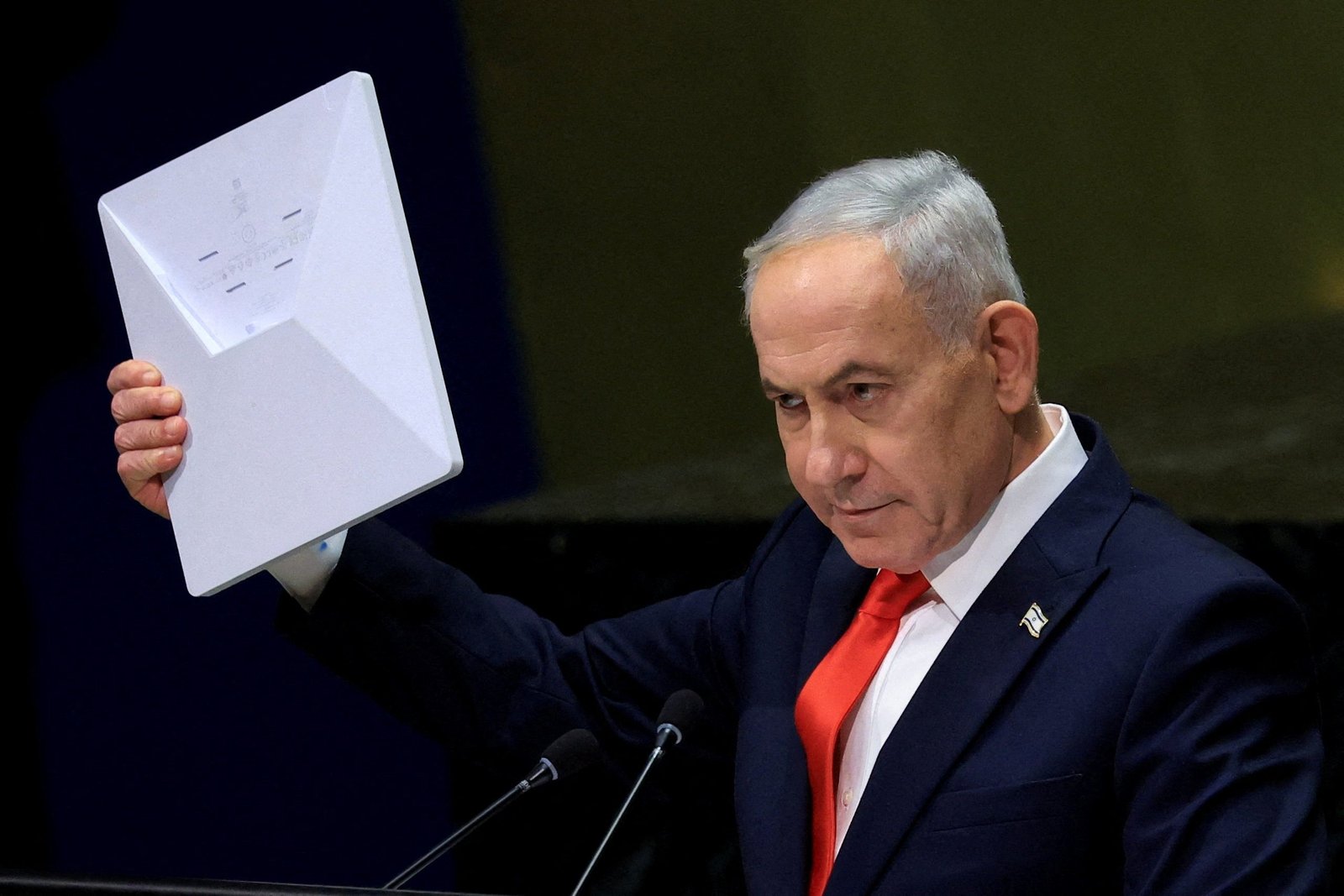
JERUSALEM, Israel – Benjamin Netanyahu looked set to remain Israel’s caretaker prime minister after unexpectedly strong backing among Jewish voters left his opponents little apparent prospect of unseating him, despite his right-wing bloc losing its parliamentary majority.

With nearly 86% of votes tallied on Wednesday, Israel’s three main broadcasters projected Netanyahu’s bloc of right-wing, far-right and ultra-Orthodox parties would win 53 seats in the 120-seat Knesset, well ahead of the 48 for rival Gadi Eisenkot’s opposition bloc.


Netanyahu set to remain caretaker after inconclusive Israeli election

Parties representing Arab Israelis were projected to win an unprecedented 19 seats, leaving Eisenkot little realistic path to power without their broad backing, which many Jewish political leaders reject.
Must Read

Israeli exit polls show deadlock, setback for Netanyahu


Israeli exit polls show deadlock, setback for Netanyahu

The results could still change as counting continued, but Eisenkot’s bloc of anti-Netanyahu parties, ranging from the center-left to the hard right, had fallen short of pre-election polls that forecast a tight race.

Netanyahu would remain caretaker prime minister during any coalition negotiations and potentially until another election next year. While a caretaker government faces some constraints, experts say it retains powers, including over the war with Iran.

Guy Lurie, a research fellow at the Israel Democracy Institute, said a caretaker government formally had the same powers as a regular government, but also “a duty of restraint” and less discretion in some areas.

Security fight sharpens

Netanyahu, addressing his Likud party’s faithful after 3 am (0100 GMT), called for the formation of “a strong, right-wing national government.”

He highlighted Israel’s military successes and raised the prospect of renewed joint military action against Iran alongside his ally, US President Donald Trump, saying the two countries had a “singular historical opportunity” to remove what he called the Iranian threat “once and for all.”

Trump, who had urged Israeli voters to keep Netanyahu in power so the two leaders could “finish the job” in Iran, said Netanyahu had done “very well” and claimed his endorsement had “helped him a lot.”

Israel’s high-turnout vote was brushed aside by some in the rest of the Middle East.

In Tehran, banners with images of slain Supreme Leader Ayatollah Ali Khamenei reminded Iranians of US and Israeli strikes launched in February which kicked off the war. Just to the right was a poster of late Hezbollah leader Hassan Nasrallah, who was killed on Netanyahu’s orders in Lebanon.

“I genuinely see the possibility of attack,” said 50-year-old Iranian citizen Abdollah Karimi.

Frustration was also palpable in Egypt, the first Arab country to make peace with Israel in 1979.

Outhman Selim, a 62-year-old lawyer, said his hopes that a Netanyahu defeat would steer the country away from the far right had been dashed.

Eisenkot acknowledged that Netanyahu remained caretaker prime minister but warned that he might use security for political ends.

“I call on the heads of the security establishment and the civil service: Netanyahu is a caretaker prime minister, without a mandate or the people’s trust,” he said. “Stand firm in the face of any attempt to challenge you.”

Netanyahu’s office has previously rejected accusations that he is using the Iran conflict for political gain and did not immediately respond to a request for comment on Wednesday.

The prospect of a caretaker government without a parliamentary majority weighed on Israeli markets. The shekel ILS= currency weakened around 1.6% to 3.10 to the US dollar. Tel Aviv’s key benchmark stock indexes fell more than 3%.

Decisive shift in Israeli politics

The result underscored the rightward shift among Israeli Jews during Netanyahu’s years as the country’s dominant political figure. The center-left that dominated Israel for the first half of its history has been reduced to a small fringe.

Nearly all Jewish parties now share Netanyahu’s rejection of an eventual independent Palestinian state, the basis of internationally endorsed peace efforts since the 1990s.

The election was Israel’s first since Hamas-led fighters killed 1,200 people and took 251 hostages in attacks on October 7, 2023, that plunged the country into wars in Gaza, Lebanon and Iran.

The war in Gaza, which flattened the territory and killed 74,000 Palestinians, according to Gaza health authorities, has left Israel increasingly isolated on the world stage.

Netanyahu himself is wanted by the International Criminal Court in The Hague on war crimes charges he calls absurd, and faces corruption charges in Israel that he dismisses as an establishment plot.

Turnout reached 77.7%, the highest in more than two decades, and was particularly high among Israelis of Palestinian descent, who make up more than a fifth of the population. Many were motivated by what they see as open racism from Netanyahu’s cabinet, which includes a party leader convicted of inciting racial hatred against Arabs.

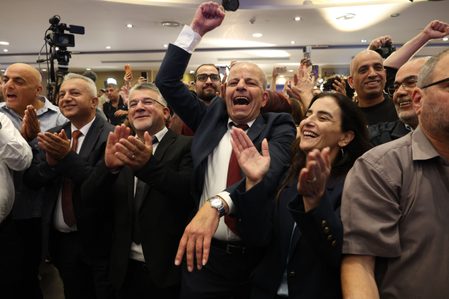
The headquarters of the Joint List, an alliance of several Arab parties, burst into whistles and applause when exit polls were released. “We refuse the occupation and racism, and we will remain here,” said Joint List candidate Faten Gattas.

The coalition that last toppled Netanyahu relied on one small Arab party, but Eisenkot’s underperformance means the opposition would now need backing from the Joint List itself. Most Jewish leaders have shunned formal alliances with Arab parties since Israel’s founding. – Rappler.com
Similar Posts

  • |

    Court summons former Lebanon Central Bank governor

    Lebanese judicial authorities have issued a court summons for former Central Bank governor Riad Salameh after he failed to appear at a scheduled hearing in a high-profile financial corruption case, marking another major development in one of the country’s most closely watched legal investigations. According to a judicial source, prosecutors ordered security forces to locate Salameh at his residence and escort him to Beirut’s Palace of Justice after he did not attend Thursday’s hearing. The case stems from a complaint filed by current Central Bank Governor Karim Soueid, who has accused his predecessor of embezzlement of institutional funds, illicit enrichment and money laundering. Salameh, 76, led Lebanon’s central bank from 1993 until July 2023, overseeing the country’s monetary policy for three decades. Once regarded as one of the Middle East’s most influential financial figures, he later became a central figure in the controversy surrounding Lebanon’s devastating financial collapse. The Central Bank has alleged that it was the victim of an embezzlement scheme involving several hundred million euros, claiming the funds were misappropriated by Salameh with assistance from individuals close to him. However, the former governor has repeatedly denied all allegations, insisting he has committed no wrongdoing. The first hearing in the case took place in June at Salameh’s home because of his reported health condition, where he was questioned by an investigating judge. On Thursday, former banking executive Samir Hanna appeared before the court in connection with the same investigation, while Salameh remained absent. The former governor has faced growing legal pressure both inside Lebanon and abroad. He was arrested in September 2024 over allegations that he embezzled $44 million from the institution he once headed. After spending a year in detention, he was released on bail exceeding $14 million, one of the largest ever imposed in Lebanon, but remains banned from leaving the country. International investigations have also intensified. French authorities issued an international arrest warrant for Salameh in 2023, while prosecutors in Paris continue examining allegations linked to cross-border financial transactions. In May this year, the Swiss subsidiary of British banking giant HSBC was formally indicted as investigators examined claims that it may have facilitated financial activities connected to the former governor. The latest court summons underscores Lebanon’s efforts to pursue accountability for the country’s prolonged financial crisis. As investigations continue at home and overseas, the case against Salameh remains one of the most significant legal battles tied to Lebanon’s economic collapse, with many citizens viewing it as a crucial test of the country’s commitment to transparency and judicial reform.

  • |

    Search for survivors intensifies after devastating 7.1-magnitude earthquake strikes southern Japan

    Emergency responders in southwestern Japan are racing against time to locate survivors trapped in rubble following a powerful 7.1-magnitude earthquake that killed at least 13 people in the Kumamoto region of Kyushu island. The powerful tremor, which struck at a shallow depth of ten kilometres, flattened residential homes, triggered severe fires, ruptured critical bridges, and cut electricity to nearly 37,000 households. Japanese Prime Minister Sanae Takaichi confirmed the death toll during an official address in Tokyo, while chief cabinet spokesman Minoru Kihara noted that at least seven individuals suffered severe injuries and more than 9,000 residents sought safety across hundreds of emergency evacuation shelters. Search operations remain heavily concentrated in the town of Kashima, where part of the Aeon Mall collapsed after a gas explosion ripped through the structure shortly after the primary quake. Rescue teams in specialised gear navigated twisted steel girders and fallen concrete inside the shopping centre, where at least two women lost their lives and eight others were pulled from the debris. Meanwhile, in Yatsushiro city, search crews continue to look for nine workers unaccounted for at a Nippon Paper Industries plant after a large smokestack collapsed onto the facility below. The seismic shock registering at the maximum level on Japan’s intensity scale caused widespread logistical disruption across Kyushu island, derailing a cargo train, suspending high-speed bullet train lines, and causing structural collapses at the historic centuries-old Kumamoto Castle. In response, the Japanese military has deployed 3,600 personnel alongside 20 reconnaissance aircraft to support disaster relief efforts, clear impassable roads, and assess localised damage in remote communities.

  • New Jersey discovers software glitch that permitted non-citizens to vote

    A major technological defect within New Jersey’s Motor Vehicle Commission (MVC) added approximately 6,600 non-U.S. citizens to the state’s voters between June 2023 and June 2024. Governor Mikie Sherrill publicly disclosed the finding during a news briefing, explaining that an investigation was immediately launched upon discovery to ensure election rolls are corrected and fully secured. Preliminary assessments conducted by election authorities indicate that fewer than 400 of those erroneously added individuals actually went on to participate in elections. Officials emphasized that there is no indication these votes altered the outcome of any contest or resulted from intentional fraud by the affected residents. The voter registration system used across New Jersey driver’s license centers relies on digital touchpads designed to streamline voter sign-ups. When residents apply for or renew state identification or driver’s licenses, the system asks a series of preliminary eligibility questions, including whether the applicant is a United States citizen. Between June 2023 and June 2024, a severe programming error caused the system to bypass negative responses. Even when non-citizen applicants explicitly selected No on the prompt asking if they were eligible citizens, the software disregarded the answer and forwarded their information to election boards as new voter registrations. Governor Sherrill noted that the individuals involved were completely blameless. They answered the eligibility prompts truthfully, but the automated backend software processed them as voters regardless. Although the underlying code error was patched in June 2024, the full scope of the improperly generated registrations was not uncovered until recently. After identifying the affected records, state election administrators conducted a preliminary audit to evaluate whether any of the erroneously registered individuals had cast ballots. The review revealed that under 400 people on the list had voted in at least one election during the period in question. The misregistered voters were distributed across political spectrums, enrolling as Democrats, Republicans, and unaffiliated voters across multiple counties. State analysts confirmed that the limited number of votes cast were widely dispersed across time and region, meaning no single local or statewide race was tipped as a result of the system error. State officials clarified that affected individuals will not face prosecution or legal penalties, as they did not falsify documents or attempt to circumvent registration laws. In response to the revelation, Governor Sherrill announced immediate corrective steps to clean the voter registries and enforce administrative accountability. Election boards have begun systematically removing all 6,600 affected names from state voter databases. The state is mailing official notification letters to all impacted residents, informing them of the system glitch and confirming that their records are being updated to prevent future voter file errors. The state Motor Vehicle Commission is severing ties with IDEMIA, the third-party software contractor responsible for managing the license registration keypads, and moving to onboard a new vendor. The Governor’s Chief Counsel has opened an internal investigation into why the error persisted for a full year under the previous administration without being escalated or publicly reported. The disclosure has drawn varied reactions across the political and advocacy landscape. Voting rights organizations, including the League of Women Voters of New Jersey, commended the current administration for its swift transparency and proactive purging of improper records while reiterating that affected residents were victims of a software glitch rather than bad actors. At the same time, the incident has fueled debates over voter registration infrastructure and database management. Republican lawmakers called for broader overhauls and stricter verification mechanisms across state agencies. State leaders maintained that the issue represents an isolated technology failure that is being thoroughly rectified to preserve the integrity of future elections.  

  • | | | |

    US, Saudi forces strike Iran allies in Iraq

    The conflict involving Iran, the United States and its regional allies has entered a new and more dangerous phase, with fresh military strikes reported across the Middle East. US and Saudi forces carried out coordinated airstrikes against Iran-aligned armed groups in eastern Iraq, according to US Central Command (CENTCOM). The operation came after a series of drone attacks that Washington and Riyadh attributed to groups linked to Iran’s Islamic Revolutionary Guard Corps (IRGC). CENTCOM said American and Saudi fighter jets targeted weapons and logistics facilities used by the armed groups. The US military claimed the groups had carried out more than 30 IRGC-directed drone attacks in recent days, including strikes targeting Saudi energy infrastructure. Saudi Arabia also confirmed the operation, saying its forces acted alongside CENTCOM after drones were launched from Iraqi territory toward petroleum facilities in the kingdom’s Eastern Province and Riyadh region. Riyadh said it did not seek a wider escalation but warned that it would respond to further attacks. The latest strikes were followed by an explosion at the headquarters of Iraq’s Popular Mobilisation Forces (PMF) in Basra. The PMF is an umbrella organisation containing several armed factions, including groups closely aligned with Iran. The cause of the blast and any casualties were not immediately confirmed. Meanwhile, tensions escalated further after the US military reported that Iran had launched multiple ballistic missiles toward American military positions in Jordan. CENTCOM said the missiles were intercepted and that US forces remained on heightened alert. Iranian authorities had not immediately issued an official statement regarding the missile launches. However, an Iranian military official rejected claims that Tehran was responsible for projectiles fired toward Saudi Arabia, warning that attributing attacks on US interests to Iran could be a serious miscalculation. The developments threaten to derail diplomatic efforts aimed at containing the conflict. Iran has repeatedly warned that any attempt to restrict its control over the Strait of Hormuz could trigger a renewed military confrontation. The latest escalation also comes as US President Donald Trump met Israeli Prime Minister Benjamin Netanyahu. Their discussions reportedly focused on Iran and the possibility of renewed military action

Leave a Reply

Your email address will not be published. Required fields are marked *